



paint experts please help

Thread Starter
Safety Car


Joined: May 2005
Posts: 4,176
Likes: 7
From: Jennings LA
 paint experts please help
here is my problem. there are tiny bubbles coming out under the paint. if you ever had water in your air lines before this is exactly what it looks like. I can't get it to show up in a picture. now the history.
I stripped it down with a razor blade then sanded the rest to this point.
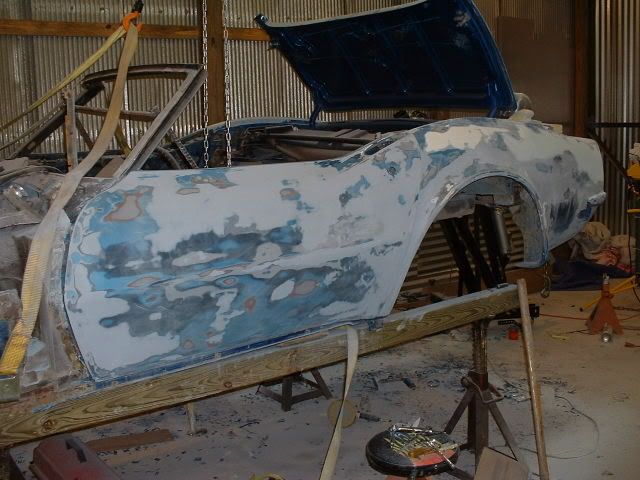

then I wiped it down with Prep Sol and primed it with some 2K high build primer. I only waited about 20 mins from wipe down to primer application. (could be part of the problem ? ) the primer fisheyed really bad. I waited a few weeks and then block sanded it then added a few more coats of 2K high build. this time I wiped it down with some DX440
again terrible fisheye problem. I had a new air hose and a new filter. after blocking and finishing some minor spots with 2 part putty it was sealed and painted with a tri coat color, all materials were Martin Senour. all was good for a few months and now it is showing small bubbles under the clear. I had a paint rep look at it today and he said the only way to correct it was to media blast it and then gel coat it. needles to say I as not impressed. he said it was either moisture or some contaminate trying to get to the surface (no joke I new that) he thought moisture or whatever might have been absorbed by the fiberglass. the only problem with this theory is it also happened on the metal gass door. I need help on how to fix this and keep it from happening again. I know I will probably be stripping it all the way back down again. sorry for the long post just wanted to put all the facts
I stripped it down with a razor blade then sanded the rest to this point.
then I wiped it down with Prep Sol and primed it with some 2K high build primer. I only waited about 20 mins from wipe down to primer application. (could be part of the problem ? ) the primer fisheyed really bad. I waited a few weeks and then block sanded it then added a few more coats of 2K high build. this time I wiped it down with some DX440
again terrible fisheye problem. I had a new air hose and a new filter. after blocking and finishing some minor spots with 2 part putty it was sealed and painted with a tri coat color, all materials were Martin Senour. all was good for a few months and now it is showing small bubbles under the clear. I had a paint rep look at it today and he said the only way to correct it was to media blast it and then gel coat it. needles to say I as not impressed. he said it was either moisture or some contaminate trying to get to the surface (no joke I new that) he thought moisture or whatever might have been absorbed by the fiberglass. the only problem with this theory is it also happened on the metal gass door. I need help on how to fix this and keep it from happening again. I know I will probably be stripping it all the way back down again. sorry for the long post just wanted to put all the facts
Burning Brakes

Joined: Jun 2006
Posts: 1,249
Likes: 13
From: San Angelo TX
Go to:
http://www.hotrodders.com
Sign up and post the question on the "Body - Exterior" forum.
Lots of Pros hang out there and you will get a lot of response.
I guarantee you will get hooked on that forum.
http://www.hotrodders.com
Sign up and post the question on the "Body - Exterior" forum.
Lots of Pros hang out there and you will get a lot of response.
I guarantee you will get hooked on that forum.

Team Owner


Joined: Sep 2001
Posts: 30,958
Likes: 0
From: Middletown Connecticut
Cruise-In IV Veteran
im assuming you sprayed it yourself?
how CLEAN was your 'booth' ?
did you drain your tank before spraying?
also.. did you just wipe the solvent on and walk away or did you wipe on then wipe off?
if you didnt wipe the excess off, there's your problem, and the solvent was trapped between coats
how CLEAN was your 'booth' ?
did you drain your tank before spraying?
also.. did you just wipe the solvent on and walk away or did you wipe on then wipe off?
if you didnt wipe the excess off, there's your problem, and the solvent was trapped between coats

Le Mans Master

Joined: Jul 2005
Posts: 5,752
Likes: 4
From: Austin Texas
Yep, that's my rule #1..... If you see a fish-eye or some kind of reaction, STOP! and find out what's going on. At my shop, we prime the vehicle, then use a black guide coat and let it sit in the hot sun for at least a week, maybe two. If there are going to be any bubbles or shrinkage, we usually catch them this way......

Le Mans Master


Joined: Oct 2004
Posts: 5,269
Likes: 54
From: Orlando Florida
St. Jude Donor '05
Moisture ? That's one thing I am worried about.... you're in LA, that's not too different from FL humidity.
What about the air that the compressor sucks into the tank ? I actually wanted to start a new thread with this question tonight.... I don't mean to hi-jack, this might be one of your problems...well, maybe it's a stupid question but anyways:
Should I let the air compressor suck "dry" air from inside the air conditioned house or is the humit garage air ok ???
What about the air that the compressor sucks into the tank ? I actually wanted to start a new thread with this question tonight.... I don't mean to hi-jack, this might be one of your problems...well, maybe it's a stupid question but anyways:
Should I let the air compressor suck "dry" air from inside the air conditioned house or is the humit garage air ok ???
Team Owner
Joined: Sep 2001
Posts: 30,958
Likes: 0
From: Middletown Connecticut
Cruise-In IV Veteran
Originally Posted by RedBad1979
Should I let the air compressor suck "dry" air from inside the air conditioned house or is the humit garage air ok ???
just drain the tank before spraying and have a couple of filters on the line and you should be fine
i have a filter right out of the compressor before it touches a line.. and one at the spray gun (small orange one) and I havent had any fish eye problems since
Le Mans Master
Joined: Oct 2004
Posts: 5,269
Likes: 54
From: Orlando Florida
St. Jude Donor '05
Originally Posted by Corz
you could.. seems like a waste of time to me
just drain the tank before spraying and have a couple of filters on the line and you should be fine
i have a filter right out of the compressor before it touches a line.. and one at the spray gun (small orange one) and I havent had any fish eye problems since
just drain the tank before spraying and have a couple of filters on the line and you should be fine
i have a filter right out of the compressor before it touches a line.. and one at the spray gun (small orange one) and I havent had any fish eye problems since

I'll buy more than one filter, just to be on the safe side....

Melting Slicks


Joined: Jul 2000
Posts: 2,107
Likes: 14
From: Lancaster PA
I believe Prep sol and dx440 are both strong wax and grease removers and are meant to be used to remove contaminents before sanding. They are not meant to be used after sanding. There are special solvents such as Dupont 3939S and 3901S that are to be used before applying paints and primers. The former products contain alot of oily solvent which may have pentrated the bare fiberglass and can lead to delamination of refinish products. That still doesn't explain the same problem on your gas door. If the bubbling there is consistant with the rest of the car I would say the contaminents were in your air lines.
Corvette Stories
The Best of Corvette for Corvette Enthusiasts

Every 2027 Corvette Engine Explained
Joe Kucinski
Designer Imagines A Corvette That Looks More Like a Corvette Than the Corvette
Verdad Gallardo
10 Ugly Corvettes That We Still Kinda Love
Joe Kucinski
Top 10 Most Expensive Corvettes Ever Sold on Bring A Trailer
Brett Foote
10 Things Every Corvette Owner Needs (2026 Edition)
Michael S. Palmer
8 Most "Only Corvette Owners Understand" Quirks and Problems
Pouria Savadkouei
10 Reasons the C6 Z06 is Still A Performance Benchmark After 20 Years
Joe Kucinski
How Much Horsepower Every Corvette Engine "LOST" in 1972
Joe Kucinski
Top 10 DOs and DON'Ts for Protecting Your Convertible Top!
Michael S. Palmer
Thread Starter
Safety Car
Joined: May 2005
Posts: 4,176
Likes: 7
From: Jennings LA
Originally Posted by Corz
im assuming you sprayed it yourself?
how CLEAN was your 'booth' ?
did you drain your tank before spraying?
also.. did you just wipe the solvent on and walk away or did you wipe on then wipe off?
if you didnt wipe the excess off, there's your problem, and the solvent was trapped between coats
how CLEAN was your 'booth' ?
did you drain your tank before spraying?
also.. did you just wipe the solvent on and walk away or did you wipe on then wipe off?
if you didnt wipe the excess off, there's your problem, and the solvent was trapped between coats
it was painted at my friends body shop, he has one of the nicest booths around and a filtered air system,

Le Mans Master
Joined: Jul 2005
Posts: 5,752
Likes: 4
From: Austin Texas
The more common causes for fish-eyes are airborne contaminants like silicone or oil (like WD-40). Did you do any work on the Vette when it was bare (before primer) involving oil or spray lubricant?
Thread Starter
Safety Car
Joined: May 2005
Posts: 4,176
Likes: 7
From: Jennings LA
Originally Posted by big_G
The more common causes for fish-eyes are airborne contaminants like silicone or oil (like WD-40). Did you do any work on the Vette when it was bare (before primer) involving oil or spray lubricant?
Thread Starter
Safety Car
Joined: May 2005
Posts: 4,176
Likes: 7
From: Jennings LA
Originally Posted by CF6873
I believe Prep sol and dx440 are both strong wax and grease removers and are meant to be used to remove contaminents before sanding. They are not meant to be used after sanding. There are special solvents such as Dupont 3939S and 3901S that are to be used before applying paints and primers. The former products contain alot of oily solvent which may have pentrated the bare fiberglass and can lead to delamination of refinish products. That still doesn't explain the same problem on your gas door. If the bubbling there is consistant with the rest of the car I would say the contaminents were in your air lines.
Pro

Joined: May 2006
Posts: 576
Likes: 1
From: Baytown Texas
Originally Posted by RedBad1979
Moisture ? That's one thing I am worried about.... you're in LA, that's not too different from FL humidity.
What about the air that the compressor sucks into the tank ? I actually wanted to start a new thread with this question tonight.... I don't mean to hi-jack, this might be one of your problems...well, maybe it's a stupid question but anyways:
Should I let the air compressor suck "dry" air from inside the air conditioned house or is the humid garage air ok ???
What about the air that the compressor sucks into the tank ? I actually wanted to start a new thread with this question tonight.... I don't mean to hi-jack, this might be one of your problems...well, maybe it's a stupid question but anyways:
Should I let the air compressor suck "dry" air from inside the air conditioned house or is the humid garage air ok ???
Burning Brakes

Joined: Mar 2006
Posts: 1,036
Likes: 2
From: Huntingburg Indiana
You don't detail cars anywhere close do you? Armor all will travel a long way. Silicone is a painter's worst enemy. Dx440 is a good cleaner for tough jobs. This does not leave any residue. Just make sure to wipe it dry. I would then blow on the car with an air hose just to make sure it's dry down in any pores.
Thread Starter
Safety Car
Joined: May 2005
Posts: 4,176
Likes: 7
From: Jennings LA
Originally Posted by bondoboy
You don't detail cars anywhere close do you? Armor all will travel a long way. Silicone is a painter's worst enemy. Dx440 is a good cleaner for tough jobs. This does not leave any residue. Just make sure to wipe it dry. I would then blow on the car with an air hose just to make sure it's dry down in any pores.
Le Mans Master
Joined: Oct 2004
Posts: 5,269
Likes: 54
From: Orlando Florida
St. Jude Donor '05
Originally Posted by Crazy81
I bought my compressor with the house. The man I bight it from restored old cars for a hobby. The way he delt with it was to run a long piece of copper tubing from the compressor through a bucket of water and back to the tank. This cools the air and allows the water to separate out before reaching the tank. Pumping hot air into the tank leaves the water in a gaseous form inside the tank and will be drawn out the top into the air lines. The cooler the air is entering the tank, the dryer the air will be in the tank. This works very well here in this humid environment and I get very little water in my filters.
Pro
Joined: May 2006
Posts: 576
Likes: 1
From: Baytown Texas
Originally Posted by RedBad1979
Just to be on the safe side I'll let the compressor suck cool, dry air from inside the house. A 30' section of pvc plumbing should do the trick

Racer

Joined: Aug 2005
Posts: 431
Likes: 0
From: Oita, Japan
Originally Posted by Crazy81
The cooler the air is entering the tank, the dryer the air will be in the tank.

Thread Starter
Safety Car
Joined: May 2005
Posts: 4,176
Likes: 7
From: Jennings LA
Originally Posted by JonnHeather
Isn't rustoleum an oil based product? Any chance there was any of that on the car before you starting priming and painting?
