











Coils Old vs New

Thread Starter
Burning Brakes


Joined: May 2006
Posts: 893
Likes: 7
From: Hazerswoude-Rijndijk Zuid Holland
 Coils Old vs New
I'm rebuilding the frond end and compared the old and the new springs today. Boy what a difference in size, the old is about 3" taller then the new (550lbs). What is the expected drop?

Le Mans Master


Joined: Oct 2007
Posts: 7,462
Likes: 985
From: RI, Now Franklin/Nashville TN
Put a set of new 550 lb springs on about 2 years ago from Mid America. Dropped about an inch and no noticeable change in ride. Much better than the originals. Three changes that changed the ride dramatically were poly control arm bushings, upper and lowers (stiffer), Bilstein shocks (Heavy Duties not sports) (much better ride) and 255/45/17 ZR's tires and rims (much better steering, handling, a slightly stiffer ride), as an FYI. You CAN significantly improve the handling and steering with a minor deterioration in the C3 ride quality.
Thread Starter
Burning Brakes
Joined: May 2006
Posts: 893
Likes: 7
From: Hazerswoude-Rijndijk Zuid Holland
Thanks for the info.
Stiffer ride is no problem. I previously owned (when business was good ;-) Alfa romeo's 156 with sport suspension, what a joy to drive (stiff as a board) what a hell to own (luckily they where full lease).
I'm currently upgrading the bushings to poly and mounting Moog Balljoints. I am a little worried about ride height or rather space between tire and fender.
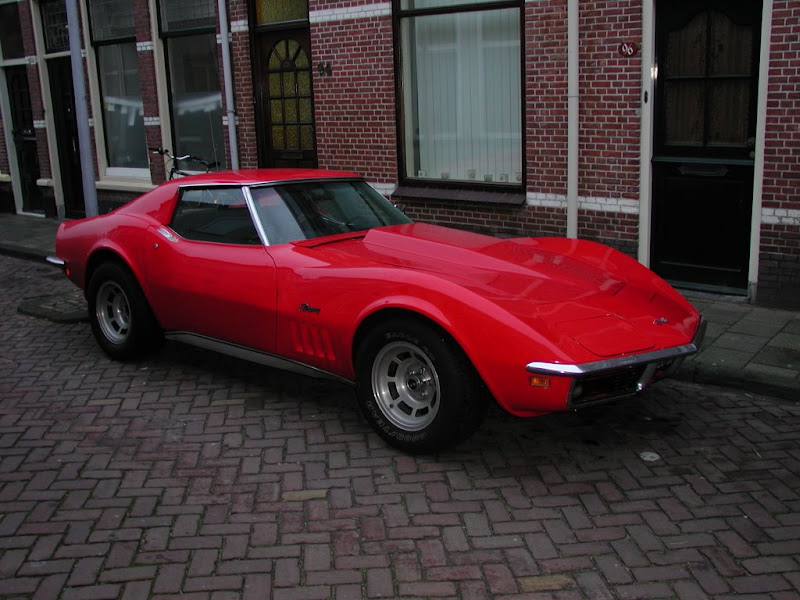
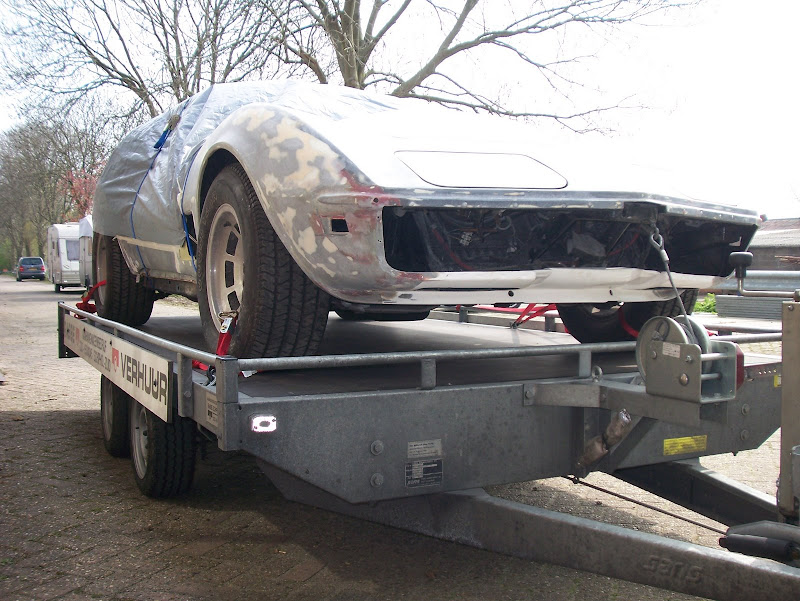
I think an inch will work out.
Sorry for spoiling you appetite with the old pictures, let me make it up.
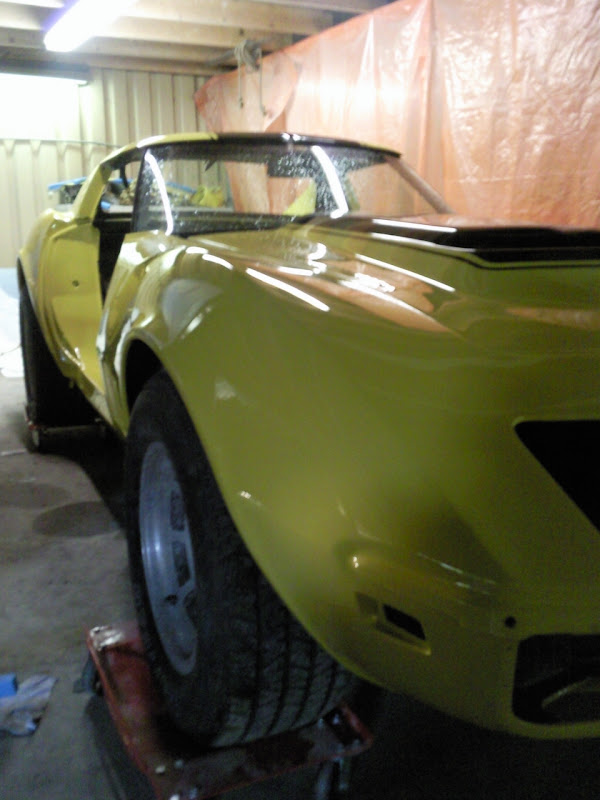
Stiffer ride is no problem. I previously owned (when business was good ;-) Alfa romeo's 156 with sport suspension, what a joy to drive (stiff as a board) what a hell to own (luckily they where full lease).
I'm currently upgrading the bushings to poly and mounting Moog Balljoints. I am a little worried about ride height or rather space between tire and fender.
I think an inch will work out.
Sorry for spoiling you appetite with the old pictures, let me make it up.
Last edited by cajos; Jan 6, 2009 at 03:23 AM.

Le Mans Master


Joined: Apr 2007
Posts: 7,353
Likes: 72
From: Graceland in a Not Correctly Restored Stingray
Suggest you drop the rear height by about that same inch. (Better yet, you could take the time to set your rear "D" height from equal with to ~0.25" more than your new front "Z" height with driver's weight and full fuel load on board.) Technically speaking, that would lower your CG and rear roll center, reduce rear jacking forces and bring your roll axis angle back down. In other words, it's a good idea. Besides, it's easy to accomplish. Should you have tire clearance issues, IMHO your handling will be better off if you change to 245's (assuming those are 255's) than to raise your ride height back up. My $.02

Corvette Stories
The Best of Corvette for Corvette Enthusiasts

5 Best & 5 Worst Corvette Daily Drivers
Joe Kucinski
The Headlights of Every Corvette Generation Explained
Joe Kucinski
5 Best & 5 Most Overrated Corvette Track Packages of All Time!
Joe Kucinski
Every 2027 Corvette Engine Explained
Joe Kucinski
Designer Imagines A Corvette That Looks More Like a Corvette Than the Corvette
Verdad Gallardo
10 Ugly Corvettes That We Still Kinda Love
Joe Kucinski
Top 10 Most Expensive Corvettes Ever Sold on Bring A Trailer
Brett Foote
10 Things Every Corvette Owner Needs (2026 Edition)
Michael S. Palmer
8 Most "Only Corvette Owners Understand" Quirks and Problems
Pouria Savadkouei
Thread Starter
Burning Brakes
Joined: May 2006
Posts: 893
Likes: 7
From: Hazerswoude-Rijndijk Zuid Holland
Suggest you drop the rear height by about that same inch. (Better yet, you could take the time to set your rear "D" height from equal with to ~0.25" more than your new front "Z" height with driver's weight and full fuel load on board.) Technically speaking, that would lower your CG and rear roll center, reduce rear jacking forces and bring your roll axis angle back down. In other words, it's a good idea. Besides, it's easy to accomplish. Should you have tire clearance issues, IMHO your handling will be better off if you change to 245's (assuming those are 255's) than to raise your ride height back up. My $.02
Duuugh, wtf. I'm lost. I have a set of 8" bolts for lowering the rear. Let me see if I understand it correctly. Front -1" Back -1.25" with a full tank and the fat bastard (me) in it? Right?
Those are 255. I'm putting new wheels (18") on but can test with the old, if I have issues I will order 245. BUT current is 255x60R15 new planned 255x45R18 with issues should I order 245x45R18? Both ends?
Le Mans Master
Joined: Apr 2007
Posts: 7,353
Likes: 72
From: Graceland in a Not Correctly Restored Stingray
For the good reasons already stated, I'm suggesting that you don't just lower the front, but the rear also. You could just drop the rear by the same amount the front has dropped with the new springs, but the better method would be to measure your front "Z" height and then set your rear "D" from equal to that to 0.25" higher. For instance, if your new "Z" height is 1.5", then set up your "D" at 1.5-1.75". Make sure the suspension is fully settled after each adjustment before re-checking and, yes, this is best done with your approx weight and full tank of gas on board. DO NOT set the rear "D" height lower than the front "Z" height, unless you have a non-original camber strut bracket or bracket spacer (in which case you subtract how much lower are the inner links from the desired height spec).

FWIW, these are the most accurate specs by which chassis ride height can be set. The recommendations given in the Chevy Power book (C3) Corvette chassis section for road race prep are "Z" at 1" to 1.25" and "D" at 1.25".
Sorry, can't help with the 18" front tire size question.
FWIW, these are the most accurate specs by which chassis ride height can be set. The recommendations given in the Chevy Power book (C3) Corvette chassis section for road race prep are "Z" at 1" to 1.25" and "D" at 1.25".
Sorry, can't help with the 18" front tire size question.
Last edited by TheSkunkWorks; Jan 6, 2009 at 10:51 PM.
Le Mans Master
Joined: Apr 2007
Posts: 7,353
Likes: 72
From: Graceland in a Not Correctly Restored Stingray
On a fairly level, flat plane surface with the suspension settled, simply measure from the ground to each point as indicated in the illustration and subtract for the difference to arrive at the respective heights. Tho the illustration posted shows acceptable tolerances of +.25", you really want to make accurate measurements here.




Race Director

Joined: Dec 2007
Posts: 14,345
Likes: 4
From: Hartselle AL
St. Jude Donor '09
On the subject of coils, anyone tried these or have an opinion?
http://www.usmracer.com/Corvette-196...6106-1489.html
'78 SA 4spd SBC
http://www.usmracer.com/Corvette-196...6106-1489.html
'78 SA 4spd SBC
Thread Starter
Burning Brakes
Joined: May 2006
Posts: 893
Likes: 7
From: Hazerswoude-Rijndijk Zuid Holland
sorry couldn't resist.
Ecklers Item# 34790
I think there is no difference with a BB w/o air
Thread Starter
Burning Brakes
Joined: May 2006
Posts: 893
Likes: 7
From: Hazerswoude-Rijndijk Zuid Holland
On the subject of coils, anyone tried these or have an opinion?
http://www.usmracer.com/Corvette-196...6106-1489.html
'78 SA 4spd SBC
http://www.usmracer.com/Corvette-196...6106-1489.html
'78 SA 4spd SBC
Isn't SS going brittle over time and stress?
Last edited by cajos; Jan 7, 2009 at 09:30 AM.


Race Director
Joined: Nov 2002
Posts: 12,142
Likes: 54
From: Taylor Michigan
There would be closer springs to the OEM to be found in the back of a 'TRW' chassis catalogue. Rate of the spring, inside diameter, wire diameter, height, and the style of the ends are in these books. Computers for auto parts will only list a number. However the good thing is the designated numbers for each spring are the same by the various companies that sell them. ie CS-960. If you find something close in one brand its a easy cross to another brand like 'Moog' or 'Elgin'. Researching them is the 'Key'. Old chassis books is where they can be found. And most sets are in the 40-50 dollar range. There are many much closer than the set pictured in an above post.