



ever seen this flair before?
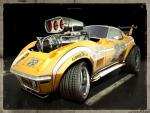
Thread Starter
Intermediate

Joined: Jul 2008
Posts: 46
Likes: 0
From: North Branford CT
 ever seen this flair before?
this is gunna sound kinda weird, maybe even get some backlash for it, but oh well. I really like the fender flair on the back of the camaro, i think it might look good on my c3. i've been looking for info on it, like where to get them and i cant find anything (yeah, ive tried camaro forums)... so if anyone has seen them before, or could help it'd be greatly appreciated!

please and thanks. - jay
please and thanks. - jay

Race Director


Joined: Oct 2000
Posts: 12,669
Likes: 3,123
From: Shamong, NJ
That appears to be Tony DeLorenzo's 1970 Camaro (you may recognize the name from his days of racing an L-88 Corvette backed by Owens-Corning). He originally raced the car in the 1970 Trans-Am Series. At that time the car was white with either a red or blue hood and forward roof section, carried the number "3" and was sponsored by Owens-Corning Fiberglass. I don't know if this car was built by DeLorenzo or was one the the ones built by Jim Hall's Chaparral Racing factory backed Trans-Am team.
Generally, flairs on early Trans-Am cars (and SCCA A-Sedan/GT-1 cars) used original, steel bodies and fabricated steel flairs. SCCA rules for the sedan classes allowed the flairing of fenders to accomadate larger tires, but required that the original wheel opening and body lines be maintained. I don't think they were ever available as a molded fiberglass part to add to a car. Though it is possible that they were once available from one of the people that produced racing fiberglass panels, such as Jim Derhawg. By 1980, when I got involved in SCCA racing, Trans-Am and GT-1 Camaros were allowed to use tube frames and fiberglass replica bodies. Only the roof was an original factory steel part by then.
If you search the net for Jim Hall and/or Chaparral Camaro, SCCA 1970 Trans-Am, and Tony DeLorenzo and/or Owens-Corning Camaro, you may come up with some other photos of these cars. There was a book printed about 20 years ago called Trans-Am Racing 66-85 that had a number of pictures of these cars. There was also a video history of Trans-Am Series done in VHS, that may now be available in DVD. The Jim Hall cars appeared in many of the history of the Camaro books that have been published and have appeared in a number of recent retrospective magazine articles about the Trans-Am Series.
Generally, flairs on early Trans-Am cars (and SCCA A-Sedan/GT-1 cars) used original, steel bodies and fabricated steel flairs. SCCA rules for the sedan classes allowed the flairing of fenders to accomadate larger tires, but required that the original wheel opening and body lines be maintained. I don't think they were ever available as a molded fiberglass part to add to a car. Though it is possible that they were once available from one of the people that produced racing fiberglass panels, such as Jim Derhawg. By 1980, when I got involved in SCCA racing, Trans-Am and GT-1 Camaros were allowed to use tube frames and fiberglass replica bodies. Only the roof was an original factory steel part by then.
If you search the net for Jim Hall and/or Chaparral Camaro, SCCA 1970 Trans-Am, and Tony DeLorenzo and/or Owens-Corning Camaro, you may come up with some other photos of these cars. There was a book printed about 20 years ago called Trans-Am Racing 66-85 that had a number of pictures of these cars. There was also a video history of Trans-Am Series done in VHS, that may now be available in DVD. The Jim Hall cars appeared in many of the history of the Camaro books that have been published and have appeared in a number of recent retrospective magazine articles about the Trans-Am Series.
Thread Starter
Intermediate
Joined: Jul 2008
Posts: 46
Likes: 0
From: North Branford CT
wow, thats really interesting, thanks alot for putting that together for me. im gunna go hunting now! but looks like ill prob have to get them fab'd. if i come across anything ill PM you. do you know what the name of the book was?
-jay
-jay
Race Director
Joined: Oct 2000
Posts: 12,669
Likes: 3,123
From: Shamong, NJ
The book I was referring to was titled "Trans-Am Racing 1966-85", written by Albert R. Bochroch and was available from Motorbooks International in Osceolo. WI. There was a second book on the Trans-Am titled, "Trans-Am The Pony Car Wars, 1966-1972" written by Dave Friedman and also published by Motorbooks International. I don't know if either is in print anymore, but a quick call to Motorbooks or a check of their website, should tell you. The Dave Friedman book actually has many more photos than the Bochroch book. The DeLorenzo #3 car is pictured head on on page 196, and the identicle #4 team car, driven by Jerry Thompson, is pictured twice, first on page 184 in a color head on shot (the cars were red on the hood and roof and the balance white) and in a side shot on page 203. There are also numerous photos of the Jim Hall Chaparral Camaros. The video tape I refered to was called "The History of the Trans-Am Series, 1966-1995" and was produced by J.B.Heimann Productions in 1996. I have both books and the tape in my "library" As you may have guessed, I'm a life long fan of the Trans-Am and was fortunet enough to have crewed for a Trans-Am team in the 80's.
I forgot about the IROC cars. As a private series, they weren't built to SCCA (or any other sanctioning body) rules, as such, they may have used fiberglass fenders. The IROC cars were built and maintained here in NJ by Jay Signore and Roger Penske. I think some of those cars were sold off in the 80's and then raced in the Trans-Am series and SCCA GT-1, when the SCCA lousened up the rules about bodywork. I remember one at the Detriot race around 1985. By that point, Trans-Am cars were using full tube frame chassis. The IROC car had what appeared to be a Nascar type chassis (as opposed to the road racing based tube frame chassis found in most Trans-Am cars of the period), complete with jacking screws at all 4 corners of the suspension. Unfortunetly, after the series was cancelled a couple years ago, all of the remaining IROC cars (3rd series Firebirds), parts, equipment, advertising material, etc. were sold off at auction.
I think the flairs that SHOWME is referring to are the old GM "ZL-1 flairs" developed by Duntov around 68-69, and similar to what's shown on the #19 Corvette in your photo. These flairs were originally available direct from Chevrolet and carried a GM part number. It didn't take long for the aftermarket to copy those flairs. I think that ACI (Auto Custom Industries) in Ohio still makes the ZL-1 flairs. If so, the set of 4 sells for about $750-$800. SHOWME is probably right, they probably can be addapted to the Camaro body, but when installed, they will look like the flairs on the IROC car pictured, not the #6 car in your photo. Good Luck.
Glenn
I forgot about the IROC cars. As a private series, they weren't built to SCCA (or any other sanctioning body) rules, as such, they may have used fiberglass fenders. The IROC cars were built and maintained here in NJ by Jay Signore and Roger Penske. I think some of those cars were sold off in the 80's and then raced in the Trans-Am series and SCCA GT-1, when the SCCA lousened up the rules about bodywork. I remember one at the Detriot race around 1985. By that point, Trans-Am cars were using full tube frame chassis. The IROC car had what appeared to be a Nascar type chassis (as opposed to the road racing based tube frame chassis found in most Trans-Am cars of the period), complete with jacking screws at all 4 corners of the suspension. Unfortunetly, after the series was cancelled a couple years ago, all of the remaining IROC cars (3rd series Firebirds), parts, equipment, advertising material, etc. were sold off at auction.
I think the flairs that SHOWME is referring to are the old GM "ZL-1 flairs" developed by Duntov around 68-69, and similar to what's shown on the #19 Corvette in your photo. These flairs were originally available direct from Chevrolet and carried a GM part number. It didn't take long for the aftermarket to copy those flairs. I think that ACI (Auto Custom Industries) in Ohio still makes the ZL-1 flairs. If so, the set of 4 sells for about $750-$800. SHOWME is probably right, they probably can be addapted to the Camaro body, but when installed, they will look like the flairs on the IROC car pictured, not the #6 car in your photo. Good Luck.
Glenn
Thread Starter
Intermediate
Joined: Jul 2008
Posts: 46
Likes: 0
From: North Branford CT
the ones in my photo are different from the ones on the black (wfo6) camaro...
you can tell by the "seam" that follows the mid-line of the body. (the main attraction for me). Im not as into the plain round ones. I like how that line continues into the flair on both sides. giveing a semi angular look on the curve (like is used all over the c3) The corvette also has the same line on the side of the cars, and think that flair would work equally as well on one.
showme, would you mind PM or posting some pics of them? if they are the exact same ones i'd like to buy them off of you.
gbvette62, any chance you would know the part number?
-jay
you can tell by the "seam" that follows the mid-line of the body. (the main attraction for me). Im not as into the plain round ones. I like how that line continues into the flair on both sides. giveing a semi angular look on the curve (like is used all over the c3) The corvette also has the same line on the side of the cars, and think that flair would work equally as well on one.
showme, would you mind PM or posting some pics of them? if they are the exact same ones i'd like to buy them off of you.
gbvette62, any chance you would know the part number?
-jay

Le Mans Master


Joined: Dec 2003
Posts: 5,727
Likes: 38
From: Fremont CA
Photo IS NOT! a 1970 year Trans-Am race flared fenders like that were NOT allowed in 1970. Looks like a 1974 and later IROC fender flare probably wont work on a C3 Vette. I like the c3's flares myself.
Corvette Stories
The Best of Corvette for Corvette Enthusiasts

10 Reasons the C6 Z06 is Still A Performance Benchmark After 20 Years
Joe Kucinski
How Much Horsepower Every Corvette Engine "LOST" in 1972
Joe Kucinski
Top 10 DOs and DON'Ts for Protecting Your Convertible Top!
Michael S. Palmer
Top 10 Most Explosive Corvettes Ever Made: Power-to-Weight Ratio Ranked!
Joe Kucinski
150 hp to 1,250 hp: Every Corvette Generation Compared by the Specs That Matter
Joe Kucinski
8 Coolest Corvette Pace Cars (and Replicas) of All Time
Verdad Gallardo
Top 10 Corvette Engines RANKED by Peak Torque (70+ Years of Muscle!)
Joe Kucinski
Corvette ZR1X Will Be Pacing the Indy 500, And Could Probably Race, Too!
Verdad Gallardo
Top 10 Corvettes Coming to Mecum Indy 2026!
Brett Foote
Thread Starter
Intermediate
Joined: Jul 2008
Posts: 46
Likes: 0
From: North Branford CT
im completely aware they will need fabrication to go on. tha'ts not the problem. the problem is finding and acquiring them. but thanks for your positive, helpful input...


Pro

Joined: Apr 2006
Posts: 719
Likes: 2
From: Lawson Missouri
The camaro has a little more curve to the body than a vette but I think that they could be trimmed and worked to fit.I'll try to get pics
They have a deffinate body line in them.The rear flares look the same on both cars to me,it's harder to see the line on the black car.The front flares are different.Mine are like the ones on the black car.
(Where's my camera???)

They have a deffinate body line in them.The rear flares look the same on both cars to me,it's harder to see the line on the black car.The front flares are different.Mine are like the ones on the black car.
(Where's my camera???)

Le Mans Master

Joined: Dec 2007
Posts: 6,422
Likes: 591
From: McHenry Illinois
http://forums.corvetteforum.com/c3-g...ed-flares.html
http://forums.corvetteforum.com/c3-g...-disaster.html
Are these like what you are looking for?
http://forums.corvetteforum.com/c3-g...-disaster.html
Are these like what you are looking for?


Thread Starter
Intermediate
Joined: Jul 2008
Posts: 46
Likes: 0
From: North Branford CT
showme, you think those look the same? hmmm. i dont really see the body line in the vette flares... but anyways if yours have that line, im down. Thanks for takin the time to snap couple shots for me!
- j
yeah that camaro is pretty rad, id still take the vette though, oh wait... i did!
- j
yeah that camaro is pretty rad, id still take the vette though, oh wait... i did!
Pro
Joined: Apr 2006
Posts: 719
Likes: 2
From: Lawson Missouri
showme, you think those look the same? hmmm. i dont really see the body line in the vette flares... but anyways if yours have that line, im down. Thanks for takin the time to snap couple shots for me!
- j
yeah that camaro is pretty rad, id still take the vette though, oh wait... i did!
- j
yeah that camaro is pretty rad, id still take the vette though, oh wait... i did!
 I think that the flares on the rear of both CAMAROS look the same.They are different than the vettes.I laid them up on the vette and they are wide but could be trimmed down on top to fit.(The wheel opening is not as round.)
Thread Starter
Intermediate
Joined: Jul 2008
Posts: 46
Likes: 0
From: North Branford CT
I'll try when I get home tonight,My good camera is not loading for some reason.My other digital takes bad pic's.I think that the flares on the rear of both CAMAROS look the same.They are different than the vettes.I laid them up on the vette and they are wide but could be trimmed down on top to fit.(The wheel opening is not as round.)
I think that the flares on the rear of both CAMAROS look the same.They are different than the vettes.I laid them up on the vette and they are wide but could be trimmed down on top to fit.(The wheel opening is not as round.)
cool thanks no rush, take your time, just dont forget!
Pro
Joined: Apr 2006
Posts: 719
Likes: 2
From: Lawson Missouri
I had to use the junk camera!


I'll try to get better ones.These particular flares are made for a gen 2 camaro.When I was a teen we had a set on my brothers 71 z-28 and I loved that car,so I have hunted these flares for a long time. I always thought that I would build one but I have too many unfinnished projects now.The flares are marked with matching serial #'s and marked R and L.
I'll try to get better ones.These particular flares are made for a gen 2 camaro.When I was a teen we had a set on my brothers 71 z-28 and I loved that car,so I have hunted these flares for a long time. I always thought that I would build one but I have too many unfinnished projects now.The flares are marked with matching serial #'s and marked R and L.
Last edited by SHOWME; Feb 20, 2009 at 12:29 AM.

Pro


Joined: Aug 2001
Posts: 711
Likes: 54
From: Boston MA
That appears to be Tony DeLorenzo's 1970 Camaro (you may recognize the name from his days of racing an L-88 Corvette backed by Owens-Corning). He originally raced the car in the 1970 Trans-Am Series. At that time the car was white with either a red or blue hood and forward roof section, carried the number "3" and was sponsored by Owens-Corning Fiberglass. I don't know if this car was built by DeLorenzo or was one the the ones built by Jim Hall's Chaparral Racing factory backed Trans-Am team.
Generally, flairs on early Trans-Am cars (and SCCA A-Sedan/GT-1 cars) used original, steel bodies and fabricated steel flairs. SCCA rules for the sedan classes allowed the flairing of fenders to accomadate larger tires, but required that the original wheel opening and body lines be maintained. I don't think they were ever available as a molded fiberglass part to add to a car. Though it is possible that they were once available from one of the people that produced racing fiberglass panels, such as Jim Derhawg. By 1980, when I got involved in SCCA racing, Trans-Am and GT-1 Camaros were allowed to use tube frames and fiberglass replica bodies. Only the roof was an original factory steel part by then.
If you search the net for Jim Hall and/or Chaparral Camaro, SCCA 1970 Trans-Am, and Tony DeLorenzo and/or Owens-Corning Camaro, you may come up with some other photos of these cars. There was a book printed about 20 years ago called Trans-Am Racing 66-85 that had a number of pictures of these cars. There was also a video history of Trans-Am Series done in VHS, that may now be available in DVD. The Jim Hall cars appeared in many of the history of the Camaro books that have been published and have appeared in a number of recent retrospective magazine articles about the Trans-Am Series.
Generally, flairs on early Trans-Am cars (and SCCA A-Sedan/GT-1 cars) used original, steel bodies and fabricated steel flairs. SCCA rules for the sedan classes allowed the flairing of fenders to accomadate larger tires, but required that the original wheel opening and body lines be maintained. I don't think they were ever available as a molded fiberglass part to add to a car. Though it is possible that they were once available from one of the people that produced racing fiberglass panels, such as Jim Derhawg. By 1980, when I got involved in SCCA racing, Trans-Am and GT-1 Camaros were allowed to use tube frames and fiberglass replica bodies. Only the roof was an original factory steel part by then.
If you search the net for Jim Hall and/or Chaparral Camaro, SCCA 1970 Trans-Am, and Tony DeLorenzo and/or Owens-Corning Camaro, you may come up with some other photos of these cars. There was a book printed about 20 years ago called Trans-Am Racing 66-85 that had a number of pictures of these cars. There was also a video history of Trans-Am Series done in VHS, that may now be available in DVD. The Jim Hall cars appeared in many of the history of the Camaro books that have been published and have appeared in a number of recent retrospective magazine articles about the Trans-Am Series.