





Ethanol in the gas -- problems?

Thread Starter
Instructor

Joined: Jan 2009
Posts: 103
Likes: 0
From: Miami FL
 Ethanol in the gas -- problems?
I was talking with a friend last night who does a lot of boating (I live in Miami), he asked if the Ethanol in the fuel had any affect on the Corvette engine. He said that Ethanol is not good for engines if they sit for long periods of time, and that he had an additive to put in the fuel, 1 oz. per 10 gallons, that would remove the Ethanol. BTW I've been filling up with Premium, not sure if this matters.
Has anyone heard of this? Thanks.
Brian
Has anyone heard of this? Thanks.
Brian

Advanced
Joined: Apr 2009
Posts: 54
Likes: 0
From: Indianapolis Indiana
Yeah, I heard something about this. I guy I work with had his new Toyota in the shop becuase, according to the toyota mechanic, the extra ethanol in the fuel gummed up his whole fuel system. He also said that the gas station admitted to upping the EtOH from the usual 10% to something like 20%. I haven't noticed anthing odd in my cars though.

Advanced
Joined: Nov 2005
Posts: 86
Likes: 0
From: Parrish Alabama
I think the ethanol in the gas is bad on the gaskets, it deteriorates them. The older cars are not made for this stuff. The fuel after awhile breaks down and attracts moisture. I read you need to cycle your fuel on a regular basis. Don't let it set for extended periods of time. If you do keep the tank full to help minimize it. Remember this is all stuff I heard, I am by no means a fuel expert.
Racer
Joined: Mar 2006
Posts: 366
Likes: 1
From: Houston Texas
I wonder why it would only effect corvettes and not the other 180 million small block 350s...
I'd estimate I've run over 150 tankfulls ethenol enhanced gas through a rebuilt qjet in the last 3 years, and haven't seen any indication of gumming or seal degradation at the power pump. Maybe I'm just lucky?
I'd estimate I've run over 150 tankfulls ethenol enhanced gas through a rebuilt qjet in the last 3 years, and haven't seen any indication of gumming or seal degradation at the power pump. Maybe I'm just lucky?

Team Owner


Joined: Aug 1999
Posts: 30,995
Likes: 99
From: Ontario
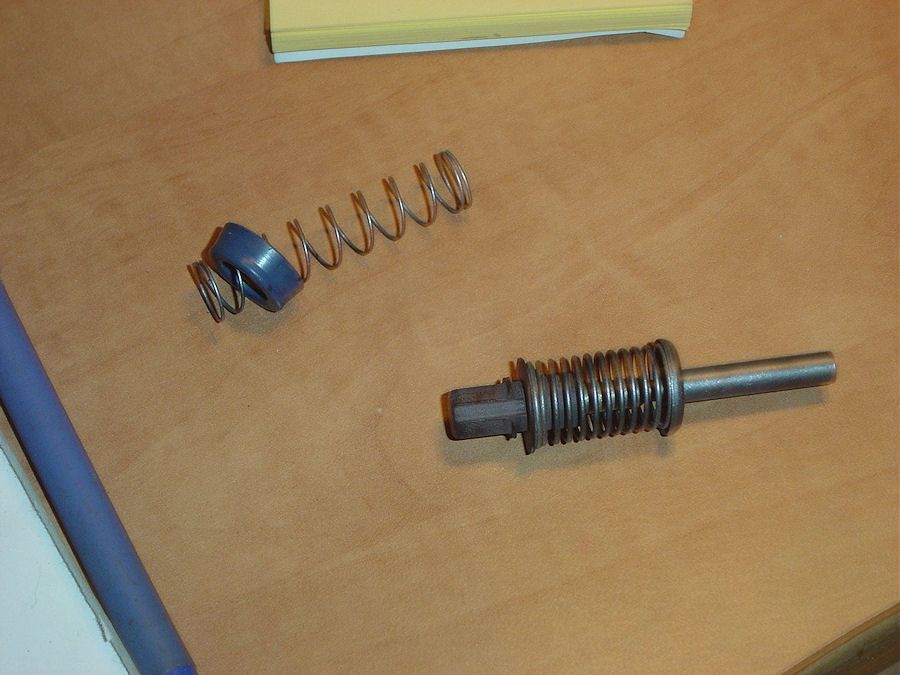
I really don't have enough experience/knowledge to say yes or no. I do know that Cliff Ruggles offers ethanol-resistant, non-rubber (Viton) carb parts. He has published an excellent book on the Q-Jet so must have observed something occurring in recent years.
Last edited by Paul L; Apr 10, 2009 at 10:29 AM.

Burning Brakes


Joined: Jul 2008
Posts: 923
Likes: 37
From: Green Bay Wisconsin
Hello All,
Ethanol has both good and bad qualities, I will list a few.
1). Ethanol actually cleans the fuel system and will sometime loosen old deposits and the old deposits will plug up fuel filters.
2). With 10% ethanol you will see a decrease in your mpg, in other words you get worse gas mileage.
3). Ethanol attracts water and that's bad. When storing a car for the winter add the correct amount of fuel stabilizer (I like Stabil) and then fill the tank to the top. Drive a few miles to get the stabil circulated into the fuel system (carb) and then park the car.
Todays fuel is only good for 60 days. To eliminate trouble run your small engines (lawn mowers) out of fuel before storage. When dealing with cars that sit for months with old fuel then you should always use fuel stabilizers.
Hope this helps and Happy Easter
Douglas in Green Bay
Ethanol has both good and bad qualities, I will list a few.
1). Ethanol actually cleans the fuel system and will sometime loosen old deposits and the old deposits will plug up fuel filters.
2). With 10% ethanol you will see a decrease in your mpg, in other words you get worse gas mileage.
3). Ethanol attracts water and that's bad. When storing a car for the winter add the correct amount of fuel stabilizer (I like Stabil) and then fill the tank to the top. Drive a few miles to get the stabil circulated into the fuel system (carb) and then park the car.
Todays fuel is only good for 60 days. To eliminate trouble run your small engines (lawn mowers) out of fuel before storage. When dealing with cars that sit for months with old fuel then you should always use fuel stabilizers.
Hope this helps and Happy Easter
Douglas in Green Bay
Team Owner
Joined: Aug 1999
Posts: 30,995
Likes: 99
From: Ontario
KB,
Interesting observations. We in Canada have very cold temps in winter and I routinely use "gas-line antifreeze", essentially alcohol. In the days of carburetors this was methanol (wood alcohol). As fuel injection took over this changed to isopropyl (rubbing alcohol). One could conclude that methanol is harmful in some way to the various seals in FI. I can't recall ethanol (drinking alcohol) ever being used but that perhaps related to the possibility of people consuming it. Nonetheless there must be some chemistry at play in fuel systems.
Interesting observations. We in Canada have very cold temps in winter and I routinely use "gas-line antifreeze", essentially alcohol. In the days of carburetors this was methanol (wood alcohol). As fuel injection took over this changed to isopropyl (rubbing alcohol). One could conclude that methanol is harmful in some way to the various seals in FI. I can't recall ethanol (drinking alcohol) ever being used but that perhaps related to the possibility of people consuming it. Nonetheless there must be some chemistry at play in fuel systems.
Corvette Stories
The Best of Corvette for Corvette Enthusiasts

10 Reasons the C6 Z06 is Still A Performance Benchmark After 20 Years
Joe Kucinski
How Much Horsepower Every Corvette Engine "LOST" in 1972
Joe Kucinski
Top 10 DOs and DON'Ts for Protecting Your Convertible Top!
Michael S. Palmer
Top 10 Most Explosive Corvettes Ever Made: Power-to-Weight Ratio Ranked!
Joe Kucinski
150 hp to 1,250 hp: Every Corvette Generation Compared by the Specs That Matter
Joe Kucinski
8 Coolest Corvette Pace Cars (and Replicas) of All Time
Verdad Gallardo
Top 10 Corvette Engines RANKED by Peak Torque (70+ Years of Muscle!)
Joe Kucinski
Corvette ZR1X Will Be Pacing the Indy 500, And Could Probably Race, Too!
Verdad Gallardo
Top 10 Corvettes Coming to Mecum Indy 2026!
Brett Foote
Instructor
Joined: Apr 2004
Posts: 201
Likes: 1
From: Taunton Ma
I found this article last year around this time Interesting http://www.projo.com/projocars/conte...6.22799b4.html

Race Director

Joined: Jul 2001
Posts: 15,892
Likes: 42
How come I've been using ethanol fuels since 1996 in every toy I own and have never had a problem, nor has anyone I know?
How come it's always a friend of a friend that knows somebody that heard it's 'bad' from some other guy?
I'd be interested in learning about this magic additive that makes 10% of the fuel in my tank disappear.
How come it's always a friend of a friend that knows somebody that heard it's 'bad' from some other guy?
I'd be interested in learning about this magic additive that makes 10% of the fuel in my tank disappear.
Burning Brakes
Joined: Mar 2008
Posts: 809
Likes: 8
From: brewster NY
Jet fuel doesn't contain ethanol wonder why not.
Ethanol turns rubber hard and brittle ,your cork float
in your gas tank will disentergrate, your fuel will collect
moisture and rust your tank and lines, Hot summer
days you might experience vapor lock. What else.
If you are going to use Stabil use the Blue For Marine.
Ethanol turns rubber hard and brittle ,your cork float
in your gas tank will disentergrate, your fuel will collect
moisture and rust your tank and lines, Hot summer
days you might experience vapor lock. What else.
If you are going to use Stabil use the Blue For Marine.