




Winterize - How To Guide?

Thread Starter
Racer


Joined: Jun 2010
Posts: 306
Likes: 1
From: Chatham Ontario
 Winterize - How To Guide?
Anyone can point me in the right direction on a how to giude on winterizing your car? I'd like to start looking at what i need to get and do in the upcoming months.. Much appreciated..

Team Owner


Joined: Jul 2008
Posts: 23,419
Likes: 22
From: In limbo
St. Jude Donor '13-'15, '17 thru '22
I follow this procedure:
1. Fill the tank with premium gasoline.
2. Park car in garage.
3. Put cover on car.
4. Close garage door.
It's worked for me for decades
1. Fill the tank with premium gasoline.
2. Park car in garage.
3. Put cover on car.
4. Close garage door.
It's worked for me for decades

Race Director

Joined: Jul 2001
Posts: 15,892
Likes: 42
Is the weather that cold already? Are you going to be like Toronto and call out the army if it snows? 
Most guides for winterizing a car sound like they're preparing it for Armageddon or nuclear holocaust and some even suggest things that do more harm than good (putting the car up on blocks, running the engine every few weeks).
PKguitar has got it right. In addition I change the oil and filter, wash the car and hook up a battery tender (not charger).
That's it.
Most guides for winterizing a car sound like they're preparing it for Armageddon or nuclear holocaust and some even suggest things that do more harm than good (putting the car up on blocks, running the engine every few weeks).
PKguitar has got it right. In addition I change the oil and filter, wash the car and hook up a battery tender (not charger).
That's it.

Burning Brakes


Joined: Jan 2006
Posts: 1,223
Likes: 174
From: Fort Wayne IN
1. Change oil, top off fluids
2. Peel out of garage, go screaming down the street
3. Come back home, fix whatever broke

Melting Slicks

Joined: Apr 2006
Posts: 2,084
Likes: 14
From: Airdrie Alberta
Same here, and then in the spring:
1. Change oil, top off fluids
2. Peel out of garage, go screaming down the street
3. Come back home, fix whatever broke
1. Change oil, top off fluids
2. Peel out of garage, go screaming down the street
3. Come back home, fix whatever broke


Melting Slicks
Joined: Aug 2004
Posts: 2,704
Likes: 6
From: Toronto

Race Director
Joined: Dec 2006
Posts: 13,172
Likes: 99
From: West Chester OH
2020 C6 of the Year Finalist - Unmodified
Cruise-In IX Veteran
St. Jude Donor '08 thru '13

Optional:
Put some Stabil in the gas.
If you feel real energenic you can put some dryer sheets under the hood to keep potential mouses out.
Corvette Stories
The Best of Corvette for Corvette Enthusiasts

8 Coolest Corvette Pace Cars (and Replicas) of All Time
Verdad Gallardo
Top 10 Corvette Engines RANKED by Peak Torque (70+ Years of Muscle!)
Joe Kucinski
Corvette ZR1X Will Be Pacing the Indy 500, And Could Probably Race, Too!
Verdad Gallardo
Top 10 Corvettes Coming to Mecum Indy 2026!
Brett Foote
Top 10 C9 Corvette MUST-HAVES to Fix These C8 Generation Flaws!
Michael S. Palmer
10 Revolutionary 'Corvette Firsts' Most People Don't Know
Joe Kucinski
5 Reasons to Upgrade to an LS6-Powered Corvette; 5 Reasons to Stay LT2
Michael S. Palmer
2027 Corvette vs The World: Every C8 vs Its Closest Competitor
Joe Kucinski
10 Most Common Corvette Problems of the Last 20 Years!
Joe Kucinski
Team Owner
Joined: Aug 1999
Posts: 30,995
Likes: 98
From: Ontario
-an oil change
-a full tank of gas
-fuel stabilizer (Canadian Tire)
-use fogging-in oil down the carb (Canadian Tire), shut down engine when it chokes
-bring battery into basement and use a battery tender (Princess Auto)
-do NOT start the car during the winter
-cover the car with a breathable fabric
-relax until April
Last edited by Paul L; Sep 5, 2010 at 05:56 PM.
Race Director
Joined: Jul 2001
Posts: 15,892
Likes: 42
Team Owner
Joined: Aug 1999
Posts: 30,995
Likes: 98
From: Ontario
Plywood?? I just don't know. It might be related to the old "never store a battery on a concrete floor" stories. We really don't want to get into that.

Race Director
Joined: Jul 2001
Posts: 15,892
Likes: 42
That photo brings up a good point- moisture and/or condensation. The biggest issue with corrosion is frequent changes in temperature and humidity in the storage area. Any time the ambient conditions go above and below the dew point, condensation will form. This is not a problem if the garage is kept shut and heated all winter or conversely the garage is open and unheated (as appears to be the case in the photo), but many people inadvertently make the problem worse by 'sealing' the car under a cover and trapping moisture inside.
If a 'bag' is used, desiccants should be kept inside to absorb any residual moisture.
If a 'bag' is used, desiccants should be kept inside to absorb any residual moisture.
Melting Slicks
Joined: Aug 2004
Posts: 2,220
Likes: 6
From: www.Z16.org North/West Pennsylvania
That photo brings up a good point- moisture and/or condensation. The biggest issue with corrosion is frequent changes in temperature and humidity in the storage area. Any time the ambient conditions go above and below the dew point, condensation will form. This is not a problem if the garage is kept shut and heated all winter or conversely the garage is open and unheated (as appears to be the case in the photo), but many people inadvertently make the problem worse by 'sealing' the car under a cover and trapping moisture inside.
If a 'bag' is used, desiccants should be kept inside to absorb any residual moisture.
If a 'bag' is used, desiccants should be kept inside to absorb any residual moisture.
Thread Starter
Racer
Joined: Jun 2010
Posts: 306
Likes: 1
From: Chatham Ontario
This will be first winter with having a corvette so i just wanted to get my facts straight before winter hits and be prepared to avoid any future problems next spring.. I'd like to thanks everyone on who replied on my thread.
Advanced
Joined: May 2008
Posts: 70
Likes: 1
From: Pensacola FL
Come and spend the winter here in Florida.. bring Vet and drive it like you stole it..LOL....My mom lives in Ohio and has a vet. she just fills the tank.. puts on cover and tends the battery... Its in a garage.. but not heated.. shes had no problems for 7 years now...

Racer
Joined: Dec 2009
Posts: 380
Likes: 0
From: Glendale AZ
You must first remove or stabilize the fuel. Fuel stabilizer is available at just about any parts store.
The tires must either be inflated to ~50PSI or there is a chance they will develop flat spots. You can also place the car on jack stands.
Drain and refill the coolant and make sure you have the proper mixture of antifreeze and coolant before storage.
Purchase dessicant packs to place inside the car to prevent mold and moisture. (these are like those silica packs you find in things you buy sometimes)
Fresh oil and filter of course.
Brakes should be bled to make sure there is no moisture currently in the lines.
There is more but it just depends on how far you want to go. Cheers!
The tires must either be inflated to ~50PSI or there is a chance they will develop flat spots. You can also place the car on jack stands.
Drain and refill the coolant and make sure you have the proper mixture of antifreeze and coolant before storage.
Purchase dessicant packs to place inside the car to prevent mold and moisture. (these are like those silica packs you find in things you buy sometimes)
Fresh oil and filter of course.
Brakes should be bled to make sure there is no moisture currently in the lines.
There is more but it just depends on how far you want to go. Cheers!
Safety Car


Joined: Sep 1999
Posts: 4,930
Likes: 11
From: AnyTown NJ
St. Jude Donor '08-'09-'10-'11-'12-'13-'14-'15
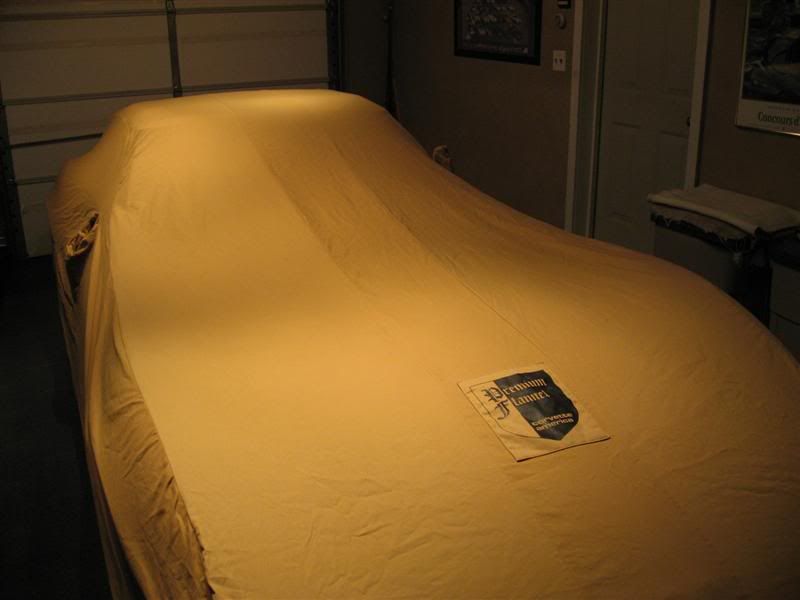
I follow the other good advise give here...oil change w/filter, top off the gas and cover with my flannel car cover.
Edit; 2 other points...I always disconnect my battery (battery cutoff) every time I park the car and of course it stays off all winter. I put a battery tender on once a month just to bring it up to full charge. With a good battery it only takes a few minutes and gives me a reason to check on the car. I don't like the idea of having the tender connected full time and it's been my experience it's not needed.
I never use a gas stabilizer...modern gas will not degrade over the winter. As long as you fill the tank with fresh gas you will not have a problem. IMHO stabilizer is just a waste of money. If I were storing it for a year or more then I would use it.
Last edited by gq82; Sep 7, 2010 at 08:30 PM.