









battery problem

Thread Starter
Racer

Joined: Nov 2007
Posts: 302
Likes: 0
 battery problem
Hi? my 82 corvette is draining the battery i don't know why. i dont drive the car it parked since am working on slowly but i do start it and let it runs for like five minute twice in a week. but when ever i go to start it , i will have to jump the battery. the battery is good.

CF Community Team


Joined: Oct 2004
Posts: 19,363
Likes: 5,243
From: Cape Cod, Mass.
2025 C6 of the Year Finalist - Unmodified
2025 C8 Z06/7/E-Ray of the Year Finalist - Unmodified
2023 C3 of the Year Finalist - Unmodified
2021 C8 of the Year Finalist Unmodified
2020 Corvette of the Year Finalist (performance mods)
2019 C1 of Year Winner (performance mods)
2017 Corvette of the Year Finalist
2016 C2 of Year
2015 C3 of Year Finalist
If you are only running the car briefly in the garage and not driving it you are "short charging" it. The only way to adequately charge the battery is to drive it for an extended period to allow the alternator sufficient time to charge the battery. I would start with a new battery and either drive it or use a battery tender to maintain the battery.
Drifting

Joined: May 2006
Posts: 1,480
Likes: 2
From: Circleville Ohio
Vader Vette
Hi? my 82 corvette is draining the battery i don't know why. i dont drive the car it parked since am working on slowly but i do start it and let it runs for like five minute twice in a week. but when ever i go to start it , i will have to jump the battery. the battery is good.
Thread Starter
Racer
Joined: Nov 2007
Posts: 302
Likes: 0

Burning Brakes

Joined: Dec 2007
Posts: 889
Likes: 0
Thread Starter
Racer
Joined: Nov 2007
Posts: 302
Likes: 0
it says good and they charged the battery. the battery will only last for two days from the day i hook the terminals to the battery. . in those two days i can start the car and after the two days, i can't start the car without a jump.
Corvette Stories
The Best of Corvette for Corvette Enthusiasts

How Much Horsepower Every Corvette Engine "LOST" in 1972
Joe Kucinski
Top 10 DOs and DON'Ts for Protecting Your Convertible Top!
Michael S. Palmer
Top 10 Most Explosive Corvettes Ever Made: Power-to-Weight Ratio Ranked!
Joe Kucinski
150 hp to 1,250 hp: Every Corvette Generation Compared by the Specs That Matter
Joe Kucinski
8 Coolest Corvette Pace Cars (and Replicas) of All Time
Verdad Gallardo
Top 10 Corvette Engines RANKED by Peak Torque (70+ Years of Muscle!)
Joe Kucinski
Corvette ZR1X Will Be Pacing the Indy 500, And Could Probably Race, Too!
Verdad Gallardo
Top 10 Corvettes Coming to Mecum Indy 2026!
Brett Foote
Top 10 C9 Corvette MUST-HAVES to Fix These C8 Generation Flaws!
Michael S. Palmer
Race Director


Joined: Mar 2006
Posts: 14,112
Likes: 28
From: Florida
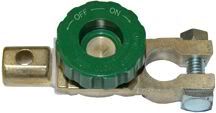
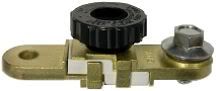
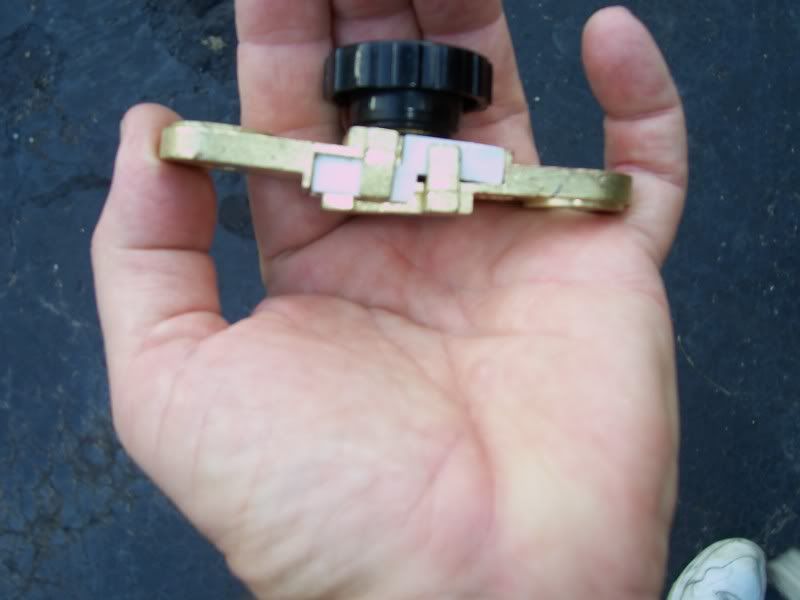
If you're not driving it, then just disconnect the battery when not in use or get one of these depending on the battery. Saves a lot of headaches and time.
You may want to test your charging system. If using a voltmeter should get around 14.7v at startup and 14v after a little while.
If using an ammeter, around 55amps at starup and down to 12amps or so when charged.
You may want to test your charging system. If using a voltmeter should get around 14.7v at startup and 14v after a little while.
If using an ammeter, around 55amps at starup and down to 12amps or so when charged.

Pro

Joined: Oct 2007
Posts: 549
Likes: 5
From: punta gorda florida
batt
there is a liquid you can put in a battery that keeps them from sulphating while in storage or used very little made by a company from australia called INOX more info if any one Is interesdted PM me
Drifting
Joined: May 2006
Posts: 1,480
Likes: 2
From: Circleville Ohio
Vader Vette
Hi? my 82 corvette is draining the battery i don't know why. i dont drive the car it parked since am working on slowly but i do start it and let it runs for like five minute twice in a week. but when ever i go to start it , i will have to jump the battery. the battery is good.

Cruising
Joined: May 2011
Posts: 12
Likes: 0
If you're not driving it, then just disconnect the battery when not in use or get one of these depending on the battery. Saves a lot of headaches and time.
You may want to test your charging system. If using a voltmeter should get around 14.7v at startup and 14v after a little while.
If using an ammeter, around 55amps at starup and down to 12amps or so when charged.
You may want to test your charging system. If using a voltmeter should get around 14.7v at startup and 14v after a little while.
If using an ammeter, around 55amps at starup and down to 12amps or so when charged.
Race Director
Joined: Mar 2006
Posts: 14,112
Likes: 28
From: Florida
There are a few junk imitiaions people have trouble with, but I had mine for at least 15 years and work flawlessly.
http://www.gamainc.com/bd.shtml
http://www.gamainc.com/bd.shtml

Race Director
Joined: May 2006
Posts: 16,528
Likes: 53
From: Dayton, Ohio
There are a few junk imitiaions people have trouble with, but I had mine for at least 15 years and work flawlessly.
http://www.gamainc.com/bd.shtml
http://www.gamainc.com/bd.shtml
edit- Like this pic
Last edited by ...Roger...; Jul 8, 2011 at 08:05 PM.


Le Mans Master

Joined: Oct 2004
Posts: 6,314
Likes: 508
From: South-central Missouri
There's a lot of manufacture's hype and misinformation and anecdotal BS about lead acid batteries, and there need not be. It ain't rocket science, and the properties of Pb and Zn in the presence of H2SO4 is well known and characterized (as it applies to automotive applications).
I used to maintain banks of lead acid batteries at remote mountain top radio and microwave sites for many years. As result of lessons learned (and some college chemistry classes) , I have ZERO problems maintaining lead acid batteries well past the usual 5 year warranty. ) I'll get to that in a minute.)
If a good (and proper) car battery is draining "too fast" - like two weeks and the car has to be jump started - excessive drain is usually the culprit. Cars with clocks and computers will typically draw 25 mA or less. (Some GM manuals say 50 mA or less, but I've never seen one that was that high that didn't have something out of whack, FWIW) If you don't have a radio or other stuff requiring a "hot" lead when the car is off, then you should read Zero mA after a second or two - time enough to charge up the various electronics (capacitors) to their quiescent points. More than 50 mA and it's time to pull out the wiring diagram and start pulling fuses, one at a time until the drain is gone. Then start breaking that circuit down.
Back to battery maintenance...
A lead-acid battery will develop lead sulfate (PbSO4film on the lead plates, which acts like an insulator. To prevent this, there needs to be a constant trickle charging current ("float current"), unless the car is a DD (where normal daily driving will keep the plates relatively clean). A lead acid battery at rest and not being charged can deteriorate at rate - that depends on the temperature, etc, but about 4% of capacity per week!
In short: A little trickle charger is all that is needed to keep the battery at full capacity for long term use. (I recommend one of the smart chargers; the Battery Tender series is excellent, for example).
Nothing like running a (normal car application) battery down flat to knock off a year or two of service, EACH time it is done. I'm just sayin'
Bottom line: If as they say, your battery is OK after charging and load testing, then I'm going to guess you have a drain somewhere. One such thing that drove me nuts for a while was the light switch in for the glove box between the seats in the back of my wife's C3 vert. The light would not go out, but in daylight I couldn't see the glow around the edge of the lid. Just that one leeetle bulb killed the battery in as little as a couple weeks.
P.
I used to maintain banks of lead acid batteries at remote mountain top radio and microwave sites for many years. As result of lessons learned (and some college chemistry classes) , I have ZERO problems maintaining lead acid batteries well past the usual 5 year warranty. ) I'll get to that in a minute.)
If a good (and proper) car battery is draining "too fast" - like two weeks and the car has to be jump started - excessive drain is usually the culprit. Cars with clocks and computers will typically draw 25 mA or less. (Some GM manuals say 50 mA or less, but I've never seen one that was that high that didn't have something out of whack, FWIW) If you don't have a radio or other stuff requiring a "hot" lead when the car is off, then you should read Zero mA after a second or two - time enough to charge up the various electronics (capacitors) to their quiescent points. More than 50 mA and it's time to pull out the wiring diagram and start pulling fuses, one at a time until the drain is gone. Then start breaking that circuit down.
Back to battery maintenance...
A lead-acid battery will develop lead sulfate (PbSO4film on the lead plates, which acts like an insulator. To prevent this, there needs to be a constant trickle charging current ("float current"), unless the car is a DD (where normal daily driving will keep the plates relatively clean). A lead acid battery at rest and not being charged can deteriorate at rate - that depends on the temperature, etc, but about 4% of capacity per week!
In short: A little trickle charger is all that is needed to keep the battery at full capacity for long term use. (I recommend one of the smart chargers; the Battery Tender series is excellent, for example).
Nothing like running a (normal car application) battery down flat to knock off a year or two of service, EACH time it is done. I'm just sayin'
Bottom line: If as they say, your battery is OK after charging and load testing, then I'm going to guess you have a drain somewhere. One such thing that drove me nuts for a while was the light switch in for the glove box between the seats in the back of my wife's C3 vert. The light would not go out, but in daylight I couldn't see the glow around the edge of the lid. Just that one leeetle bulb killed the battery in as little as a couple weeks.
- Battery = good
- Alternator charging at about 14.5+ volts (cold) when engine running
- no current drains
- float charger between outings...U B a happy camper!
P.
