









New Engine Start Up / Coolant Question

Thread Starter
Melting Slicks


Joined: Sep 2011
Posts: 3,372
Likes: 215
From: Peoria Arizona
 New Engine Start Up / Coolant Question
In the past I've always put my 50/50 antifreeze mix in before my startups, but I had a friend of mine bring up a valid point and was wondering if anyone had thoughts on this. So you know, the guy that passed along this advice has professionally built LOTS of small and big block chevy motors over the years so I trust his advice.
His method and thinking is this - he only adds water (no coolant) before his initial break in runs. Since the break in runs are short, he has not run into any overheating issues. He runs his motors at about 1700 rpm for 15 minutes. Does a shut down and complete cool down then repeats. I should mention he has NEVER lost a cam in any motor he has built for himself or others.
The reason is that if you have any sort of a internal coolant leak (intake etc) you only end up with water in the oil and save your bearings. Once the break in runs are done, you check everything and if all looks good, drain the water and add your normal 50/50 mix.
Sounds like good thinking to me... thoughts anyone?
Thanks in advance for any advice,
Adam
His method and thinking is this - he only adds water (no coolant) before his initial break in runs. Since the break in runs are short, he has not run into any overheating issues. He runs his motors at about 1700 rpm for 15 minutes. Does a shut down and complete cool down then repeats. I should mention he has NEVER lost a cam in any motor he has built for himself or others.
The reason is that if you have any sort of a internal coolant leak (intake etc) you only end up with water in the oil and save your bearings. Once the break in runs are done, you check everything and if all looks good, drain the water and add your normal 50/50 mix.
Sounds like good thinking to me... thoughts anyone?
Thanks in advance for any advice,
Adam
Thread Starter
Melting Slicks
Joined: Sep 2011
Posts: 3,372
Likes: 215
From: Peoria Arizona
 Seems like a good idea. Did you have any issues with overheating when you did your breakin run?
Thanks Rogman
Adam

Drifting


Joined: Aug 2003
Posts: 1,868
Likes: 13
From: Mascoutah IL
Rogman
Le Mans Master


Joined: May 2002
Posts: 5,086
Likes: 786
From: Lebanon Township New Jersey
All water first can't hurt. Drain and refill with water/antifreeze. Keep in mind that all water cools more efficiently than water/antifreeze so keep the concentration low. I run about 75% water/25% antifreeze.
Also, you didn't ask, but one certain way of filling without trapping air is to remove the thermostat and fill thru there with the car sitting level. The water will reach the tstat level and the top of the radiator at the same time, with no entrapped air.
Also, you didn't ask, but one certain way of filling without trapping air is to remove the thermostat and fill thru there with the car sitting level. The water will reach the tstat level and the top of the radiator at the same time, with no entrapped air.
Drifting
Joined: Aug 2003
Posts: 1,868
Likes: 13
From: Mascoutah IL
All water first can't hurt. Drain and refill with water/antifreeze. Keep in mind that all water cools more efficiently than water/antifreeze so keep the concentration low. I run about 75% water/25% antifreeze.
Also, you didn't ask, but one certain way of filling without trapping air is to remove the thermostat and fill thru there with the car sitting level. The water will reach the tstat level and the top of the radiator at the same time, with no entrapped air.
Also, you didn't ask, but one certain way of filling without trapping air is to remove the thermostat and fill thru there with the car sitting level. The water will reach the tstat level and the top of the radiator at the same time, with no entrapped air.
Rogman
Corvette Stories
The Best of Corvette for Corvette Enthusiasts

Top 10 Most Expensive Corvettes Ever Sold on Bring A Trailer
Brett Foote
10 Things Every Corvette Owner Needs (2026 Edition)
Michael S. Palmer
8 Most "Only Corvette Owners Understand" Quirks and Problems
Pouria Savadkouei
10 Reasons the C6 Z06 is Still A Performance Benchmark After 20 Years
Joe Kucinski
How Much Horsepower Every Corvette Engine "LOST" in 1972
Joe Kucinski
Top 10 DOs and DON'Ts for Protecting Your Convertible Top!
Michael S. Palmer
Top 10 Most Explosive Corvettes Ever Made: Power-to-Weight Ratio Ranked!
Joe Kucinski
150 hp to 1,250 hp: Every Corvette Generation Compared by the Specs That Matter
Joe Kucinski
8 Coolest Corvette Pace Cars (and Replicas) of All Time
Verdad Gallardo


Melting Slicks
Joined: Feb 2006
Posts: 3,428
Likes: 5
From: Japan
Don't know about any of the other vintage race groups but the one I ran with some years ago (VARA) mandated water only in cooling systems. Most of us used Water Wetter, but if the tech guys pulled your cap and saw green you'd be dumping your radiator and refilling with straight water before they would let you out onto the track...Redvetracr may confirm this. The term 'coolant' is actually a misnomer since it doesn't make your engine run any cooler, it just raises the boiling point of the water. Straight water is actually more effective at carrying away heat...

Burning Brakes

Joined: Aug 2006
Posts: 1,058
Likes: 27
From: Eastern North Carolina
Most of the advice I got when I did my built last winter was water only for the break-in, then if everything is tight go to the 50/50 mix. I followed the Cam Manufactors instructions for the break-in, everything went very well......Tim

Burning Brakes

Joined: May 2009
Posts: 1,232
Likes: 6
From: Tucson AZ
St. Jude Donor '12
Don't know about any of the other vintage race groups but the one I ran with some years ago (VARA) mandated water only in cooling systems. Most of us used Water Wetter, but if the tech guys pulled your cap and saw green you'd be dumping your radiator and refilling with straight water before they would let you out onto the track...Redvetracr may confirm this. The term 'coolant' is actually a misnomer since it doesn't make your engine run any cooler, it just raises the boiling point of the water. Straight water is actually more effective at carrying away heat...
Hmm, I thought coolant (antifreeze, ethelyne glycol) lowered the freezing point and pressure in the cooling system provided by the cap's pressure rating raised the boiling point.
Is the reason for running straight water to keep from slicking up the track with coolant? It makes sense, the stuff is slippery and doesn't seem to evaporate.
Thread Starter
Melting Slicks
Joined: Sep 2011
Posts: 3,372
Likes: 215
From: Peoria Arizona
Wow... some excellent (and very different) answers here. That's why I love this forum.
In response to the filling method of using the thermostat housing or upper hose. Did you add the water into the upper hose (I'm guessing from what you said) - if so that must be a slow process with the thermostat being closed?
In the past, I've always added mine into the radiator, and done the front end bounce a few times - this seemed to burp the air out of the block.
Thanks again for all the advice and input guys... awesome stuff.
Adam
In response to the filling method of using the thermostat housing or upper hose. Did you add the water into the upper hose (I'm guessing from what you said) - if so that must be a slow process with the thermostat being closed?
In the past, I've always added mine into the radiator, and done the front end bounce a few times - this seemed to burp the air out of the block.
Thanks again for all the advice and input guys... awesome stuff.
Adam


Drifting
Joined: Aug 2003
Posts: 1,868
Likes: 13
From: Mascoutah IL
Wow... some excellent (and very different) answers here. That's why I love this forum.
In response to the filling method of using the thermostat housing or upper hose. Did you add the water into the upper hose (I'm guessing from what you said) - if so that must be a slow process with the thermostat being closed?
In the past, I've always added mine into the radiator, and done the front end bounce a few times - this seemed to burp the air out of the block.
Thanks again for all the advice and input guys... awesome stuff.
Adam
In response to the filling method of using the thermostat housing or upper hose. Did you add the water into the upper hose (I'm guessing from what you said) - if so that must be a slow process with the thermostat being closed?
In the past, I've always added mine into the radiator, and done the front end bounce a few times - this seemed to burp the air out of the block.
Thanks again for all the advice and input guys... awesome stuff.
Adam
Rogman

Race Director

Joined: Jul 2001
Posts: 15,892
Likes: 42
Hmm, I thought coolant (antifreeze, ethelyne glycol) lowered the freezing point and pressure in the cooling system provided by the cap's pressure rating raised the boiling point.
Is the reason for running straight water to keep from slicking up the track with coolant? It makes sense, the stuff is slippery and doesn't seem to evaporate.
Is the reason for running straight water to keep from slicking up the track with coolant? It makes sense, the stuff is slippery and doesn't seem to evaporate.

Le Mans Master
Joined: May 2002
Posts: 5,086
Likes: 786
From: Lebanon Township New Jersey
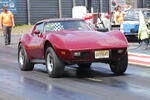
I bracket race my 77 in hot summertime conditions, run after run (if I'm lucky) and I have no overheating problems.