






Quadrajet ticking like a clock............

Thread Starter
Advanced

Joined: Apr 2012
Posts: 80
Likes: 0
From: Webster Ky.
 Quadrajet ticking like a clock............
Brand new C3 owner here (last weekend) 1981, 350, automatic, Quadrajet carb. I noticied after I got home that when you turn the key on there was a clicking noise under the hood that I traced to the carb. A plug on the front passenger side of the carb (2 prong plug) unplug it and the ticking stops. The car is pretty much original with 99,000 miles. It ran fine on the 90 mile trip home. Any help is appreciated!!!
Last edited by donjack; Apr 30, 2012 at 06:10 PM.

Race Director


Joined: Jul 2001
Posts: 15,892
Likes: 42
Make sure, in every post, to give us as little detail as possible. Never, ever mention what year, engine, transmission, or modifications you might have as somebody could accidentally give a helpful answer.
By the way, I chose your post for points towards my 2012 'Mr. Nasty' award. Thanks!
By the way, I chose your post for points towards my 2012 'Mr. Nasty' award. Thanks!

Melting Slicks

Joined: Aug 2005
Posts: 2,359
Likes: 15
From: Confusion
make sure, in every post, to give us as little detail as possible. Never, ever mention what year, engine, transmission, or modifications you might have as somebody could accidentally give a helpful answer.
By the way, i chose your post for points towards my 2012 'mr. Nasty' award. Thanks! :d
By the way, i chose your post for points towards my 2012 'mr. Nasty' award. Thanks! :d

Team Owner


Joined: May 2001
Posts: 87,376
Likes: 1,593
From: Western NY
Brand new C3 owner here (last weekend) I noticied after I got home that when you turn the key on there was a clicking noise under the hood that I traced to the carb. A plug on the front passenger side of the carb (2 prong plug) unplug it and the ticking stops. The car is pretty much original with 99,000 miles. It ran fine on the 90 mile trip home. Any help is appreciated!!!
Step 1....Put the plug back in place! The car will not run properly without the carb in a "closed loop" operation.
Race Director
Joined: Jul 2001
Posts: 15,892
Likes: 42
I'll presume it's a stock '81 qjet carb which I think has an electric choke. If the ticking was during warm up, it might be normal, but I'll let the people that know something about '81 qjets give a more knowledgeable answer.
Opps- already done, and I leaned something.
Opps- already done, and I leaned something.
Thread Starter
Advanced
Joined: Apr 2012
Posts: 80
Likes: 0
From: Webster Ky.
Thank you for the info, I pluged it back in after determining that is where the noise was comming from, will check the heat riser but just to be clear this should not be doing this anytime the key is on, correct?
Team Owner
Joined: May 2001
Posts: 87,376
Likes: 1,593
From: Western NY
As soon as you key the ignition, you're telling the computer that you intend to start the car, which in turn, tells the O2 sensor to prepare to monitor the air/fuel mixture, therefore causing the solenoid on the carb to "pulse" the metering rods, controlling the mixture.
The carb needs to be "plugged in" and you need to hear the solenoid pulsing. This is how a "feedback" Quadra-Jet is designed to operate.
Corvette Stories
The Best of Corvette for Corvette Enthusiasts

Top 10 Most Expensive Corvettes Ever Sold on Bring A Trailer
Brett Foote
10 Things Every Corvette Owner Needs (2026 Edition)
Michael S. Palmer
8 Most "Only Corvette Owners Understand" Quirks and Problems
Pouria Savadkouei
10 Reasons the C6 Z06 is Still A Performance Benchmark After 20 Years
Joe Kucinski
How Much Horsepower Every Corvette Engine "LOST" in 1972
Joe Kucinski
Top 10 DOs and DON'Ts for Protecting Your Convertible Top!
Michael S. Palmer
Top 10 Most Explosive Corvettes Ever Made: Power-to-Weight Ratio Ranked!
Joe Kucinski
150 hp to 1,250 hp: Every Corvette Generation Compared by the Specs That Matter
Joe Kucinski
8 Coolest Corvette Pace Cars (and Replicas) of All Time
Verdad Gallardo
Le Mans Master


Joined: Oct 2006
Posts: 7,123
Likes: 433
From: Gladstone MO
C3 of Year Finalist (appearance mods) 2019
If you're planning on working on your Vette, get a Genuine GM Service Manual for that specific year. Don't try and fool around with the aftermarket ones- 90+% of the time, they're incomplete in respect to diagnostics. They do have some good info, but in 1981, the CCC system was a mystery. Even some of the guys that were working on them at GM took some time to figure it all out. And they had GM's Tech info.

Le Mans Master
Joined: Feb 2012
Posts: 6,644
Likes: 479
From: OK
Make sure, in every post, to give us as little detail as possible. Never, ever mention what year, engine, transmission, or modifications you might have as somebody could accidentally give a helpful answer.
By the way, I chose your post for points towards my 2012 'Mr. Nasty' award. Thanks!
By the way, I chose your post for points towards my 2012 'Mr. Nasty' award. Thanks!

Safety Car


Joined: Jul 2005
Posts: 3,697
Likes: 833
From: WI
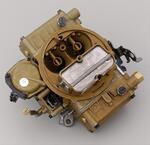
The Mixture Control Solonoid pulses 10x per second. It meters your fuel to produce the most efficient air/fuel ratio when idling and as you drive. Therefore, it will operate cleaner, not rich or lean. It basically does what a fuel injection system does, but it's electromechanical in the form of a carburetor, not an injector or injectors. A good running 81 will just sit and idle like a fuel injected car will. The good news is that the computer parts have come down in cost if and when you need any.
If you are into doing your mechanical work yourself and like to know more about your car, THIS is the manual to get to know all there is about your carb:
http://www.ebay.com/itm/1981-88-GM-C...22867e&vxp=mtr
And, this would be the other one dealing with the computer system itself:
http://www.ebay.com/itm/81-82-83-84-...53ef24&vxp=mtr
If you are into doing your mechanical work yourself and like to know more about your car, THIS is the manual to get to know all there is about your carb:
http://www.ebay.com/itm/1981-88-GM-C...22867e&vxp=mtr
And, this would be the other one dealing with the computer system itself:
http://www.ebay.com/itm/81-82-83-84-...53ef24&vxp=mtr
Last edited by Mark G; Apr 30, 2012 at 10:39 PM.
Le Mans Master
Joined: Mar 2008
Posts: 5,948
Likes: 72
From: Oxford MA-----You just lost the game!!!!
If someone asks for more info than you give in your initial post, don't just go back and edit your first post, post another post with the requested info. or at least indicate that the added info is an edit. Not doing so can make the thread confusing for people trying to read it. Good luck with yout computer controlled carb, I have heard that traditional carb skills won't get you too far with these things, but if you invest in a little book learning, they can be worked with.
Keep the shiny side up!
Scott
Keep the shiny side up!
Scott
Team Owner
Joined: May 2001
Posts: 87,376
Likes: 1,593
From: Western NY
If someone asks for more info than you give in your initial post, don't just go back and edit your first post, post another post with the requested info. or at least indicate that the added info is an edit. Not doing so can make the thread confusing for people trying to read it. Good luck with yout computer controlled carb, I have heard that traditional carb skills won't get you too far with these things, but if you invest in a little book learning, they can be worked with.
Keep the shiny side up!
Scott
Keep the shiny side up!
Scott
Back "in the day", I had two cars with this carb on it. The first was an '85 Firebird that I bought new, and several years later, an '82 Buick LeSabre that I picked up for a "winter car". Over the course of time, I rebuilt both of these carbs, and they weren't all that different than a regular Q-jet, other than the solenoid for the metering rods. It did seem a little strange, however, setting the "duty cycle" of the solenoid by using a dwell meter....
