






secondary Fuse Block
Thread Starter
Racer


Joined: May 2009
Posts: 286
Likes: 11
From: LA CA
 secondary Fuse Block
http://i63.photobucket.com/albums/h1...lueSea13-1.jpg
Do any of You guys uses this to power headlights, fans or accessories. I am thinking of it but I am wondering if necessary or if the clean install is worth.
Just trying to get ideas
Do any of You guys uses this to power headlights, fans or accessories. I am thinking of it but I am wondering if necessary or if the clean install is worth.
Just trying to get ideas
Melting Slicks


Joined: Jul 2001
Posts: 2,609
Likes: 12
From: Massapequa Park NY
I added a Painless wiring 7 circuit auxiliary fuse block to power up the electric headlight operators, electric fans, headlights, amp, etc.
Mounted it on a panel attached to the inner fender where the vacuum tank would normally be located.
Jim
Mounted it on a panel attached to the inner fender where the vacuum tank would normally be located.
Jim
Thread Starter
Racer
Joined: May 2009
Posts: 286
Likes: 11
From: LA CA
How is it working for You.. Any issues
Melting Slicks
Joined: Jul 2001
Posts: 2,609
Likes: 12
From: Massapequa Park NY
Only one problem for me, I used the spare ignition terminal in the fuse block to trigger the relay. One late summer cruise I knocked it off with my foot some how which killed the electric fans & started to overheat. Jumped on the parkway And was able to cool it down enough to stop & figure out what was wrong  Made for a little excitement.
  Now there are a couple of zip ties added.
I also added a 100 amp alternator, junction block that's used on later Vettes, and up-sized some wiring due to the higher loads.
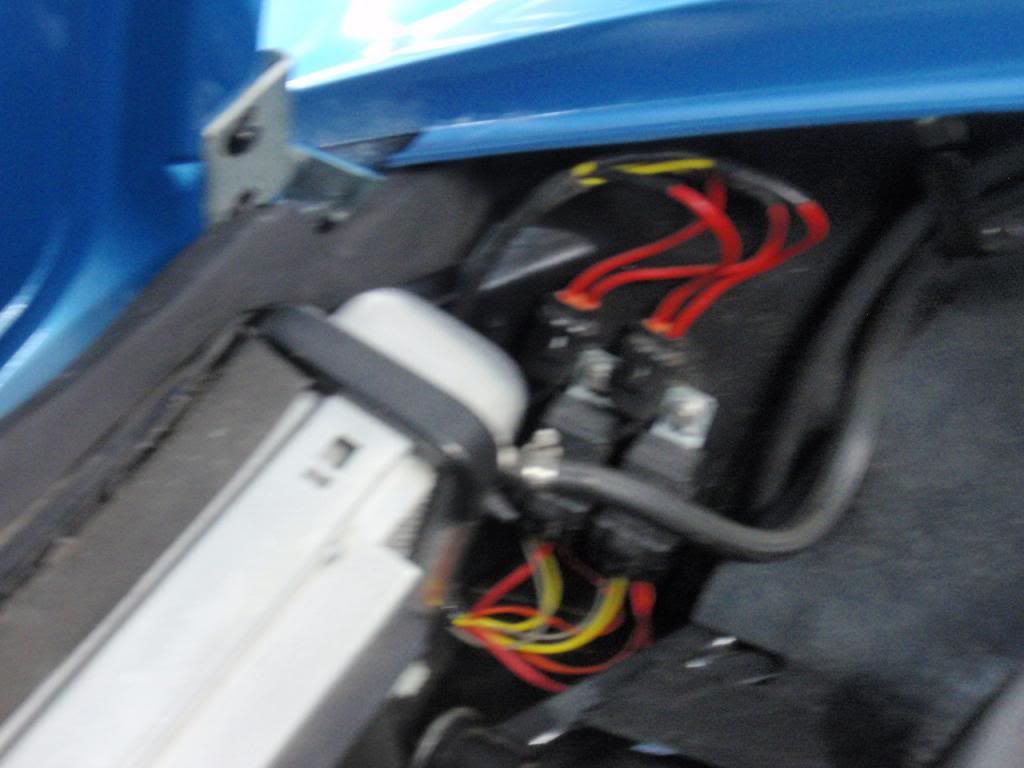
A few pics I have
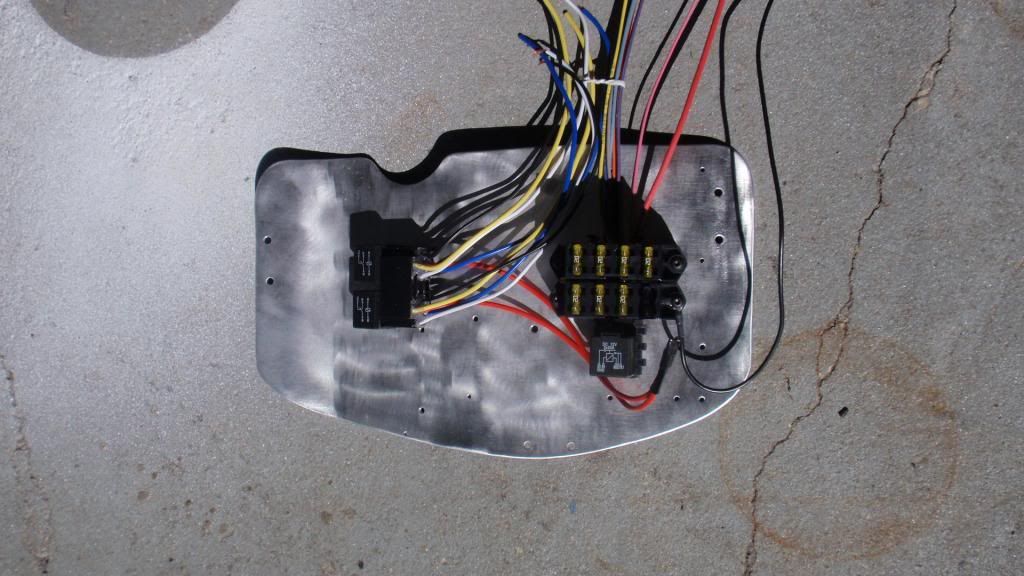
The mounting plate with the block & relays attached
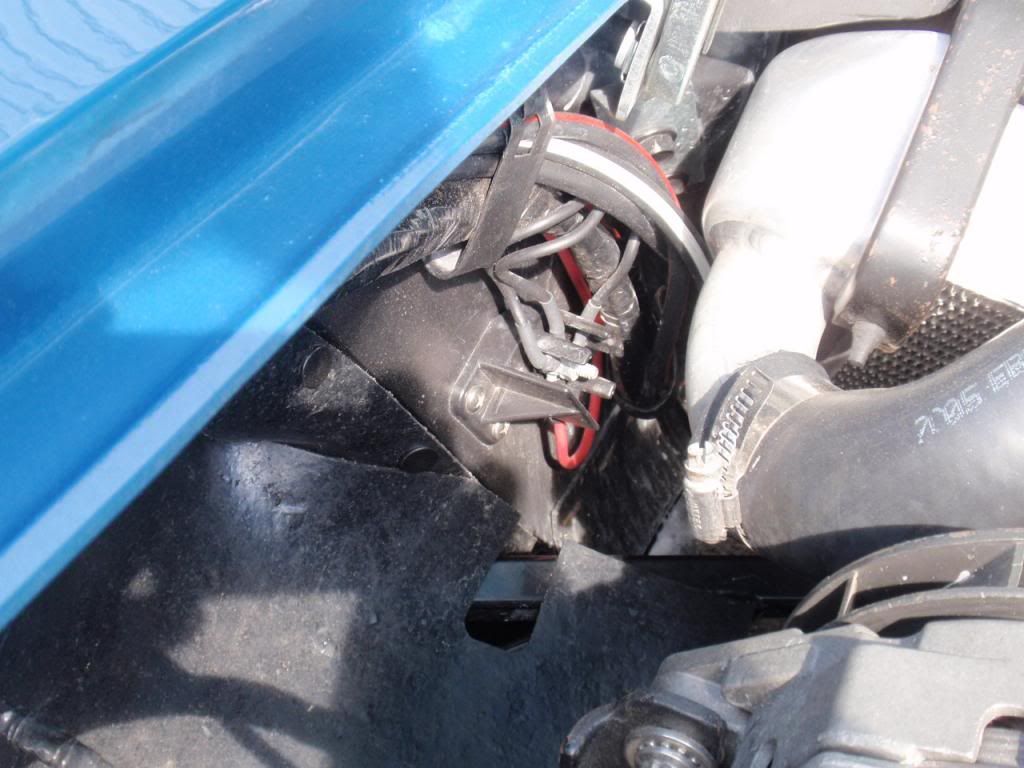
Junction block on D/S inner fender near alternator
Fuse block etc on D/S inner fender where vaccum tank would normally be
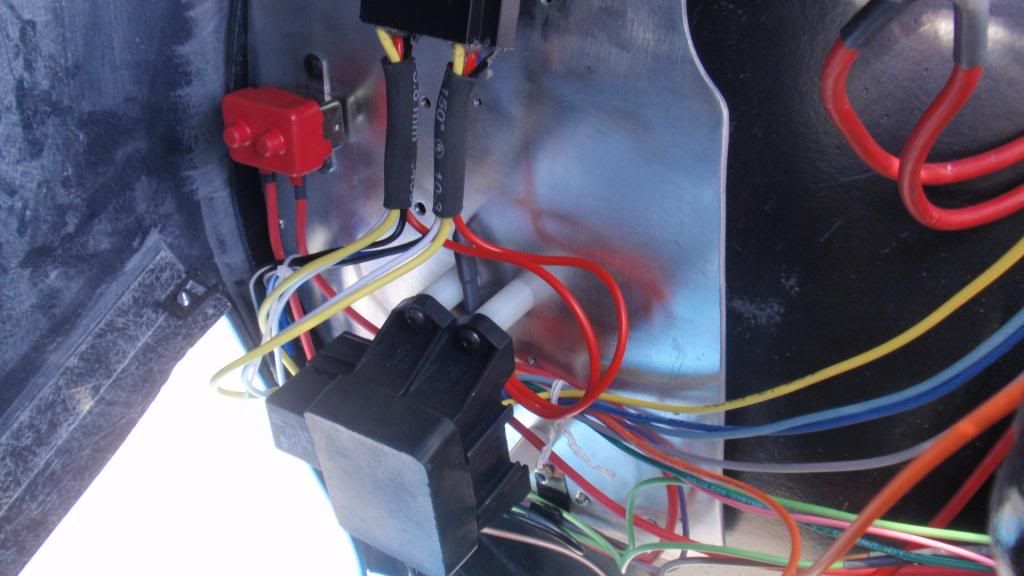
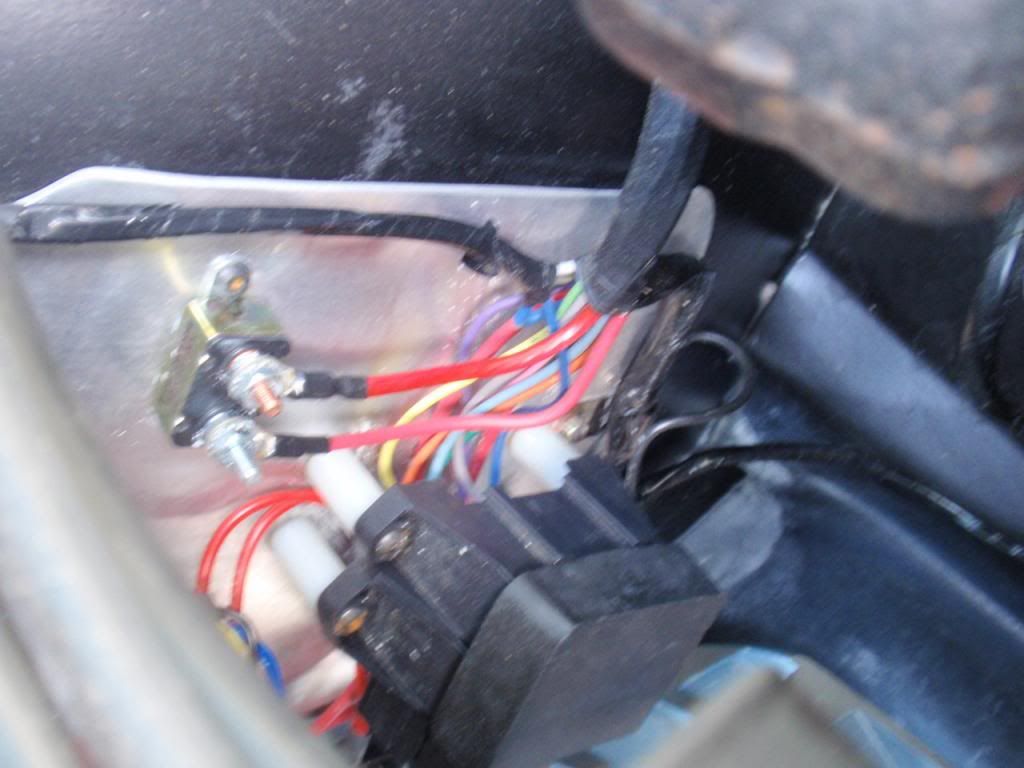
Fan relays & fuses on P/S inner fender
Jim
Made for a little excitement. Now there are a couple of zip ties added.I also added a 100 amp alternator, junction block that's used on later Vettes, and up-sized some wiring due to the higher loads.
A few pics I have
The mounting plate with the block & relays attached

Junction block on D/S inner fender near alternator

Fuse block etc on D/S inner fender where vaccum tank would normally be


Fan relays & fuses on P/S inner fender

Jim

2026 Loser of the Year


Joined: Sep 2013
Posts: 36,600
Likes: 7,046
From: New Or-leens Loo-z-anna
I've "run out" of spare terminals on my OEM fuse block by installing cooling fans/etc. on my '68 project.
For safety's sake.....I'll follow the lead of other members----add another heavy-gage 12V cable from the starter + lug to a new aux. fuse block since I just upgraded to a 130 amp alternator/larger feed & charging wires (the original wires were getting a "little warm").
For safety's sake.....I'll follow the lead of other members----add another heavy-gage 12V cable from the starter + lug to a new aux. fuse block since I just upgraded to a 130 amp alternator/larger feed & charging wires (the original wires were getting a "little warm").
Thread Starter
Racer
Joined: May 2009
Posts: 286
Likes: 11
From: LA CA
Only one problem for me, I used the spare ignition terminal in the fuse block to trigger the relay. One late summer cruise I knocked it off with my foot some how which killed the electric fans & started to overheat. Jumped on the parkway And was able to cool it down enough to stop & figure out what was wrong Made for a little excitement. Now there are a couple of zip ties added.
I also added a 100 amp alternator, junction block that's used on later Vettes, and up-sized some wiring due to the higher loads.
A few pics I have
The mounting plate with the block & relays attached
Junction block on D/S inner fender near alternator
Fuse block etc on D/S inner fender where vaccum tank would normally be
Fan relays & fuses on P/S inner fender
Jim
Made for a little excitement. Now there are a couple of zip ties added.I also added a 100 amp alternator, junction block that's used on later Vettes, and up-sized some wiring due to the higher loads.
A few pics I have
The mounting plate with the block & relays attached
Junction block on D/S inner fender near alternator
Fuse block etc on D/S inner fender where vaccum tank would normally be
Fan relays & fuses on P/S inner fender
Jim
Melting Slicks
Joined: Jul 2001
Posts: 2,609
Likes: 12
From: Massapequa Park NY
http://www.summitracing.com/parts/prf-70207/overview/
Included the circuit breaker that you see. Plan out everything in advance & make sure you have enough circuits. I took the feed for the new panel from the horn relay terminal and the trigger for the isolation relay from the ignition terminal on the main fuse block.
Many ways to accomplish the same end result. I just chose this way.
Jim
Corvette Stories
The Best of Corvette for Corvette Enthusiasts

Top 10 Most Expensive Corvettes Ever Sold on Bring A Trailer
Brett Foote
10 Things Every Corvette Owner Needs (2026 Edition)
Michael S. Palmer
8 Most "Only Corvette Owners Understand" Quirks and Problems
Pouria Savadkouei
10 Reasons the C6 Z06 is Still A Performance Benchmark After 20 Years
Joe Kucinski
How Much Horsepower Every Corvette Engine "LOST" in 1972
Joe Kucinski
Top 10 DOs and DON'Ts for Protecting Your Convertible Top!
Michael S. Palmer
Top 10 Most Explosive Corvettes Ever Made: Power-to-Weight Ratio Ranked!
Joe Kucinski
150 hp to 1,250 hp: Every Corvette Generation Compared by the Specs That Matter
Joe Kucinski
8 Coolest Corvette Pace Cars (and Replicas) of All Time
Verdad Gallardo
Melting Slicks
Joined: Jul 2001
Posts: 2,609
Likes: 12
From: Massapequa Park NY
Only the control circuit side of the fan relays is fed from the aux panel.
The headlight relays are wired so that the control circuit is the from the main fuse panel and the load side of the relay is from the aux fuse panel. Don't remember what the current draw is, but its easy to calculate if you measure the resistance of the headlight bulbs
Jim
Thread Starter
Racer
Joined: May 2009
Posts: 286
Likes: 11
From: LA CA
IIRC the relay & circuit breaker are rated at 30 amp. The load side feed for the fan relay (high current) comes off of the junction block next to the radiator with a separate fuse located at the relay on the P/S fender.
Only the control circuit side of the fan relays is fed from the aux panel.
The headlight relays are wired so that the control circuit is the from the main fuse panel and the load side of the relay is from the aux fuse panel. Don't remember what the current draw is, but its easy to calculate if you measure the resistance of the headlight bulbs
Jim
Only the control circuit side of the fan relays is fed from the aux panel.
The headlight relays are wired so that the control circuit is the from the main fuse panel and the load side of the relay is from the aux fuse panel. Don't remember what the current draw is, but its easy to calculate if you measure the resistance of the headlight bulbs
Jim
Melting Slicks
Joined: Jul 2001
Posts: 2,609
Likes: 12
From: Massapequa Park NY