















rolling bomb
Thread Starter
Burning Brakes


Joined: Sep 2016
Posts: 958
Likes: 449
From: Dutchess county New York
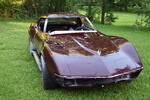
 rolling bomb
I bought my first C3 just after Thanksgiving 2016 and have just now got it running properly and it has passed the required state inspection. This weekend I was able to cruise through rolling countryside with the top down and that old car absolutely booming – I bet it’s been a decade or more since it’s been able to do that. I’ve read recent posts about people who have made long trips in these things after purchase without major incident. Six months later with the benefit of hindsight I am glad I didn’t try to take mine on the highway and here’s a few things to consider. I know this runs long but that’s the way I write, sorry.
This car sat under a tarp for years. Solid car no question but hadn’t been run. It ran and drove decently enough for a 10 mile test ride but I knew it was making more noise than horsepower. As part of the deal it was trailered right to my garage. A little bit of use last December before it snowed revealed a gas leak. Wound up replacing the mechanical pump, filters and lines in the engine bay. Easy enough. Spent the winter fixing a ton of details to get it to pass inspection; headlights, turn signals, backup lights, e-brake, those verdammit vacuum doors and on and on and on.
In the spring I ran it around the neighborhood and it seemed OK if a bit weak. Then it flooded out so badly I almost didn’t make it home. Had to pull the fouled plugs, turn the motor over enough to blow the fuel out and let it air out a couple of days. A helicoil came out with the #3 plug – suboptimal but not a show stopper.
Started from scratch. Setting the timing and dwell proved interesting. Whoever built the motor has the cam in 180 degrees out. Straightforward enough to correct once you figure it out but when you are trying to zero things out with a shop manual and don’t realize that it makes for a lot of wonky no-run backfire though the carb time wasted.
So now the secret’s been revealed and on to the fuel system. BTW – I say this like I’m some kind of pro. Nope. Just a putz trying to figure things out. My brother gave me a really cool ‘70s vintage Sears auto meter, a timing light and an old vacuum gauge.
Did something really radical. Rather than fiddle with all the screws as many like to do I downloaded the correct tuning docs from Holley for the 4160 and started from a factory setting. #1 problem is that the vacuum advance was connected to the full manifold vacuum port, not the timed port. Next is the electric choke hooked to the coil – exactly where Holley tells you NOT to connect it. Third is the adjustment for the choke body – rotated around past its stop – again – exactly as Holley tells you NOT to do. Fast idle cam was dangling loose – spring attached but not connected. Accelerator pump setting cranked down closed – used a feeler gauge and set it to factory.
Cleaned the plugs and she fired right up. Set the primary idle and fiddled with the fast idle screw and after a few test runs in the neighborhood she was running great. Made an appointment for a drive up inspection. Next morning I fired it up and it ran like crap, wouldn’t idle – had to stop and bump up the idle to even drive it (manual transmission). It passed inspection but was puking fuel – you could look right down into secondaries and see it running through. Blowing fuel laden smoke everywhere.
I got it home, pulled the fouled plugs and let it air out overnight. What happened is that I had run about 10 gallons of fresh high octane gas and Sea Foam through it. Good stuff that Sea Foam. Secondary float must have been stuck and that night prior to inspection had come unstuck – and then hit the adjustment the last guy left which, like every other setting on this car, was GIVE ME FUEL FUEL FUEL FUEL FUEL. Now that the float is actually doing what it's supposed to I made sure the level is set per the Holley docs - as I thought I had done before but actually hadn't.
New plugs, even one with a new helicoil and a little fiddling and guess what? Now I can go zooming around and it’s running great. It’s not the original engine but it is a 1969 CE engine and it does have double hump heads on it with the correct casting #s for 1969. Not concerned about #s matching but didn’t want an engine from Mom’s Estate Wagon in there either. Peering through the oil fill it looks absolutely spotless in there. Compression tests consistently @ 215psi per cylinder (didn’t test #3 because of helicoil).
I think the previous owner had someone do a rebuild that included a mild cam and the Edelbrock intake manifold & Holley carb. I’m guessing ‘80s or ‘90’s vintage. Maybe the PO didn’t know about the cam. Whoever messed with the carb clearly had some wrong notions on the topic no matter what they were trying to accomplish. I also would be willing to bet this car has very, very few miles on it post rebuild because it hasn’t been running right. The only really surprising thing is that it ran as well as it did the way it was set up.
So I took a chance on this car and it worked out. I wanted to make this post to say that there’s no substitute for documentation and basic troubleshooting. Also that old cars of this vintage can be damned dangerous. Between leaking fuel lines and the carb setup problems this car was a rolling bomb. Had I tried to drive it 80 miles home from where I bought it who knows what could have happened. Maybe nothing. Probably something not good.
I’ve been riding around with a fire extinguisher. Now I think I can put that in the back and ride around with my wife and enjoy it. Been getting an unbelievable amount of attention with it - fortunately NOT from the local Fire Department !
This car sat under a tarp for years. Solid car no question but hadn’t been run. It ran and drove decently enough for a 10 mile test ride but I knew it was making more noise than horsepower. As part of the deal it was trailered right to my garage. A little bit of use last December before it snowed revealed a gas leak. Wound up replacing the mechanical pump, filters and lines in the engine bay. Easy enough. Spent the winter fixing a ton of details to get it to pass inspection; headlights, turn signals, backup lights, e-brake, those verdammit vacuum doors and on and on and on.
In the spring I ran it around the neighborhood and it seemed OK if a bit weak. Then it flooded out so badly I almost didn’t make it home. Had to pull the fouled plugs, turn the motor over enough to blow the fuel out and let it air out a couple of days. A helicoil came out with the #3 plug – suboptimal but not a show stopper.
Started from scratch. Setting the timing and dwell proved interesting. Whoever built the motor has the cam in 180 degrees out. Straightforward enough to correct once you figure it out but when you are trying to zero things out with a shop manual and don’t realize that it makes for a lot of wonky no-run backfire though the carb time wasted.
So now the secret’s been revealed and on to the fuel system. BTW – I say this like I’m some kind of pro. Nope. Just a putz trying to figure things out. My brother gave me a really cool ‘70s vintage Sears auto meter, a timing light and an old vacuum gauge.
Did something really radical. Rather than fiddle with all the screws as many like to do I downloaded the correct tuning docs from Holley for the 4160 and started from a factory setting. #1 problem is that the vacuum advance was connected to the full manifold vacuum port, not the timed port. Next is the electric choke hooked to the coil – exactly where Holley tells you NOT to connect it. Third is the adjustment for the choke body – rotated around past its stop – again – exactly as Holley tells you NOT to do. Fast idle cam was dangling loose – spring attached but not connected. Accelerator pump setting cranked down closed – used a feeler gauge and set it to factory.
Cleaned the plugs and she fired right up. Set the primary idle and fiddled with the fast idle screw and after a few test runs in the neighborhood she was running great. Made an appointment for a drive up inspection. Next morning I fired it up and it ran like crap, wouldn’t idle – had to stop and bump up the idle to even drive it (manual transmission). It passed inspection but was puking fuel – you could look right down into secondaries and see it running through. Blowing fuel laden smoke everywhere.
I got it home, pulled the fouled plugs and let it air out overnight. What happened is that I had run about 10 gallons of fresh high octane gas and Sea Foam through it. Good stuff that Sea Foam. Secondary float must have been stuck and that night prior to inspection had come unstuck – and then hit the adjustment the last guy left which, like every other setting on this car, was GIVE ME FUEL FUEL FUEL FUEL FUEL. Now that the float is actually doing what it's supposed to I made sure the level is set per the Holley docs - as I thought I had done before but actually hadn't.
New plugs, even one with a new helicoil and a little fiddling and guess what? Now I can go zooming around and it’s running great. It’s not the original engine but it is a 1969 CE engine and it does have double hump heads on it with the correct casting #s for 1969. Not concerned about #s matching but didn’t want an engine from Mom’s Estate Wagon in there either. Peering through the oil fill it looks absolutely spotless in there. Compression tests consistently @ 215psi per cylinder (didn’t test #3 because of helicoil).
I think the previous owner had someone do a rebuild that included a mild cam and the Edelbrock intake manifold & Holley carb. I’m guessing ‘80s or ‘90’s vintage. Maybe the PO didn’t know about the cam. Whoever messed with the carb clearly had some wrong notions on the topic no matter what they were trying to accomplish. I also would be willing to bet this car has very, very few miles on it post rebuild because it hasn’t been running right. The only really surprising thing is that it ran as well as it did the way it was set up.
So I took a chance on this car and it worked out. I wanted to make this post to say that there’s no substitute for documentation and basic troubleshooting. Also that old cars of this vintage can be damned dangerous. Between leaking fuel lines and the carb setup problems this car was a rolling bomb. Had I tried to drive it 80 miles home from where I bought it who knows what could have happened. Maybe nothing. Probably something not good.
I’ve been riding around with a fire extinguisher. Now I think I can put that in the back and ride around with my wife and enjoy it. Been getting an unbelievable amount of attention with it - fortunately NOT from the local Fire Department !
Last edited by pigfarmer; Jun 6, 2017 at 01:26 PM.

Racer


Joined: Feb 2002
Posts: 378
Likes: 19
With GM cars, the timing is set with distrib vacuum can disconnected, then when set it is plugged into manifold vacuum. The Fords are plugged into ported vacuum. At least that's what I've been doing for the last 50 years.

Is my vette stock?? HAHA


Joined: Oct 2015
Posts: 20,241
Likes: 9,386
From: Im not allowed to tell you
2020 C3 of the Year Finalist - Modified
2020 Corvette of the Year Finalist (performance mods)
2019 C3 of Year Winner (performance mods)
2016 C3 of Year Finalist
good story. Welcome aboard. Now that sounded like there was a little Bubba futzing with your carb. Good job resolving your issues. Now to reiterate, where is our pictures????
A great story needs pictures
A great story needs pictures
Thread Starter
Burning Brakes
Joined: Sep 2016
Posts: 958
Likes: 449
From: Dutchess county New York
pictures
This is how I found the carb vacuum lines:


peek inside valve cover


Corvette Stories
The Best of Corvette for Corvette Enthusiasts

Every 2027 Corvette Engine Explained
Joe Kucinski
Designer Imagines A Corvette That Looks More Like a Corvette Than the Corvette
Verdad Gallardo
10 Ugly Corvettes That We Still Kinda Love
Joe Kucinski
Top 10 Most Expensive Corvettes Ever Sold on Bring A Trailer
Brett Foote
10 Things Every Corvette Owner Needs (2026 Edition)
Michael S. Palmer
8 Most "Only Corvette Owners Understand" Quirks and Problems
Pouria Savadkouei
10 Reasons the C6 Z06 is Still A Performance Benchmark After 20 Years
Joe Kucinski
How Much Horsepower Every Corvette Engine "LOST" in 1972
Joe Kucinski
Top 10 DOs and DON'Ts for Protecting Your Convertible Top!
Michael S. Palmer
Thread Starter
Burning Brakes
Joined: Sep 2016
Posts: 958
Likes: 449
From: Dutchess county New York
dunno
With it hooked up to the full vacuum port the vacuum advance was constantly on. With it hooked up properly I can look through the little window on the dist cap and see it functioning the way it should.



Is my vette stock?? HAHA
Joined: Oct 2015
Posts: 20,241
Likes: 9,386
From: Im not allowed to tell you
2020 C3 of the Year Finalist - Modified
2020 Corvette of the Year Finalist (performance mods)
2019 C3 of Year Winner (performance mods)
2016 C3 of Year Finalist
I still have my box from 1980 or so. It doesn't look as cool as yours

Racer
Joined: Feb 2002
Posts: 378
Likes: 19
Maybe I've been doing it wrong for the last 50 yrs with running GM mtrs vacuum advance using manifold vacuum, but I doubt it. Anyway, good luck with it, looking good. The head casting # indicates 74 cc combustion chambers, the correct 350/350 head would be 3927187 which has the camel hump at front of castings, 64 cc chambers and accessory holes.

Melting Slicks

Joined: Oct 2012
Posts: 2,156
Likes: 273
From: Dunedin NZ.
Maybe I've been doing it wrong for the last 50 yrs with running GM mtrs vacuum advance using manifold vacuum, but I doubt it. Anyway, good luck with it, looking good. The head casting # indicates 74 cc combustion chambers, the correct 350/350 head would be 3927187 which has the camel hump at front of castings, 64 cc chambers and accessory holes.
The mechanical advance is adjusted for high load WOT conditions. Under light load, part throttle conditions the manifold pressure is lower so volumetric efficiency is lower so the cylinder pressure is lower so the fuel mixture burns more slowly. This means you need to light the mixture sooner so you reach peak cylinder pressure at the ideal time. This is the purpose of the vacuum advance. The lower the load is the more it will advance the timing. Vacuum advance will improve gas mileage and drivability of a street driven car. A lot of guys think a vacuum advance hurts performance, this is not true. The vacuum advance is entirely independent of the mechanical advance. They are two separate systems that perform two separate functions. The mechanical adjust timing based on RPM where the vacuum adjusts timing based on load. Under high load, WOT, performance conditions there is almost no manifold vacuum so the vacuum advance does nothing. The only time the vacuum advance adds timing is at part throttle, low load conditions when there is manifold vacuum. So unless you race at half throttle a vacuum advance will have no effect on performance. It will however improve part throttle drivability so unless your car is a 100% race car I would recommend running a vacuum advance.
You're probably thinking, "Sure there is no manifold vacuum at WOT but aren't I supposed to use ported vacuum for the vacuum advance." Hold onto your hat, THEY ARE THE SAME THING! Except ported is shut off at idle. There are a lot of misconceptions when it comes to the ported vacuum source. After hearing 20 different theories I decided to hook up two vacuum gauges, one to manifold and one to ported, then drive my car and watch it. I found out they are the same, except the ported is shut off when the throttle is closed. Even then I had a hard time convincing guys so I hooked up a couple MAP sensors and a throttle position sensor to a data logger and recorded them while driving then dumped it into a spreadsheet and made a chart. As you can see, there is a direct relationship between throttle position and vacuum. When the throttle is closed vacuum is high, when the throttle is open vacuum is low, and ported vacuum is the same as manifold except when the throttle is closed. So which one do you want to hook it to? I prefer manifold vacuum. This pulls in more timing at idle which is good since there is virtually no load. Your motor will idle smoother and cooler with the extra timing. One night I was at the drags and my car was running hot in the staging lanes, I swapped the vacuum advance from ported to manifold then it would idle all night at 175°. Believe it or not the purpose of ported vacuum is to raise the temperature at idle, to lower NOx emissions. If you're like most hotrodders that is of no concern to you. If you have a big cam with a choppy idle then a vacuum advance hooked to manifold vacuum can really help. It will idle smoother and requires less throttle to maintain speed. Often a big cam requires you to open the throttle so far that the curb idle adjustment needles won't work. Hooking the vacuum advance to manifold vacuum will allow you to close the throttle some which may be enough for the idle mixture screws to work. Someone told me he noticed less dynamic braking with the vacuum advance hooked to manifold. I didn't notice it on my car but it makes sense. If the motor is running more efficiently with the added advance it will make a less effective brake. So which should you use? Try both and see which you like best.
Once you have the mechanical advance setup to give you the most power, and no pinging, at WOT then you should setup the vacuum advance. A stock vacuum advance will pull in 20° or more. If your car is pinging or running rough after hooking up your vacuum advance then you need to turn it down. Most vacuum canisters are adjusted by sticking an allen wrench in the vacuum tube. Turning the wrench counterclockwise will reduce the timing. Just turn it down a bit at a time until the problem goes away. I had to turn my vacuum advance down until it only pulled in 5°.
If you have any questions or comments e-mail me at mrriggs@gofastforless.com.
Thread Starter
Burning Brakes
Joined: Sep 2016
Posts: 958
Likes: 449
From: Dutchess county New York
vacuum sucks
Nice looking vert! FWIW I agree with jersey, manifold vacuum was used for the vac advance before the smog era started, the change to ported vac was made to make the engine run hotter at idle to lower NOx emissions. If you are interested have a read of the excerpt below from an article I found a few years back -
The mechanical advance is adjusted for high load WOT conditions. Under light load, part throttle conditions the manifold pressure is lower so volumetric efficiency is lower so the cylinder pressure is lower so the fuel mixture burns more slowly. This means you need to light the mixture sooner so you reach peak cylinder pressure at the ideal time. This is the purpose of the vacuum advance. The lower the load is the more it will advance the timing. Vacuum advance will improve gas mileage and drivability of a street driven car. A lot of guys think a vacuum advance hurts performance, this is not true. The vacuum advance is entirely independent of the mechanical advance. They are two separate systems that perform two separate functions. The mechanical adjust timing based on RPM where the vacuum adjusts timing based on load. Under high load, WOT, performance conditions there is almost no manifold vacuum so the vacuum advance does nothing. The only time the vacuum advance adds timing is at part throttle, low load conditions when there is manifold vacuum. So unless you race at half throttle a vacuum advance will have no effect on performance. It will however improve part throttle drivability so unless your car is a 100% race car I would recommend running a vacuum advance.
You're probably thinking, "Sure there is no manifold vacuum at WOT but aren't I supposed to use ported vacuum for the vacuum advance." Hold onto your hat, THEY ARE THE SAME THING! Except ported is shut off at idle. There are a lot of misconceptions when it comes to the ported vacuum source. After hearing 20 different theories I decided to hook up two vacuum gauges, one to manifold and one to ported, then drive my car and watch it. I found out they are the same, except the ported is shut off when the throttle is closed. Even then I had a hard time convincing guys so I hooked up a couple MAP sensors and a throttle position sensor to a data logger and recorded them while driving then dumped it into a spreadsheet and made a chart. As you can see, there is a direct relationship between throttle position and vacuum. When the throttle is closed vacuum is high, when the throttle is open vacuum is low, and ported vacuum is the same as manifold except when the throttle is closed. So which one do you want to hook it to? I prefer manifold vacuum. This pulls in more timing at idle which is good since there is virtually no load. Your motor will idle smoother and cooler with the extra timing. One night I was at the drags and my car was running hot in the staging lanes, I swapped the vacuum advance from ported to manifold then it would idle all night at 175°. Believe it or not the purpose of ported vacuum is to raise the temperature at idle, to lower NOx emissions. If you're like most hotrodders that is of no concern to you. If you have a big cam with a choppy idle then a vacuum advance hooked to manifold vacuum can really help. It will idle smoother and requires less throttle to maintain speed. Often a big cam requires you to open the throttle so far that the curb idle adjustment needles won't work. Hooking the vacuum advance to manifold vacuum will allow you to close the throttle some which may be enough for the idle mixture screws to work. Someone told me he noticed less dynamic braking with the vacuum advance hooked to manifold. I didn't notice it on my car but it makes sense. If the motor is running more efficiently with the added advance it will make a less effective brake. So which should you use? Try both and see which you like best.
Once you have the mechanical advance setup to give you the most power, and no pinging, at WOT then you should setup the vacuum advance. A stock vacuum advance will pull in 20° or more. If your car is pinging or running rough after hooking up your vacuum advance then you need to turn it down. Most vacuum canisters are adjusted by sticking an allen wrench in the vacuum tube. Turning the wrench counterclockwise will reduce the timing. Just turn it down a bit at a time until the problem goes away. I had to turn my vacuum advance down until it only pulled in 5°.
If you have any questions or comments e-mail me at mrriggs@gofastforless.com.
The mechanical advance is adjusted for high load WOT conditions. Under light load, part throttle conditions the manifold pressure is lower so volumetric efficiency is lower so the cylinder pressure is lower so the fuel mixture burns more slowly. This means you need to light the mixture sooner so you reach peak cylinder pressure at the ideal time. This is the purpose of the vacuum advance. The lower the load is the more it will advance the timing. Vacuum advance will improve gas mileage and drivability of a street driven car. A lot of guys think a vacuum advance hurts performance, this is not true. The vacuum advance is entirely independent of the mechanical advance. They are two separate systems that perform two separate functions. The mechanical adjust timing based on RPM where the vacuum adjusts timing based on load. Under high load, WOT, performance conditions there is almost no manifold vacuum so the vacuum advance does nothing. The only time the vacuum advance adds timing is at part throttle, low load conditions when there is manifold vacuum. So unless you race at half throttle a vacuum advance will have no effect on performance. It will however improve part throttle drivability so unless your car is a 100% race car I would recommend running a vacuum advance.
You're probably thinking, "Sure there is no manifold vacuum at WOT but aren't I supposed to use ported vacuum for the vacuum advance." Hold onto your hat, THEY ARE THE SAME THING! Except ported is shut off at idle. There are a lot of misconceptions when it comes to the ported vacuum source. After hearing 20 different theories I decided to hook up two vacuum gauges, one to manifold and one to ported, then drive my car and watch it. I found out they are the same, except the ported is shut off when the throttle is closed. Even then I had a hard time convincing guys so I hooked up a couple MAP sensors and a throttle position sensor to a data logger and recorded them while driving then dumped it into a spreadsheet and made a chart. As you can see, there is a direct relationship between throttle position and vacuum. When the throttle is closed vacuum is high, when the throttle is open vacuum is low, and ported vacuum is the same as manifold except when the throttle is closed. So which one do you want to hook it to? I prefer manifold vacuum. This pulls in more timing at idle which is good since there is virtually no load. Your motor will idle smoother and cooler with the extra timing. One night I was at the drags and my car was running hot in the staging lanes, I swapped the vacuum advance from ported to manifold then it would idle all night at 175°. Believe it or not the purpose of ported vacuum is to raise the temperature at idle, to lower NOx emissions. If you're like most hotrodders that is of no concern to you. If you have a big cam with a choppy idle then a vacuum advance hooked to manifold vacuum can really help. It will idle smoother and requires less throttle to maintain speed. Often a big cam requires you to open the throttle so far that the curb idle adjustment needles won't work. Hooking the vacuum advance to manifold vacuum will allow you to close the throttle some which may be enough for the idle mixture screws to work. Someone told me he noticed less dynamic braking with the vacuum advance hooked to manifold. I didn't notice it on my car but it makes sense. If the motor is running more efficiently with the added advance it will make a less effective brake. So which should you use? Try both and see which you like best.
Once you have the mechanical advance setup to give you the most power, and no pinging, at WOT then you should setup the vacuum advance. A stock vacuum advance will pull in 20° or more. If your car is pinging or running rough after hooking up your vacuum advance then you need to turn it down. Most vacuum canisters are adjusted by sticking an allen wrench in the vacuum tube. Turning the wrench counterclockwise will reduce the timing. Just turn it down a bit at a time until the problem goes away. I had to turn my vacuum advance down until it only pulled in 5°.
If you have any questions or comments e-mail me at mrriggs@gofastforless.com.
Food for thought and I will try an wrap my head around all that. I defer to your experience and don't doubt there is a lot more to this topic. Also, I'm not racing anyone, just cruising and looking cool ....
Again, I'm not a mechanic - but I have several decades of experience troubleshooting complicated communications equipment and when on unfamiliar ground I fall back to test gear and documentation.
When I made this post there were a couple of points I wanted to make:
** "Drive it home" can have complications i.e BOOM !
** Just because you found something hooked up a certain way doesn't mean it's right. True enough. Specifically in this case regarding the vacuum port; I can see there is room for debate and absolutely don't doubt there are other ways to skin a cat. As a novice I'm only following the docs from the people who made it.
** Follow logical steps and documentation
It has been running nicely, idling 650-700 rpm when warm and zero heat issues.For all that though, the carb has been having intermittent problems. It will still occasionally flood out it's secondaries. It'll be fine for a while then suddenly start idling badly and stinking of fuel. When I take off the air cleaner look down into the top of the carb and see fuel leaking. I've set the fuel bowl level twice and it doesn't seem to matter. Primary side is fine. but on the secondary even with the max fuel bowl adjustment it'll still dribble fuel - occasionally. Unpredictable and obviously something has failed. The o-ring around the needle & seat looked worn and shabby. I ordered another that should arrive tomorrow. Figured I would try the easy fix first. Next the fuel bowl comes off and the float checked.
I spoke to Holley and they suggested a power valve, which doesn't look expensive or difficult. We'll see. Unless I see something obvious with the float I may try one anyway while I have it apart
It's sat for many years and then had any number of people noodling with it. A rebuild is probably in the offing but I'd like to try a few things first. From what I've seen online I'm not alone with these problems with a Holley - but I also think any piece of equipment can suffer from age, neglect and booger fingers.
Thanks again guys - I really do appreciate your experience and opinions.
Le Mans Master

Joined: Oct 2005
Posts: 6,247
Likes: 471
From: Glen Allen, VA
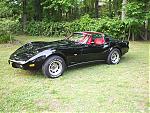
Another suggestion, only because I haven't seen those tires on a car in a while. Check the dates on those tires!! You wouldn't want one to come apart, because as speed, it will rip the fender right off the car.