When you click on links to various merchants on this site and make a purchase, this can result in this site earning a commission. Affiliate programs and affiliations include, but are not limited to, the eBay Partner Network.
I installed a ZZ4 in my '71 in 2000 and have put close to 30,000 trouble free, fun miles on it. It's just a first generation SBC. It's not what people call high performance in the days of 400+ HP crate engines but I can tell you it's a fun engine to live with everyday. I'm testament to that since my '71 had been my daily driver for the past 3 years. Also remember that a 1975 Corvette only had 165hp and a ZZ4 is 355hp with 405ft.lbs of torque. Don't let anyone tell you it's not a fun engine. With a cam/lifter swap it can be woken up and it's a 4 bolt main which can be built.
As far as driving it a long way, if the engine was well maintained then that would be your least worry. As others have said, check for fuel/brake leaks.
Good luck and have fun. I bought my car in Fla (non-original motor and it had an old truck SBC in it when I bought it but I was planning on changing that anyway) and drove it all the way to Round Rock, Tx without really knowing the mechanical condition of the car at that time. I made it fine but I did a through inspection of the items I mentioned above before the trip.
You guys have been great with feedback! Thank you for your time and comments. I have decided to trailer it home. I really wanted to drive her but as long as it took me to worry the heel out of my wife to get it, I can't afford any issues with her with the trip home!
Also remember that a 1975 Corvette only had 165hp and a ZZ4 is 355hp with 405ft.lbs of torque..
Not quite! The 1975's 165hp was rated in NET horsepower(Engine with parasitic loss from accessories). That ZZ4 is rated in GROSS hp (engine with no accessories and dyno headers). So the 355hp ZZ4 is actually more like 280 NET hp.
Not quite! The 1975's 165hp was rated in NET horsepower(Engine with parasitic loss from accessories). That ZZ4 is rated in GROSS hp (engine with no accessories and dyno headers). So the 355hp ZZ4 is actually more like 280 NET hp.
Still a big improvement due to newer head design.
The reduction in hp was due to the addition of catalytic converters correct? First year having them for the vette if I read correctly.
The reduction in hp was due to the addition of catalytic converters correct? First year having them for the vette if I read correctly.
It wasn't actually a reduction in horsepower, it was a change in the rating system (though I'm sure whatever year first got catalytic converters also lost 5-10hp).
cars prior to 1972 were rated in GROSS horsepower, which is the horsepower of the engine with no accessories and dyno headers (flow much better than exhaust manifolds or normal car headers). Beginning in 1972, cars were rated in NET horsepower which was the engine with all accessories hooked up. The engines were the same, but the advertised horsepower was reduced dramatically because of the change in rating.
Crate engines are still rated in GROSS horsepower. It looks better on the spec sheet (perfect example above where the user thought they had an engine that made double the horsepower of the stock motor with their ZZ4).
You can't really calculate the parasitic loss from Gross to Net hp because it will vary based on the headers used, the pulley ratio and drag, etc... but most would say assume 15-20% loss from Gross to Net hp.
I see you’ve made up your mind to trailer it, but I’m still going to share my story.
About 10 years ago, I talked the wife into flying from Philly to Chicago to pick up and drive home a 1986 Porsche 930 RUF. It only had 42k miles and I had a local Porsche shop perform a PPI. They found several minor things including the battery needed replacement (which I had them replace) and the front a/c condenser fan motor was making noise (I ignored it). Part of my logic with her was we would stop for the night in Pittsburgh to visit my niece who was going to Pitt Law and tour Falling Water. We flew into Midway, picked up the car, cranked the a/c and headed out. It was raining off and on and the a/c worked well keeping the windshield clean and us comfortable. Just outside of Pittsburgh smoke started coming into the cabin and I pulled over to see black smoke coming out of the frunk (front trunk given the engine is in the back for you non-Porsche folks). I quickly pulled over, shut her down, and popped the frunk lid to see flames shooting up from just in front of my new battery. Yep, you guessed it, the noisy fan motor seized and burst into flames (a known Porsche problem as there is no fuse). I grabbed the wife’s water bottle, put out the fire and surveyed the damage. Burnt carpet, a slight melt spot on my new $250 Porsche battery (yeah, you think Corvette parts are expensive, hah), and carbon stains all over. I disconnected the melted fan, closed the frunk and turned around to talk to the wife. She was about 100 yards up the highway headed god knows where! I convinced her it was safe, got her back in the car and we arrived at our hotel safely. The next day was a MAJOR storm, but that adventure is best told later.
Even after all that, we would both not hesitate to do it again. It was scary, challenging, but an adventure that we still share with friends and get a good laugh out of teasing each other (yeah, Mark’s expensive Porsche burst into flames and I was stupid enough to actual get back in it! Says the wife). I still say go for it!
Quite true, and I still have people telling me that my SB 72 is down on horsepower form the 71. Neither one is a hot rod, but they are essentially the same.
Originally Posted by mobird
It wasn't actually a reduction in horsepower, it was a change in the rating system (though I'm sure whatever year first got catalytic converters also lost 5-10hp).
cars prior to 1972 were rated in GROSS horsepower, which is the horsepower of the engine with no accessories and dyno headers (flow much better than exhaust manifolds or normal car headers). Beginning in 1972, cars were rated in NET horsepower which was the engine with all accessories hooked up. The engines were the same, but the advertised horsepower was reduced dramatically because of the change in rating.
Crate engines are still rated in GROSS horsepower. It looks better on the spec sheet (perfect example above where the user thought they had an engine that made double the horsepower of the stock motor with their ZZ4).
You can't really calculate the parasitic loss from Gross to Net hp because it will vary based on the headers used, the pulley ratio and drag, etc... but most would say assume 15-20% loss from Gross to Net hp.
Last edited by crawfish333; Sep 28, 2018 at 12:08 PM.
Not quite! The 1975's 165hp was rated in NET horsepower(Engine with parasitic loss from accessories). That ZZ4 is rated in GROSS hp (engine with no accessories and dyno headers). So the 355hp ZZ4 is actually more like 280 NET hp.
Still a big improvement due to newer head design.
My ZZ4 dyno results when new in front of my Muncie 4 speed was 314hp a the wheels. I don't have power steering, no A/C or air pump. The only thing my engine turns other than the drivetrain is the alternator and water pump. I've also made a few 1/4 passes and if I can remember my best time was 13.4 @ 112mph. I'm trying to find my dyno sheet and time sheets but they are buried in my mountain of recipts on stuff I've put into the car over the years
My ZZ4 dyno results when new in front of my Muncie 4 speed was 314hp a the wheels. I don't have power steering, no A/C or air pump. The only thing my engine turns other than the drivetrain is the alternator and water pump. I've also made a few 1/4 passes and if I can remember my best time was 13.4 @ 112mph. I'm trying to find my dyno sheet and time sheets but they are buried in my mountain of recipts on stuff I've put into the car over the years
That is a very healthy wheel horsepower from a 350! There was a "hotcam" upgrade for the ZZ4 which it is possible you have. But being realistic, even if it was 355 Net horsepower, it wouldn't put over 300 to the wheels. So either GM underrated the ZZ4, your motor isn't a stock ZZ4, or that was a "happy" dyno.
Try to find that timeslip! That is a good way to verify, If it actually trapped 112 mph than it definitely actually has 300+ wheel horsepower.
I
Crate engines are still rated in GROSS horsepower. It looks better on the spec sheet (perfect example above where the user thought they had an engine that made double the horsepower of the stock motor with their ZZ4).
Please quote me where I said I doubled the HP over the stock engine please. I love it when people put words in my mouth.
Please quote me where I said I doubled the HP over the stock engine please. I love it when people put words in my mouth.
?? I wasn't trying to insult or put words in your mouth, but this is what you said:
Originally Posted by theandies
Also remember that a 1975 Corvette only had 165hp and a ZZ4 is 355hp with 405ft.lbs of torque.
Pretty sure that is basically double the stock power according to your numbers. I was not trying to insult you, I was clarifying the numbers for BRN517 who is learning about the different advertised horsepowers.
” . . . . . . . . . . . . . .cars prior to 1972 were rated in GROSS horsepower, which is the horsepower of the engine with no accessories and dyno headers (flow much better than exhaust manifolds or normal car headers). Beginning in 1972, cars were rated in NET horsepower which was the engine with all accessories hooked up.. . . . . . . . .”
Close.
*“Over the years, the Society of Automotive Engineers (SAE) and similar standards-setting bodies in other countries have developed various methodologies for measuring the output of an automotive engine. These standards fall into two basic categories: gross and net output.
Gross output, which in the U.S. is typically measured using the methodology laid out in SAE standards J245 and J1996, is the output of a ‘bare’ engine running on a test stand with no external engine-driven accessories (e.g., alternators or water pumps), free-flowing exhaust headers with no mufflers, and optimal ignition timing. Gross ratings are also mathematically corrected for standard atmospheric conditions. In other words, gross output represents a particular engine’s maximum output under ideal conditions.
In the real world, automotive engines very rarely operate in ideal conditions. The engines of most cars are burdened with various engine-driven accessories, including the engine’s own water pump and generator/alternator and add-ons like the power steering pump and air conditioning compressor. Engines intended for on-road use typically also have restrictive air cleaners and exhaust systems, sound-deadening mufflers, and emissions-control add-ons like catalytic converters and thermal reactors. Engine tuning is further compromised in the interests of reduced noise, better drivability, improved cold-weather performance, and lower exhaust emissions. All of these factors reduce the engine’s maximum output in ways that the gross rating methodology does not reflect.
For that reason, the SAE and similar bodies have also established standards for measuring net output. Net ratings, such as the ones defined by SAE standards J1349 and J2723, are still taken with the engine on a test stand, but reflect stock ignition timing, carburetion/fuel delivery, exhaust systems, and accessories. The specific methodology varies depending on the specific standard being used, but the gist is that a net rating is a closer approximation of an engine’s output as actually installed in a car.”
If you have AAA Club card you can get free towing for 200 miles. If your wife or any other family member is with you (on a premium membership) they will tow you 200 miles for free and one other paid member another 200 mile for free.
I bought a 71 vette off of “Member” here. You wouldn’t think this seller would lie to a fellow member, but he really didn’t care. I was a big DA, I didn’t see the warning signs. The seller was so nervous he couldn’t count out $14,000 cash. $13,000 in $100 bills and $2,000 in $50 bills, it took him recounting 5 times before I was so frustrated I said “no more, it’s there and I gotta go, recount it when you calm down.”
I should have taken my money and go home.
Didn’t walk from settlement on a house that was a mistake in 2003 either.
Just curious, what was wrong that he did not disclose? Did you check the car before the purchase? Is it possible the seller was unaware of the problem? How recent was the purchase?
Originally Posted by Z06LMB
If you have AAA Club card you can get free towing for 200 miles. If your wife or any other family member is with you (on a premium membership) they will tow you 200 miles for free and one other paid member another 200 mile for free.
I bought a 71 vette off of “Member” here. You wouldn’t think this seller would lie to a fellow member, but he really didn’t care. I was a big DA, I didn’t see the warning signs. The seller was so nervous he couldn’t count out $14,000 cash. $13,000 in $100 bills and $2,000 in $50 bills, it took him recounting 5 times before I was so frustrated I said “no more, it’s there and I gotta go, recount it when you calm down.”
I should have taken my money and go home.
Didn’t walk from settlement on a house that was a mistake in 2003 either.
?? I wasn't trying to insult or put words in your mouth, but this is what you said:
Pretty sure that is basically double the stock power according to your numbers. I was not trying to insult you, I was clarifying the numbers for BRN517 who is learning about the different advertised horsepowers.
It's all good. I'm just saying that a ZZ4 is a good engine that has more power than a stock 1975 engine and really wakes up a mid '70's Corvette. Yes the numbers do indicate approximate double the HP but I would never say that as I know the manufacturer changed the HP ratings in the early '70's which was mostly for insurance purposes so thanks for mentioning the HP rating change.
When I installed my ZZ4 I didn't install the hot cam for it but I did upgrade my rockers to 1.6:1 rollers and did a little head port work so my ZZ4 breathes a little better than a stock ZZ4. Plus since my car had no power accessories and I put the car on a weight reduction I've managed to get my car with no top installed down to 2997 lbs. (land fill truck scale so I'm not sure on the accuracy of that number). My guess is my ZZ4 is pushing closer to 375 at the flywheel but have never had it on an engine dyno. I did the 1.6:1 rockers so I can upgrade to the ZZ4 hot cam someday.








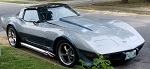

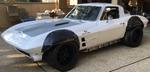


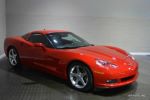











 I'm just saying that a ZZ4 is a good engine that has more power than a stock 1975 engine and really wakes up a mid '70's Corvette. Yes the numbers do indicate approximate double the HP but I would never say that as I know the manufacturer changed the HP ratings in the early '70's which was mostly for insurance purposes so thanks for mentioning the HP rating change.