When you click on links to various merchants on this site and make a purchase, this can result in this site earning a commission. Affiliate programs and affiliations include, but are not limited to, the eBay Partner Network.
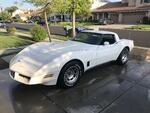
I'll spare everyone the mechanic horror story, but suffice it to say I have new rotors, new calipers, new pads, new master cylinder, new booster, and several new lines all installed within the last month or two on my 1981 Corvette.
Pedal is already going to the floor, and while replacing the fuel pump today I saw fluid coming out of where the two halves meet and there is an O ring between them.
So, is there a way to seal that area better?
I just read a bunch of posts about "just replace them with $1000 of parts" and that's not an option, as I already sprung for the stock stuff, so any help with my brand new all stock system would be great.
What brand are they original? Take apart and rebuild yourself..20 bucks each includes supplies..
if a month old no warranty? Swappit?
also there is still 50/50 chance its not leaking from where you think..
if your mechanic rebuilt they are really torqued together hard
Last edited by interpon; Jul 31, 2020 at 07:42 PM.
Everything is brand new and stock. The o ring is there.
If the o'ring is there and it leaks then either:
1) It's the wrong size o'ring.
2) Damaged o'ring
3) The o'ring counter bore was machined too deep.
Check that the o'ring is proud of the machined face.
They are all AC delco or whatever the stock brand is. Not rebuilt. Brand new. The mechanic was so bad I'll never go back to him.
I'm looking for a method or technique to sealing these. I'm not sure why I would rebuild brand new calipers. If there is a reason let me know.
I've only had the car a few months, and it was at the mechanic more than half that time.
It's been so tough getting help with this car from "professionals" that I have committed to fixing everything myself from now on.
(You should see the garbage silicon pan gasket I got charged for)
Any professionals on here, if you were closer, I'd love to talk about why no one else knows how to work on these cars.
I'm in Fresno, CA
If the o'ring is there and it leaks then either:
1) It's the wrong size o'ring.
2) Damaged o'ring
3) The o'ring counter bore was machined too deep.
Check that the o'ring is proud of the machined face.
The caliper were new before, and the mechanic replaced them saying they were leaking. Now I know that there is little chance that 2 brand new set of calipers are bad in a row in just a month or two. I suspect it is a design problem. I need some Jedi level help with this. I've had it 4 months, and today was the first day it drove well, engine-wise, but the brakes are still an issue, thousands of dollars later and everything replaced new.
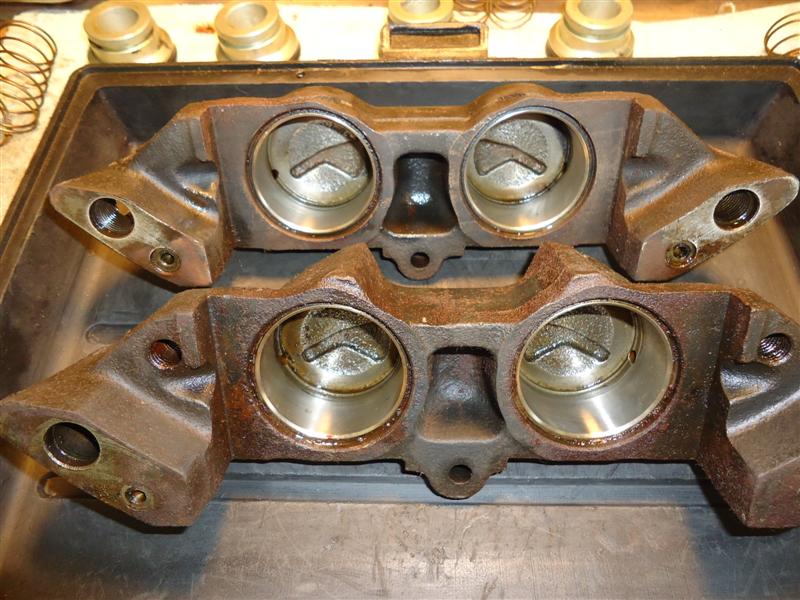
There's nothing complicated about these. Look at the upper half in this picture and you'll see the counter bore that the o'ring goes in to. Measure the depth. Then measure the thickness of the o'ring (should be about .070"). The counter bore depth should be .030-.040" deep. If the counter bore depth is close to the thickness of the o'ring, you're screwed. It sounds like you are positive that's where it's leaking. Look for cracks in the housing when you have it apart.
Where did the mechanic get them from? If it was a new part, it should be covered under warranty. That warranty should extend to the owner, so perhaps you can return them. Can you post a photo? The original Delco Moraine castings, when SS sleeved and rebuilt properly, seem to work most of the time. If this is what you have, you could try to rebuild them yourself (or just replace the o-ring). There are new reproduction calipers that say Delco on them that may not be fine.
There's actually a pretty good chance that several rebuilt calipers are bad in a row, if they weren't sourced from Lonestar or CSSB Inc. (or Wilwood, for new production).
Man, this is going great! I don't have any friends that are car people (all jazz musicians and hippies) so this is the only way I have found to try to reach out to people. Mechanics around here, even the one that said he was an expert, are leaving me in a bad way. Thanks so much for people responding and helping with this.
I don't know where the mechanic got them from, but he made such a mash of this car, I wouldn't trust him to die if I hit him with the car.
I was thinking that the o ring in between the halves may need to be augmented with some sort of gasket glue or rtv to keep it sealed. It would be great to just know I need thicker ones and not deal with the mess of trying my "bubba" approach. (YouTube Corvette Ben calls questionable repair "Bubba Engineering". He's helped a lot too if you have time to watch a million videos.)
If anyone else has any tips for these I would appreciate it. I bought this car to daily it and use it for autocross (as a stock vehicle - once I buy a second vehicle I will try some upgrades). Because it's my daily (had to do it for budget reasons) its super important that it works right. I have a few dollars left to throw at a real expert mechanic, but there aren't any that I have found close to me. Before today, the car wouldn't even make it an hour away. Changed the fuel pump, now it pulls like a train-unfortunately it stops like a train too.
If an O-ring leaks, it is usually because it is cracked, the wrong size, or there are scratches on the sealing face. I use O-ring lube whenever I can (Molykote 111), but be careful using anything but brake fluid in brake systems. Mixing RTV with O-rings always leads to disaster.
A few other things to look for include rotor runout, and using DOT 5 fluid in rebuilt brake systems, as the new production O-rings may not like it.
Mechanic may be a pos..but no sweat off him if you swap out under warranty and you do the work..they probably dont warrant labor anyway. Im still not sure its the o ring..if new..
post some pics of what you have you may get better advice..
rebuilding is basically an inspection cleaning and sealing..pretty straightforward
Last edited by interpon; Jul 31, 2020 at 10:48 PM.
Don't go putting glue on that o-ring. Have you eyeballed it yet? Even small damage will be a problem. You'll probably have to fix them yourself because I wouldn't go back to that moron. Buy a pressure bleeder, or make yourself a pressure bleeder, your corvette life will be much better if you do.
Originally Posted by wheelhouse73
Thanks for the tip. I'll look for that O ring stuff.
The whole reason I started the post was to make sure I wasn't doing something dumb by putting stuff that didn't belong there, so thanks for that.
Yeah, no sealants, RTV or glue on brake stuff. You're going to need to take it apart. If when you do, I take a piece of rubber membrane and fold it over the brake hose and clamp the rubber membrane tight with a C-shaped Vise grips (the kind with the swivel pads -- Harbor Freight sells them for a couple bucks). Then you don't have fluid dripping out and can work at your leasure. https://www.harborfreight.com/hand-t...ers-39534.html
I recommend watching a bunch of videos on brake fundamentals, and brake bleeding to bring yourself up to speed before you start. What do you have for toold?
I'm pretty set for tools, and I'm pretty handy. Bleeding is no problem for me, I have the procedure in a shop manual. I'm trying to see if there is a 'magic' step that experienced people know that you can't find online or in a manual.
So far, to summarize the thread: Double check the integrity of the metal, measure and verify the thickness of the o ring compared to the gap that it occupies and lubricate it with the Molykote 111.
Then reassemble and bleed correctly.
Someone somewhere said that the rotors have to be trued to a certain tolerance or they wobble and create air in the line. Two mechanics said they checked it for me. One repacked the front bearings, replaced the bearing seals, replaced all caliper/rotor/pads in front, and turned the rotors to make sure they are true...and that is the one I noticed dripping today. Anyone got something for that?
Just to be clear, I use Molykote 111 on all other O-rings, on scuba gear, on water treatment equipment, everything. You only need a tiny amount. And I used it on MY brake caliper O-rings. YMMV. I wouldn't recommend anything except brake fluid (and only DOT 3, 4, or 5.1, not DOT 5 anymore) for your brake system O-rings. But please educate yourself!
It sounds like you have the tools to be successful. Good luck, and please post some photos!
First...fill the master cylinder with brake fluid/remove the wheel using proper safety/clean the caliper well and dry it/have someone apply the brakes until you can pinpoint the origin of the leak (bleeder? brake line connection? piston orings? caliper oring?
You can buy a decent set of digital calipers from harbor freight for about $25. The small end of the caliper can be used as a depth gage, and the large end will measure the thickness, outside diameter, and inside diameter of the oring and also the counterbore that the oring fits into.
I'm guessing the oring should protrude 00.010" to 00.020 above the metal surface it sits inside.
Do nor reuse an oring no matter how good it looks if it has been in use for years (they flatten).
As you disassemble it, Pictures of the caliper and orings will be helpful.
Friends, here are the pics I took yesterday when I had the front wheel off.
Then, I bled all 4 corners. Only the fronts had any air in them. After, the pedal was firm and the hopes were high. After a short drive today to only the other side of town, 15 miles, the brake failed, and the portioning valve put all the braking to the rear, the light came on, and the hopes were dashed.
It is 100 degrees here everyday, so I only have a short window of time to work on the car each morning. The sweat will gush into your eyes by 10am. I'll be pulling the fronts apart and inspecting o rings in the morning, but I hoped that maybe the pics would trigger a response that would help first. Thanks again for all your help folks.
the casting and model where the halves meet, a big drip the fluid from the front of the caliper only a top view, everything in order here
I just recently went thru this same issue with the leak from the very same spot. Not sure where your calipers came from, mine was from Autozone, After the warranty replacement of the warranty replacement for the exact same leak I couldn’t have cared less that they were lifetime warranty, the time and hassle of redoing it wasn’t worth the savings in price.






 New brakes leaking