When you click on links to various merchants on this site and make a purchase, this can result in this site earning a commission. Affiliate programs and affiliations include, but are not limited to, the eBay Partner Network.
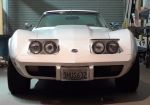
I own 2 - one is a red turbo 78 ACI/Greenwood , 454 manual 4+1 speed trans, greenwood suspension, originally had a turbo (gauge still present) and I also own a tan/brown 78 GT 350, Auto with a martin turbo. My tan/brown one is the car you see on the back front cover in the 79 ACI catalog and appears in a few places in that catalog. Supposedly it was Schullers wifes car used to promote his cars and can be seen in his driveway with him and the ACI go cart in a few pictures. Both cars have a pillar logo from ACI which I believe is a decal placed over the greenwood logo. One car had the center caps with the 78 edition corvette emblem in the center - took them off to clean and the other side had the greenwood gt lettering ground off the plastic but still readable.
Cool cars. Looks like the two tone magazine ad car and technically one of the Greenwood Turbos with a hatch back, converted to an ACI Turbo (super rare, as a model everyone forgot, because wrongly only three Greenwood Turbos are claimed. Every car that is not one of the three Turbos by Greenwood are usually automatically thought to be built up parts cars, not aftermarket production.Two very very rare cars here, and that most Corvette experts have forgotten.
On the Facebook groups, I woke up everyone's memories about much of the history, stuff forgotten by the participants even.
Learned something here myself, as Schuller woud have removed all Greenwood branding, but to have patina still evident is Wow! History to preserve, never sand on that.
Last edited by TCracingCA; Jun 6, 2023 at 10:59 PM.
Interesting history, thanks @TCracingCA for sharing your research here.
I became aware of Greenwood and his race cars several years ago, I didn't know he was attempting to modify factory cars for the public.
I have to wonder about the different business partners.
Was he difficult to work with, or a perfectionist, and the business owners had to push cars out to get money rolling in before Greenwood thought they were ready.
Imagine what he may have accomplished with Corvette's if he had come along 15 years earlier, when Carol Shelby began with Ford.
By the time Greenwood started, the government was mandating components that Shelby didn't have to contend with when he was getting started.
From an outsiders viewpoint looking in, it looked bad. A great Corvette hero to many like myself, his business ventures just weren't happening. I have had some interaction with Bert, but it hasn't been pleasant. The Greenwoods should have their story told with a book, and Bert will be the guy that will decide what is said, not necessarily history, not following what was said in articles back in the day. Still, the Greenwood name was full of glory.
The street car program was a bust from an outsiders viewpoint. Due to the racing endeavors, the focus on the street cars was neglected.
Yes these attempts to market performance tuner cars,, happened at a bad time of heavy Government regulation. The same happened like at Motion. The production Corvette had lost power, and was overweight due to crash impact requirements for highway safety.
To answer your other question, it seems like in the modern they have all kissed and made up, or are dead and gone. A guy like Gale Bank's Turbo collaboration assistance, was downplayed but Bank's went onto fame, so this small chapter seems to get a pass, they laugh in the modern about it all. No big deal I guess. Credit was given back to Ryding for the one suspension, now they are all friends. Then there is the suspension Guru Riley, Riley has so many accolades, he hasn't said much about any of that history. Such a small segment of his career. I have attempted to study the out the back door Factory/Zora assistance to guys like Greenwood, and what in the present being said, I wasn't liking. That got me going on the research more specifically. Just in my enthusiast interests, I used to follow everything racing and Corvette. My Dad would throw out the weekly Autoweeks and for some reason I saved them, pulled them and other magazines from the trash.
I was better condensing the IMSA/SCCA history. SCCA ran production and production based amateur classes. Their Can Am, Trans Am (Sedan class, Pony cars, no Corvettes in 1972) were their Pro classes, F-5000 too. IMSA comes along and gives Corvette running Professional Teams a place to compete in 1971. SCCA in 1973 attempts to attract those operation to compete in the revised new Trans Am series. First SCCA threatens guys like Mo Carter with license suspensions if they continue with IMSA. Tracy Bird the leader of SCCA next attempts to sanction tracks that invite IMSA. Basically the money won out, big tobacco sponsorship from Camel GT, Reynolds, etc. Was too attractive. The fuel crisis at this time, threatened the existence of racing period in these early 1973, etc years. But IMSA grids were massive, making rules where everyone could compete was the key to success, weathering the times. SCCA evolved, allowing the pontoon fenders, the tube chassis, etc. The evolution caused difficulty for Racers to keep up. The Factory Homologated Hot Rods dominated. True independent Teams were hard pressed to keep up with the rapid changes at Pro level. The Greenwood model, essentially by hook or by crook kind of was in play. John was a salesman, first for himself, and could attract talent with ideas. He was the guy with his own vision. Anyone that knows the John Paul Sr. story and a few other drug dealer connected stories, knows a number of these high end operations were able to exist on dirty money laundered. That wasn't Greenwood, no where near that level, did he do deals, did he take deposits on future Turbos, the story is in print in those old magazines. ACI and Ecklers became Corvette dynasty type operations, John Greenwood talked himself into partnerships, based on his Corvette persona, and yes talent to engineer and innovate, often connecting up with true talent like Riley, Bank's, Zora, the soon to be Trans Am/IMSA chassis kings like the CVC-Apex guys (cut trailing arm design, thought to originate from the GM Engineer Ryding which would become the suspension in play on the future Daytona, and what Greenwood would call his 5 bar Suspension, etc., it softened some for the Street Daytonas. And keep in mind, John was shooting for speeds well over 220mph with the newest race car to be fielded along with T&R Team. I might check into dirty money at this point! Ha ha! Humor, but I did find a conviction in the 1980s on a Rene R. actually that was a car collector!
Looking at true Greenwood cars, yes a streak of perfectionist, yes at times they had to sell stuff, to keep going. Sometimes genius, whether that be self talent or using people to your own end goal can operate in that fringe. Sometimes because they are fun to be around, could keep people hooked in. Also the sharks, the users would circle people with growing degrees of fame, some most definitely tried to ride the Greenwood coat tails. Some wanted to use his name, and Greenwood sold himself into partnerships, using his own name, rightfully so, why not!
Last edited by TCracingCA; Jun 10, 2023 at 07:07 PM.
Many guys know that I just got tired of all the 50 year forgotten history on many of the favorite Corvette legend models. I do wish each notable guy had a book. Even Zora's book sucks! In lieu of not having well done biographies or historically truly accurate remembrances of the behind the scenes development, many of my posts attempt to resurrect lost stories, many arising questions from attempting research. The more I learn, the more questions come to mind. On Facebook, I last hit Bert with some direct questions, and got great feedback. What he shared helped those specific areas of mystery, questions, seemingly lost info, but I am not going to be the guy who interviews or publishes their saga. The triumphant accomplishments are the easy to assemble parts of their stories, but it is the controversial or the stories they would like everyone to forgot, that are the hard to research areas.
At Ecklers, John built up a couple of Turbo II cars after bringing one with him to Ecklers. I somewhere posted an ad on that 1979 model Greenwood car. I never got a chance to find out more about that model. Ecklers was producing their own models, and that car looked to much like a competitor to the Eckler CR and Can Am wide body glass cars shown:
First appearing on their newest Catalog to the general public, from the model introduction shoot, the catalog where they introduced the Greenwood line coming soon.
70s
I timeline things, I attempt to run parallel histories often, and the move to the Daytona model might have happened, as Ecklers wasn't wanting competition from within their own partnership by the Greenwood Turbo model. The Daytonas were wild, the pinnacle of street opulence, tamed for the supercar street market. I think the big mistake in attracting buyers to this radical design, was the marketing by Ecklers of Greenwood Daytona glass, allowing an enthusiast or a good shop to fab up their own. It was so futuristic looking, I remember the Star War mural Production one, being displayed at the second Star Wars movie Premiere out in Hollywood, with R2D2, C3PO, etc. all standing next to the car. IMSA did not approve of the Specs mostly the size of the tires, so the revised GTO model was born.
The Greenwood car website, was slammed by the brothers, but released no counter information to straighten out claimed inaccuracies. I try not to be an expert on any one area or model, but do hope my shares are solid. The more old articles I source, I am not necessarily getting history on like the Greenwood story from Greenwood articles per se. Some of the sources for what I wrote were from Schuller interviews and articles, or others, some I found in print from Riley, etc. If 50 years has passed and the story is still lost to the public, no one should fault my attempt to try to share on these old historic times.
Last edited by TCracingCA; Jun 9, 2023 at 06:11 AM.
I was done with Greenwood, but it actually is quite the story. The Daytona was unveiled at the Ecklers Reunion in Spring 1981 (missed the target of Thanksgiving 1980)
. When the GTO was done, they were back doing their own thing. Reading the old articles last night to refresh my memory, the GTO panels were Greenwood exclusive. They actually did not protect their unique glass up to this point. Thus many outfits touted Greenwood styled Glass essentially.
I noticed the Greenwood Corvette site, many pages within are down, clicking in leads to an error message?
Gearing up this weekend for LeMans 24 100th Race. Thus I might do some research on the end of the Ecklers partnership. I do know they stayed friends. In digging some stuff up already, I found Ralph Ecklers personal driver, a Gold flared C2 with flip front end.
It is believed 4 Street Daytonas got built, the 1st one was donated by the California owner to the National Corvette Museum #001 the red one. For GTO's only two built- Black with Red interior (Stick) and Black with saddle interior (Automatic).
I will see if I can share some more long forgotten history.
Last edited by TCracingCA; Jun 10, 2023 at 07:49 AM.
As LeMans is starting in less than an hour, quick post here. I differ with the Greenwood Site on some of the Daytona info, which I will attempt to figure out. Also I have not substantiated the existence of the Tico 1980 White Prototype personal driver as a true production Daytona, in the modern, there were pictures of the claimed car in Red.
Don't know if they went straight into the Race Car project. I should have some articles (Car #81) around here on that race car, maybe something will turn up in print to lay out the dates better. Also not all of the Daytonas got the 5-Bar Rear Suspension. It confuses some when these cars are talked about, as all had Greenwood Suspension, but if you go back and read some of my Sebring GT model history, Greenwood marketed, sold, installed a very let's say tuned F-41 unit, something he worked with Koni on, to spec a better suspension upgrade package (GTS kits first used on the Sebring GTs). The first two Sebring GTs were built with the Greenwood A-arm set up though. That Greenwood Suspension and engineering and pieces shown in this thread, above in the ACI Turbo catalog pages, as I think they won the rights to this suspension, thus not seeing it again on a Greenwood car after that breakup, beyond the one Turbo Greenwood took with him to go into the Eckler 3nd period, as Eckler started with Greenwood back in the early 70s, then 2nd period in the mid-70s (the Customer car period of race cars, where I have shared that advertisement of what could be ordered-- supplying the parts in general for them) for both Small and Big Block cars. Thus the balance of the Daytona's had this Greenwood Tuned F-41 based unit. Two of the cars thought to be Daytona #002 & #004 are thought to have the 5-Bar Suspension (CVC-Apex that became the Greenwood suspension). Ps I have one of these set ups, I bought in the very late 70s directly from them, as mine is a race version, employing Heim/Sphericals. I also have a pair of NOS rear Shocks from Greenwood, still in the boxes- the Koni collaboration units. As a teenager, young military guy all into building my dream car, I bought everything that came out during this period. Still in my garages, or on my cars, for my Canyon Racing passion.
As I think of things to share, I am just free styling posts here from memory mostly. Yes that could be dangerous, so any of the knowledgeable guys, proof read my shares to help! It is appreciated, as I ended up not to be a fan of Greenwood, after keeping them most of my life in hero status standing. I don't feel like authoring the complete history here in simple posts, giving some good info here in these posts, some has been super complimentary of the Greenwood legacy, and some not so flattering, big whoop! Crap happens even to legend type people.
Ok, 20 minutes till Grid coverage of the 100th LeMans, got to go make breakfast, snacks every couple of hours, some working out, while watching, etc. planned and I don't drink, but got a few beers actually. Corvette announced a discontinuation of Factory involvement, but I think they are still going to sell some customer GT-3 cars????? I am rooting for the underdog #3 Yellow Cadillac, even though off pace, and had the fire. I heard in practice Corvette had an off course shunt, but haven't had time to run down more on that, but hope they got crashing out of their systems. Last Factory related LeMans Corvette run, so #33 is a little weird for my future model car purchase, but pulling for them, but I am also a Porsche fan. For LMP 2, could care less for that class. Just please beat Toyota!!!!!!! Somebody!!!!!!!
Last edited by TCracingCA; Jun 12, 2023 at 04:59 AM.
I watched all 24 Hours of LeMans, so just woke up a 3pm. Still have to pull the catalog out.
PS that Greenwood Corvette site seems to be working, so maybe just a problem with my Wifi. Just one of the complications I have with that research on the Daytona model is they contradict their own info. It is claimed a Tico and Rene car, white 1980 was built up as the first one (1- 1980 & 4-1981). They say 4 of the were Red, all Automatics, one with black interior, one dyed years later to black, 5 total. Then they turn around and say 1- Sunoco Blue one, blue interior (maybe as that is a custom color, the car started out red?), but the info leads you to believe produced was red. OK some other issues too, but wil focus on the Race cars.
These guys bought the Riley chassis Super Vette and I am pulling all of the race numbers, appearances, but one config was white with #03 as a number at first race- 1979 12 Hours of Sebring completing 73 laps, with Pepe Romero and a weird entrant driver denoted as Motor Hernandez. The team ownership was under Motorcito Racing (zero involvement with Greenwood, John did not enter this race). I will if I have time, check for any other events ran. For the car's history, they only claim this one race. Also they and Greenwood were not present at the earlier Daytona, unless they all were drinking Mojitos watching.
Next year Tico and Rene were at 1980 Daytona 24 in their Porsche Carrera DNF (26th placed if they finished) so they went the race distance, only 15 entrants places, many many fell out of the required time compared to the Winners- Joest/Stommelen's 935 Hybrid car, and were No Classification.
For 1980 Sebring 12, they brought the Corvette back, placing 68th but DNF, and teamed with a Gabriel Riano. The car entry is interesting as designated as a Protofab Corvette. What confuses many, to include me, but my research usually fixes that eventually is that this car was the former John Paul Jr Blue/Yellow liveried Super Corvette built in JP's shops using all of the guys that would become Protofab, a complete Riley chassis/suspension design. If it wasn't for the first Super Corvette, this car really had no Greenwood hand that I have found in the construction, but will be on the lookout for his potential participation.
This all has to be time lined as the car was still in 1980 bodied with the long sleek body that was ran with JP.
Now here is where my potential research might go in an interesting direction. First I see absolutely no 1981 Entrant of John Greenwood for the Daytona 24 Hour race, not even an application to enter, nothing. The records that circulate with the car, claim DNS (wrong)!!!!!! Tico and Rene were present again in their Porsche Carrera.
Breaking down the Greenwood suspensions, here is what I believe
1973 working on his own mostly, John Greenwood was playing with Suspension ideas and enter Ryland (GM Engineer of Zora's Group, claimed to be moonlighting, attempting to get his own consulting operation going. I believe the cut trailing arm suspension was thought up then.
Still 1973, Zora is running around developing a Corvette Wide Body with the known prototype pontoon fenders, etc. that would be initially ran by Greenwood. In Zora's biography, and one other source I have, two sets of Glass were commissioned from Diversified, and Zora riveted on those with duct tape and started testing, the other set went to Greenwood who was prepping a ground up build, parallel to the development of the Zora Wide Body Prototype.
Zora claimed heavy development that led to the Greenwood car. From the Riley camp, it was said Zora brought in Bob Riley, not John Greenwood. But the Wide Body concept arose from John Greenwood talking to Zora of a Can Am wide Corvette, when they were at a Trans Am event together. The Riley A-arm suspension (better than the cut arms, as it addressed not just Anti Dive and Squat, but Camber change in suspension travel) was developed during all of this, and went onto the Greenwood cars. The story became Greenwood Suspension, giving Riley credit, but I think GM commissioned work by Riley, given to the Greenwood effort. Note too, that Zora was their when the Greenwood cars won, honored guest standing on the Victory stand, but that seemed to be glossed over, forgetten with the telling of the Greenwood fame. This is the most major area of contention, caused the rift when I had first talked to John in some post shares and then his brother. They in the modern recognize Riley for the A-arm Rear Suspension, and rightfully they should, and Ryding for the Cut Trailing Arm suspension- later called 5-Bar Suspension, then 5-Link, then Ryding's CVC- his Company he founded called Competition Vehicle Chassis and he went to the famed Bill Truesdale for manufacturing (Apex), thus CVC-Apex suspension. This suspension in a softened version (Greenwood had a hand in this) would be fitted to two of the Daytona model cars and married to Coilovers, and thus the famed sketch of the Ryland suspension, drawn up by his friend that circulates in articles and catalogs.
Posting to not lose info
Continuing- in progression:
Stock Race, based F-41 Suspension
Cut Trailing Arm Suspension, no coilovers (no coilovers is important at this stage)
Riley A-arm Suspension, when Greenwood moved into the true Wide Body Customer cars, this suspension under his branding was offered on that ad page under his branding.
Then the CVC unit or CVC-Apex. This was the Cut trailing arms, then boxed with welded on Heim/Sphericals, and it did not have a top link in the conventional sense, it was a mid-link running parallel to the half shaft, brackets are welded to the rear diff crossmember and ran over and connected to the boxed cut trailing arm uprights in the rear.
So how did I end up getting one of these Suspensions at 18 years of age. I was shopping our family friend Dick Guldstrand, my Father having a long history with him. I naturally was a Corvette raised kid. I talked to Dick about all of this. At the time of pulling the trigger, Dick offered no Multi link, no 5-link. He asked me to bring it in, he would install it for me, but I just brought it in to show him. Naturally he wanted to stay competitive, so him and others immediately started doing such a suspension. His was crudely welded, super strong, and I assume effective. In his catalog he had the offset jig welded ugly trailing arms only. His cut arms never made the catalog, he photocopied some individual sheets of this newest offering, and handed them to customers with the newest catalog. I had this sheet, but can't find it. Next Bob Riley under his newest Protofab operation (RPF- Riley, Protofab, and Foltz) started advertising their 5-link Rear suspension in National ad. Guldstrand became a West Coast distributor of the RPF. So Dick told me this one was better, so spent more of my paycheck for this suspension also. Figured we could put one on Dad's car, and the other on my car. Thought to give it to him as a birthday present, but he liked how his car handled, and thumbed his nose at these units. On his car would be a no go. Thus I installed the RPF unit, and ran that for a time, the CVC- Apex languishing in the garage unused until I crashed my first former Race Vette, and bought the other former cheap autocross car cheap to get the frame, planning to sell the rest to recoup money. Moving forward, I ended up building up both cars, but on the rebuild of the Race Car, I bought the Guldstrand branded aluminum pretty upright 5-Link, and then threw the RPF in the garage for years and years. I next crashed the old Autocross car, and in the rebuild of that, I took off the CVC-Apex unit, and went back to a nice Street Rod level of build, for some comfort in using it as a Daily driver for years and years. Thus to this day, I have all of these in my garages or on my cars. Derek I remember when I shot this picture, I purposely included some white New Balance Shoes, to be funny!
The RPF unit was a sketch up idea by Riley as he was designing a suspension for the Super Corvette Tube framed racer for 1977. He sat it aside with the thought of it being a good potential street suspension.
Thus back to T&R (Tico and Rene). So they bought the JP Super Corvette which is known as the Riley everything car (Chassis/Suspension). Mention of it has always been accredited to Riley (Riley suspension).
Now the interesting trail I am chasing, In my research there multiple mention of the Super Corvette body being replaced with the GTO body for racing, for the 1982 GTO rules season. So where am I going with this research, there is a possibility the T&R Daytona, might be different from the former Super Corvette JP car which got the GTO body!!!!!!!!!!!! There are pictures of a darker stock Corvette getting white Daytona panels. Then we have pictures of a #13 Greenwood race car in Daytona body work at Daytona, but those were not at the race photos, as he must have been testing, tuning, check aero. The confusion seems to arise from the Daytona suspensions being called the 5-Bar or 5-Link. Thus for the Daytona race car, we truly need to figure out what suspension was under that car and the pictures I have, don't allow me to make a call on that. Thus if it is any other suspension than the Super Vette Riley unit, then that Daytona race car is a different car, than the Super Vette that ended up in the GTO configuration, running in the 1982 season. Also that race Daytona might have had the older Riley A-arm suspension, branded under Greenwood till the ACI-Schuller break up and split, pre-Super Vette!
You can see an example where research here, leads to even more questions.
Posting to not lose info, will pick this up in a continuation.
Well we just have too many 5-links in play in this story.
Technically the CVC-Apex unit (one bottom camber, one top mid link- also controls toe adjustment , two trailing arm links, and the halfshaft)
Technically the RPF unit (two bottom camber that set toe, two trailing arm links, and the halfshaft).
Technically the Riley Arm (getting tired of typing, will add in later)
Technically the Riley Super Corvette Suspension (the same getting tired of typing).
The bottomline is to figure out the Daytona Model Race car. It looks like 1981, nothing was happening, as this model was getting figured out. Actually a big time period span, 1978 Turbo GT model, ACI split, Started the Ecklers partnership, then the 1982 Daytona, that effort born during the 1981 year. My perception of where the Eckler's partnership quickly went, was Greenwood was trying to get free Showroom. He would build a car at his own facility, and then have Eckler body or mod the body and then roll it onto the showroom. A flaw in the story from the Greenwood Corvette site, is they claim the Daytonas were built before the Ecklers glass being provided. I think more of Greenwood's bull crap, as the original Daytona build glass was supplied by Ecklers. Their relationship goes back to the early 70s, and they were solid in the partnership starting in 1978. A car like the Daytona would have been glassed up and then it needed to be finished, then sold, or sold on an order basis.
Stopping there for now. Long enough post for today. I need to pull the old Catalogs, to time line all of this. The key is what John Greenwood called all four renditions of the Multi-link rear suspensions, and what was what, on what cars. I think the confusion arose from the magazines of the day not know their *** from a hole in the ground. The Turbo GT was easy, definitely Riley A-arm Suspension. The Sebring GTs, the first two got the Riley A-arm Suspension (Wayne during our collaboration I think misunderstood my final share, as I thought at first those were the CVC-Apex units, but were Riley A-arm. The rest of the Mancuso order was a Greenwood to his own spec GTS suspension, based on Small or Big Block F-41. The CVC-Apex prototype with Coilovers was first fitted to the DePirro car going into the 1978 season.
The Sebring GT model, first ones (Prototypes were built 1976 is what I believe, and the production run from 1976-1978 essentially, that taken over by the ACI operation, cars rebranded as ACI American GT 1978. The Turbo GT had just started production, and I am thinking only two exist with true Greenwood branding, and the three one found, the catalog picture car, was snatched by Schuller of ACI and got the Greenwood branding removed, but later resurrected as the third Greenwood. I will double check these last thoughts, as I have to type a time line on all of this Greenwood stuff. When I stopped research on Greenwood everything, eliminated John as a former Corvette Hero, but respected, but then not respected as a business guy, I never did a Greenwood per se history time line.
Ok need to recharge tablet, and get dinner. Waking up 3pm, my body clock is all jacked up for work tomorrow. I am not much of a drinker, so only did two beers the whole 24 hour race, got four more to think about. But definitely don't want to be accused of researching drunk!!!!! Ha ha! PS you guys only get pictures if I am not on this tablet, as never figured out how to do those or emoji's on this tablet. Easiest way to post pictures for me, is working on the iPhone, but can't type crap good, using that!
Last edited by TCracingCA; Jun 12, 2023 at 02:44 PM.
Well that took 20 minutes only to get a primary piece of the puzzle, but the John Paul Super Tube Framed Corvette was rebodied to become the #81 Race car (Daytona body). Thus the car had the super full race exotic Riley chassis and suspension. Not the A-Arm or CVC-Apex or Greenwood Suspensions. Thus 220-240 thought to be speed capability. Then the IMSA rules for 1982 caused a second rebody to the GTO. This car had the non-Corvette uprights, having the very Can Am/Formula car type units.
I will try to proof the competition history further, as I have to check FIA, IMSA, and SCCA Trans Am, so take time. Checking first 1981, as not sure it even ran that year, especially with all of the rebodying!
Thus my guess on the Daytona race car, is they needed a body to graft on the body panels. Thus could be where the White car came into the conversation. To my knowledge, an entire Daytona or GTO body was not existing.
This fits, as it looks like Greenwood lost the Riley A-arm suspension in the dissolution of the ACI-Schuller break-up. Thus I see no more A-Armed suspensioned Greenwood Turbos, no Daytonas with A-Arm rear suspension, and not on the GTO either. This further fits that he had to get another suspension, if he wanted different from stock. Thus he courted the CVC guy Ryding, who was a friend and a guy that moonlights previously as crew. I believe they both had earlier history with this Cut and bond Trailing Arm rear set-up, but in this 1978-81 period, added Coil-Overs to the design. Thus the first Daytona #001 had the F-41 styled GTS with the Koni Shocks suspension.
And just to be a smart ***, the four 1981 cars are known as #001 to #004. The claimed 1980 no one can find, claimed to be Tico & Rene's driving prototype is Serial number???? Also some of these kept their stock original Vin, and Mancuso added Greenwood styled Serial numbers to the two he brokered. This history is wacked, but we are straightening this out, just like on the 1963 Z06 cars, the thought to be 1966 Back door race cars (M22, Pre-L88).
My guess, is a regular production car was used to mockup the fenders. Then glassed on, probably went to Tico & Rene, but technically not a Daytona, as the Daytona run of four cars (used to be just 3 known, thought to be built, but now claimed 1+4), but car #001 donated to the Corvette Museum shown above, my opinion was the true first Daytona car (complete built car).
Last edited by TCracingCA; Jun 11, 2023 at 11:50 PM.
I think I am dealing with differing info, as to the cars as delivered, the base cars and how they were delivered to customers. Who knows. I am OK with 5 cars. For my registry entries, just trying to proof things myself. I will proof read, take care of typos or other above, when next on a keyboard.
Claimed Prototype
#001 (Museum donated car)
#002
#003
#004
I have to dig out that Star Wars car article thing, and reread about what that was all about, which car. My memory is now telling me, I think it was being claimed as a 6th one, but best to find that article, as getting older, mind isn't as sharp these days, as in the younger years.
Last edited by TCracingCA; Jun 12, 2023 at 02:41 PM.
what year and number catalog is the announcement of greenwood in the eckler catalog ?
Catalog #8 1978-79, Copyright 1978.
The next 1980 catalog had page and a half on Greenwood Sway bars and links, shocks, no suspensions being offered. And about 3 pages of Greenwood Glass.
Just as a fun add, Going back to the 1974 Catalog, it shows a Stars & Stripes BFG race car and says they supply the glass, but we know that already.
Lastly just for anyone new following, in researching, you might have the facts in front of you, but are just going thru the motions to verify, double check other sources. If anyone has followed my research in front of everyone, I at times will question even myself, as to what I was thinking, while looking for the fact in print. Here I kind of just got into a refresher on the Daytona and GTO models. I thought that Greenwood Corvette site was down, and put something more substantial on CF to keep the history around. I am trying to get the actual Vins to move info to my registry, but it is nice to add some of the back story, when something happened, what might have been happening.
So taking like the Daytona, OK Prototype car? I hope it isn't just a made up story, hoax claim, and some of those can get pretty elaborate. We have a car based on 1980 model claimed to be a Prototype, you have Tico & Rene buying the JP race car. Keep in mind that the JP car wasn't going to be legal come 1982, due to the body, they didn't know that yet. I do need to look at the 1981 season for any factual racing of this car, and they definitely while owning the Corvette were fielding on and off a Porsche Carrera. We had the Spring Ecklers Reunion, and the introduction of the Daytona. I am looking for my pictures of that event. I believe it was the #81 race car shown there. They also took it to Daytona, just for some lapping and a photo shoot. You would think they would have the Prototype there, but I am checking, as the race car was solidly owned by Tico & Rene.
I was mistaken above a few times-- as I said Ecklers was solidly involved in the Glass workings of these Daytona cars (Conversions is mentioned a few times). But I was wrong on the Glass kits availability, And the Glass kits to do your own, were only made available after the Daytona cars were made. The word play on these magazine articles can be tricky. I do notice John Greenwood was consistently hyping the facts, to generate interest and sales, but what salesman doesn't claim bigger and better to get buyers.
In that 1980 year, he was still pushing Turbo bodywork glass, and attempting to get his sway bars and such business end going. Ecklers was already a retail outfit where you could get solid bushings, adjustable ball joints, HD tie rods, steering components, three levels of shocks, selling Bilsteins, etc. etc. etc. Most of what they sold, looks like Vette Productions stuff.
A question that came up in my mind, was where did the Greenwood Turbo unit used on the Turbo Model go?????????? This unit to hear John G talk was the pinnacle of engineering, maybe not the pinnacle (the cat's meow), but we will go with the hype. From what I read this weekend, it appears that the 1981 season was a bust, due to not having the Daytona Turbocharged, or not having a Turbo for it, period. They went to a Turbo in the aftermarket, when they got around to that. One article talks about how behind Porsche they were, that running the car without the turbo caused this and that, related to a disadvantage in performance. They were initially talking 1000hp needed, and then that was upped to 1200hp to have a chance against the Porsche top cars. I will have to look up the Porsche Turbo HP levels, as I thought the 935s were in the 700-800 hp range. I do know we were entering the Intercooler era, and waste gates!
Last edited by TCracingCA; Jun 13, 2023 at 01:03 PM.
TC! Thank you so much for the information on Greenwood ! It is really much appreciated and the level of detail you provide is incredible...
We share a lot of similar experiences. I was lucky enough to have a brother who loved racing who was 13 years older than me. So I grew up at Riverside Raceway - seeing all of the SCCA races and a few times a year the big professional races. I was there for it all at Riverside - the Hans Stuck win in 1975, the Whittington Bros win, the Stommlen accident, the Lynn St James flip - all of those years.
I was always partial to the Corvettes. Greg Pickett, Rich Sloma, John Greenwood and later the Chandler family - always my favorite. I've done a lot of research recently on old Greenwood Racing Vettes. I've seen the John Paul car at Canepa and found the 1978 Greg Pickett car (as raced in 1978) in an engine shop.
Recently I stumbled onto the Greenwood Corvettes site. The 1975 Sebring GT is SO cool. I called the number on that site but apparently the site hasn't been updated in 18 years. Through the name on the 18 year old ad, I found the former owner and had a nice conversation with his wife. Unfortunately, they no longer own the car...
I've seen a few Turbo GTs over the years. Most turn out to be people that modified their own Corvettes with ACI or Ecklers body kits. There is an ad out now for a "Greenwood" Corvette - it doesn't look quite right but I'm still going to fly and inspect the car and see what I can figure out. It is a 1978 car - I believe you wrote above that there were only three actual Greenwood modified cars in 1978. Looks like ACI made some Corvettes after the "break-up" with Greenwood - perhaps this is one of those cars...
A couple of random things I've heard over the years RE- Greenwood. There were three cars made in the "Spirit of Sebring" era. One for Greenwood, a second car for his teammate (don't recall who that was now maybe Smothers) and the third car that was put together from spare parts. I've heard that this third car is owned by Coast Corvettes in Anaheim, CA. This could all be inaccurate but just interesting gossip. I would love to find the 1980 Pickett Corvette with the Kevlar body (yes I know, not a Greenwood car) - it seems that this car has vanished. The 1982 Wietzes car and the Murray Edwards cars are around but I don't see anything on the 1980 Pickett car.
I had an Eckler Daytona kit on a 1978 Vette back in the mid to late 1980;s and now have a Greenwood Daytona kit I install on a 1980. There appear to be only subtle differences on the front of the car, but the rear quarter panels and door scoops are narrower on the Greenwood version. Can anyone confirm if Greenwood was forced to make changes to the body after the split with Eckler in order to continue to market a "Daytona"?
History share from research and this old thread and my post shares led to discovered apparent holes in this history!
John Greenwood befriended Tico the fellow IMSA racer in an attempt to fund his next Daytona model venture! What happened is Ralph Heckler had his Can Am models in his offerings, very much a competing model to John's Sebring GT. Thus John would build anyone, anyone of his creations if you put up.the cash. Ralph wasn't to fond of him doing any Sebring GTs while under his roof! The direction John wanted to go to initially was with his Turbo model. Part of the settlement related to the end of the ACI (Schuller) partnership is John wanted away essentially giving up the Sebring GT, but he was still fighting to hang onto his future and his Turbo model. The Turbo was not direct competition to Eckler, not having a Turbo offering! The price point was way higher also, so Ralph considered allowing that, so John in the early relationship got two Series II cars built from deposits he had taken directly, not through ACI! Greenwood also in the dissolution of the ACI breakup, clung onto not letting his Gale Banks collaborated Turbo unit to be swiped from him! Thus Schuller of ACI had to source a new different Turbo for his American Turbo, and the next model Duntov Turbo, both a fail! ThevACI offered Turbo caused angry customers, cars returned to be fixed, and one melted down in a fire! Thus my count is 8 American Turbo went out the car, not counting the reworked Sebring GT sole Convertible one, #27! This hurt the Duntov Turbo sales and interest, when the initial ones produced had the same issues!
So back to Tico and John, the first Daytona prototype (White car, later painted red) was completed in 1980. John was development driving it around, promoting as Only John could do, but it was Rico's car, as it was his money! Greenwood to reel in the relationship sold Tico on the idea of taking the Daytona platform racing, thus the fate of the second prototype of the two 1977 Silhouette Racer Tube framed IMSA race cars built (1978 the second John Paul one). That exotic Riley designed chassis was rebodied as a Daytona. I will add some pictures! The finished car was taking to Daytona (not raced on that first visit, but taken to get IMSA Bishop's endorsement, because they were rewriting rules for 1981 coming season! Tico's partner Rene would continue on within Greenwood, and raced it solo and with John. The body had to be hacked, stretched here and there to marry it to the 1977 Super Corvette chassis. Then due to the IMSA rule final changes, they modified it into the GTO body, which was another hack job and John built the two street GTOs. In the modern the racer that became the Daytona race car, then the GTO race car has been restored back to the John Paul configuration!
I am heavy into the suspensions as I do my private Canyon running thing (even started the design of my own Riley RPF/CVC hybrid coilover 6-link and just need to start TIG welding my design), but Greenwood had needed a suspension that was race capable losing his Riley alarm setup in the ACI divorce! Thus he approached CVC who was receptive. A hard race version with coil over design added went onto the new Tico white Daytona car, heim/sphericals, but the talk of production Day to as was the allure. For a radical Daytona street model sold to finance John's renewed racing ambitions which Ralph Eckler wanted no part of, selling this would be the ticket to a comeback. That suspension got softened up, with bushings, losing many of the heim/sphericals for street operation.
The first production Daytona was pretty much done. Eckler at his spring 1981 reunion happily integrated its unveiling (Sunoco Blue/Blue interior and carried Greenwood serial number badging as Daytona #2 or #1002-81)! The rest were red, and automatics. So back to Tico again. The first Daytona was a little rough, and that body went onto the race chassis as I think above, so Greenwood renewed that 1980 street chassis and it was rebodied and painted red too, thus leading to the former expert confusion that I just fixed here, on the car count! And red didn't stay red, but I got to go get some stuff done! Hope to continue sharing on this and many researched Corvette model histories. Enjoy!
Last edited by TCracingCA; Nov 16, 2025 at 09:20 PM.
Oh real quick to add to my just shared big post above! The three 1978 Greenwood Turbos are only two, not three. The Burgandy Car #3 was still on the ACI lot and captured. The Greenwood badging was removed, and it shows on the 1978 published, ACI 1979 catalog cover! It's fate was becoming an ACI American Turbo. Another Turbo built Tan/Brown finished and Schuller's,wife drove that around for promotion!
The Greenwood line of cars would let him market and sale and what parts line he had at that time, started February 1st, 1979!