When you click on links to various merchants on this site and make a purchase, this can result in this site earning a commission. Affiliate programs and affiliations include, but are not limited to, the eBay Partner Network.
I am at the point in my restoration journey where it’s time to prep and paint the car. For reference, I’ve never done body work before so this takes me COMPLETELY out of my comfort zone.
Question 1: Prepping the aftermarket L88 ‘long’ hood
What is the correct process to prepare the hood for primer and paint? It’s currently in gel coat (I think?) and seems to be in decent shape aside from some knicks here and there
Should this part just be block sanded with 220, then primed and painted like the rest of the car?
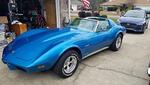
Picture of hood on car below
Question 2: Closing door/fender gaps
There’s every noticeable uneven gaps at the front of both doors, particularly at the top. This is NOT intended to be a show car, but this is just too bad for me to move forward with as is
Should I add material to the fender, or the door, or both? (Pics below)
Can I use fiberglass-reinforced body filler to close/even out this gap?
The gaps at the rear of both doors looks good, but is there anything else I should do BEFORE trying to remedy the uneven gap?
Note - I am 99% sure the front clip was replaced before, which I assume is to blame for the ugliness
Hood:
The very first thing to do is check the hood for straightness. Use something like a very straight 3' aluminum ruler ...something you know is straight on both sides. Find out what you have first, so you know your next moves. More than likely it'll need some filler in certain places, that's just how aftermarket panels usually are. Are there cracks from shipping? Any damage? Bad molding?? Here you really ought to rely on a pro to help you gauge if it's straight or not and any damage that might need to be repaired. Even hidden damage you might not at first see. I mean its best here to get a relyable set of eyes from someone who's done high-quality bodywork before ...not your uncle joe-blow who painted a car once 10 years ago under a shade tree. And guys who do only crash work aren't necessarily good bodywork guys either. They are into 'quickies'. And old-timers who haven't been in the game for years, I hate to say it, are likely to give you crappy advice that was true 30 years ago. Determine where and how much filler will be needed. Maybe even draw it out on the hood with a marker.
If the hood happens to be super straight and needs almost no filler, then note that. Wetsand or better yet, DA the hood gel coat with like 220 as you say, or 180. It's probably better to DA the hood in your case so no water gets wicked into the fiberglass. But you can wetsand as long as you give it time to dry out (a couple days maybe ..in the sun). New guys always make simple mistakes ...so. Anyway, once sanded, prime 2-3 coats with a 2k Urethane primer. Nason or Evercoat/Crossfire (NAPA -- made by Sherwin Williams) ...any of those will work. Everyone here is going to tell you to buy the most expensive product out there but you don't need to. Urethane paint/primer technologies have been 'out of the box' for 20 years now. Go buy a gallon of 2k High Build primer & activator from your local paint and body store.
Get a gallon of filler (tack-free stuff). Make sure it can be applied over primer. It doesn't have to be expensive filler. Even farm & barn Bondo cheap filler (but using 'good' hardner ...not the crappy pink stuff!) will work fine. Most nowadays can be applied over primer. The primer is going to adhere to your hood better, and the filler will adhere to your primer well. Do your bodywork get it straight as an arrow (I mean *perfect*!) and then apply 3 coats of primer over that.
Doors:
Um, Ok. The first thing here is to knock out the old door hinge pins, remove the doors and rebuild the hinges. New pins & bushings. Unless you just did it 2 months or less ago. Then re-install. Open the door slightly and lift up/down on the back of the door and make sure it's not loose. It shouldn't be. We need to see pics of the rear of your door to give you any more advice on door adjustments.
It appears like the top of the fenders might have come unadhered from the metal bird cage. It's real common. Rust & water gets under the adhesive and it separates and pushes up. You have to remove some trim to actually see the adhesive. Do that and see if it's separated. What I did on my car was get in there with a long saws-all wood blade ...like a 12" long course, and thick blade and dig the old adhesive out. By hand ...not actually using the sawsall. Go slow and just using your hands saw it out. It's plastic so it's not that hard to do. And you shouldn't damage any of the fiberglass or body doing it. Then, work some JB weld or other adhesive in the gap and tighten down (don't compress too much ..the old adhesive was about 1/8" probably). The sawing process should remove most of the rust. If not, keep sawing the rust away with the blade teeth.
Then you might need to readjust your doors to get them 'perfect'. This can take a lot of time since it's basically infinite adjustability. It think I spend 2-4 hours on just one of my doors alone!!
Products you'll want to get:
2K Sandable High-build primer & activator
Sandpaper
Course 36 or 40 grit board-sanding sandpaper
Long Dura-block. They're expensive but worth it IMO
Piece of 2" clear vinyl hose from the hardware store. 12" long. It should have a permanent 'bend' in it and works great for around the wheel wells
Now you've opened the floodgates to the guys who are going to attempt to convince you, you need to buy all expensive products. That's hogwash. Such was the case 25 years ago, but esp with primers, that technology has been out of the box forever. I've used lots of inexpensive no-name primers (and clears), and they've all worked great and lasted a long time. In fact they are on test projects I've done (sitting outside) in some cases for 20 years. (rain/sleet/snow/ice/-20*F/Hot temps). For a garage-queen corvette they'll last almost forever. I know guys who've done really good restorations using Cross-Fire (NAPA/Sherwin Williams) paint/primers. 10-12 years later now, they still look fantastic.
My only advice would be to probably stick with a single mfgr of paint products, since you're a beginner. No offense, but people new to bodywork don't usually know where ya can fudge or not and get into trouble attempting to mix & match products playing home-chemist. Don't do it. Best to stick with a paint/primer brand like Nason (formerly DuPont's non-autobody shop line), or another (Omni...by PPG), are both good lines you can get in most locations. If money is no object, you can go PPG mainline products, but your results won't generally be any better or last longer. I'm not sure I'd go with Kirker or some of those brands....
Like I say, Nason (formerly DuPont), Omni (PPG), Crossfire (Sherwin Williams)...those are non-bodyshop lines of the largest major auto paint companies, and well-established products, which have a great track record and won't break the bank. But if you decided to go top-end with Axalta (formerly DuPont), PPG, Martin Senour (Sherwin Williams) ...or any of the other major companies out there ...there are a lot to choose from. Get products you can *drive to* your local automotive paint & body store and get paint and body products. A guy always runs low on things and you don't want to wait days for mail shipping.
Great idea on the door hinge pins and bushings, I haven’t done them and it make sense to do this as a first step before ‘aligning’ everything.
As for the body work on the hood - will heed your advice as best as I can!
As for paint/materials, there is an english color paint shop that I’ve gone to before for another project who can hopefully set me up with the products I need from the same line/manufacturer to helpfully minimize any risk.
Yes, I know there are many on here who are far more expert than I will ever be, and all have their own opinions. I am open to all of them, but will also need to match my budget/skill against the intended outcome of a driver quality paint job!
I didn't see you were from across the pond. Pretty sure Nason is avail there. Others might be as well. Some of the best automotive paints are european-based. Most paint companies I listed are essentially large global chemical companies and automotive paints are just one of their chemical lines.
Most automotive paint companies have a pro-based line which caters to high-production autobody shops, and a consumer-based line (e.g. Nason and Omni) which cater to walk-in guys like you, myself, some other forum members, & small bodyshops. The Pro-based lines for production bodyshops include things like on-site mixing stations, pigments, access to paint formulas, "What's new" paint product updates, Paint rep visits and tips .....things like that, which a bodyshop needs, but which DIY consumers don't really need, or want to pay for. You can get that at the paint shop you go to. The latest formulations such as water-based products and newer technologies are going to be the top-end lines. The consumer-based lines of major companies are generally going to be tried & true Urethanes and generally great to excellent. The paint companies don't provide much warranty support like they do for the mainline autobody shop lines.
And then there are tons of no-name primers and clears that have labels you never heard of before. These *could* be repackaged products from the majors, or smaller, start-up paint companies, or even imported from ...who knows? I've tried many no-name primers & clears on my own personal vehicles, or low-cost projects I did pro-bono 'just to see'. I used to know a shop rep who would give me (or sell dirt cheap) primers & clears. The projects I've done have been sitting outside for now a couple decades in some cases, and my experience is they've been excellent and have lasted a long time (usually about 13 years on the clears). But garaged they would be practically forever if left unmolested. In some cases these no-name products smell EXACTLY like a certain major company product (diff companies' products have distinct smells). I really haven't been stung by any no-namer primers or clears, but that's not to say they're all good (I haven't tried them all, or asian import stuff). But mostly I just stick to Nason/Omni ...which I can get down the road bc it never fails that ya need more of this or that product at the most untimely time. And the quality is good enough. LOL
Whoops! I thought something didn't make sense ...with Tx.
Looking at English Color's line card, they appear to sell a full and good line of products. Get to know a couple guys there. They can walk you through what you need. Ask, perhaps they have some night classes you can attend to learn more. Evening classes and mfgr rep sales events are a great way to possibly get to know a few local body guys with yrs of experiece, who might be able to tutor you when you need help ...which *could* be the biggest single factor that makes your job look amature or Pro! Most P&B shops do offer some classes or manufacturer rep product highlight events. They're fun.
Upol has some decent off-brand primers. I love USC off-brand primer, if they carry it. USC is a pretty big company. Obviously 3M has good stuff. You could definitely use their primers and body fillers (they own Bondo and make almost Everything for paint & body). Evercoat is good. There's nothing wrong with going straight mainline PPG or BASF too. Depends on your budget, needs, etc. I've sprayed both in the past.
I'm not bad at fiberglass work. I can get a panel fairly smooth, and have always done the bodywork and paint on some sportbikes I had in the past with excellent results. My '69 is in the paint shop, and I did a lot of the prep work (including disassembly) and even two rounds of block sanding, but for the final block sanding, painting, and finishing work on my Vette, I'm leaving that to the professionals. If you are at all planning to go with a dark color, you want those fiberglass panels too look like glass with no waviness. That's a tall order for a beginner.
Not sure what paint you want to go with, but a gallon of Diamont is about $950 for the color I'm using, which I think is pretty reasonable. Diamont is also supposed to be pretty easy to shoot, and has an overall excellent reputation. Some colors are more, some are less depending on how many colors need to be blended to make the tint you want in the line.
I haven't seen panels that misaligned in some time and it will be a pain to get that corrected. Was the Vette in an accident, new front clip (you mentioned it could be), or any frame work been done recently (body mount replacements, etc)? If you have a laser alignment tool, measure the frame for straightness.
Maybe consider buying a damaged C3 door shell or hood, and use that as your practice panel and get comfortable with working with fiberglass panels before attacking the vette. While not impossible to get good results for first-timers, using a chrome bumper C3 as your first bodywork/paint project is not the best choice.
Last edited by Corvette-ZL1; Sep 12, 2023 at 03:53 PM.
Thanks for the reply. I don’t know if the car has ever been in a wreck, but it’s definitely possible considering the front clip is a replacement. No frame work that I am aware of either, and no evidence of any by the naked eye looking underneath it.
I have a few spare panels that I plan on practicing on before doing anything to the body of the car. From what I have seen, aside from the door gaps, the fiberglass is pretty straight. It’s hard to tell being that it’s in primer, of course. Aside from the hood, my plan is to do as little sanding and body work as necessary on the rest of the car so I don’t inadvertently make things worse.
@Mark G Here are some pics of the rear door gaps. The passenger side needs some work, but will wait until I get the new hinge bushings installed to align it again.
The rear door gaps look pretty good. The pass side might have a slight sag to it. Like I say, open the doors 6" or so, and lift up down on the door bottoms. You'll be able to feel free-play in the bushings if there are any. Your car's pins might be ok. You should be able to buy bushings at Autozone.
The Driver's side rear door gap looks pretty good. But check the pins/bushings also for wear. And check the striker bolt (and door latch) for wear too. They can both wear. Wiggle the moving latch 'catch' ...driver's door latches commonly wear from chronically sagging doors. Who knows, maybe the hinges and latches were recently replaced? Or a former owner could have re-adjusted the hinges (even with work pins/bushings) to accomodate for wear in the hinges. Those hinges could have been adjusted many times over the years. The doors are pretty heavy. Use a block of wood on a floor jack to help steady and replace/adjust hinge parts.
It would be a good idea to remove the rubber/plastic trim covering the gap between the top/rear of the fenders (by the lower a-pillar) so you can see if the adhesive is broke, cracked or separated where the front clip attaches. Also, lift up on the fender-side of top of the fenders (open the hood and pull up/down on the fender-side), and see if that area has come un-laminated too. Inspect your car's front clip bushings at the radiator surround.
You just don't know what adhesive the previous owner/fixer used or how the attached the front clip.
@Mark G I also have to thank you for this timely information as I will be starting this on my car as well. To add more to this thread, how would you approach the refinishing of the Polyurethane bumpers? would you sand it right down to the bare yellow, or stop before that? What sort of filler would you use on these....is there a flexible filler?
I'm lucky enough that the local body shop supply in our small town has the Nason line, so that's likely what I will be using......I've done a few cars with that product before and it's easy to work with IMO.
Are you going to strip the paint off the fiberglass? Or sand down the paint (to some degree) during your re-paint process? Or is this a super-quickie low-buck job?
It appears by the paint chipping around the door lock, and a few other areas I see, the paint seems to be pretty thick. At least from the few pictures I see. You might have someone look at it (at English Color for example), and evaluate it. Or show us some chips that go down to the fiberglass. As the paint gets thicker the greater liklihood it can crack.
So I help at a body shop a couple days a week. So the process we use to get panels straight is as follows.
1. First scuff with 80 grit dry on a long hard block. It it will help find the low spots. Then just regular filler. Sand 90% of that off with 80 grit dry on long block. Do that again.
2. Next is a glaze which is a finer version of filler. Sand 90% of that off.
3. Then two rounds of epoxy primer. Sanding first with 180 dry. Then 320 dry. Both on a long block.
4. Then 320 on a DA with soft pad.
Do not chemically strip the urethane bumpers. The newer chemical that says safe for fiberglass are not for urethane. It will warp them if it dwells.
i would sand them (insert how far dependent on quality of existing paint or layers) to primer and follow directions of mfr for all layers that may need flex additive and or hardener to flex.
Some use epoxy once sanded down to seal off prior decades of unknown and fill from there.
remove any layers that are cracked, checked, or damaged.
great advice in this thread.
do all your alignment and adjustments like hood first before bodywork







 DIY Bodywork / Paint prep question