When you click on links to various merchants on this site and make a purchase, this can result in this site earning a commission. Affiliate programs and affiliations include, but are not limited to, the eBay Partner Network.
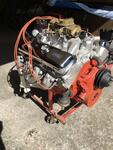
So picked up a 1974 454 corvette the other day. After the engine washing I was surprised to see the motor plate with some unusual markings. I had heard back in the day when motor shops had decked an engine they sometimes restamped the blocks and also heard of some crazy block stamps but wanted to get some thoughts from some of you that had seen more of them than me. The block has the correct mold marking in the back the front stamp is suspect. Thoughts?
The double Vin sequence isn't that concerning being off kilter & twice stamped – errors happened. The engine build stamp however looks like it's been ground out after the option code. If it has, then the VIN stamp is definitely not original. Can you take another pic of the pad straight down?
What is the casting date of the block? Should be on the rear flange, passenger side.
Does the VIN sequence match the VIN tag on the pillar post and the blue certification label on the driver door above the door latch? A pic of the door label would be good to post too.
Last edited by barkingrats; Mar 24, 2024 at 10:56 AM.
that’s how I read the data sheets as well, that they used that block in both trucks and cars. I hand heard stories of double stamping. But I’m like you I worry about the missing information past the initial CW. It does look like it may have been ground.
The first partial vin number looks like it had a partial factory grind out of a stamp above it. Maybe it was vin stamped 3 times. The fonts look good. Somebody who really has experience with stamps would need to look at the pad much more closely and compare to stamps from the same time. I am not convinced it’s a restamp yet. The only thing I’m sure of is that it’s very hard to tell anything unless it’s very obvious. I’ve seen some amazing restamps and some original abominations. It’s really hard to pin down.
It looks like the St. Louis assembly plant messed up on their first attempt at the vin stamp. Show a better picture of the Tonawanda stamp to see if it looks OK.
That's a weird one. Tonawanda stamp is the one done at the engine assembly plant in Tonawanda. It will give the date and a two or three letter identifier indicating what engine it is. The VIN stamp was done on the assembly line as the car was being built. It looks to me like someone took a die grinder to the pad for some reason before the VIN stamp was done. Hard to tell. Get a better picture and post that.
Before you dive too deep, does that VIN match the car? How about the date codes? Does the car's birthday (encoded on the trim tag) match the VIN sequence?
There is no doubt that this is a factory job. It is just very sloppy. It looks like the first vin stamp was above the one running off the pad. Maybe they forgot the change the vin from the previous car. It was mostly ground off but still a little visible. Unfortunately they took most of the Tonawanda R off with it. Then the vin was stamped again, but they placed the stamp too low and part of the numbers ran off the pad. Finally it was stamped the third time to the right of the mess they had made of the first two attempts. It was ok for production on a moving assembly line, but it looks bad to car collectors 50 years later. Don’t worry about the last 5 of the vin being a little out of line. The holders were not real tight and the pieces of type forming the number sequence could wiggle a bit in the holder. This is the original engine. It is just very unusual that the vin took three tries.
With Christmas and New Years thrown in, it appears to be an acceptable time frame from engine build (12/21/73) to VIN assignment (~1/12/74). I think it looks like VIN stamp # 1 shows the remnants of 1 125 of the other two stamps, so who knows why it was ground out.
One of the comments on the NCRS forum is that the T stamp is too close to the pad's forward edge. The Tonawanda BBs were stamped before the heads were installed, so the stamp is typically further from the pad edge. In general I see their point, but it looks like a typical BB stamping to my eye.
Originally Posted by 69L88
The 3999289 casting number indicates it is a truck block, not installed in any Corvette.
Originally Posted by 67:72
Actually it was... and not just trucks:
Originally Posted by 69L88
Whoops
After a few forum searches on '74 LS4 casting numbers, it seems the chart above is incorrect in that it should also include Corvettes through '74. 1975 and after did not have a BB offering. This site shows this: https://corvettec3.ca/casting.htm
As everyone has an opinion, I'll add mine. I think it looks factory, including a factory ground out.
From what I see my guess would be that at St Louis the VIN derivative was initially stamped over the engine suffix code. Someone then decided that it needed to be moved so it was ground out and restamped, but then the pad was missed when the second stamp was done (maybe the guy stamping it was pissed he had to do it again and wasn't paying attention?). A third stamp was then done further to the right of the engine stamp without first doing another grind out, to make sure entire VIN appeared on the block. I came to this conclusion because the ground out took out a portion of the suffix code, and the last two digits of the VIN (25) can be faintly seen over/behind the "14" in the full VIN stamp. If it's a restamp, they're the best reproduced broach marks I've seen on a pad yet. This is my guess, for whatever it's worth?
The 3999289 block was used in a number of 454 engines in 72-74 Chevrolets, including the 72 Corvette LS5 and the 73-74 Corvette LS4.
Designer Imagines A Corvette That Looks More Like a Corvette Than the Corvette
Slideshow: A Jaguar designer's personal project imagines what a modern front-engined Corvette might look like if Chevrolet revisited the golden age of the Stingray.






 Block numbers