When you click on links to various merchants on this site and make a purchase, this can result in this site earning a commission. Affiliate programs and affiliations include, but are not limited to, the eBay Partner Network.
A little back story:
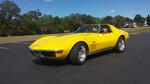
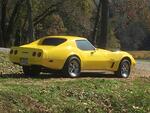
1974 Corvette, partial “body of” restoration. Lifted the body one side at a time, replaced all body mount bushings, cleaned/POR-15 frame, had T/A’s rebuilt by Bair’s, installed ALL new fuel, and brake lines purchased from Inline Tube, and the list goes on…
I’ve researched many times, and yet, somehow so many people rave about how great the Motive Power Bleeder is.
It must be me.
I have read multiple times to simply throw away the chain set that comes with the bleeder.
Then it is suggested to use 2 small bar clamps to seal the bleeder lid. Tightened as tight as I could get them by hand.
Still leaked like a sieve all over my new Borgeson steering box.
Then I added 2 wooden vise clamps, as shown in pics.
Still leaked.
I then added 2 cast iron C clamps, slowed it down, but still leaked.
I pulled EVERYTHING back off and used SIX C clamps, and FINALLY achieved a sealed pressure cap on the Master Cylinder.
Pumped the pressure bleeder tank to 6 psi.
Then I proceed to bleeding the brakes, starting at the right rear outside bleeder screw.
All was finally going well, but I was getting tiny air bubbles in the drain tube, so I stopped and decided to check on the pressure in the tank.
WTF?!
The cap on the pressure tank where the hand pump shaft goes through is spewing brake fluid all over my fender and on the ground!!
I had stacked 3 5-gallon paint buckets to give a platform to rest the bleeder tank on to keep it away from the car.
So, after frantically rushing to clean brake fluid off the fender, I’ve had time to contemplate life decisions and my love/hate relationship with this car.
Has anyone else had similar experiences with their brake bleeding using the motive bleeder?
Did I just get a $hit unit?
Something I’m overlooking??
TIA
Originally tried with 4 small clamps. Then added more various clamps. Also tried 4 C clamps. Nope Finally took SIX C clamps to seal. Don’t know if you can see it, but it’s pouring out of the top of the bleeder.
On some of the garden sprayers I have seen there is a connection between the PUMP and the lid on the housing. Sometimes they get loose and won't hold pressure. Or will leak. Or maybe you got the crappy one made in China that was supposed to come to me. That is usually what happens to me. Maybe just open all the bleeders, fill the MC and walk away for an hour or two and let gravity take it's toll. Hopefully you haven't gotten to the paint job yet on your project.
Check to make sure it's not flat or something.
I use one large c-clamp right in the middle, not all that tight honestly, just snug + maybe 1 ugha
And I know you have to take it off to re-fill but I never put any fluid in the pump, just use it to pressurize the MC. Saves wasting fluid I didn't need and I'm always afraid the thing will leak all over the engine
I've done this with new and empty brakes as well as just "topping" up. If it's only the rear lines or front for some reason I'll gravity bleed to get most of it (and not have to re-fill too many times) but usually I'm in a hurry and pressure bleed
Others will have their own methods, this works for me
M
Jarhead 74 Vette
Use an old inner tube and make a gasket for the master cylinder. I tighten mine down with 1 c-clamp...and not that horribly tight.
You may have gotten a defective component. My home-made pressure bleeder doesn't leak and I pressurize between 10 psig and 20 psig. If not then inspect the upper seal to ensure that thing is put together properly.
I put the brake fluid into the "pressurizer" and pump it up so it is at the top of the Tygon tube before I attach to the master cylinder cover.
Dont tighten as tight as you can, snug is good enough.
Establish your seal before you even put fluid in the tank.
Pump up the pressure empty to see if it holds, adjust clamps(2)if needed.
Some guys dont even put fluid in the tank, just use the air pressure. But then you're constantly resealing everything when you add fluid to the master.
I have no problem putting fluid in the tank. When done simply tilt tank so hose inside is out of the fluid and open front bleeder watching for the air bubble in the line to get to the master then stop.
Helps eliminate any mess when disconnecting everything.
If you've read any thread where I raved about the Motive Power Bleeder, I may have mentioned that I don't put brake fluid into it. If I wanted to do that, I'd add a valve and a disconnect into the system.
I only push air in, and I unclamp, add fluid, and reclamp several times during the job.
Trying to seal a cast iron part with a steel lid, as you know will not work all that well.
Several parts stores have spare master lid "gaskets" or just buy the whole lid and use the gasket. That would seal much better.
I don't understand the concept of using a Motive Tank as just compressed air. Just extra work making sure the master did not run dry.
The whole concept of the Motive is to have an uninterrupted & endless supply of DOT3, on hand. Two bottles of brake fluid in the tank should be ample to do six bleeders. Its not like DOT3 is $20 a bottle, splurge.
Then just make sure to rinse the tank with denatured alcohol when done.
In all fairness, the hose from tank to lid adaptor was too short for my liking. A quick trip to NAPA got me about six feet of clear hose.
I also cover the pump with a towel after building up pressure. Doesn't take much unless all six bleeders are open.
As said by others and myself: pitch the lid adaptor that comes with the tank. Garbage.
Click on my avatar and look for photo album on how to make your own MC (clear) lid adaptor that you don't need to keep removing to see inside.
Last edited by HeadsU.P.; Sep 2, 2024 at 07:18 PM.
..........When done simply tilt tank so hose inside is out of the fluid and open front bleeder watching for the air bubble in the line to get to the master then stop......
Open the front bleeder on either of the front calipers, correct?
Open the front bleeder on either of the front calipers, correct?
Thanks
Yeah, so you can watch the bubble.
And while bleeding keep the level in the master 1/4" to 1/2" below the top edge. When you're done the level should still be there, then top off to 1/4 " below.
Some say let the air push the fluid and some say fill the bottle partially.
I didn’t think to air test it first, so the fluid was already in the bottle and sealing it was such a PITA, I wouldn’t dream of having to open it up multiple times to refill the MC.
I have no clue how anyone was able to get a seal with one or 2 clamps.
Literally, it took all 6 clamps before I could get a tight enough seal that it wasn’t dripping onto my steering box.
Yes, the cover came with a rubbery pad on the bottom. I did have to remove the bales that clamp the MS cover in place for regular use, plus the booster vacuum inlet was also in the way, so I had to slightly rotate the bleeder cover to clear it. However, there was full coverage with the motive pressure plate.
I tried calling Motive to explain the issue, but today was a holiday, so no answer. I’ll try again Tuesday.
Again, I truly appreciate everybody’s help and advice, but I’m still discombobulated about why the pump cap/ t-handle would start spewing brake fluid out of it. Thankfully I got up to check the bottle when I did.
Not sure how long it takes to start eating paint, but I definitely don’t want to find out.
I bought the car with a somewhat fresh, albeit very cheap respray.
Regardless, it’s a 10-footer, except for a few problem areas, but it is what it is.
I have no plans on dropping another $10K for a paint job on this car.
The good news is that paint damage from the brake fluid is pretty quick acting. If you don't see it already I think it's good to go.
I made my own pressure bleeder plate from plexiglass and only use two clamps, moderately tight. That is sufficient to pressurize the system at ~10 psi. Weird that the plate wouldn't seal. What is the top surface of the master like? Any divots on the outer perimeter that would leak the pressure? If you had it off the car, I'd recommend flattening the top surface, but that wouldn't be good without being able to flush out the reservoirs. You might consider a second - or replacement - layer of thicker/softer rubber on the Motive plate.
The good news is that paint damage from the brake fluid is pretty quick acting. If you don't see it already I think it's good to go.
I made my own pressure bleeder plate from plexiglass and only use two clamps, moderately tight. That is sufficient to pressurize the system at ~10 psi. Weird that the plate wouldn't seal. What is the top surface of the master like? Any divots on the outer perimeter that would leak the pressure? If you had it off the car, I'd recommend flattening the top surface, but that wouldn't be good without being able to flush out the reservoirs. You might consider a second - or replacement - layer of thicker/softer rubber on the Motive plate.
Brand new MC and brake booster, newly installed. Bench bled MC last week.
I may try a secondary gasket material on the bleeder plate.
The Motive is a great pressure bleeder but I like to use it differently. Not sure why you are having all the difficulty.
Use it dry without fluid. I use it on DOT3 and DOT 5 systems without any contamination risk. No Mess when dry but you will need to refill the master cylinder a few times. Im good with that if it gets me out of the garage a few minutes later without any disasters.
Bleed the bubbles out of the inner screw first. Do the single bubble outer screw after. If you do it the other way around, you can pull lots of tiny bubbles, one at a time as the fluid travels past the air pocket filled inner screw on the way to the outer screw you are bleeding. Takes a LOT longer that way and wastes fluid.
I had no problem getting it to seal with air and a clamp. If I were going through the effort of building my own plate, I'd just buy a $12- sprayer, like I use for oil in LS engines.
Here's the clamp I used the first time, which got annoying with repeated refils. A single grip-clamp works now. Perhaps they changed the gasket material, or I just lucked out with two original master cylinders?
Originally Posted by Bikespace
I'm glad it worked out for you. There's a reason we always recommend them!
Buy a clamp, too, and throw those chains right in the trash. I use a grip-clamp now, but this worked.
The Motive is a great pressure bleeder but I like to use it differently. Not sure why you are having all the difficulty.
Use it dry without fluid. I use it on DOT3 and DOT 5 systems without any contamination risk. No Mess when dry but you will need to refill the master cylinder a few times. Im good with that if it gets me out of the garage a few minutes later without any disasters.
Bleed the bubbles out of the inner screw first. Do the single bubble outer screw after. If you do it the other way around, you can pull lots of tiny bubbles, one at a time as the fluid travels past the air pocket filled inner screw on the way to the outer screw you are bleeding. Takes a LOT longer that way and wastes fluid.
Thank you for the heads up on the inner screw first.
My only reason for bleeding with fluid is that it was such a pain to get it to seal the first few tries, that I just decided to not have to pull the plate any more than needed.
Im thinking leaving the plate secured to the MC, disconnect the coupling screw from the longer tank hose to the short plate hose. Then grab one of the cheapo garden sprayers and find the correct fitting and cut the wand off the garden sprayer hose and use the garden sprayer to pressurize the MC.
I had no problem getting it to seal with air and a clamp. If I were going through the effort of building my own plate, I'd just buy a $12- sprayer, like I use for oil in LS engines.
Here's the clamp I used the first time, which got annoying with repeated refils. A single grip-clamp works now. Perhaps they changed the gasket material, or I just lucked out with two original master cylinders?
Im getting ready to try using a garden sprayer, cut off the wand and attach it to the Motive bleeder plate with necessary brass fitting from HD.
I’ll post here if it works.
Already started the refund process thru Amazon on the motive kit, and have a couple weeks to get it shipped back for a refund. If this plan works, I may buy just the MC bleeder plate by itself.
Or make my own from clear plexiglass.
Lids:
Not any 'ole hardware store plexiglass, it will shatter.
Lexan. Which is at least a quarter inch thick. Almost bullet-proof and will handle the pressure of clamping.
Lexan can be found at a business near you that handles, makes, installs household windows. aka a glass place.
When you drill Lexan for your hose fitting, go slow and low RPM, sharp bit.
To those of you that use a garden tank sprayer, those do not have a pressure gauge. That is the beauty of the Motive, you can monitore the gauge, knowing when to stop pumping or add air. It doesn't take much pressure to bleed the car. About 8 - 12 lbs is all thats needed.









 Motive power bleeding headaches