






How do you remove a air lock from your rad

Safety Car


Joined: Aug 2000
Posts: 3,711
Likes: 43
From: San Antonio TX

You sure you have an air lock? While somewhat common in cars where the engine is higher than the radiator, it's pretty unusual for a Corvette.
At any rate, where you have a design with the expansion space higher than the highest water point in the engine, all you have to do is remove the radiator (or expansion tank) cap and run the engine to allow unpressurized water circulation. On systems where the highest water level is in the engine, there will be a burp valve to allow bleeding out the air.
But, again, the expansion space for Corvettes will be in the radiator or an expansion tank on the fender which almost always inhibits steam pockets forming in the heads.
At any rate, where you have a design with the expansion space higher than the highest water point in the engine, all you have to do is remove the radiator (or expansion tank) cap and run the engine to allow unpressurized water circulation. On systems where the highest water level is in the engine, there will be a burp valve to allow bleeding out the air.
But, again, the expansion space for Corvettes will be in the radiator or an expansion tank on the fender which almost always inhibits steam pockets forming in the heads.

Le Mans Master

Joined: Mar 2002
Posts: 7,456
Likes: 2
From: Coming home from Luckenbach Texas
Some people have mentioned rolling the right front wheel up onto a curb to make the radiator cap side of the car higher than everything else....it might help.
You ARE using an expansion bottle, aren't you?
You ARE using an expansion bottle, aren't you?
Corvette Stories
The Best of Corvette for Corvette Enthusiasts

Top 10 Most Expensive Corvettes Ever Sold on Bring A Trailer
Brett Foote
10 Things Every Corvette Owner Needs (2026 Edition)
Michael S. Palmer
8 Most "Only Corvette Owners Understand" Quirks and Problems
Pouria Savadkouei
10 Reasons the C6 Z06 is Still A Performance Benchmark After 20 Years
Joe Kucinski
How Much Horsepower Every Corvette Engine "LOST" in 1972
Joe Kucinski
Top 10 DOs and DON'Ts for Protecting Your Convertible Top!
Michael S. Palmer
Top 10 Most Explosive Corvettes Ever Made: Power-to-Weight Ratio Ranked!
Joe Kucinski
150 hp to 1,250 hp: Every Corvette Generation Compared by the Specs That Matter
Joe Kucinski
8 Coolest Corvette Pace Cars (and Replicas) of All Time
Verdad Gallardo
Melting Slicks

Joined: Feb 2002
Posts: 2,298
Likes: 1
From: Sodertalje/Sweden



Race Director


Joined: Sep 2004
Posts: 11,874
Likes: 263
From: Arlington Va Current ride 04 vert, previous vettes: 69 vert, 77 resto mod
Originally Posted by BB wowbagger
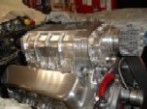
never seen that before...it looks like it replaces the thermostat neck? is that correct ? what does it do and does it replace the need for an additional radiator cap on the radiator or is this a big block thing? that gets used with expansion tanks?



Instructor

Joined: Jun 2000
Posts: 176
Likes: 0
From: Bakersfield CA.
Ive always tryied to raise the Rt ft of the car so after changing the fluid ,the air will have the highest point to get out.,after filling and no more bubbles come out........ start the car and fill the radiator,until the rad. is full. then when the engine starts to heat up and before fluid starts to spill. put the cap on (fill the overflow tank to the cold level.), and after driving the car a few times . ................the engine heats up and discharges fluid into the discharge tank,then after cooling down the radiator sucks fluid back into the system. this will also expell the little bit of air that might be left in the system.(air thats still inside the engine)......
remember that water will boil at a lower temp. when Air is present. so if you have a good overflow tank and Rad. cap . the system will get the air out . but you have to keep an eye on the overflow tank to make sure theres enough fluid there to be sucked back in when the engine is cooling down...
remember that water will boil at a lower temp. when Air is present. so if you have a good overflow tank and Rad. cap . the system will get the air out . but you have to keep an eye on the overflow tank to make sure theres enough fluid there to be sucked back in when the engine is cooling down...

Le Mans Master


Joined: Feb 1999
Posts: 8,351
Likes: 75
From: Tampa Bay FL
Originally Posted by norvalwilhelm
Why must the heater be on?? Is there a valve that prevents the water from circulating through the heater when the heater is off??

Melting Slicks
Joined: Dec 2004
Posts: 2,161
Likes: 0
From: pr, frederick md.
Originally Posted by gerry72
You sure you have an air lock? While somewhat common in cars where the engine is higher than the radiator, it's pretty unusual for a Corvette.
At any rate, where you have a design with the expansion space higher than the highest water point in the engine, all you have to do is remove the radiator (or expansion tank) cap and run the engine to allow unpressurized water circulation. On systems where the highest water level is in the engine, there will be a burp valve to allow bleeding out the air.
But, again, the expansion space for Corvettes will be in the radiator or an expansion tank on the fender which almost always inhibits steam pockets forming in the heads.
At any rate, where you have a design with the expansion space higher than the highest water point in the engine, all you have to do is remove the radiator (or expansion tank) cap and run the engine to allow unpressurized water circulation. On systems where the highest water level is in the engine, there will be a burp valve to allow bleeding out the air.
But, again, the expansion space for Corvettes will be in the radiator or an expansion tank on the fender which almost always inhibits steam pockets forming in the heads.

Melting Slicks
Joined: Dec 2004
Posts: 2,161
Likes: 0
From: pr, frederick md.
i posted it once before on simialar thread. learned it in a rad shop i used to do some welding for. the owner was typical old guy/wizard, seen it all, done it all. probably could blow away any young engineer, even though he never finished high school. but thats another thread. it worked perfectly on cars like vette and oddball trucks like the cab over ones with weird engine placement.

 Only old geezers know that stuff