




Brake tips for 1977

Thread Starter
Intermediate

Joined: Jun 2004
Posts: 48
Likes: 0
From: Orlando FL
 Brake tips for 1977
Forgive me for not using the search tool.
I've tried several times. It keeps telling me to log in. But never lets me do a search.
I'm rebuilding the brakes on my wife's 77 tomorrow. Everything from the master cyl to the rotors will be replaced. I'm not a newbie but I've never done brakes on a 4 piston caliper before. Are there any tricks or tips you could pass along to make the job easier? Likewise what is the deal with the front rotors? Is there some kind of special procedure needed to replace them?
What should I expect when I "break" into these tomorrow?
I've tried several times. It keeps telling me to log in. But never lets me do a search.
I'm rebuilding the brakes on my wife's 77 tomorrow. Everything from the master cyl to the rotors will be replaced. I'm not a newbie but I've never done brakes on a 4 piston caliper before. Are there any tricks or tips you could pass along to make the job easier? Likewise what is the deal with the front rotors? Is there some kind of special procedure needed to replace them?
What should I expect when I "break" into these tomorrow?

Melting Slicks


Joined: Feb 2003
Posts: 3,053
Likes: 4
St. Jude Donor '03,'11
soak everything with PB blaster a few hours before you start. Your gonna need a big as5 breaker bar for the caliper bolts and a good 5 pt 9/16 socket. The rear lines are gonna be real hard to remove without buggering up, hopefully you have new ones.
Thread Starter
Intermediate
Joined: Jun 2004
Posts: 48
Likes: 0
From: Orlando FL
So far, only one of the four bolts on the front calipers were difficult, but the torque wrench took care of that. Gotta love leverage. I do have all new flex hoses as well as stainless sleeved calipers and dot 5 fluid.
So... upon initial disassembly and inspection it looks like the front hubs are attached to the rotors with 5 rivets each. Is this correct? If so I guess that they'll need to be taken somewhere for assembly via some kind of press before they can be used.

Maybe they can still be turned.
So... upon initial disassembly and inspection it looks like the front hubs are attached to the rotors with 5 rivets each. Is this correct? If so I guess that they'll need to be taken somewhere for assembly via some kind of press before they can be used.
Maybe they can still be turned.
Melting Slicks
Joined: Feb 2003
Posts: 3,053
Likes: 4
St. Jude Donor '03,'11
Originally Posted by 2002z28ssconv
So far, only one of the four bolts on the front calipers were difficult, but the torque wrench took care of that. Gotta love leverage. I do have all new flex hoses as well as stainless sleeved calipers and dot 5 fluid.
So... upon initial disassembly and inspection it looks like the front hubs are attached to the rotors with 5 rivets each. Is this correct? If so I guess that they'll need to be taken somewhere for assembly via some kind of press before they can be used.
Maybe they can still be turned.
So... upon initial disassembly and inspection it looks like the front hubs are attached to the rotors with 5 rivets each. Is this correct? If so I guess that they'll need to be taken somewhere for assembly via some kind of press before they can be used.
Maybe they can still be turned.
If you put new rotors on you should check trueness with a dial indicator using the lug nuts on backwards torque the rotor down and measure it. Should be less than a couple of thousands. Try different positions on the hub and maybe you can find a combo that runs true otherwise you have to shim the damn thing. Thats a mess.
Also hope that your new calipers will mount centered on the rotor. Some people have to shim those too. It can be a real mess.
You are taking on a big job. There's tons of knowledge here to get you through it.
Thread Starter
Intermediate
Joined: Jun 2004
Posts: 48
Likes: 0
From: Orlando FL
Just a thought...
You would think that with all the Stingrays running around out there, a rotor supplier would design a one-piece replacement with the same dimensions and make a killing.
Maybe I'm just not seeing the benefits of the original design.
You would think that with all the Stingrays running around out there, a rotor supplier would design a one-piece replacement with the same dimensions and make a killing.
Maybe I'm just not seeing the benefits of the original design.

Race Director

Joined: Jul 2001
Posts: 15,892
Likes: 42
You may want to hold off on this job till you've heard all the pitfalls.
Regarding the rotors, unless they are definitely scrap do not remove them for 'turning'. This practice works for other cars but not C2/C3 Corvettes. The rotors were originally turned as a matched pair (that's why they're riveted together) and a replacemnt rotor will need to be turned as an assembly with it's hub. Ecessive lateral runout mentioned above is the risk you run.
It's highly unlikely that they need turning anyway, usually they're good for 100-125K miles, not like modern cars. Don't assume they need to be turned just because it's normal to do it on other cars.
You mention changing over to DOT5 fluid. Do not do this unless you've replaced or cleaned the entire brake system 100%. The two fluid types do not mix and all sorts of people will tell you about the crud that develops.
Regarding the rotors, unless they are definitely scrap do not remove them for 'turning'. This practice works for other cars but not C2/C3 Corvettes. The rotors were originally turned as a matched pair (that's why they're riveted together) and a replacemnt rotor will need to be turned as an assembly with it's hub. Ecessive lateral runout mentioned above is the risk you run.
It's highly unlikely that they need turning anyway, usually they're good for 100-125K miles, not like modern cars. Don't assume they need to be turned just because it's normal to do it on other cars.
You mention changing over to DOT5 fluid. Do not do this unless you've replaced or cleaned the entire brake system 100%. The two fluid types do not mix and all sorts of people will tell you about the crud that develops.
Melting Slicks
Joined: Feb 2003
Posts: 3,053
Likes: 4
St. Jude Donor '03,'11
Originally Posted by bams12
Not meaning to steal this thread however I need to service the park brake on my 80 . Will i need to remove my disc with the associated problems such as drilling the rivets etc. ??? Brent
Corvette Stories
The Best of Corvette for Corvette Enthusiasts

Top 10 Most Expensive Corvettes Ever Sold on Bring A Trailer
Brett Foote
10 Things Every Corvette Owner Needs (2026 Edition)
Michael S. Palmer
8 Most "Only Corvette Owners Understand" Quirks and Problems
Pouria Savadkouei
10 Reasons the C6 Z06 is Still A Performance Benchmark After 20 Years
Joe Kucinski
How Much Horsepower Every Corvette Engine "LOST" in 1972
Joe Kucinski
Top 10 DOs and DON'Ts for Protecting Your Convertible Top!
Michael S. Palmer
Top 10 Most Explosive Corvettes Ever Made: Power-to-Weight Ratio Ranked!
Joe Kucinski
150 hp to 1,250 hp: Every Corvette Generation Compared by the Specs That Matter
Joe Kucinski
8 Coolest Corvette Pace Cars (and Replicas) of All Time
Verdad Gallardo
Thread Starter
Intermediate
Joined: Jun 2004
Posts: 48
Likes: 0
From: Orlando FL
Unfortunately having no functional brakes is a bit of an inconvenience when it comes time to drive the car. So I can't put it off. I'm already half way into it now anyway. I was going to turn one of the rotors simply because the pads got down to the rivets and chewed one up a little bit.
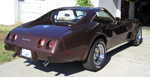
I have since just decided to put it back on for now and worry about that later. The pads were cheap anyway and the wife wants to drive her Valentines Day gift.
The entire system is being replaced so Dot5 shouldn't be a problem either. I'm blowing the lines out before I reconnect them.
I have since just decided to put it back on for now and worry about that later. The pads were cheap anyway and the wife wants to drive her Valentines Day gift.
The entire system is being replaced so Dot5 shouldn't be a problem either. I'm blowing the lines out before I reconnect them.
Race Director

Joined: Sep 2002
Posts: 10,362
Likes: 5
From: San Diego - Deep Within The State of CONFUSION!
You mention changing over to DOT5 fluid. Do not do this unless you've replaced or cleaned the entire brake system 100%. The two fluid types do not mix and all sorts of people will tell you about the crud that develops.
Absolutely. These cars use Dot 3
Absolutely. These cars use Dot 3
Race Director
Joined: Jul 2001
Posts: 15,892
Likes: 42
Originally Posted by 2002z28ssconv
The entire system is being replaced so Dot5 shouldn't be a problem either. I'm blowing the lines out before I reconnect them.
Blowing out the lines is insufficent. Do yourself a favour and stay with DOT3 or 4.
Melting Slicks
Joined: Feb 2003
Posts: 3,053
Likes: 4
St. Jude Donor '03,'11
Originally Posted by Mike Ward
I bet you're not replacing the proportioning valve..............
Blowing out the lines is insufficent. Do yourself a favour and stay with DOT3 or 4.
Blowing out the lines is insufficent. Do yourself a favour and stay with DOT3 or 4.

mine siezed up after adding DOT5. Brake light stayed on all the time.
Thread Starter
Intermediate
Joined: Jun 2004
Posts: 48
Likes: 0
From: Orlando FL
Okay, let me correct myself. My apologies. It's DOT5.1 fluid.
I've done a bit of research now and found that 5.1 brake fluid is a glycol-based fluid like the DOT 3 and 4 types, and mixes with DOT 3 and 4 without problems since it's not silicone-based like DOT 5 fluid. As far as the basic behavior of 5.1 fluids, they are much like "high performance" DOT4 fluids, rather than traditional DOT5 brake fluids. DOT5.1 provides superior performance over the other brake fluids discussed here. It has a higher boiling point, either dry or wet, than DOT 3 or 4. In fact, its dry boiling point (about 275 degrees C) is almost as high as racing fluid (about 300 degrees C) and 5.1's wet boiling point (about 175 to 200 degrees C) is naturally much higher than racing's (about 145 C).
DOT5.1 is said to be compatible with all rubber formulations.
DOT5.1 fluids are non-silicone fluids and will absorb water.
DOT5.1 fluids, like DOT3 & DOT4 will still eat paint.
This was information I've combined from several sources, not my personal experience.
I've done a bit of research now and found that 5.1 brake fluid is a glycol-based fluid like the DOT 3 and 4 types, and mixes with DOT 3 and 4 without problems since it's not silicone-based like DOT 5 fluid. As far as the basic behavior of 5.1 fluids, they are much like "high performance" DOT4 fluids, rather than traditional DOT5 brake fluids. DOT5.1 provides superior performance over the other brake fluids discussed here. It has a higher boiling point, either dry or wet, than DOT 3 or 4. In fact, its dry boiling point (about 275 degrees C) is almost as high as racing fluid (about 300 degrees C) and 5.1's wet boiling point (about 175 to 200 degrees C) is naturally much higher than racing's (about 145 C).
DOT5.1 is said to be compatible with all rubber formulations.
DOT5.1 fluids are non-silicone fluids and will absorb water.
DOT5.1 fluids, like DOT3 & DOT4 will still eat paint.
This was information I've combined from several sources, not my personal experience.



Thread Starter
Intermediate
Joined: Jun 2004
Posts: 48
Likes: 0
From: Orlando FL
We'll do the 2-man method tomorrow hopefully. I wrenched too hard on the right rear flex hose and broke the distribution block. If I can't find one around town on Sunday I'll send the wife over to Eckler's on Monday. Other than that the only other problem I've had was one bolt on the right rear caliper. Actually, come to think of it, everything on the right rear was a pita. The brake line wouldn't come out and the head rounded, then the stuck bolt, then the distribution block. Of course the right rear was the one caliper that was spewing fluid. Otherwise I probably would have given up on that one. But it was the one I absolutely had to replace. Go figure.
