



Oil in intake manifold
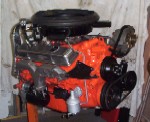
Thread Starter
Melting Slicks

Joined: Dec 2000
Posts: 2,198
Likes: 2
From: Eastern Connecticut

I pulled the intake off again (getting good at it). Still oil in the drivers side and a little in the pass side:

All the plugs look about the same, a little bit of black deposits on the ground electrodes, except #2 and #3 are pretty clean (fed by the same runner). All the head ports have a little oil in them, also except #2 and #3. There was a little oil around #6 and #7 port on the manifold, but I don't know if it was from running or it dripped out of the heat shield.
I'm bringing the manifold to my machinist friend, he's going to give it a good looking-over. Another set of eyes might catch something. I am giving him the old gaskets, the RTV off the ends and I didn't wipe anything, so he can play detective with as many clues as possible.
Hopefully he'll find something, and/or gasketdude will come up with a miracle gasket. BTW, the steel-core NAPA gaskets I used measure under 1/16" compressed.
Joe
PS, can't try "the test" now, but it sounds like a good idea if I still have problems.
[oh yeah, I looked at the bolt holes real carefully before I unstuck the manifold. They all looked perfectly centered. Was the original GM head gasket a steel shim in 1973? ]
All the plugs look about the same, a little bit of black deposits on the ground electrodes, except #2 and #3 are pretty clean (fed by the same runner). All the head ports have a little oil in them, also except #2 and #3. There was a little oil around #6 and #7 port on the manifold, but I don't know if it was from running or it dripped out of the heat shield.
I'm bringing the manifold to my machinist friend, he's going to give it a good looking-over. Another set of eyes might catch something. I am giving him the old gaskets, the RTV off the ends and I didn't wipe anything, so he can play detective with as many clues as possible.
Hopefully he'll find something, and/or gasketdude will come up with a miracle gasket. BTW, the steel-core NAPA gaskets I used measure under 1/16" compressed.
Joe
PS, can't try "the test" now, but it sounds like a good idea if I still have problems.
[oh yeah, I looked at the bolt holes real carefully before I unstuck the manifold. They all looked perfectly centered. Was the original GM head gasket a steel shim in 1973? ]
Last edited by joe73vette; May 24, 2005 at 10:08 PM.

Pro


Joined: Jan 2004
Posts: 535
Likes: 1
From: Darwin, Australia NT
Im in the middle of a manifold swap and realised Im sucking oil into the ports too. Heads have been angle milled and have had manifolds done to match.
Will try sealant around ports. Tossing up between non hardening Permatex or black silastic. Permatex would last longer but the silastic will fill a bigger gap. Contact glues have also been mentioned but they are a little harder to use properly.
Will try sealant around ports. Tossing up between non hardening Permatex or black silastic. Permatex would last longer but the silastic will fill a bigger gap. Contact glues have also been mentioned but they are a little harder to use properly.

Le Mans Master


Joined: Mar 2004
Posts: 7,507
Likes: 1,513
From: Little Rock AR
Joe,
I did have this problem years ago when I swapped intakes from an Edelbrock Performer to a LT-1 copy intake. The new intake was machined wrong and it never would seal right. The car ran stronger with the new intake but it was not sealing at the ports. After several tries at regasketing and still having the problems I gave up and went back to my Edelbrock Performer. I also added a Moroso valley pan baffle to keep the oil splash off the bottom of the intake surfaces. Not a bad mod if you ask me. The power was down a bit with the Performer intake but the problem went away.
-Mark.
I did have this problem years ago when I swapped intakes from an Edelbrock Performer to a LT-1 copy intake. The new intake was machined wrong and it never would seal right. The car ran stronger with the new intake but it was not sealing at the ports. After several tries at regasketing and still having the problems I gave up and went back to my Edelbrock Performer. I also added a Moroso valley pan baffle to keep the oil splash off the bottom of the intake surfaces. Not a bad mod if you ask me. The power was down a bit with the Performer intake but the problem went away.
-Mark.

Team Owner


Joined: Jul 1999
Posts: 65,492
Likes: 230
From: Orange Park Florida
After some frustrating attempts to cure the problem on this 355 engine, I took the edel base into the shop and had 20 mills cut off the top edge of the flanges....changing the plane/angle as it hit the gaskets/heads....
THAT finally cured the oil sucking problem....the gaskets were wet and it looked just like the pictures....oil stains all over the bottom 1/2 of the gaskets...and yes, I also have some oil in the PCV problems also....stock valve covers, but I cured most of that....
GENE
THAT finally cured the oil sucking problem....the gaskets were wet and it looked just like the pictures....oil stains all over the bottom 1/2 of the gaskets...and yes, I also have some oil in the PCV problems also....stock valve covers, but I cured most of that....
GENE

Drifting


Joined: Jan 2002
Posts: 1,645
Likes: 11
From: Schaumburg IL
Oil In Runners
Originally Posted by Simmo
Im in the middle of a manifold swap and realised Im sucking oil into the ports too. Heads have been angle milled and have had manifolds done to match.
Will try sealant around ports. Tossing up between non hardening Permatex or black silastic. Permatex would last longer but the silastic will fill a bigger gap. Contact glues have also been mentioned but they are a little harder to use properly.
Will try sealant around ports. Tossing up between non hardening Permatex or black silastic. Permatex would last longer but the silastic will fill a bigger gap. Contact glues have also been mentioned but they are a little harder to use properly.
Drifting
Joined: Jan 2002
Posts: 1,645
Likes: 11
From: Schaumburg IL
Milling Intake
Originally Posted by mrvette
After some frustrating attempts to cure the problem on this 355 engine, I took the edel base into the shop and had 20 mills cut off the top edge of the flanges....changing the plane/angle as it hit the gaskets/heads....
THAT finally cured the oil sucking problem....the gaskets were wet and it looked just like the pictures....oil stains all over the bottom 1/2 of the gaskets...and yes, I also have some oil in the PCV problems also....stock valve covers, but I cured most of that....
GENE
THAT finally cured the oil sucking problem....the gaskets were wet and it looked just like the pictures....oil stains all over the bottom 1/2 of the gaskets...and yes, I also have some oil in the PCV problems also....stock valve covers, but I cured most of that....
GENE

Le Mans Master


Joined: Feb 1999
Posts: 8,351
Likes: 75
From: Tampa Bay FL
Will the front/rear cork gaskets cause gaps on the intake/head mating surfaces? I always thought we shouldn't use them since they tend to squirm (I've never actually had a problem with them squirming out of position).
Thinking I should pull the front/rear cork strips and use RTV if (and ONLY IF) they are in fact contributing to the intake/head sealing problem...
FWIW, I JUST installed the Printoseals a weekend ago and am checking the oil periodically to see if I have solved my consumption problem on the '80 L48. Definitely have less 'lifter noise' (was another problem I was diagnosing. I suspect the lifter noise was actually noise coming from the leaking intake gasket. Quieter now but not completely gone...
Thinking I should pull the front/rear cork strips and use RTV if (and ONLY IF) they are in fact contributing to the intake/head sealing problem...
FWIW, I JUST installed the Printoseals a weekend ago and am checking the oil periodically to see if I have solved my consumption problem on the '80 L48. Definitely have less 'lifter noise' (was another problem I was diagnosing. I suspect the lifter noise was actually noise coming from the leaking intake gasket. Quieter now but not completely gone...

Melting Slicks

Joined: Feb 2003
Posts: 2,331
Likes: 6
From: Long Island NY
I've been following this thread closely, as I have the same problem ('78-L82-95k miles). I replaced the intake gasket last year with Fel-Pro 1204's. I'm right now replacing the valve stem seals with Fel_Pro Umbrella & O-Rings together. All the seals were gone. But I have a strong feeling about the intake gasket. 2 points to bring up, anybody use Mr. Gaskets Ultra-Seal II? And I had my intake was powdercoated (looks great), but I'm think that the holes were coated and causing the manifold not to seat as flush...
Corvette Stories
The Best of Corvette for Corvette Enthusiasts

5 Best & 5 Worst Corvette Daily Drivers
Joe Kucinski
The Headlights of Every Corvette Generation Explained
Joe Kucinski
5 Best & 5 Most Overrated Corvette Track Packages of All Time!
Joe Kucinski
Every 2027 Corvette Engine Explained
Joe Kucinski
Designer Imagines A Corvette That Looks More Like a Corvette Than the Corvette
Verdad Gallardo
10 Ugly Corvettes That We Still Kinda Love
Joe Kucinski
Top 10 Most Expensive Corvettes Ever Sold on Bring A Trailer
Brett Foote
10 Things Every Corvette Owner Needs (2026 Edition)
Michael S. Palmer
8 Most "Only Corvette Owners Understand" Quirks and Problems
Pouria Savadkouei
Thread Starter
Melting Slicks
Joined: Dec 2000
Posts: 2,198
Likes: 2
From: Eastern Connecticut
OK, report from the machinist:
There's nothing wrong with the intake manifold or the gaskets. They are all compressed equally and line up with the ports.
That means something else is causing the oil leakage: either valve seals or I installed a second piston ring upside down.
The seals are hard plastic, could be a problem, but nobody else seems to have problems with these heads. I don't want to tear the motor apart either. So I'll change the seals and hope for the best.
It seems odd that oil could go by the rings and back up to the manifold, but he says reversion does funny things.
Joe
There's nothing wrong with the intake manifold or the gaskets. They are all compressed equally and line up with the ports.
That means something else is causing the oil leakage: either valve seals or I installed a second piston ring upside down.
The seals are hard plastic, could be a problem, but nobody else seems to have problems with these heads. I don't want to tear the motor apart either. So I'll change the seals and hope for the best.
It seems odd that oil could go by the rings and back up to the manifold, but he says reversion does funny things.
Joe
Pro
Joined: Jan 2004
Posts: 535
Likes: 1
From: Darwin, Australia NT
Originally Posted by Simmo
Im in the middle of a manifold swap and realised Im sucking oil into the ports too. Heads have been angle milled and have had manifolds done to match.
Will try sealant around ports. Tossing up between non hardening Permatex or black silastic. Permatex would last longer but the silastic will fill a bigger gap. Contact glues have also been mentioned but they are a little harder to use properly.
Will try sealant around ports. Tossing up between non hardening Permatex or black silastic. Permatex would last longer but the silastic will fill a bigger gap. Contact glues have also been mentioned but they are a little harder to use properly.
Drifting
Joined: Jan 2002
Posts: 1,645
Likes: 11
From: Schaumburg IL
Oil In INtake
Hope someone see this and sheds some light.
I removed the Torker II that I installed last week with great care. I did everything by the book and then some.
- Used FelPro 1212's that will compress - not hard like the 1210's were.
- Use Edelbrock Gasketcinch on the head and gasket as a contact cement and boy did it hold the gasket in place.
- Used RTV Red on the end rails, not the rubber ends.
- Torqued the maniofld bolts not once but 3 times letting it set for about 12 hours each time.
Results - after about 10 minutes of run time the damn thing was smoking again. Me too!!
- Pulled the carb and the floor of the manifold was oily.
- Pulled the manifold and the print of the manifold to the gasket seemed ok to me, not off center etc.
- All and repeat all runners were oily in the manifold.
At this point I do not think it is the intake manifold sealing, but rather something else feeding the oil into the manifold, but I do not have a clue what it would be. I can't believe all 8 intake guides are messed up as they were new with only 300 miles on them and used PC seals.
This has happened with 2 different stock intake manifolds. The heads are the 1973 049's and I do not believe the intake rocker studs are open to the runners as were some older ones. I can not feel them protruding or open into the runner. I have heard this is a problem on some and needs thread sealer. Am I missing something in this area??
I used a new Delco fuel pump on the rebuild so I would doubt the thing is sucking oil, but at this point who knows. I did not see oil residue on the carb filter.
The PCV valve is a possibilty but I changed this with others also. I plan on putting on another manifold that I have - Pro Products cyclone that I am borrowing from a shop. At that time I will pull and block the PCV valve to see what happens.
The trans vacuum line to the modulator is a possiblilty but I am not losing fluid and the oily residue in the intake is not red.
Question - How can I tell if the heads are not of the correct angle on the intake ports and no manifold will ever seal?
Compression check or leak down or pray - advice.
Thanks for reading this problem. Jim
I removed the Torker II that I installed last week with great care. I did everything by the book and then some.
- Used FelPro 1212's that will compress - not hard like the 1210's were.
- Use Edelbrock Gasketcinch on the head and gasket as a contact cement and boy did it hold the gasket in place.
- Used RTV Red on the end rails, not the rubber ends.
- Torqued the maniofld bolts not once but 3 times letting it set for about 12 hours each time.
Results - after about 10 minutes of run time the damn thing was smoking again. Me too!!
- Pulled the carb and the floor of the manifold was oily.
- Pulled the manifold and the print of the manifold to the gasket seemed ok to me, not off center etc.
- All and repeat all runners were oily in the manifold.
At this point I do not think it is the intake manifold sealing, but rather something else feeding the oil into the manifold, but I do not have a clue what it would be. I can't believe all 8 intake guides are messed up as they were new with only 300 miles on them and used PC seals.
This has happened with 2 different stock intake manifolds. The heads are the 1973 049's and I do not believe the intake rocker studs are open to the runners as were some older ones. I can not feel them protruding or open into the runner. I have heard this is a problem on some and needs thread sealer. Am I missing something in this area??
I used a new Delco fuel pump on the rebuild so I would doubt the thing is sucking oil, but at this point who knows. I did not see oil residue on the carb filter.
The PCV valve is a possibilty but I changed this with others also. I plan on putting on another manifold that I have - Pro Products cyclone that I am borrowing from a shop. At that time I will pull and block the PCV valve to see what happens.
The trans vacuum line to the modulator is a possiblilty but I am not losing fluid and the oily residue in the intake is not red.
Question - How can I tell if the heads are not of the correct angle on the intake ports and no manifold will ever seal?
Compression check or leak down or pray - advice.
Thanks for reading this problem. Jim
Le Mans Master
Joined: Mar 2004
Posts: 7,507
Likes: 1,513
From: Little Rock AR
I had another engine with an oil problem. The new valve stem seals were causing the grief. They were teflon style and they were all cracked. Some were riding up and down on the stems instead of riding on the guide bosses. Just not right. The valves seemed to have excessive clearances in some cases. The valves could have been moving around in the guides causing the seals to fatigue. Maybe caused by floating the valves once, maybe just bad machine work. I went to rubber umbrella seals and all was better.
-Mark.
-Mark.
Drifting
Joined: Jan 2002
Posts: 1,645
Likes: 11
From: Schaumburg IL
Oil in INtake
Mark,
After I install the intake I am going to pull the rockers and put in unbrealla seals a matter of fact. Yes, the PC seals are new but who knows if there are any good. Thanks for the advice.
Jim
After I install the intake I am going to pull the rockers and put in unbrealla seals a matter of fact. Yes, the PC seals are new but who knows if there are any good. Thanks for the advice.
Jim
Drifting
Joined: Jan 2002
Posts: 1,645
Likes: 11
From: Schaumburg IL
Originally Posted by stingr69
Be sure the intake is not bottoming out on the front/rear block surfaces. Bolt the intake down without sealer and run a feeler gauge between the block and the intake across the front and rear. You are looking for some amount of gap. If you have contact on the front or rear, you will have a leak on the sides.
Do not use the front and rear gasket strips. Only use RTV in that position. Use some High-Tack on the gaskets around the port openings on both sides of the gasket. High-Tack is rated for gasoline contact. Many other sealers are not rated for continuous gasoline contact.
It IS coming from somewhere.
Maybe the fuel pump diaphram is leaking?
-Mark.
Do not use the front and rear gasket strips. Only use RTV in that position. Use some High-Tack on the gaskets around the port openings on both sides of the gasket. High-Tack is rated for gasoline contact. Many other sealers are not rated for continuous gasoline contact.
It IS coming from somewhere.
Maybe the fuel pump diaphram is leaking?
-Mark.
Le Mans Master
Joined: Mar 2004
Posts: 7,507
Likes: 1,513
From: Little Rock AR
Originally Posted by bigvette1
Mark, are you saying to bolt the intake on with or without the gaskets in place?
 Use nothing front and rear. You want to check for any contact across the front or rear block/intake interface with the manifold torqued down. Normaly, the front and rear interface on the block/intake surface has a gap that we fill with RTV sealer. If the machining on the block/heads/intake is off a bit, the intake could bottom out on the top of the block front or rear surface causing the ports on the side to be up off the heads a tiny bit causing a leak. Run a feeler gauge across the front and back to be sure you have a gap. Not a likely problem but one you need to check.
 As for the umbrella seals, I would pull the other seals off and try running with just the outer springs and the umbrellas in an effort to diagnose the situation. Be sure to wiggle the valve stems while you have it apart to check for excessive clearance. If the situation improves, you are getting warmer.
-Mark.



Le Mans Master
Joined: Mar 2002
Posts: 7,456
Likes: 2
From: Coming home from Luckenbach Texas
Originally Posted by joe73vette
The seals are hard plastic, could be a problem, but nobody else seems to have problems with these heads.
I haven't started troubleshooting the problem yet. It's the original block, so it could be rings. Or it could be the intake sucking oil.
I don't have the telltale blue smoke on startup caused by bad valve seals, so I don't think that's it.
Stay tuned...