




How does a powervalve work????

Thread Starter
Instructor


Joined: Jan 2003
Posts: 244
Likes: 0
From: Thomson Illinois
 How does a powervalve work????
Grettings all.
I am curious as to "HOW" a powervalve works. The reason I am curious, when driving my car, my co-pilot (aka wife) tells me she can see a liquid flowing thru the boost referrence lines on the rear carb.
For those of you that may not be familiar to what I have done........
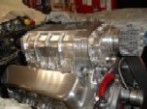
I have modified some 600 Holleys for use on my blower by following some guidlines Holley referrenced to me. This consisted of drilling a hole (1/8" - 3/16") thru the main body of the carb to the vacuum chamber of the powervalve and connected a line from this chamber to the intake manifold under the blower.
Now, at deceleration she has seen a liquid flowing out of the line that I installed from the rear carb toward the intake manifold. The front carb does not do this. This tells me that one of the carbs are malfunctioning but I do not know which.

Any ideas?
I am curious as to "HOW" a powervalve works. The reason I am curious, when driving my car, my co-pilot (aka wife) tells me she can see a liquid flowing thru the boost referrence lines on the rear carb.
For those of you that may not be familiar to what I have done........
I have modified some 600 Holleys for use on my blower by following some guidlines Holley referrenced to me. This consisted of drilling a hole (1/8" - 3/16") thru the main body of the carb to the vacuum chamber of the powervalve and connected a line from this chamber to the intake manifold under the blower.
Now, at deceleration she has seen a liquid flowing out of the line that I installed from the rear carb toward the intake manifold. The front carb does not do this. This tells me that one of the carbs are malfunctioning but I do not know which.
Any ideas?
Race Director


Joined: Nov 2000
Posts: 11,872
Likes: 12
From: Waterloo ontario Canada
I run NO springs on my power valves, boost pushes them open, vacuum keeps them closed.
I used the existing port in the bottom of the carb, the one where the check valve was, I filled in the hole with devcon alumunim and then drilled a new set of ports so a line could be run from the carb base to the intake on the motor below the blower.
If you actually drilled into the gas part of the power valve you would be running so rich at idle that the car wouldn't idle at all. You would notice the car stumbling badly if you struck gas.
Your wife might see something in the lines but you could feel that flooding
Without seeing where you actually drilled the port it is hard to say if you are sucking up some gas but agian at idle with high vacuum you would think if you had a leak it would be sucking gas all the time and flooding the engine.
At coast vacuum can reach 20 inches. I run vacuum boost gages both above and below the blower.
I used the existing port in the bottom of the carb, the one where the check valve was, I filled in the hole with devcon alumunim and then drilled a new set of ports so a line could be run from the carb base to the intake on the motor below the blower.
If you actually drilled into the gas part of the power valve you would be running so rich at idle that the car wouldn't idle at all. You would notice the car stumbling badly if you struck gas.
Your wife might see something in the lines but you could feel that flooding
Without seeing where you actually drilled the port it is hard to say if you are sucking up some gas but agian at idle with high vacuum you would think if you had a leak it would be sucking gas all the time and flooding the engine.
At coast vacuum can reach 20 inches. I run vacuum boost gages both above and below the blower.

Race Director
Joined: Mar 2001
Posts: 11,322
Likes: 1
From: Living in the Hartland
The power valve is muck like a second 'jet' that has a spring that pulls a valve open to allow fuel to flow, the vac sucks on the rubber seal pulling the valve closed when the vaccum is above the PV rating, if there is a hole in the rubber seal gas will get sucked through it on into the line you have so you might have a blown power valve
Thread Starter
Instructor
Joined: Jan 2003
Posts: 244
Likes: 0
From: Thomson Illinois
below are 2 pics showing the location of the hole drilled. Holley referrenced this area as the powervalve vacuum chamber. I did not know if fuel was present under normal conditions or not.
What effect would a "Blown" powervalve have... other than fuel being where it shouldnt? Would it hinder the idle/acceleration or would there be very little notice?


Thanks!
KC
What effect would a "Blown" powervalve have... other than fuel being where it shouldnt? Would it hinder the idle/acceleration or would there be very little notice?
Thanks!
KC
Race Director
Joined: Nov 2000
Posts: 11,872
Likes: 12
From: Waterloo ontario Canada
Originally Posted by Fevre
The power valve is muck like a second 'jet' that has a spring that pulls a valve open to allow fuel to flow, the vac sucks on the rubber seal pulling the valve closed when the vaccum is above the PV rating, if there is a hole in the rubber seal gas will get sucked through it on into the line you have so you might have a blown power valve
There is a predrilled passage in the main jet plate. When the power valve is open fuel is allowed into this passage. To richen a power valve you can drill this passage.
Thread Starter
Instructor
Joined: Jan 2003
Posts: 244
Likes: 0
From: Thomson Illinois
the engine does die on its own but more noticable.... when the engine comes to an idle whether from starting or at a stop light the rpms will vary from 700 to 1100. Up and down..... and the longer it idles, the worse it gets until it dies on its own. A cycle will last about 1 minute till it dies.
this is Great information guys. Thanks for the information!
this is Great information guys. Thanks for the information!
Corvette Stories
The Best of Corvette for Corvette Enthusiasts

Top 10 Most Expensive Corvettes Ever Sold on Bring A Trailer
Brett Foote
10 Things Every Corvette Owner Needs (2026 Edition)
Michael S. Palmer
8 Most "Only Corvette Owners Understand" Quirks and Problems
Pouria Savadkouei
10 Reasons the C6 Z06 is Still A Performance Benchmark After 20 Years
Joe Kucinski
How Much Horsepower Every Corvette Engine "LOST" in 1972
Joe Kucinski
Top 10 DOs and DON'Ts for Protecting Your Convertible Top!
Michael S. Palmer
Top 10 Most Explosive Corvettes Ever Made: Power-to-Weight Ratio Ranked!
Joe Kucinski
150 hp to 1,250 hp: Every Corvette Generation Compared by the Specs That Matter
Joe Kucinski
8 Coolest Corvette Pace Cars (and Replicas) of All Time
Verdad Gallardo

Burning Brakes

Joined: Jul 2005
Posts: 787
Likes: 0
A power valve is a diaphragm device that uses vacuum levels to decide when richer A/F mixtures will occur.
The reference lines you have are a measure that helps becuase the blower is always creating vacuum in the carbs (so they would be fooled)......instead, taking a lack of vacuum in the intake to trip the power valves.
The reference lines you have are a measure that helps becuase the blower is always creating vacuum in the carbs (so they would be fooled)......instead, taking a lack of vacuum in the intake to trip the power valves.

Racer


Joined: Apr 2006
Posts: 477
Likes: 43
From: Millbrae California
a power valve is used to cause the air/ fuel mixture to go leaner (close) when the vaccum is above its rated vaccum point. it does this to both improve fuel economy and avoid fouling the spark plugs with the richer power mixture when the power valve is open.
if there is gas going thru the vaccum lines the power valve (or gaskets) are bad!
a boost referenced power valve looks at the vaccum or boost that is in the intake system below the supercharger so the power valve closes or opens by the true vaccum (or boost) the engine has and not the vacuum created by the supercharger. the standard power valve used on most supercharged engines is 4.5 inches of vaccum.
there is a much more detailed explaination of this in the July 2006 issue of Street Rodder or also at www.automotiveu.com.
hope this helps
if there is gas going thru the vaccum lines the power valve (or gaskets) are bad!
a boost referenced power valve looks at the vaccum or boost that is in the intake system below the supercharger so the power valve closes or opens by the true vaccum (or boost) the engine has and not the vacuum created by the supercharger. the standard power valve used on most supercharged engines is 4.5 inches of vaccum.
there is a much more detailed explaination of this in the July 2006 issue of Street Rodder or also at www.automotiveu.com.
hope this helps
Thread Starter
Instructor
Joined: Jan 2003
Posts: 244
Likes: 0
From: Thomson Illinois
Originally Posted by olescarb
a power valve is used to cause the air/ fuel mixture to go leaner (close) when the vaccum is above its rated vaccum point. it does this to both improve fuel economy and avoid fouling the spark plugs with the richer power mixture when the power valve is open.
if there is gas going thru the vaccum lines the power valve (or gaskets) are bad!
a boost referenced power valve looks at the vaccum or boost that is in the intake system below the supercharger so the power valve closes or opens by the true vaccum (or boost) the engine has and not the vacuum created by the supercharger. the standard power valve used on most supercharged engines is 4.5 inches of vaccum.
there is a much more detailed explaination of this in the July 2006 issue of Street Rodder or also at www.automotiveu.com.
hope this helps
if there is gas going thru the vaccum lines the power valve (or gaskets) are bad!
a boost referenced power valve looks at the vaccum or boost that is in the intake system below the supercharger so the power valve closes or opens by the true vaccum (or boost) the engine has and not the vacuum created by the supercharger. the standard power valve used on most supercharged engines is 4.5 inches of vaccum.
there is a much more detailed explaination of this in the July 2006 issue of Street Rodder or also at www.automotiveu.com.
hope this helps
KC
