



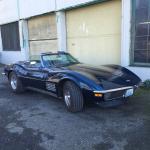



71 running hot, please help

Melting Slicks

Joined: Dec 2005
Posts: 2,441
Likes: 0

If a cooling system is designed and working properly, leaving out the thermostat would not allow the engine to heat up. Excessive coolant flow rates not allowing the heat to be exchanged is myth. An analogy I've seen used in the forum is to think of the thermostat as like the one that keeps you house at a comfortable level.
Last edited by shafrs3; Jun 10, 2006 at 09:38 AM.

Race Director

Joined: May 2006
Posts: 16,528
Likes: 53
From: Dayton, Ohio
Originally Posted by shafrs3
If a cooling system is designed and working properly, leaving out the thermostat would not allow the engine to heat up. Excessive coolant flow rates not allowing the heat to be exchanged is myth. An analogy I've seen used in the forum is to think of the thermostat as like the one that keeps you house at a comfortable level.
 In theory yes---reality no

Race Director

Joined: Nov 2002
Posts: 12,142
Likes: 54
From: Taylor Michigan
Originally Posted by dwncchs
I dont get your thinking--when an engine gets to 200 the 180 and the 160 are wide open and wont close again until the temp.drops back to 180 or 160--right?

Le Mans Master


Joined: Aug 2000
Posts: 6,273
Likes: 14
From: Austin TX
Be certain the metal blade fan is installed correctly. If it's a GM fan, it is stamped "Front". If it is installed backwards, it will seem normal at idle since air will be blown towards the back of the radiator then bounce rearward giving the impression that the fan is pulling air thru the radiator. Obviously, if it is installed backwards, it will not do what you need.
Don't ask how I know this....
Don't ask how I know this....
Race Director
Joined: May 2006
Posts: 16,528
Likes: 53
From: Dayton, Ohio
Originally Posted by Ironcross
Correct and then as a result it circulates faster than the radiator can recover. It just keeps getting hotter and hotter and then boils over
Melting Slicks
Joined: Dec 2005
Posts: 2,441
Likes: 0
Originally Posted by dwncchs
The engine relys on a minimum temp. to operate properly for many reasons---this is the purpose of the therm. for minimum temp.Heat is the engines friend within the proper ranges.
Corvette Stories
The Best of Corvette for Corvette Enthusiasts

Top 10 Most Explosive Corvettes Ever Made: Power-to-Weight Ratio Ranked!
Joe Kucinski
150 hp to 1,250 hp: Every Corvette Generation Compared by the Specs That Matter
Joe Kucinski
8 Coolest Corvette Pace Cars (and Replicas) of All Time
Verdad Gallardo
Top 10 Corvette Engines RANKED by Peak Torque (70+ Years of Muscle!)
Joe Kucinski
Corvette ZR1X Will Be Pacing the Indy 500, And Could Probably Race, Too!
Verdad Gallardo
Top 10 Corvettes Coming to Mecum Indy 2026!
Brett Foote
Top 10 C9 Corvette MUST-HAVES to Fix These C8 Generation Flaws!
Michael S. Palmer
10 Revolutionary 'Corvette Firsts' Most People Don't Know
Joe Kucinski
5 Reasons to Upgrade to an LS6-Powered Corvette; 5 Reasons to Stay LT2
Michael S. Palmer
Pro


Joined: May 2003
Posts: 601
Likes: 0
From: Nottingham
Well, no-one's mentioned it yet, but make absolutely sure you're actually reading the *right* temp on your gauge. If the sender's been replaced at some point it may well not be calibrated to the gauge. Of course, if you're talking about an increase in heat on an already known-good gauge, then start looking deeper. But otherwise, before you start worrying too much, get a proper idea of the accuracy of that 30 year old gauge/sender combo. You could be 30F out, just because of that.

Theo
Theo
Race Director
Joined: May 2006
Posts: 16,528
Likes: 53
From: Dayton, Ohio
Originally Posted by shafrs3
I agree with you on proper engine temps, I'm disputing the myth that excessive coolant flow won't allow the radiator to radiate heat away from the coolant.
Race Director
Joined: May 2006
Posts: 16,528
Likes: 53
From: Dayton, Ohio
[QUOTE=theoUK]Well, no-one's mentioned it yet, but make absolutely sure you're actually reading the *right* temp on your gauge. If the sender's been replaced at some point it may well not be calibrated to the gauge. Of course, if you're talking about an increase in heat on an already known-good gauge, then start looking deeper. But otherwise, before you start worrying too much, get a proper idea of the accuracy of that 30 year old gauge/sender combo. You could be 30F out, just because of that Good point!
Pro
Joined: May 2003
Posts: 601
Likes: 0
From: Nottingham
This sort of thing's fresh in my head right now, I'm convinced my sender/gauge combo is all on the pi$$. I get an indicated 220F when the top hose is just starting to warm up, with a stock 195 stat. Could be the stat, fair enough, but the gauge sender looks suspiciously new and I bet it's not calibrated to the gauge. Have just installed electric fans and this has kinda inspired me to look at the gauge accuracy. Pulling the sender tomorrow to calibrate it in hot oil (then I can go over 100C!) and will be putting a k-type thermocouple in the block to compare against. Might be quite interesting to to see how temps vary from bank to bank.
Theo
Theo
Burning Brakes

Joined: Aug 2005
Posts: 1,126
Likes: 0
From: Hudson Falls, N.Y. 76 Vette Modified L-48
I think we've lost perspective of the guy's problem....he needs a cool running car for a Bowling Green run..down and dirty, pulling the stat HAS to be the first step, regardless of if it's "proper"...you will NOT hurt the car with the stat out...and you WILL get the car to operating temp or very close, with or without a stat....better a slightly cooler then spec running car then a blown engine or head gasket...

Melting Slicks
Joined: May 1999
Posts: 2,897
Likes: 0
From: Moon Township PA
Your lower rad should most definetly have a spring in it. If not, buy a cheap rad hose and steal the spring from that one.
Are you absolutely certain that your engine is getting to 230 degrees? Have you verified it with an IR gun or other means. Our temp sending units and gauges are not the most accurate devices out there. Do you have any boil over, puking green stuff or anything else? If you don't have access to an IR gun, call around to the various rad shops and see if someone will shoot your rad, your upper rad hose, and your thermostat housing. You wouldn't be the first person who really does NOT have overheating, just a gauge that says you are.
Gary
Are you absolutely certain that your engine is getting to 230 degrees? Have you verified it with an IR gun or other means. Our temp sending units and gauges are not the most accurate devices out there. Do you have any boil over, puking green stuff or anything else? If you don't have access to an IR gun, call around to the various rad shops and see if someone will shoot your rad, your upper rad hose, and your thermostat housing. You wouldn't be the first person who really does NOT have overheating, just a gauge that says you are.
Gary
Thread Starter
Burning Brakes
Joined: Mar 2006
Posts: 1,036
Likes: 2
From: Huntingburg Indiana
Thanks for all the help. My engine block and heads were hot tanked so they are clean. The radiator has no bent fins and has no blockage inside. My fan is installed correctly and I used the proper spacer and it probably is 1/2" closer to the radiator than stock. I installed a new temp sensor from ecklers and I have a working guage. At first the idea of the engine running hot with a cool thermostat didn't make sense. On my 78 chevy 4x4, I have a modified 350 with the stock heavy duty cooling system. I replaced the 180 degree with a 160 and the temp came way down. You can tell by the heater output. From what i've read here, vette cooling systems are different and tricky to get right.
The thing I don't understand is when I adjusted the rockers the other day, I had the engine at operating temp and it only ran about 170 degrees. When I drove it friday, it stayed cool until I was idling in traffic, then it got warm. I am going to install new hoses. The store did not have a hose for a 4 speed car, but he showed me an auto hose and it was about twice as thick as the ones on my car. Evidently the new hoses are thicker and the spring is eliminated. My car has the thin hoses without the spring. It takes no effort to squeeze them shut. The hose at the store was hard to squeeze. I believe this is part of the problem. The thermostat idea makes sense now. I am going from the high flow 160 to a more restrictive oem 180. Maybe this will help. Keep the ideas coming guys. By the way, I did this engine/trans rebuild several months ago so I had plenty of time for the hot rod reunion. In the past 3 weeks I had a rocker break and now this. The rockers are fixed and I hope I can get this fixed, too. Thanks.
The thing I don't understand is when I adjusted the rockers the other day, I had the engine at operating temp and it only ran about 170 degrees. When I drove it friday, it stayed cool until I was idling in traffic, then it got warm. I am going to install new hoses. The store did not have a hose for a 4 speed car, but he showed me an auto hose and it was about twice as thick as the ones on my car. Evidently the new hoses are thicker and the spring is eliminated. My car has the thin hoses without the spring. It takes no effort to squeeze them shut. The hose at the store was hard to squeeze. I believe this is part of the problem. The thermostat idea makes sense now. I am going from the high flow 160 to a more restrictive oem 180. Maybe this will help. Keep the ideas coming guys. By the way, I did this engine/trans rebuild several months ago so I had plenty of time for the hot rod reunion. In the past 3 weeks I had a rocker break and now this. The rockers are fixed and I hope I can get this fixed, too. Thanks.
Thread Starter
Burning Brakes
Joined: Mar 2006
Posts: 1,036
Likes: 2
From: Huntingburg Indiana
Thanks for all of the help guys. I believe I have it fixed. I installed a oem 180 thermostat and new radiator hoses. I drove on streets in town where I would be going slow and waiting at many stops. The warmest it ever got was around the halfway mark on the guage. If I got moving faster, the temp came down about 20 degrees cooler.
Race Director
Joined: Nov 2002
Posts: 12,142
Likes: 54
From: Taylor Michigan
Originally Posted by bondoboy
Thanks for all of the help guys. I believe I have it fixed. I installed a oem 180 thermostat and new radiator hoses. I drove on streets in town where I would be going slow and waiting at many stops. The warmest it ever got was around the halfway mark on the guage. If I got moving faster, the temp came down about 20 degrees cooler.

PS, Now you can have fun on your trip.


Le Mans Master

Joined: Jan 2006
Posts: 9,192
Likes: 27
From: Boca Raton Florida
OK, I'll wade in now;
#1, you NEED a thermostat, a 180 will do you fine. Reason is as a couple guys said you need to give th rad time to cool the water, with a high flow pump and No Thermostat, the coolant will get hotter and hotter, especially in heavy traffic.
#2, Bondoboy, did you ever say exactly what HOT is on your car? as long as its under 230 your good. Make sure your temp gauge and sender are calibrated, use MADelectric's article, its a good one.
#3, Air Flow - make sure chin spoiler is in the correct chape and not pushed up, it happens a lot on these cars because of parking curbs and the like. Seals on radiator and hood have to be good, sounds like you have the fan to shroud fit good.
#1, you NEED a thermostat, a 180 will do you fine. Reason is as a couple guys said you need to give th rad time to cool the water, with a high flow pump and No Thermostat, the coolant will get hotter and hotter, especially in heavy traffic.
#2, Bondoboy, did you ever say exactly what HOT is on your car? as long as its under 230 your good. Make sure your temp gauge and sender are calibrated, use MADelectric's article, its a good one.
#3, Air Flow - make sure chin spoiler is in the correct chape and not pushed up, it happens a lot on these cars because of parking curbs and the like. Seals on radiator and hood have to be good, sounds like you have the fan to shroud fit good.
Thread Starter
Burning Brakes
Joined: Mar 2006
Posts: 1,036
Likes: 2
From: Huntingburg Indiana
I installed a 180 and now the warmest it ever got was around 210 in traffic on a hot day. If I got any speed at all, the temp comes down to 180. 230 just seems a little hot to me. I have a lot of money in this engine even with me doing everything besides what the machine shop did. I just don't want to see it burn up. All of the seals are fine and the front spoiler is fine. Thanks for the help, I expect my cooling problem to be over.
Racer

Joined: Apr 2005
Posts: 494
Likes: 0
From: Virginia
Originally Posted by SIXFOOTER
OK, I'll wade in now;
#1, you NEED a thermostat, a 180 will do you fine. Reason is as a couple guys said you need to give th rad time to cool the water, with a high flow pump and No Thermostat, the coolant will get hotter and hotter, especially in heavy traffic.
#1, you NEED a thermostat, a 180 will do you fine. Reason is as a couple guys said you need to give th rad time to cool the water, with a high flow pump and No Thermostat, the coolant will get hotter and hotter, especially in heavy traffic.