




New Alternator acting right?????

Thread Starter
Pro


Joined: Mar 2003
Posts: 553
Likes: 1
From: Valparaiso IN
 New Alternator acting right?????
I have a '71 w/ built 355 SB and the DeWitt dual spal setup. It is wired per the diagram and works perfectly. I noticed after the installation that when the fans kick on, my battery meter would go from the normal center (0) to about halfway (+20). I figured that this was an increase due to the added draw from the the fans. So, I was ready to upgrade to a polished alternator anyway and I decided to increase the output from the stock 63 (or whatever) to 100 amp. Now when the fans kick on, it pegs to about +40 and slowly comes back..??? Is this right? I was expecting that when the fans kicked on, the added output of the alternator would not show an effect on my battery guage or my battery output.. Electrical guys please chime in and set me straight.....

Thanks,
Steve
Thanks,
Steve
Burning Brakes


Joined: Jan 2006
Posts: 1,154
Likes: 1
From: St Augustine FL
When an electric motor starts up it has an in rush load (high amp draw) and as the motor reaches full operating speed/capacity the power it draws decrease to an operating load. If the motor locks up, then you have a llocked rotor situation and the amp draw will go through the roof untill either the wire burns in two or the overload protective device trips or fuse blows. I am assuming the same rule applies to vehicles. The only differance is 12 volts DC instead of 120/208v or 277/480v AC.
You could have a motor that is going bad meaning the rotor could be in the process of locking up which means the bearings in the fan motor are going bad. You should not have a huge power spike for an extended period of time.
You could have a motor that is going bad meaning the rotor could be in the process of locking up which means the bearings in the fan motor are going bad. You should not have a huge power spike for an extended period of time.

Le Mans Master


Joined: Jan 2006
Posts: 9,192
Likes: 27
From: Boca Raton Florida
you need to wire the fans to a term block connected directly to the back of the alternator. This will stop the high current draw on the meter. There are a lot of small voltage drops all thru a 30 odd yr old wireing harness. Of course use relays or a PWM to control the fans
Racer

Joined: Jul 2004
Posts: 414
Likes: 1
I seem to have the same results as you.
I recently installed the Dual Spals from Dewitts. I upgraded from a 63 amp to 100amp. I'm using the Spal electronic controller and relay. I have the main fan power wires attached to the battery.
When the first fan turns on the meter goes to +2, when the second fan turns on the meter goes almost to +4 then comes back a smidge. When the second fan turns off, I'm back to +2. And, when neither run, it is zero. Seems like everything is ok.
I recently installed the Dual Spals from Dewitts. I upgraded from a 63 amp to 100amp. I'm using the Spal electronic controller and relay. I have the main fan power wires attached to the battery.
When the first fan turns on the meter goes to +2, when the second fan turns on the meter goes almost to +4 then comes back a smidge. When the second fan turns off, I'm back to +2. And, when neither run, it is zero. Seems like everything is ok.
Advanced
Joined: Dec 2005
Posts: 76
Likes: 0
From: St Louis MO
When you are referring to the "battery meter", I assume you are referring to the original factory equipment ammeter installed in the center instrument cluster?
If so, then to answer yor question, yes the alternator is acting right. The alternator is increasing it's output in relation to the load being placed on it when the fans come on. As long as it indicates on the positive side, it is generating current to keep the battery charged properly and carry the electrical load being placed on it by various components to include the fans, radio, ignition, etc.
If so, then to answer yor question, yes the alternator is acting right. The alternator is increasing it's output in relation to the load being placed on it when the fans come on. As long as it indicates on the positive side, it is generating current to keep the battery charged properly and carry the electrical load being placed on it by various components to include the fans, radio, ignition, etc.
Le Mans Master
Joined: Jan 2006
Posts: 9,192
Likes: 27
From: Boca Raton Florida
 Thats all correct. But, like I said, thats a Lot of current running thru an old wiring harness that was not designed to carry it. Pull your power feed for the fans back up to the front and terminate it on a block located close to the alternator. No reason to send the current for the fans in the front of the car from the alt all the way to the battery by way of the starter and battery charge circuit and then back up front to the fans. There are a lot of connectione in there nad each one will have a slight voltage drop across it. Thet generates heat. It can slowly cook your harness and cause all kind of other problems.
my .02

Race Director


Joined: Apr 2000
Posts: 17,676
Likes: 201
From: Who says "Nothing is impossible" ? I've been doing nothing for years.
It does not matter if he has a 63 amp alternator or 6300 amp alternator if nothing else changes the current drawn from the bigger alternator will be the same as the smaller alternertor. So if the 63 amp alternator didn't fry the wires then the 100 amp won't either. THe alternator output is dictated by the load. 
Corvette Stories
The Best of Corvette for Corvette Enthusiasts

Top 10 Most Expensive Corvettes Ever Sold on Bring A Trailer
Brett Foote
10 Things Every Corvette Owner Needs (2026 Edition)
Michael S. Palmer
8 Most "Only Corvette Owners Understand" Quirks and Problems
Pouria Savadkouei
10 Reasons the C6 Z06 is Still A Performance Benchmark After 20 Years
Joe Kucinski
How Much Horsepower Every Corvette Engine "LOST" in 1972
Joe Kucinski
Top 10 DOs and DON'Ts for Protecting Your Convertible Top!
Michael S. Palmer
Top 10 Most Explosive Corvettes Ever Made: Power-to-Weight Ratio Ranked!
Joe Kucinski
150 hp to 1,250 hp: Every Corvette Generation Compared by the Specs That Matter
Joe Kucinski
8 Coolest Corvette Pace Cars (and Replicas) of All Time
Verdad Gallardo
Thread Starter
Pro
Joined: Mar 2003
Posts: 553
Likes: 1
From: Valparaiso IN
Yes, Ammeter, couldn't think of the word, guage says battery. 
I am wired to my starter, since I want my fans to come on even after I turn off the engine.
Motorhead, I get what your saying, but if I was pulling 'x' amount of load with my 63 amp alternator and the guage moved up to show that the alternator was working, wouldn't you expect that with a higher output alternator, and 'x' being the same, that the guage would not show that the alternator was working harder or putting out more current?
thanks for your input.
Steve
I am wired to my starter, since I want my fans to come on even after I turn off the engine.
Motorhead, I get what your saying, but if I was pulling 'x' amount of load with my 63 amp alternator and the guage moved up to show that the alternator was working, wouldn't you expect that with a higher output alternator, and 'x' being the same, that the guage would not show that the alternator was working harder or putting out more current?
thanks for your input.
Steve



Melting Slicks

Joined: Feb 2003
Posts: 3,053
Likes: 4
St. Jude Donor '03,'11
Originally Posted by MotorHead
It does not matter if he has a 63 amp alternator or 6300 amp alternator if nothing else changes the current drawn from the bigger alternator will be the same as the smaller alternertor. So if the 63 amp alternator didn't fry the wires then the 100 amp won't either. THe alternator output is dictated by the load.
Stick to gas driven motors.

Not true. If you have a high capacity alternator the current out of that unit will be much higher for a given voltage drop.
You can definitely overload your wiring so be carefull. The wire from the starter to alternator is not that big so you may want to consider running an additional wire or new wire of a bigger size.
A posible condition that would cause problems is when the battery has been drained and you start the car the big as alternator sees a low voltage and goes to full boost to rapidly charge the battery. You'll see closer to 100+ depending on the size rather than 40a which would be normal. The wire from the alt to starter will get hot and degrade the insulation jacket.
Instructor

Joined: Dec 2004
Posts: 230
Likes: 6
From: Washington DC
Originally Posted by MotorHead
It does not matter if he has a 63 amp alternator or 6300 amp alternator if nothing else changes the current drawn from the bigger alternator will be the same as the smaller alternertor. So if the 63 amp alternator didn't fry the wires then the 100 amp won't either. THe alternator output is dictated by the load.
Sorry for the Hijack..
Race Director
Joined: Apr 2000
Posts: 17,676
Likes: 201
From: Who says "Nothing is impossible" ? I've been doing nothing for years.
Originally Posted by turtlevette
MotorHead,
Stick to gas driven motors.
Not true. If you have a high capacity alternator the current out of that unit will be much higher for a given voltage drop.
You can definitely overload your wiring so be carefull. The wire from the starter to alternator is not that big so you may want to consider running an additional wire or new wire of a bigger size.
A posible condition that would cause problems is when the battery has been drained and you start the car the big as alternator sees a low voltage and goes to full boost to rapidly charge the battery. You'll see closer to 100+ depending on the size rather than 40a which would be normal. The wire from the alt to starter will get hot and degrade the insulation jacket.
Stick to gas driven motors.
Not true. If you have a high capacity alternator the current out of that unit will be much higher for a given voltage drop.
You can definitely overload your wiring so be carefull. The wire from the starter to alternator is not that big so you may want to consider running an additional wire or new wire of a bigger size.
A posible condition that would cause problems is when the battery has been drained and you start the car the big as alternator sees a low voltage and goes to full boost to rapidly charge the battery. You'll see closer to 100+ depending on the size rather than 40a which would be normal. The wire from the alt to starter will get hot and degrade the insulation jacket.
I don't want to argue with an EE but what you are saying is that a bigger alternator is going to deliver more current for the same load as a smaller alternator ?
You are correct in your last paragraph but that is exactly what I said the load will dictate the current and if you have a 100 A alternator and it goes to full "boost" because of a short or low battery then yes you are going to see alot more current thru the wires than with a smaller alternator.


Pro


Joined: May 2005
Posts: 745
Likes: 0
From: Miami Florida
what about voltage
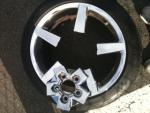
i just drove the car for the first time after installing a Mark VIII ele fan. the VOLTAGE (1982) guage used to read 14.5 once everything stabilized but now barely makes it to 12 and the windows are a bit sluggish. do i need a bigger alternator? since the previous owner gutted the f.i. and added a monster stereo system i assumed he upped the alt but i cant id mine . i attached two pics. could someone id it or at least confirm my diagnosis?

Drifting

Joined: Sep 2003
Posts: 1,325
Likes: 6
From: FRANKLIN GA
Rastadr- That's not an original alt, have no idea how much it puts out but it's not original.
I had the same problem you are describing and switched to a mid 80 model corvette alt and it fixxed it. The originals are 63 amps the new ones are 106 I think it was. Anyway it cured it and it was a lot cheaper than buying a high output one
I had the same problem you are describing and switched to a mid 80 model corvette alt and it fixxed it. The originals are 63 amps the new ones are 106 I think it was. Anyway it cured it and it was a lot cheaper than buying a high output one

Race Director
Joined: Apr 2000
Posts: 17,676
Likes: 201
From: Who says "Nothing is impossible" ? I've been doing nothing for years.
I have a 92 amp alternator in mine right now and I didn't change any wires or fuses. If you do what EDDIEJ82 says it certainly can''t do any harm As a matter of fact I am now thinking about doing the same thing 
As a matter of fact I am now thinking about doing the same thing