


Primer


Thread Starter
Drifting


Joined: May 2006
Posts: 1,864
Likes: 148
From: Santa Barbara California
 Primer
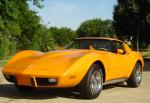
I am in the process of having my 72 repainted. I had a fellow tell me yesterday that with Ontarion Orange I will need to use a red-oxide primer if I want the color to be correct. I am still on the fence as to the use of lacquer or base/clear. The car has been primed with a fiberglass primer (gray color). I was not aware of lacquer or base/clear being so translucent that the red oxide would make that difference. Dupont would be the lacquer of preference.

Le Mans Master

Joined: Jul 2005
Posts: 5,752
Likes: 4
From: Austin Texas
Chevy only used red oxide primers on early 'Vettes, and they top-coated in all colors. So I think your painter is wrong. I would think that he should consider BC/CC DuPont urethane, which is much more durable. You can then use the appropriate value-shade primer under the base-coat. In many states, you can't even buy lacquer paints anymore. Make sure your painter verifies primer/top-coat compatability.

Le Mans Master


Joined: Oct 2005
Posts: 9,429
Likes: 44
From: Macon, GA
I don't think your eyes will be able to notice a color difference if you leave it in gray primer (unless you have another car done the other way sitting right next to yours). 
Anyway, the main thing you need to be worried about is to have an even base to paint over. Whether your primer is red, green or blue it doesn't matter as long as it is the same. That way the color coat will be the same. Of course, your primer color choice WILL most definately affect your top coat color, but most of us aren't smart enough to see a difference anyway.
Others will chime in as I'm sure this will turn into a several page thread, so don't beat up on me guys cause I know there's a lot more to it.
Anyway, the main thing you need to be worried about is to have an even base to paint over. Whether your primer is red, green or blue it doesn't matter as long as it is the same. That way the color coat will be the same. Of course, your primer color choice WILL most definately affect your top coat color, but most of us aren't smart enough to see a difference anyway.
Others will chime in as I'm sure this will turn into a several page thread, so don't beat up on me guys cause I know there's a lot more to it.
Drifting

Joined: Jun 2005
Posts: 1,523
Likes: 1
From: grand prairie texas
When I stripped my 77 I found my primer coat was black. Did anyone else have the same black factory primer? My paint is ontario orange. I have not shot primer yet and I want to use the proper color primer.
Le Mans Master


Joined: Jul 1999
Posts: 9,206
Likes: 17
From: Sewell NJ
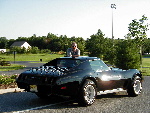
I've primed my car twice and its a black car. The first time I used a charcoal gray primer that was almost black and the second time I used a primer that was a very light gray, almost like a dirty white. The only difference I've noticed is that when I get chips they show more with the light gray.
As far as the lacquer vs. base/clear question goes, do yourself a favor and get it done in base/clear. I've painted my car twice, and retouched it a number of times, with lacquer. I can tell you from experience that lacquer is a career and the only reason to use it is for originality, ease of spraying in a dusty environment (dries quickly), or because its much safer for an amateur to spray at home requiring less safety equipment. If you're having the car professionally sprayed the safety issue and dusty environment issue is moot. Lacquer has a number of downsides. It is a very brittle paint that is prone to cracking and checking. It chips easily and doesn't weather near as well as more modern paint. It also shrinks so if your bodywork isn't absolutely spot on perfect you will see every repair. It also requires much more upkeep (compounding and polishing) than more modern paints since its more suceptible to staining and damage from the elements. The only upside to lacquer is that when its done correctly, clearcoated and color sanded and buffed, it has amazing depth and clarity. But I would only recommend it for garage queens or show cars. Base/clear paint has much more durability and can be color sanded and buffed almost to the same clarity as lacquer without all of the issues.
As far as the lacquer vs. base/clear question goes, do yourself a favor and get it done in base/clear. I've painted my car twice, and retouched it a number of times, with lacquer. I can tell you from experience that lacquer is a career and the only reason to use it is for originality, ease of spraying in a dusty environment (dries quickly), or because its much safer for an amateur to spray at home requiring less safety equipment. If you're having the car professionally sprayed the safety issue and dusty environment issue is moot. Lacquer has a number of downsides. It is a very brittle paint that is prone to cracking and checking. It chips easily and doesn't weather near as well as more modern paint. It also shrinks so if your bodywork isn't absolutely spot on perfect you will see every repair. It also requires much more upkeep (compounding and polishing) than more modern paints since its more suceptible to staining and damage from the elements. The only upside to lacquer is that when its done correctly, clearcoated and color sanded and buffed, it has amazing depth and clarity. But I would only recommend it for garage queens or show cars. Base/clear paint has much more durability and can be color sanded and buffed almost to the same clarity as lacquer without all of the issues.
Last edited by vettfixr; Jul 26, 2006 at 03:00 PM.
Burning Brakes

Joined: Mar 2006
Posts: 1,036
Likes: 2
From: Huntingburg Indiana
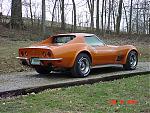
If you use dupont base, the color of primer will change the color of the paint because it is somewhat transparent. I mix this stuff everyday. There is more clear binder than actual color in the paint. Use ppg and you don't have to worry about the color of primer too much.









