




wet-sanding questions...
Thread Starter
Pro

Joined: Jan 2006
Posts: 548
Likes: 0
 wet-sanding questions...
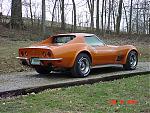
well, the paint on the 'vette was never wet-sanded after it was painted (about a year ago) due to issues with getting it to the shop and the shop having time/resources...
it has a considerable orangepeel all over the car, and definitely needs smoothing. since i live 2 hours away from the paint shop, and really dont want to take it up there and deal with trying to get a ride back, etc...i was thinking of doing the sanding myself in stages.
so, my questions are:
1) does it take a considerable amount of finesse, or is it more of a procedural thing?
2) can it be done in a garage or on a driveway, or are relatively sterile conditions needed?
3) what materials will i need and how much will the cost be?
4) i know that wetsanding is best done early, but will the clearcoat now be too hard to sand at all?
5) can if be done in stages (like one fender a weekend or something)?
6) will i **** it up, even if i have a pretty considerable amount of mechanical and paint-care skill?
thanks guys!
-jeff
it has a considerable orangepeel all over the car, and definitely needs smoothing. since i live 2 hours away from the paint shop, and really dont want to take it up there and deal with trying to get a ride back, etc...i was thinking of doing the sanding myself in stages.
so, my questions are:
1) does it take a considerable amount of finesse, or is it more of a procedural thing?
2) can it be done in a garage or on a driveway, or are relatively sterile conditions needed?
3) what materials will i need and how much will the cost be?
4) i know that wetsanding is best done early, but will the clearcoat now be too hard to sand at all?
5) can if be done in stages (like one fender a weekend or something)?
6) will i **** it up, even if i have a pretty considerable amount of mechanical and paint-care skill?
thanks guys!
-jeff
Le Mans Master


Joined: Apr 2005
Posts: 6,359
Likes: 428
From: Seattle Area WA
This is kind of tricky to answer because no one knows how many coats of clear are on your car. It is very straightforward, since you say it is a very heavy orange peel:
You can do this in the driveway, garage etc. I would do it in the garage just to stay cooler
I would start with 400 wet dry and using a rubber sanding block and keeping the paper wet with a bucket of water, just start sanding a large area. You don't want to just stay in one spot an make a "hole". Stop constantly to wipe it off and take a look at your progress.
With the 400 I would focus on knocking down most of the large orange peel and then follow it with 600 and see how that looks. You may end up finishing it with 1000 or finer before buffing.
If you go through the clear stop!! If you don't screw up the paint, they can recoat the clear.
I'm sure more will chime in on this process too.
You can do this in the driveway, garage etc. I would do it in the garage just to stay cooler
I would start with 400 wet dry and using a rubber sanding block and keeping the paper wet with a bucket of water, just start sanding a large area. You don't want to just stay in one spot an make a "hole". Stop constantly to wipe it off and take a look at your progress.
With the 400 I would focus on knocking down most of the large orange peel and then follow it with 600 and see how that looks. You may end up finishing it with 1000 or finer before buffing.
If you go through the clear stop!! If you don't screw up the paint, they can recoat the clear.
I'm sure more will chime in on this process too.
Burning Brakes

Joined: Sep 2005
Posts: 755
Likes: 1
From: Hobart Tasmania
I am sure many people have there own ideas. When mine was done it needed some repairs as it was cracking at the seams. Took it to a marine fibreglass repairer for that and then my very good friend of 40 years painting experince did the rest. He said to keep water right away from the glass and use Fast CUT DRY SANDPAPER. I see guys on the Forum using razor blades and alike which is fine in what they believe.
My paint job was purposely painted in a light orange peel effect as the original was and I think it looks great. To get the best original looking effect we did not go lower than 1200 grit.
Regards,
Chris

My paint job was purposely painted in a light orange peel effect as the original was and I think it looks great. To get the best original looking effect we did not go lower than 1200 grit.
Regards,
Chris

Melting Slicks


Joined: Oct 2005
Posts: 2,056
Likes: 8
From: Redruth Cornwall
Originally Posted by Chris Farrer
I am sure many people have there own ideas. When mine was done it needed some repairs as it was cracking at the seams. Took it to a marine fibreglass repairer for that and then my very good friend of 40 years painting experince did the rest. He said to keep water right away from the glass and use Fast CUT DRY SANDPAPER. I see guys on the Forum using razor blades and alike which is fine in what they believe.
My paint job was purposely painted in a light orange peel effect as the original was and I think it looks great. To get the best original looking effect we did not go lower than 1200 grit.
Regards,
Chris
My paint job was purposely painted in a light orange peel effect as the original was and I think it looks great. To get the best original looking effect we did not go lower than 1200 grit.
Regards,
Chris
Razor blades are used for stripping the car, not finishing and 1200 grit paper is mighty fine...should be able to get a glass finish with that.

Intermediate

Joined: Jan 2005
Posts: 35
Likes: 0
From: Las Vegas Nevada
This is a pretty good article 
It is always a good idea to soak the papers you will be using even if the manufacturer says it isn’t necessary. While the papers are soaking, mask off any areas that are not to be sanded. This is especially important for areas such as bodylines, pinstripes, panel edges, and moldings. You never want to sand more than you have to and risk damage. Wrap the piece of sandpaper around the sanding block and be sure it is free of any dirt or grit. Take a spray bottle filled with water and wet down the area to be sanded. I prefer to sand at a 45-degree angle to the scratch. This method will help you determine if the scratch has been eliminated because you will see the sandscratches at a different angle than the vehicle scratch.
With all the water involved in this process you may lose sight of the scratch and mistakenly think it is removed. The water will fill the scratch and hide it. You will also notice that the water runoff has a whitish color to it. This is the clearcoat being washed away. You may even get a sniff of paint as you are sanding. The key to this procedure is to apply firm but even pressure to the panel and don’t stay in one area too long or you will rub through the clearcoat. Periodically wipe the area dry with a clean soft towel and use a blowgun to totally dry the area. At this point you will see no shine whatsoever to the panel, and hopefully no scratch. If the scratch still shows through the sandscratches, it means the paper you used was not aggressive enough, or the scratch is too deep to be removed completely. This is where you must decide to use a more aggressive paper or finish the procedure and hope for the best.
Even if the scratch is gone or lightened up sufficiently, there is still more work to be done. You must follow up with a lighter grade of paper or two to make the buffing process easier. For example, if you started with 1200 grit, follow that with 1500 grit, and then move to 2000 grit. The finer you go with the paper, the easier it is to buff those sandscratches out. You never want to see sandscratches through the clear. This is why I like to finish everything with 2000 paper. It will not take that much more time. At this point don’t lose concentration. If you did not rub through the clear with your 1000 or 1200 paper, don’t assume that you can’t rub through the panel with 1500 or 2000 paper. You are still “sanding” the panel even with the lighter grades of paper.
GET THE SHINE BACK
Congratulations! You sanded out the scratch but look what has happened to the panel. There is no gloss! The finish is white and chalky looking. Now it is time to buff the sandscratches. There are a number of ways to go as far a pad choice (wool or foam) and compound or polish. If you have sanded to 2000 grit, the sandscratches are not that difficult to remove but as stated in previous articles you must be careful not to create too much heat and burn the paint. Don’t be in too much of a hurry to see the shine come back. It may not appear on your first or second pass, but it will start to return. Work slowly and gradually proceed to a polishing procedure to remove any swirl marks and bring up a high gloss.
It is always a good idea to soak the papers you will be using even if the manufacturer says it isn’t necessary. While the papers are soaking, mask off any areas that are not to be sanded. This is especially important for areas such as bodylines, pinstripes, panel edges, and moldings. You never want to sand more than you have to and risk damage. Wrap the piece of sandpaper around the sanding block and be sure it is free of any dirt or grit. Take a spray bottle filled with water and wet down the area to be sanded. I prefer to sand at a 45-degree angle to the scratch. This method will help you determine if the scratch has been eliminated because you will see the sandscratches at a different angle than the vehicle scratch.
With all the water involved in this process you may lose sight of the scratch and mistakenly think it is removed. The water will fill the scratch and hide it. You will also notice that the water runoff has a whitish color to it. This is the clearcoat being washed away. You may even get a sniff of paint as you are sanding. The key to this procedure is to apply firm but even pressure to the panel and don’t stay in one area too long or you will rub through the clearcoat. Periodically wipe the area dry with a clean soft towel and use a blowgun to totally dry the area. At this point you will see no shine whatsoever to the panel, and hopefully no scratch. If the scratch still shows through the sandscratches, it means the paper you used was not aggressive enough, or the scratch is too deep to be removed completely. This is where you must decide to use a more aggressive paper or finish the procedure and hope for the best.
Even if the scratch is gone or lightened up sufficiently, there is still more work to be done. You must follow up with a lighter grade of paper or two to make the buffing process easier. For example, if you started with 1200 grit, follow that with 1500 grit, and then move to 2000 grit. The finer you go with the paper, the easier it is to buff those sandscratches out. You never want to see sandscratches through the clear. This is why I like to finish everything with 2000 paper. It will not take that much more time. At this point don’t lose concentration. If you did not rub through the clear with your 1000 or 1200 paper, don’t assume that you can’t rub through the panel with 1500 or 2000 paper. You are still “sanding” the panel even with the lighter grades of paper.
GET THE SHINE BACK
Congratulations! You sanded out the scratch but look what has happened to the panel. There is no gloss! The finish is white and chalky looking. Now it is time to buff the sandscratches. There are a number of ways to go as far a pad choice (wool or foam) and compound or polish. If you have sanded to 2000 grit, the sandscratches are not that difficult to remove but as stated in previous articles you must be careful not to create too much heat and burn the paint. Don’t be in too much of a hurry to see the shine come back. It may not appear on your first or second pass, but it will start to return. Work slowly and gradually proceed to a polishing procedure to remove any swirl marks and bring up a high gloss.

Burning Brakes
Joined: Sep 2005
Posts: 1,139
Likes: 109
From: B'ham Alabama
I worked at a dealership years ago, when there was no clear coat, and wet sanding was the norm on everything!!
You can wet sand at ANY time, it doesn't matter how old the paint may be.
Yes, you can do one panel at a time if you would like.
It is very basic work, you just have to be very careful sanding around the edges and curves, not to sand through. As stated, you keep the car very wet, and keep it wet. Start with 400 or higher paper. You sand until you get a even DUE finish all over . You then progress to higher and higher paper to get all the fine scratches out.
The really tuff part is the buffing. If you've never used a real buffer before, you can ruin a paint job in minutes. You start out with a heavy abbrasive compund, (I use a 3M product called "Fast Cut"). After that, you re-buff it with a swirl remover, (I use 3M product called "Swirl Away"). Then, I go over it again with a fine yellow type of wax by hand.
When done properly, it will be the best looking paint job you've ever seen.
Again, from the old days at the dealership,...the thinking was, it didn't matter how the inital paint job looked, (runs, dust specks, dull, orange peel, etc), the buffing was what really made the job!!!
You can wet sand at ANY time, it doesn't matter how old the paint may be.
Yes, you can do one panel at a time if you would like.
It is very basic work, you just have to be very careful sanding around the edges and curves, not to sand through. As stated, you keep the car very wet, and keep it wet. Start with 400 or higher paper. You sand until you get a even DUE finish all over . You then progress to higher and higher paper to get all the fine scratches out.
The really tuff part is the buffing. If you've never used a real buffer before, you can ruin a paint job in minutes. You start out with a heavy abbrasive compund, (I use a 3M product called "Fast Cut"). After that, you re-buff it with a swirl remover, (I use 3M product called "Swirl Away"). Then, I go over it again with a fine yellow type of wax by hand.
When done properly, it will be the best looking paint job you've ever seen.
Again, from the old days at the dealership,...the thinking was, it didn't matter how the inital paint job looked, (runs, dust specks, dull, orange peel, etc), the buffing was what really made the job!!!
Corvette Stories
The Best of Corvette for Corvette Enthusiasts

Top 10 Most Expensive Corvettes Ever Sold on Bring A Trailer
Brett Foote
10 Things Every Corvette Owner Needs (2026 Edition)
Michael S. Palmer
8 Most "Only Corvette Owners Understand" Quirks and Problems
Pouria Savadkouei
10 Reasons the C6 Z06 is Still A Performance Benchmark After 20 Years
Joe Kucinski
How Much Horsepower Every Corvette Engine "LOST" in 1972
Joe Kucinski
Top 10 DOs and DON'Ts for Protecting Your Convertible Top!
Michael S. Palmer
Top 10 Most Explosive Corvettes Ever Made: Power-to-Weight Ratio Ranked!
Joe Kucinski
150 hp to 1,250 hp: Every Corvette Generation Compared by the Specs That Matter
Joe Kucinski
8 Coolest Corvette Pace Cars (and Replicas) of All Time
Verdad Gallardo
Thread Starter
Pro
Joined: Jan 2006
Posts: 548
Likes: 0
the buffing is what i was afraid of...it'll be cheaper in gas to just take it back and live wihtout the 'vette for a week or two and get it professionally done than to hold onto it and do it myself after buying a PC buffer 
Burning Brakes
Joined: Sep 2005
Posts: 1,139
Likes: 109
From: B'ham Alabama
A decent buffer that will do this type job will cost you at LEAST $75.00. Then, you have to buy several pads, another $30.00, and then you have to buy the buffing compond, $40 to $50 for the cutting compound and another $25 to $35 for the swirl rmover compund, and of course the sand paper, another $15.00 to $20.00.
You'll have at least $150.00 to $200.00 in supplies.
Of course, you will have enough compuund and wax to do more cars, and you would still own the buffer.
If you check around, most detail shops have people who could do the cut and buff for you. This may save you them long drive back to the body shop. It may cost you the same $150.00 at a detail shop though.
You'll have at least $150.00 to $200.00 in supplies.
Of course, you will have enough compuund and wax to do more cars, and you would still own the buffer.
If you check around, most detail shops have people who could do the cut and buff for you. This may save you them long drive back to the body shop. It may cost you the same $150.00 at a detail shop though.

Melting Slicks
Joined: Dec 2000
Posts: 3,407
Likes: 2
From: Carmichael CA
Is there any clear coat on it? If so then you can sand until you see color in the particles, but if you don't have any clear coat on it then you should have a very light touch and wait until you get the clear coat on before you attempt to completely remove the orange peel.
I completely did the new bumpers on my car. What I learned is that the water is there to keep the sandpaper and surface clear of particles. I suggest a garden hose with a sprinkler attachment on low and keep it above where you are sanding.
I found that 600 grit takes a lot off. I would never use 400...especially not on a color coat unless you are a pro or have been sanding for a long time. With 600 it will only require between 4 and 10 wipes to smooth out your orange peel...400 grit and it will only require 1 or 2 wipes...the higher grit sandpaper is more forgiving. And, it is almost impossible to see what is happening to the paint while it's wet...pros can see it, but I had to dry the area and look at it on an angle to see what was going on. So...400 grit greatly reduces the amount of work necessary, but also greatly increases the risk of removing too much paint.
Stay on the 600 until your orange peel is gone then follow up with a few strokes of 1200 grit just for good measure. If it's the color coat you are sanding then stop there and get the clear coat finished.
If it's the clear coat that you are sanding then get the shine back with a few strokes of 1600 followed by a few strokes of 2000. Then move to a polishing compound...most of the pros I've talked to use 3M products. I used the 3M Medium Cut Rubbing Compound part # 39001. I then washed the car with liquid dish detergent to get every particle off of the surface. My final shine was obtained with Zaino Bros Z-1 Show Car Polish Lok followed by Z-2 Show Car Polish. From then on I wash my car regularly with Z-7 Show Car Wash and if I'm out where there's some dust I use Z-6 Ultra Clean "Gloss Enhancer" and a towel (a color coordinated towel adds to the image).
I completely did the new bumpers on my car. What I learned is that the water is there to keep the sandpaper and surface clear of particles. I suggest a garden hose with a sprinkler attachment on low and keep it above where you are sanding.
I found that 600 grit takes a lot off. I would never use 400...especially not on a color coat unless you are a pro or have been sanding for a long time. With 600 it will only require between 4 and 10 wipes to smooth out your orange peel...400 grit and it will only require 1 or 2 wipes...the higher grit sandpaper is more forgiving. And, it is almost impossible to see what is happening to the paint while it's wet...pros can see it, but I had to dry the area and look at it on an angle to see what was going on. So...400 grit greatly reduces the amount of work necessary, but also greatly increases the risk of removing too much paint.
Stay on the 600 until your orange peel is gone then follow up with a few strokes of 1200 grit just for good measure. If it's the color coat you are sanding then stop there and get the clear coat finished.
If it's the clear coat that you are sanding then get the shine back with a few strokes of 1600 followed by a few strokes of 2000. Then move to a polishing compound...most of the pros I've talked to use 3M products. I used the 3M Medium Cut Rubbing Compound part # 39001. I then washed the car with liquid dish detergent to get every particle off of the surface. My final shine was obtained with Zaino Bros Z-1 Show Car Polish Lok followed by Z-2 Show Car Polish. From then on I wash my car regularly with Z-7 Show Car Wash and if I'm out where there's some dust I use Z-6 Ultra Clean "Gloss Enhancer" and a towel (a color coordinated towel adds to the image).

Le Mans Master


Joined: Nov 1999
Posts: 8,512
Likes: 3
From: Memphis, Tn
I have wet sanded and buffed a few cars. My advice would be to let a pro do it. Unless you have a $500 paint job, it isn't worth the risk of having to redo the car. 400 is too aggressive, especially for a newbie. And if you sand through the clear into the base coat, you'll have to re-shoot the panel with base and clear. And silver is hard to match if you just shoot one panel. It is usually the buffing that burns through the clear to the base, though.
If you are interested in doing it yourself, I would suggest getting some panels from a junk yard and practice on those. Make sure you go through the clear so you'll know what it looks like.
If you've never wet sanded and buffed before, you will probably screw it up. I know I did on my first few cars.
If you are interested in doing it yourself, I would suggest getting some panels from a junk yard and practice on those. Make sure you go through the clear so you'll know what it looks like.
If you've never wet sanded and buffed before, you will probably screw it up. I know I did on my first few cars.
Pro
Joined: Aug 2005
Posts: 704
Likes: 2
From: Cincinnati OH
Ok, I did this myself just a month ago. Do not use 400 grit paper. You will have to work more but for clear coat you should start with 1500 grit paper and then go to 2000 grit. Soak it in water for a few minutes before starting. Use LOTS of water for best results, it keeps the paper from filling up and gives the best finish. Buy a California water blade. Do not buy an off brand as they do not work for this. Don't ask me why they just aren't as good, go figure. sand then pull water away with the blade. inspect the surface. you will the orange peel very clearly now as the pits will still be glossy. sand in small areas till the whole car is done. go over it again with 2000 grit. Buy a good buffing system. what you spend now wil save you from burning the paint later and lots of agony. I bought the presta system. It's 3 stages of buffing pads matched to 3 different grades of compound plus the wax and detailing mist - $186. Ibought a good 1/2hp buffer off ebay brand new. Retails for $75 and I bought it for $24 shipped to my door. This is what I have (which I bought because it's what the shop had)...http://cgi.ebay.com/ebaymotors/Vecto...spagenameZWD1V
you will need multiple speeds. It's nearly impossible to burn through the paint with the Presta Chroma system.
So for what it's worth this is what worked for me. If you have questions drop me a line. It's a lot of work I found out.By the time you're done you will have essentially sanded your car 6 time!
you will need multiple speeds. It's nearly impossible to burn through the paint with the Presta Chroma system.
So for what it's worth this is what worked for me. If you have questions drop me a line. It's a lot of work I found out.By the time you're done you will have essentially sanded your car 6 time!
Thread Starter
Pro
Joined: Jan 2006
Posts: 548
Likes: 0
Originally Posted by Vet76te
A decent buffer that will do this type job will cost you at LEAST $75.00. Then, you have to buy several pads, another $30.00, and then you have to buy the buffing compond, $40 to $50 for the cutting compound and another $25 to $35 for the swirl rmover compund, and of course the sand paper, another $15.00 to $20.00.
You'll have at least $150.00 to $200.00 in supplies.
Of course, you will have enough compuund and wax to do more cars, and you would still own the buffer.
If you check around, most detail shops have people who could do the cut and buff for you. This may save you them long drive back to the body shop. It may cost you the same $150.00 at a detail shop though.
You'll have at least $150.00 to $200.00 in supplies.
Of course, you will have enough compuund and wax to do more cars, and you would still own the buffer.
If you check around, most detail shops have people who could do the cut and buff for you. This may save you them long drive back to the body shop. It may cost you the same $150.00 at a detail shop though.
Thread Starter
Pro
Joined: Jan 2006
Posts: 548
Likes: 0
Originally Posted by 85 Dave
I have wet sanded and buffed a few cars. My advice would be to let a pro do it. Unless you have a $500 paint job, it isn't worth the risk of having to redo the car. 400 is too aggressive, especially for a newbie. And if you sand through the clear into the base coat, you'll have to re-shoot the panel with base and clear. And silver is hard to match if you just shoot one panel. It is usually the buffing that burns through the clear to the base, though.
If you are interested in doing it yourself, I would suggest getting some panels from a junk yard and practice on those. Make sure you go through the clear so you'll know what it looks like.
If you've never wet sanded and buffed before, you will probably screw it up. I know I did on my first few cars.
If you are interested in doing it yourself, I would suggest getting some panels from a junk yard and practice on those. Make sure you go through the clear so you'll know what it looks like.
If you've never wet sanded and buffed before, you will probably screw it up. I know I did on my first few cars.
btw, the paint job cost over 2500$, so it shouldnt look like that...it's worth going back just to get the time out of their hides.
Burning Brakes

Joined: Mar 2006
Posts: 1,036
Likes: 2
From: Huntingburg Indiana
Are you wanting to wet sand and buff, or wet sand to re-clear? If you are wanting to buff, you are going to have a hard time getting the shine back. There is a window of time when you can buff new paint. It has to be dry enough, but if you wait too long the paint will be too hard. Modern paints have a chemical reaction that hardens them. Lacquer didn't, so you could buff it any time. If your paint has been on there for a year, it's totally hardened by now. If you have orange peel that severe, the body shop probably didn't do the best job. The body shop should know about the time they have to rub out a new paint job.
Thread Starter
Pro
Joined: Jan 2006
Posts: 548
Likes: 0
Originally Posted by bondoboy
Are you wanting to wet sand and buff, or wet sand to re-clear? If you are wanting to buff, you are going to have a hard time getting the shine back. There is a window of time when you can buff new paint. It has to be dry enough, but if you wait too long the paint will be too hard. Modern paints have a chemical reaction that hardens them. Lacquer didn't, so you could buff it any time. If your paint has been on there for a year, it's totally hardened by now. If you have orange peel that severe, the body shop probably didn't do the best job. The body shop should know about the time they have to rub out a new paint job.


Team Owner


Joined: Jul 1999
Posts: 65,492
Likes: 230
From: Orange Park Florida
Well, ok, first off, over the years, I have seen/heard toooooo many complaints, and seen tooooo many sun damaged clear coated cars to ever bother messing with it on any car of mine.....why chance it???
I have a Ditzler Radiance paint job....some sort of catalyzed urethane, I think, anyway it's outta production for quite some years now, the paint is about 20 years old, if not older....
I buffed out the rear deck from what I thought was terminal damage and sure enough with some 3M micro finishing compound that smells like wax and is tan in color....with nothing but a turkish towel cut to size and put over my random orbital ~4" sander pad.....beleive it or not, it came out looking damn near NEW....HUGE improvement....
now some years ago I hit a damn deer, and wiped out both headlight assys, so not able to paint that front damage I finally did some mods to the headlights, using Eckler's tray sugar scoops, I put in late Camaro bulbs on my own fabbed up vinyl plactic mounts, and junkyard camaro parts/bulbs.....and reduced the openings front-rear, this finally meant I had to repaint a whole lot....so I used a 2 part Sherwin BMW gray to go for the contrast, and pick up the colors in theshark on the hood, totaly unable to match the original burgundy of course...so go for the contrast, safe bet....
well anyway, I am about the world's WORST body man, I can't even use a freaking spray bomb well, IMO, anyway....but I do have a Binks gun, and so after it dried, it looked like crap, but was rather thick with 3 coats, but had texture shading all to hell with being really rough from overspray in spots and really glossy in others.....
Pro body folks locally here would not touch it....so I asked a buddy, and so he said to use a bucket of detergent/water and hose the car off from any dirt, and a good pad with 1000 grit wet/dry paper....so thats that I did, to the back and the front....car came up great, far as i'm concerned.....I mean really, for a rank/gross amateur it's not so bad looking....with the compound above on the same sander, it worked great....surely I need to go back over it, but the underlaying body work is not good enough to warrent it, really, so maybe another go round when money, time, health, weather manage to co incide yet again....BTW, click on shutterfly there for some car and other cute pix....
I have a Ditzler Radiance paint job....some sort of catalyzed urethane, I think, anyway it's outta production for quite some years now, the paint is about 20 years old, if not older....
I buffed out the rear deck from what I thought was terminal damage and sure enough with some 3M micro finishing compound that smells like wax and is tan in color....with nothing but a turkish towel cut to size and put over my random orbital ~4" sander pad.....beleive it or not, it came out looking damn near NEW....HUGE improvement....
now some years ago I hit a damn deer, and wiped out both headlight assys, so not able to paint that front damage I finally did some mods to the headlights, using Eckler's tray sugar scoops, I put in late Camaro bulbs on my own fabbed up vinyl plactic mounts, and junkyard camaro parts/bulbs.....and reduced the openings front-rear, this finally meant I had to repaint a whole lot....so I used a 2 part Sherwin BMW gray to go for the contrast, and pick up the colors in theshark on the hood, totaly unable to match the original burgundy of course...so go for the contrast, safe bet....
well anyway, I am about the world's WORST body man, I can't even use a freaking spray bomb well, IMO, anyway....but I do have a Binks gun, and so after it dried, it looked like crap, but was rather thick with 3 coats, but had texture shading all to hell with being really rough from overspray in spots and really glossy in others.....
Pro body folks locally here would not touch it....so I asked a buddy, and so he said to use a bucket of detergent/water and hose the car off from any dirt, and a good pad with 1000 grit wet/dry paper....so thats that I did, to the back and the front....car came up great, far as i'm concerned.....I mean really, for a rank/gross amateur it's not so bad looking....with the compound above on the same sander, it worked great....surely I need to go back over it, but the underlaying body work is not good enough to warrent it, really, so maybe another go round when money, time, health, weather manage to co incide yet again....BTW, click on shutterfly there for some car and other cute pix....
