








Big Block 572 in a C3

Team Owner

Joined: Aug 2006
Posts: 24,125
Likes: 15
From: Columbia Missouri

Maybe so, but when Stacey installed that first 572 in his Copper Head pickup, he explained how they weighed more than a short deck big block, and suspension modifications would have to be made to handle the extra weight. Was he wrong?
Burning Brakes

Joined: Dec 2004
Posts: 1,020
Likes: 1
From: Nederland Texas
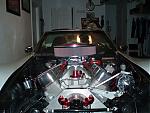
The weight was a factor in my car. It now sits HIGH in the front. I removed the C/B radiator, used AL heads and removed a few items like wiper door etc... I plan to use a set of QA1 double adjustable coilovers to adjust the ride height and allow for good weight transfer on track days. Does anyone have these and are you sassy-fied?
-P
-P
Racer


Joined: Aug 2001
Posts: 445
Likes: 2
From: Austin Texas
The weight was a factor in my car. It now sits HIGH in the front. I removed the C/B radiator, used AL heads and removed a few items like wiper door etc... I plan to use a set of QA1 double adjustable coilovers to adjust the ride height and allow for good weight transfer on track days. Does anyone have these and are you sassy-fied?
-P
-P
I am in the process of installing the Van Steel coil over setup with the QA1's - I should have you some feedback before too long. As a side note, I do have a brand new set of QA1's (shocks and springs) if there is a need on your part.
Bryan

Instructor

Joined: Aug 2004
Posts: 174
Likes: 0
From: Roskilde

Here's a picture of my talldeck, it can be done

Team Owner
Joined: Aug 2006
Posts: 24,125
Likes: 15
From: Columbia Missouri
Corvette Stories
The Best of Corvette for Corvette Enthusiasts

Every 2027 Corvette Engine Explained
Joe Kucinski
Designer Imagines A Corvette That Looks More Like a Corvette Than the Corvette
Verdad Gallardo
10 Ugly Corvettes That We Still Kinda Love
Joe Kucinski
Top 10 Most Expensive Corvettes Ever Sold on Bring A Trailer
Brett Foote
10 Things Every Corvette Owner Needs (2026 Edition)
Michael S. Palmer
8 Most "Only Corvette Owners Understand" Quirks and Problems
Pouria Savadkouei
10 Reasons the C6 Z06 is Still A Performance Benchmark After 20 Years
Joe Kucinski
How Much Horsepower Every Corvette Engine "LOST" in 1972
Joe Kucinski
Top 10 DOs and DON'Ts for Protecting Your Convertible Top!
Michael S. Palmer


Team Owner
Joined: Jul 2001
Posts: 182,997
Likes: 88
From: Lakeland, FL
Cruise-In IV-V-VI-VII-VIII Veteran
St. Jude Donor '03, '06, '17
If somebody has the money for a $$$ engine, he has the money to add a tall cowl on the hood!! Harwood makes all different types of cowl induction setups that can be fiberglassed onto the original hood...
for example:
http://store.summitracing.com/partde...5&autoview=sku
6 inches cowl should be plenty!
for example:
http://store.summitracing.com/partde...5&autoview=sku
6 inches cowl should be plenty!
Burning Brakes
Joined: Dec 2004
Posts: 1,020
Likes: 1
From: Nederland Texas
Stop picking on me Olivier!
I really don't want the "Racer" look of one of those hoods. I will post some pics of not only a 572 fitting nicely with power brakes but of the hood I want as well.
-P
I really don't want the "Racer" look of one of those hoods. I will post some pics of not only a 572 fitting nicely with power brakes but of the hood I want as well.
-P
Burning Brakes
Joined: Dec 2004
Posts: 1,020
Likes: 1
From: Nederland Texas
I have given it some thought. I would need it to drop some and then maybe K&N would make me a filter. I have had them custom make a filter in the past. HHHMMMM.
-P
PS. Check out that custom 572 top. Pretty cool, but restrictive looking.
-P
PS. Check out that custom 572 top. Pretty cool, but restrictive looking.

Le Mans Master

Joined: Apr 1999
Posts: 6,134
Likes: 46
From: Raleigh North Carolina
Is that brake line this?
"The 90/10 Solution for replacement brake lines
Cunifertm is the answer. Seamless copper-nickel 90/10 alloy brake line is strong as steel, completely corrosion proof and much easier to work with. High performance manufacturers such as Aston Martin, Porsche, Volvo and Audi, have chosen to install 90/10 alloy over all other materials including stainless steel brake lines.
Its unique properties allow it to be snaked into positions that are impossible to do with steel brake line. Flares easier, minimum tube preparation required and no seam to split. Cunifertm brake line
seals better, making it the best choice for your installation!
No other brake tubing compares for strength, reliability and ease of installation. It is the perfect replacement brake line tubing for cars, trucks and buses."
Or is it this...
"Brake line pressures can and do exceed 1000 psi. On no account should copper, aluminum, or commercial fuel line be used, despite the fact that they are easily available and appear to be easy to work with. Pure copper tubing work-hardens and becomes very, very brittle- especially at flare fittings. Under the cyclical loadings seen from brake applications, and in the presence of moisture (and possibly high concentrations of chlorides, if you live in a road salt area), they will almost certainly fail. They will tend to crack and fail right at the flare, generally with little or no warning. (Copper also catalyzes the auto-oxidation of fuel, the mechanism of sludge formation. Copper should never be in contact with fuel.)"
Or is it not brake line stuffed in there?
?
"The 90/10 Solution for replacement brake lines
Cunifertm is the answer. Seamless copper-nickel 90/10 alloy brake line is strong as steel, completely corrosion proof and much easier to work with. High performance manufacturers such as Aston Martin, Porsche, Volvo and Audi, have chosen to install 90/10 alloy over all other materials including stainless steel brake lines.
Its unique properties allow it to be snaked into positions that are impossible to do with steel brake line. Flares easier, minimum tube preparation required and no seam to split. Cunifertm brake line
seals better, making it the best choice for your installation!
No other brake tubing compares for strength, reliability and ease of installation. It is the perfect replacement brake line tubing for cars, trucks and buses."
Or is it this...
"Brake line pressures can and do exceed 1000 psi. On no account should copper, aluminum, or commercial fuel line be used, despite the fact that they are easily available and appear to be easy to work with. Pure copper tubing work-hardens and becomes very, very brittle- especially at flare fittings. Under the cyclical loadings seen from brake applications, and in the presence of moisture (and possibly high concentrations of chlorides, if you live in a road salt area), they will almost certainly fail. They will tend to crack and fail right at the flare, generally with little or no warning. (Copper also catalyzes the auto-oxidation of fuel, the mechanism of sludge formation. Copper should never be in contact with fuel.)"
Or is it not brake line stuffed in there?
?
Last edited by Tom454; Jan 25, 2007 at 03:16 PM.

Melting Slicks

Joined: Nov 2003
Posts: 2,362
Likes: 1
From: San Antonio TX

Team Owner
Joined: Aug 2006
Posts: 24,125
Likes: 15
From: Columbia Missouri

