


Lower Steering Column Shaft, Tilt vs. Std


Thread Starter
Melting Slicks


Joined: Mar 2005
Posts: 2,838
Likes: 10
From: Austin TX
 Lower Steering Column Shaft, Tilt vs. Std
Are the lower steering column shafts the same for both tilt and standard steering columns? The shaft I'm speaking of is the shaft that goes to the steering box (via the coupler). It appears this is sometimes called the intermediate shaft (I think).
Thanks.
Thanks.


Le Mans Master


Joined: Jul 2000
Posts: 6,001
Likes: 113
From: Saginaw Michigan
I am not sure exactly what you are asking.
Specifically, the actual steering shafts (T&T vs Standard non-adjustable) are different.
However, the differences are up-inside the steering column. The part that is sticking out into the engine compartment is identical between the two columns.
Jim
Specifically, the actual steering shafts (T&T vs Standard non-adjustable) are different.
However, the differences are up-inside the steering column. The part that is sticking out into the engine compartment is identical between the two columns.
Jim
Thread Starter
Melting Slicks
Joined: Mar 2005
Posts: 2,838
Likes: 10
From: Austin TX
Jim, yes, I'm asking about the part that sticks out in to the engine bay and attaches to the flange that attaches to the rag joint.
You're saying that shaft is the same for tilt and non-tilt cars?
You're saying that shaft is the same for tilt and non-tilt cars?
Le Mans Master
Joined: Jul 2000
Posts: 6,001
Likes: 113
From: Saginaw Michigan
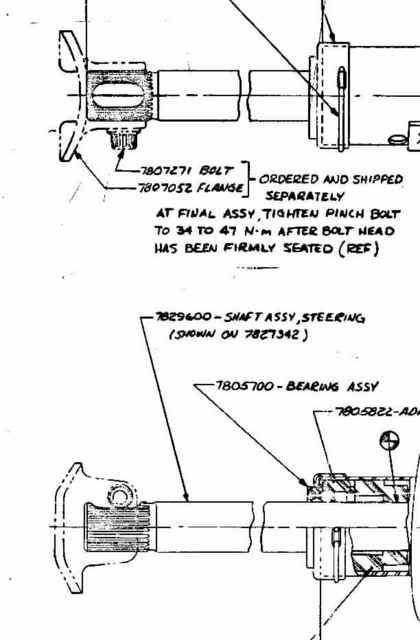
Yes, the Corvette steering column shafts are identical. The same expensive, cast, detachable flange is attached to the end of either steering column.
This is not the case with the other cars from General Motors. Most other GM cars with standard (non-adjustable) steering columns have a stamped flange that is permanently staked to the end of the steering shaft. Stamped flanges are much cheaper than cast, detachable flanges. The standard steering column steering shaft can be loaded into the steering column from the lower (engine compartment) end. And therefore a cheaper stamped flange can be a permanent part of the shaft.
Adjustable steering columns (tilt and the T&T types) must load their steering shafts from the upper (driver) end of the column. Therefore, the steering shaft has to pass all the way down through the steering column from the driver end and cannot have any type of permanent flange on the end. The expensive, cast, detachable flange is necessary and the additional cost is typically factored into the cost of a tilt or T&T column option.
Now you ask, why did Corvette use an expensive detachable flange on their standard steering column? Well, you will notice both Corvette steering column steering shafts have serrations and a 1/2 inch long notch on the end. The 1/2 inch slot allows for the tolerance between the Vette frame (where the gear is mounted) and the Vette body (where the steering column is mounted.) So whichever column is in the car, the detachable flange is located along the end of the steering column shaft to take up the tolerance.
Jim
This is not the case with the other cars from General Motors. Most other GM cars with standard (non-adjustable) steering columns have a stamped flange that is permanently staked to the end of the steering shaft. Stamped flanges are much cheaper than cast, detachable flanges. The standard steering column steering shaft can be loaded into the steering column from the lower (engine compartment) end. And therefore a cheaper stamped flange can be a permanent part of the shaft.
Adjustable steering columns (tilt and the T&T types) must load their steering shafts from the upper (driver) end of the column. Therefore, the steering shaft has to pass all the way down through the steering column from the driver end and cannot have any type of permanent flange on the end. The expensive, cast, detachable flange is necessary and the additional cost is typically factored into the cost of a tilt or T&T column option.
Now you ask, why did Corvette use an expensive detachable flange on their standard steering column? Well, you will notice both Corvette steering column steering shafts have serrations and a 1/2 inch long notch on the end. The 1/2 inch slot allows for the tolerance between the Vette frame (where the gear is mounted) and the Vette body (where the steering column is mounted.) So whichever column is in the car, the detachable flange is located along the end of the steering column shaft to take up the tolerance.
Jim









