






Found some lost HP on the dyno

Le Mans Master


Joined: Oct 2002
Posts: 5,714
Likes: 6
From: Silver City NM
St. Jude Donor '05-'07

Dep

Team Owner

Joined: Jul 2001
Posts: 182,997
Likes: 88
From: Lakeland, FL
Cruise-In IV-V-VI-VII-VIII Veteran
St. Jude Donor '03, '06, '17
Well, you are giving away HP... It's one of the biggest myths that open plenum intakes will cost you streetability. Sure.. if you go with a Super Victor, you will lose streetability but with a I mild open plenum intake like the old torker intake it will not cost you anything. The TM-1 Torker intake on my old 383 outperformed the Performer RPM THROUGHOUT THE RPM BAND on the dyno.. I gained a total of 30 HP just by changing from vacuum secondaries carb to mechanical secondaries carb + from Performer RPM to Torker TM-1 intake. 335 vs. 365 RWHP... As I said, even at lower RPM, the ported TM-1 outperformed the Performer RPM..
Le Mans Master
Joined: Oct 2002
Posts: 5,714
Likes: 6
From: Silver City NM
St. Jude Donor '05-'07
Well, you are giving away HP... It's one of the biggest myths that open plenum intakes will cost you streetability. Sure.. if you go with a Super Victor, you will lose streetability but with a I mild open plenum intake like the old torker intake it will not cost you anything. The TM-1 Torker intake on my old 383 outperformed the Performer RPM THROUGHOUT THE RPM BAND on the dyno.. I gained a total of 30 HP just by changing from vacuum secondaries carb to mechanical secondaries carb + from Performer RPM to Torker TM-1 intake. 335 vs. 365 RWHP... As I said, even at lower RPM, the ported TM-1 outperformed the Performer RPM..
If you buy an early Torker manifold make sure it SAYS "TORKER" somewhere on the top of the manifold. Here's a TORKER marking ...

Many manifolds are sold on E-bay as Torker manifolds and they are actually Tarantula manifolds. Olivier...if yours said TM-1 and didn't have TORKER in a rectangle, it was a Tarantula manifold.

Dep
Team Owner
Joined: Jul 2001
Posts: 182,997
Likes: 88
From: Lakeland, FL
Cruise-In IV-V-VI-VII-VIII Veteran
St. Jude Donor '03, '06, '17
Be careful about recommending the earlier manifolds. The TM-1 was also a Tarantula manifold and was more suited to the strip than street.
If you buy an early Torker manifold make sure it SAYS "TORKER" somewhere on the top of the manifold. Here's a TORKER marking ...
Many manifolds are sold on E-bay as Torker manifolds and they are actually Tarantula manifolds. Olivier...if yours said TM-1 and didn't have TORKER in a rectangle, it was a Tarantula manifold.
Dep
If you buy an early Torker manifold make sure it SAYS "TORKER" somewhere on the top of the manifold. Here's a TORKER marking ...
Many manifolds are sold on E-bay as Torker manifolds and they are actually Tarantula manifolds. Olivier...if yours said TM-1 and didn't have TORKER in a rectangle, it was a Tarantula manifold.
Dep
Le Mans Master
Joined: Oct 2002
Posts: 5,714
Likes: 6
From: Silver City NM
St. Jude Donor '05-'07

Dep
Team Owner
Joined: Jul 2001
Posts: 182,997
Likes: 88
From: Lakeland, FL
Cruise-In IV-V-VI-VII-VIII Veteran
St. Jude Donor '03, '06, '17
Oh I don't doubt for a second it did better than the Performer. It's actually made for high RPM applications...from 2500-7500 if I remember right. The Torker was made more for street use...1500-5500 RPM. Again...I'm depending on my often faulty memory for the RPM ranges
Dep
Dep
Le Mans Master
Joined: Oct 2002
Posts: 5,714
Likes: 6
From: Silver City NM
St. Jude Donor '05-'07
Some dual planes I like a lot. The factory dual plane high rise for the rectangular port big block works pretty good. Ditto for the Z-28/LT-1 aluminum high rise. The single planes work well if you are running a double pumper. The extra squirts of gas make up for the lack of vacuum at low RPMs.
Dep
Dep
Corvette Stories
The Best of Corvette for Corvette Enthusiasts

Every 2027 Corvette Engine Explained
Joe Kucinski
Designer Imagines A Corvette That Looks More Like a Corvette Than the Corvette
Verdad Gallardo
10 Ugly Corvettes That We Still Kinda Love
Joe Kucinski
Top 10 Most Expensive Corvettes Ever Sold on Bring A Trailer
Brett Foote
10 Things Every Corvette Owner Needs (2026 Edition)
Michael S. Palmer
8 Most "Only Corvette Owners Understand" Quirks and Problems
Pouria Savadkouei
10 Reasons the C6 Z06 is Still A Performance Benchmark After 20 Years
Joe Kucinski
How Much Horsepower Every Corvette Engine "LOST" in 1972
Joe Kucinski
Top 10 DOs and DON'Ts for Protecting Your Convertible Top!
Michael S. Palmer
Team Owner
Joined: Jul 2001
Posts: 182,997
Likes: 88
From: Lakeland, FL
Cruise-In IV-V-VI-VII-VIII Veteran
St. Jude Donor '03, '06, '17
Some dual planes I like a lot. The factory dual plane high rise for the rectangular port big block works pretty good. Ditto for the Z-28/LT-1 aluminum high rise. The single planes work well if you are running a double pumper. The extra squirts of gas make up for the lack of vacuum at low RPMs.
Dep
Dep

Race Director


Joined: Jan 2000
Posts: 13,022
Likes: 2,264
From: Corsicana, Tx
2020 C2 of the Year - Modified Winner
2020 Corvette of the Year (performance mods)
C2 of Year Winner (performance mods) 2019
2017 C2 of Year Finalist
We've got a Tarantula on a .060 over 327, small solid flat tappet and some iron SR Torquer heads. The little sucker is sweet..runs 12.70's on BFG street tires and will pull 7500 rpm if you want to. It drives pretty sweet with the old style intake. I ran it on a 350 with both stock heads and mega bad boy ported aluminum ones....loved it!
Thos early single planes were pretty small..even the Tarantula. When the Street and Strip Dominators came out from Holley,..things started getting pretty big.
JIM
Thos early single planes were pretty small..even the Tarantula. When the Street and Strip Dominators came out from Holley,..things started getting pretty big.
JIM

Drifting


Joined: Sep 2004
Posts: 1,959
Likes: 1
From: North Bend Ohio
Team Owner
Joined: Jul 2001
Posts: 182,997
Likes: 88
From: Lakeland, FL
Cruise-In IV-V-VI-VII-VIII Veteran
St. Jude Donor '03, '06, '17
You can run a double pumper with vacuum secondaries..
Re-read what I wrote (you even quoted it). If I would've said it the other way (that I'm running mech. secondaries but also run a double pumper), then your statement would be true as there are no single pumper mech. secondaries carb. However, the way I stated it, it is true. You can have a double pumper with vacuum secondaries so it doesn't automatically mean that a double pumper is also a mech. secondaries carb.
Double Pumper vacuum secondaries:
http://store.summitracing.com/partde...5&autoview=sku
or
http://store.summitracing.com/partde...5&autoview=sku
Double Pumper mech. secondaries:
http://store.summitracing.com/partde...5&autoview=sku
or
http://store.summitracing.com/partde...5&autoview=sku
Last edited by GrandSportC3; Apr 15, 2007 at 08:22 AM.
Drifting
Joined: Sep 2004
Posts: 1,959
Likes: 1
From: North Bend Ohio
Hmm... I didn't know Holley made a vacuum secondary carburetor that had double accelerator pumps.
As a matter of fact I didn't think the extra accelerator pump was needed on a vacuum secondary carburetor.
Oh well.
BigBlockk
Later.....
As a matter of fact I didn't think the extra accelerator pump was needed on a vacuum secondary carburetor.
Oh well.
BigBlockk
Later.....
Team Owner
Joined: Jul 2001
Posts: 182,997
Likes: 88
From: Lakeland, FL
Cruise-In IV-V-VI-VII-VIII Veteran
St. Jude Donor '03, '06, '17
All the Street Avenger carbs are double pumper carbs and the secondary pump is operated by vacuum...
There are also vacuum secondaries 4150 series (double pumper) carbs.
The 4160 series are all single pumpers with vacuum secondaries. The 4150 series are all double pumpers, available with vacuum or mech. secondaries operated secondary pump..
IMHO, a vaccum secondaries carb has no business being on a performance engine.. I initially ran a "built" vacuum secondaries carb (with proform main body) on my old 383 but the secondaries would never open up completely with the vacuum, so I went with the HP series mech. secondaries carb.. What a difference!!
Le Mans Master
Joined: Oct 2002
Posts: 5,714
Likes: 6
From: Silver City NM
St. Jude Donor '05-'07
Again...dual inlet/dual feed does not mean two accelerator pumps
A second accelerator pump on a vacuum secondary carb would be worthless. It would be squirting gas into closed throttle plates!!!
Dep
Last edited by DJ Dep; Apr 15, 2007 at 10:39 AM.

Drifting


Joined: Apr 2002
Posts: 1,743
Likes: 37
From: Stockton Ca
Close to 300 rwhp?
My dyno guy found 75 rwhp in my combo. I now have 280 rwhp/315 rwtq. I still have stk smog rams horns. They are costing me big hp/tq till I get headers. 300 rwhp has a nice ring to it.
Ricisan
Ricisan

Race Director
Joined: Mar 2006
Posts: 14,112
Likes: 28
From: Florida
Big: They DON'T!!!! Olivier is a bit confused. The first two carbs he linked to do NOT have double accelerator pumps. They have DUAL FEED! That means they get gas to both floats. Dual feed does not mean "double pumper". There is only one pump on vacuum secondary carbs. There is a kit that will add a second set of squirters for the secondaries on a single pump carb if you've done the old "sheet metal screw through the vacuum linkage" trick.. But it is using the single pump to squirt to all four holes.
Again...dual inlet/dual feed does not mean two accelerator pumps
A second accelerator pump on a vacuum secondary carb would be worthless. It would be squirting gas into closed throttle plates!!!
Dep
Again...dual inlet/dual feed does not mean two accelerator pumps
A second accelerator pump on a vacuum secondary carb would be worthless. It would be squirting gas into closed throttle plates!!!
Dep

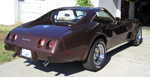
Thread Starter
Race Director

Joined: Sep 2002
Posts: 10,362
Likes: 5
From: San Diego - Deep Within The State of CONFUSION!
On the other hand the Ram Horns are good manifolds. They're as good as cast iron manifolds get and arguably as good as cheap headers.

Instructor


Joined: Sep 2006
Posts: 154
Likes: 0
From: Upper Darby PA
I'm enjoying the discussion on this subject. as always I'm learning from those who have been there/done that. I understand that dual plane intakes are good for low and mid range rpm's, and single for high rpm's.
I have heard that if you remove some material from the dividing plenum, you can even the playing field and have the best of both worlds. is this one of those urban legends, or is it fact ? if true, how do you remove the metal ? is it notched or evenly removed across the whole divider ? how much material is removed ? thanks, Rich
I have heard that if you remove some material from the dividing plenum, you can even the playing field and have the best of both worlds. is this one of those urban legends, or is it fact ? if true, how do you remove the metal ? is it notched or evenly removed across the whole divider ? how much material is removed ? thanks, Rich