


QJet Question??

Thread Starter
Pro

Joined: Jan 2004
Posts: 518
Likes: 0
From: oh

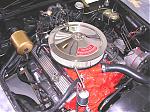
float level is set to spec. new gaskets between intake and carb. timing set. The distributor has an electronic conversion kit in it...are there any adjustments that need to be made? or is it just plug and play? here are the vacuum connections:


btw, the idle screw will not let the car idle less than 850 rpm. you can basically remove the idle screw and spring and it will not go below 850 rpm. any ideas?
Jeff
btw, the idle screw will not let the car idle less than 850 rpm. you can basically remove the idle screw and spring and it will not go below 850 rpm. any ideas?
Jeff

Safety Car


Joined: Apr 2000
Posts: 3,802
Likes: 61
From: Wichita KS
You should be able to kill the engine if you back out the idle screw to much.
Check clearance between gasket and throttle plates or for any other potential obstructions.
cc

Le Mans Master

Joined: Mar 2002
Posts: 6,217
Likes: 1
From: End of the Ike IL
Cruise-In V Veteran
Cruise-In VI Veteran
From the pictures, I see that you have the vacuum advance hooked to ported vacuum port on the carburetor. You can improve idle quality, performance, and cooling by changing over to a manifold vacuum source. Easiest way for you to do this (from the pics) is to get a longer rubber hose and route it back to the port near the dashpot that looks like it has a short hose with a screw in the end. Make sure you cap the ported vacuum port off when you change it over. Lars, Barry K and others have info on manifold vs. ported vacuum to the vacuum advance can. I wasn't sure it would help my BB, but it did! Much better idle, crisper throttle response, and way better cooling in traffic. I did change to a different vacuum can (B20 VC1765 from original B1 VC680) to match my idle vacuum. Depending on your idle vacuum, you might not have to mess with the advance can.








