




Help, I have no brakes.....
Thread Starter
Advanced

Joined: Jul 2005
Posts: 95
Likes: 0
 Help, I have no brakes.....
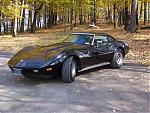
Hi, my 76 has sat for a little over one year without being driven. This past weekend I went to get it out and found I have no brakes at all. When the car went into storage it had great brakes. Anyways, we bled the brakes, checked for leaks, checked fluid level and still nothing. After that, we replaced the master cylinder, rebled the brakes, still nothing, pedel goes straight to the floor. There was no sign of leakage under the car, and I can find no fluid around any lines/calipers. I am borrowing a pressure bleeder to try tommarow and see if that helps. Also, the brake light is on at all times now inside the car. Could it be the booster? I pulled the vacume line off and the engine ran poorly when it was off. My understanding is that is a good thing. If anyone has any ideas, or advice to help me I would appriciate it alot.

Team Owner

Joined: Aug 2006
Posts: 24,125
Likes: 15
From: Columbia Missouri
I'm willing to bet you have a large air bubble trapped in both circuits and it's just moving around when you bleed. Try excessive bleeding on both front and rear circuits, and try tapping on the master, calipers, and proportioning valve with a small tack hammer or a small rubber mallet.
Did you bench bleed the new master when it went in? Meaning, did you purge all the air and prime with fluid before installing it?
Did you bench bleed the new master when it went in? Meaning, did you purge all the air and prime with fluid before installing it?
Team Owner
Joined: Aug 2006
Posts: 24,125
Likes: 15
From: Columbia Missouri
Okay, then my first thought is air is still in the system. Even if your booster WAS bad you would still have manual brakes to work with. It would be a hard pedal but it would still stop the car.
If there are no leaks and the fluid level in the master is okay then you probably have air trapped and that's why the BRAKE light is on.
Bleed 10 - 15 times at each wheel, and then maybe even repeat, while constantly adding fluid.
Passenger rear.
Driver rear.
Passenger front.
Driver front.
Thread Starter
Advanced
Joined: Jul 2005
Posts: 95
Likes: 0
I feel like im an expert at bleeding brakes now, Ill give it a try, and if nothing else I'll change out the MC again, it is a crappy advance auto MC. It would probably pay to get a good one. After all that I've read I agree with what you said about air.
Pro


Joined: Apr 2007
Posts: 528
Likes: 9
From: Grand Rapids Michigan
Good Luck.
Team Owner


Joined: Jun 2001
Posts: 23,358
Likes: 1,058
From: Virginia USA
If your brake light is on then your poportional valve is set to close off one circuit. If you lose one circuit then the pressure from the good circuit sets a plunger inside the prop valve and completes the circuit causing the light to come on. IT's a safety thing. The manual says that after you correct the problem that caused the light to come on (in your case it may be a leak that you have not found yet or a big air bubble described above) you have to give the pedal a couple of quick strokes to reseat the valve. I don't know if this will work in your case yet if your pedal is going to the floor easily. Good luck
Pro
Joined: Oct 2005
Posts: 541
Likes: 1
From: Freeport FL
Well, one thing that you could do (that I used to help isolate a similar problem) is to clamp off all 4 rubber brake lines with something like vise grips and a rag to protect them. This may help focus your troubleshooting by telling you whre the problem is *not* at.
Corvette Stories
The Best of Corvette for Corvette Enthusiasts

10 Revolutionary 'Corvette Firsts' Most People Don't Know
Joe Kucinski
5 Reasons to Upgrade to an LS6-Powered Corvette; 5 Reasons to Stay LT2
Michael S. Palmer
2027 Corvette vs The World: Every C8 vs Its Closest Competitor
Joe Kucinski
10 Most Common Corvette Problems of the Last 20 Years!
Joe Kucinski
5 MOST and 5 LEAST Popular Corvette Model Years in History!
Joe Kucinski
2027 Corvette Buyer's Guide: Everything You Need to Know!
Joe Kucinski
10 Things C8 Corvette Owners Hate (But Won't Tell You)
Joe Kucinski
10 Best Corvettes Coming to Barrett-Jackson Palm Beach 2026!
Brett Foote
Every Corvette Grand Sport Explained! (C2, C4, C6, C7, & C8)
Joe Kucinski
Le Mans Master


Joined: Aug 2006
Posts: 7,411
Likes: 1,551
From: mount holly NC
2025 c3 ('74-'82) of the Year Finalist - Unmodified
2019 C3 of Year Finalist (appearance mods)
Hi atrack350. The front brakes can be bleed with the whees on, in the back you must remove the wheels to get to the outer bleeders, did you do that? PG
