


Ideal Thermostat Temp???


Burning Brakes


Joined: Jul 2006
Posts: 1,047
Likes: 12
From: SoCal

After "sleeping on it" overnight, I realized that both sides of the discussion have been partially right and partially wrong. Here's what my memories of theromdynamics courses as a chemistry major should have been telling at me. Since those were a whole lotta' days ago (more than I'd care to admit to  ), those memories are a bit hazy, but here goes:
The behavior of the thermostat is dictated by two things:
1) The thermostat's rated temperature - you all know what that is
2) Something I'll call the "engine's working temperature" - this is primarily made up of three things: (a) the efficiency of your cooling system (do you have a nice new radiator with good flow, or...); (b) the workload on your engine (are you cruising at constant speed down the highway, or are you in stop-and-go traffic, or...); and (c) ambient air temperature
Now, #1 is fixed for each thermostat, and #2a is also fixed (at least for a given trip in your car). But #2b and #2c can vary as you drive.
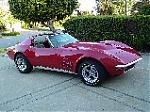
And now, since I somewhat maligned Tim H, I'll vindicate him first. Let's say it's a nice cool fall day and ambient air temp is 45F and Tim is cruising in his Vette down the highway at a constant speed of 65MPH to try out the new DeWitt radiator that he just installed in his freshly rebuilt engine, and he's got a 180F thermostat. Oh, and since it's a bit chilly out, let's say he's also got his heater on (which is an old trick to lower engine temp). I'm betting that his thermostat may not open at all, but if it does his system will behave as he described (i.e., the thermostat's rated temp will be his "maximum" temp, although he'll probably never hit it).
Now let's change things in the oppposite direction - Let's say I'm stuck in my Vette in downtown Las Vegas stop-and-go traffic where yesterday afternoon it was 116F, and that I'm running with that same 180F thermostat and my cooling system has a normal amount of crud in it, plus I'm running my AC. Betcha' my thermostat is wide open the entire time (i.e., the thermostat's rated temp will be my "minimum" temp, although I'll probably never hit it until I shut off the car and it cools down).
So, the thermostat's behavior is determined by the thermostat's rated temperature as compared to the engine's working temperature. If the engine's working temp is below the tstat's rated temp, then the tstat's rated temp is a "maximum". If the engine's working temp is above the tstat's rated temp, then the tstat's rated temp is a "minimum".
Man, I hope I got this right or my old profs will be spinning in their graves!
), those memories are a bit hazy, but here goes:The behavior of the thermostat is dictated by two things:
1) The thermostat's rated temperature - you all know what that is
2) Something I'll call the "engine's working temperature" - this is primarily made up of three things: (a) the efficiency of your cooling system (do you have a nice new radiator with good flow, or...); (b) the workload on your engine (are you cruising at constant speed down the highway, or are you in stop-and-go traffic, or...); and (c) ambient air temperature
Now, #1 is fixed for each thermostat, and #2a is also fixed (at least for a given trip in your car). But #2b and #2c can vary as you drive.
And now, since I somewhat maligned Tim H, I'll vindicate him first. Let's say it's a nice cool fall day and ambient air temp is 45F and Tim is cruising in his Vette down the highway at a constant speed of 65MPH to try out the new DeWitt radiator that he just installed in his freshly rebuilt engine, and he's got a 180F thermostat. Oh, and since it's a bit chilly out, let's say he's also got his heater on (which is an old trick to lower engine temp). I'm betting that his thermostat may not open at all, but if it does his system will behave as he described (i.e., the thermostat's rated temp will be his "maximum" temp, although he'll probably never hit it).
Now let's change things in the oppposite direction - Let's say I'm stuck in my Vette in downtown Las Vegas stop-and-go traffic where yesterday afternoon it was 116F, and that I'm running with that same 180F thermostat and my cooling system has a normal amount of crud in it, plus I'm running my AC. Betcha' my thermostat is wide open the entire time (i.e., the thermostat's rated temp will be my "minimum" temp, although I'll probably never hit it until I shut off the car and it cools down).
So, the thermostat's behavior is determined by the thermostat's rated temperature as compared to the engine's working temperature. If the engine's working temp is below the tstat's rated temp, then the tstat's rated temp is a "maximum". If the engine's working temp is above the tstat's rated temp, then the tstat's rated temp is a "minimum".
Man, I hope I got this right or my old profs will be spinning in their graves!
Last edited by VCuomo; Jul 7, 2007 at 05:44 PM.

Drifting


Joined: Sep 2004
Posts: 1,959
Likes: 1
From: North Bend Ohio
General Motors doesn't put parts on their cars that don't need to be there. The thermostat was invented to get the engine to a minimum operating temperature as quickly as possible. There is a reason for this. No matter how cold it is outside the engine will run with the thermostat at least partial open at operating temperature provided the radiator is sized correctly.
People run into problems when they start goofing with this system. If you put a four core Big Block radiator in a base L-48 with a 160 'stat then drive it in Waycold Alaska during winter the engine is going to have a condensation problem inside. Moisture plus exhaust gas equals acid. This is why they went to aluminumized and then stainless steel in exhaust systems. I wonder what this will do to the inside of your engine.
Lastly, I would like to know how much extra power ya'll think you're going to get running a 160 'stat? My guess is that you won't be able to feel it in the car but you will be able to see the lower gas mileage.
BigBlockk
Later.....
People run into problems when they start goofing with this system. If you put a four core Big Block radiator in a base L-48 with a 160 'stat then drive it in Waycold Alaska during winter the engine is going to have a condensation problem inside. Moisture plus exhaust gas equals acid. This is why they went to aluminumized and then stainless steel in exhaust systems. I wonder what this will do to the inside of your engine.
Lastly, I would like to know how much extra power ya'll think you're going to get running a 160 'stat? My guess is that you won't be able to feel it in the car but you will be able to see the lower gas mileage.
BigBlockk
Later.....

Race Director


Joined: May 2005
Posts: 10,674
Likes: 122
From: Millington Illinois
St. Jude Donor '08-'09
The number on a thermostat is how hot the water should get.
If you have a 180 then thats when the stat opens, if it gets hotter its not the stast fault.
Room temp is your minimum.
People beleive if you have a 180 stat that is the minimum temp and then its up from there but its not!
If you have a 180 then thats when the stat opens, if it gets hotter its not the stast fault.
Room temp is your minimum.
People beleive if you have a 180 stat that is the minimum temp and then its up from there but its not!
 A 180 stat maintains your water temp in the block at 180 or above. Room temp is gone by the time you back out of the garage. You are not going to cruise down the road @ 160 water temp with a 180 thermostat. You will be @ 180 or higher. Doesn't matter how efficient your cooling system is you will run 180 or higher.
Last edited by 63mako; Jul 8, 2007 at 10:58 AM.








