



Heat-Riser Installation

Thread Starter
Le Mans Master

Joined: Nov 2006
Posts: 5,262
Likes: 283
From: I'd like to propose a toast... to internal combustion and wind in the face.
 Heat-Riser Installation
I have been battling some valve clatter in my '72 454 coupe since I re-installed the engine. Yesterday I discovered that I may have the heat riser valve installed upside-down. I know I was thinking about the implications when I installed the valve, but I was laying on my back, had dirt in my eyes, cursing and generally uncomfortable, you get (or know) the point. I remember when I was re-installing the valve that there was no definitive instruction or picture in the assembly manual so I was wondering if anyone had any pics or tips. Right now the counterweight would have to rotate up (against the exhaust flow) for the valve to open.
I must say that if infact I do have the valve installed upside-down that I'm more than just a little embarrassed so go ahead an take your shots. If correcting this fixes my car I would be on cloud nine. Anyone's help is appreciated.
Mudbone64
I must say that if infact I do have the valve installed upside-down that I'm more than just a little embarrassed so go ahead an take your shots. If correcting this fixes my car I would be on cloud nine. Anyone's help is appreciated.
Mudbone64

Intermediate


Joined: May 2005
Posts: 39
Likes: 2
From: Bay Point, CA
Mudbone,
I just went to the garage to check my stock 1972 454 and the weight on my heat riser points down when open and towards the starter when closed.
I hope this helps, no shots from me!
voat
I just went to the garage to check my stock 1972 454 and the weight on my heat riser points down when open and towards the starter when closed.
I hope this helps, no shots from me!
voat
Thread Starter
Le Mans Master
Joined: Nov 2006
Posts: 5,262
Likes: 283
From: I'd like to propose a toast... to internal combustion and wind in the face.
Again your help is appreciated.
Mudbone64

Racer
Joined: Nov 2004
Posts: 485
Likes: 1
From: Oakville ON
I am not familiar with your model but as far as I know the valve actuator uses manifold vacuum to pull on a rod to pull the valve open, so if you put a length of rubber tubing on the actuator (instead of the one from the manifold) and pull a vacuum on it, you should see the valve shaft move 90 degrees. Manifold vacuum pulls the valve closed (when cold). Release vacuum and it should rotate back / open. Is so, it is in right. Then the problem is the quality and / or timing of vacuum (or not) to the valve. If the thermal vacuum switch is allowing partial vacuum to the actuator when the engine is hot, it will rattle.

Le Mans Master

Joined: Jan 2006
Posts: 8,319
Likes: 7
From: Wilmington DE, Drive it like you stole it, 68 327 4 speed coupe
I am not familiar with your model but as far as I know the valve actuator uses manifold vacuum to pull on a rod to pull the valve open, so if you put a length of rubber tubing on the actuator (instead of the one from the manifold) and pull a vacuum on it, you should see the valve shaft move 90 degrees. Manifold vacuum pulls the valve closed (when cold). Release vacuum and it should rotate back / open. Is so, it is in right. Then the problem is the quality and / or timing of vacuum (or not) to the valve. If the thermal vacuum switch is allowing partial vacuum to the actuator when the engine is hot, it will rattle.
the vaccum is for later models, the earlier models used the bi-metal spring heat actuated valve and you should be looking right at the counterweight from the passenger side if it is installed correctly

Thread Starter
Le Mans Master
Joined: Nov 2006
Posts: 5,262
Likes: 283
From: I'd like to propose a toast... to internal combustion and wind in the face.
My heat riser valve is the earlier type and only uses springs to open/close the valve.
Now that I realize I have the valve installed upside-down I was wondering about how the valve is "clocked" in relation to the car. I'll take your advice Sweet Hence and install the valve with the counterweight be placed next to the frame.
Thanks guys,
Mudbone64
Now that I realize I have the valve installed upside-down I was wondering about how the valve is "clocked" in relation to the car. I'll take your advice Sweet Hence and install the valve with the counterweight be placed next to the frame.
Thanks guys,
Mudbone64
Le Mans Master
Joined: Jan 2006
Posts: 8,319
Likes: 7
From: Wilmington DE, Drive it like you stole it, 68 327 4 speed coupe
My heat riser valve is the earlier type and only uses springs to open/close the valve.
Now that I realize I have the valve installed upside-down I was wondering about how the valve is "clocked" in relation to the car. I'll take your advice Sweet Hence and install the valve with the counterweight be placed next to the frame.
Thanks guys,
Mudbone64
Now that I realize I have the valve installed upside-down I was wondering about how the valve is "clocked" in relation to the car. I'll take your advice Sweet Hence and install the valve with the counterweight be placed next to the frame.
Thanks guys,
Mudbone64
when cold, the valve should be in the closed position I think that means the counterweight is in the more horizontal position, and it opens it rotates down to more vertical
Thread Starter
Le Mans Master
Joined: Nov 2006
Posts: 5,262
Likes: 283
From: I'd like to propose a toast... to internal combustion and wind in the face.
Unless there was something in the way like the starter, could you not rotate the heat riser valve around the end of the exhaust manifold? Or is there only one way the valve will fit onto the exhaust manifold (assuming you have it right-side-up).
Corvette Stories
The Best of Corvette for Corvette Enthusiasts

5 Best & 5 Worst Corvette Daily Drivers
Joe Kucinski
The Headlights of Every Corvette Generation Explained
Joe Kucinski
5 Best & 5 Most Overrated Corvette Track Packages of All Time!
Joe Kucinski
Every 2027 Corvette Engine Explained
Joe Kucinski
Designer Imagines A Corvette That Looks More Like a Corvette Than the Corvette
Verdad Gallardo
10 Ugly Corvettes That We Still Kinda Love
Joe Kucinski
Top 10 Most Expensive Corvettes Ever Sold on Bring A Trailer
Brett Foote
10 Things Every Corvette Owner Needs (2026 Edition)
Michael S. Palmer
8 Most "Only Corvette Owners Understand" Quirks and Problems
Pouria Savadkouei
Le Mans Master
Joined: Jan 2006
Posts: 8,319
Likes: 7
From: Wilmington DE, Drive it like you stole it, 68 327 4 speed coupe

If I understand you correctly then no, the heat riser is kept from "rotating" by the fact that the exhaust studs go throught the casting
but I may be not getting what you say
Thread Starter
Le Mans Master
Joined: Nov 2006
Posts: 5,262
Likes: 283
From: I'd like to propose a toast... to internal combustion and wind in the face.
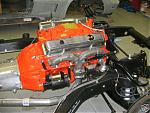
Here's a pic of the correct valve for my car:

It looks like you could pull the valve from the studs and rotate it either clockwise or counter-clockwise and then push the valve back up onto the studs when you reached your desired position. I was wondering what the proper position is. I guess it really doesn't matter as long as the action of the counterweight is interfered with.
It looks like you could pull the valve from the studs and rotate it either clockwise or counter-clockwise and then push the valve back up onto the studs when you reached your desired position. I was wondering what the proper position is. I guess it really doesn't matter as long as the action of the counterweight is interfered with.
Le Mans Master
Joined: Jan 2006
Posts: 8,319
Likes: 7
From: Wilmington DE, Drive it like you stole it, 68 327 4 speed coupe
Here's a pic of the correct valve for my car:
It looks like you could pull the valve from the studs and rotate it either clockwise or counter-clockwise and then push the valve back up onto the studs when you reached your desired position. I was wondering what the proper position is. I guess it really doesn't matter as long as the action of the counterweight is interfered with.
It looks like you could pull the valve from the studs and rotate it either clockwise or counter-clockwise and then push the valve back up onto the studs when you reached your desired position. I was wondering what the proper position is. I guess it really doesn't matter as long as the action of the counterweight is interfered with.
cheers

Instructor
Joined: Feb 2007
Posts: 190
Likes: 0
From: shrewsbury Pa.
On my 1970, its really quite simple to determine which way it goes in. The top side matting surface of the valve is perfectly flat and requires the FLAT gasket to be applied there to the FLAT surface of the manifold. The bottom side of the valve has a "recess" if you will, where its pretty obvious the dougnut gasket will fit so that you can connect the exhaust pipe up to it. look at your valve. One side should have this recess where the doughnut gasket fits.
Intermediate
Joined: May 2005
Posts: 39
Likes: 2
From: Bay Point, CA
Mudbone,
On my 72 the heat riser weight is clocked so the counter weight is towards the engine and is right next to the starter.
When the valve is closed, the counter weight points towards the starter so that the bottom of the weight (side opposite the spring) is almost touching the starter.
voat
On my 72 the heat riser weight is clocked so the counter weight is towards the engine and is right next to the starter.
When the valve is closed, the counter weight points towards the starter so that the bottom of the weight (side opposite the spring) is almost touching the starter.
voat
Thread Starter
Le Mans Master
Joined: Nov 2006
Posts: 5,262
Likes: 283
From: I'd like to propose a toast... to internal combustion and wind in the face.
Mudbone,
On my 72 the heat riser weight is clocked so the counter weight is towards the engine and is right next to the starter.
When the valve is closed, the counter weight points towards the starter so that the bottom of the weight (side opposite the spring) is almost touching the starter.
voat
On my 72 the heat riser weight is clocked so the counter weight is towards the engine and is right next to the starter.
When the valve is closed, the counter weight points towards the starter so that the bottom of the weight (side opposite the spring) is almost touching the starter.
voat
Burning Brakes

Joined: Feb 2006
Posts: 1,024
Likes: 1
From: AL
even if that is how it came from the factory in 72, i think i'd turn it so that the weight is pointing away from the block. one day you will want to hit it with pb blaster and grab it and work it up and down (i know i know) . . . it will be a lot easier to free if "clocked" properly. also, this is how they were "clocked" in 74 . . . .02

Race Director

Joined: Nov 2002
Posts: 12,142
Likes: 54
From: Taylor Michigan
A simple test is that the two gaskets are different. The flat 3 hole gasket gos directly to the manifold. The beveled {donut} matches the pipe. You should be able to see this without disassembling any parts.
Instructor
Joined: Feb 2007
Posts: 190
Likes: 0
From: shrewsbury Pa.

Safety Car


Joined: Apr 2000
Posts: 3,802
Likes: 61
From: Wichita KS
Mudbone,
On my 72 the heat riser weight is clocked so the counter weight is towards the engine and is right next to the starter.
When the valve is closed, the counter weight points towards the starter so that the bottom of the weight (side opposite the spring) is almost touching the starter.
voat
On my 72 the heat riser weight is clocked so the counter weight is towards the engine and is right next to the starter.
When the valve is closed, the counter weight points towards the starter so that the bottom of the weight (side opposite the spring) is almost touching the starter.
voat
I have a spacer to replace the valve with someday.
cc
