




How to 427 sb?
Thread Starter
Safety Car

Joined: Nov 2007
Posts: 3,570
Likes: 0
From: bottom of the sea

i give up. maybe things cost more where you guys live. as for the link, i still gotta get the GF to help me post a pic! thats why i suggested you do your own searches.
example: crate engine depot.com 1 out of MANY i found,
1. 383 w/ heads- 4320$
2. 383 complete except carb-4180$
3. 383 w/ nitrided crank and rods and fast burn cyl. heads-5017$
now if your paying attention, these are whole engines. my quote was for a short block. but these prices are still way south of what you guys are saying, and i found these in 2 minutes
thanks for all your guy's help.
really

later
example: crate engine depot.com 1 out of MANY i found,
1. 383 w/ heads- 4320$
2. 383 complete except carb-4180$
3. 383 w/ nitrided crank and rods and fast burn cyl. heads-5017$
now if your paying attention, these are whole engines. my quote was for a short block. but these prices are still way south of what you guys are saying, and i found these in 2 minutes
thanks for all your guy's help.
really
later

Burning Brakes


Joined: Sep 2005
Posts: 993
Likes: 3
From: Iowa
Well the thing you need to remember is that you must build what you need. It's been my experience that most people come to me with the idea that they need parts that are at least two tiers higher than they actually do. In working with full blown race units for years I understand fully how things add up, but the prices that have been being thrown around are a little shocking to me. Now I'm not going to pick apart someone's build and get into one of the now famous arguments over what part and why but I feel the answer is in the middle.
Also, all the talk about the 400 blocks being worthless and going to an aftermarket unit is really out line at this point. I have a guy out there right now, racing a 410 sprint car (that makes any engine owned by those posting about how bad they are look rather WEAK) that is running a factory block (and it isn't filled up with concrete either, just main cap work). In the past few seasons that I have been working with him he has only had one failure to date that was the blocks fault; after a lot of race hours operating at 16.5-1 compression we did have a cylinder wall failure. Now my personal engine has an aftermarket aluminum, dry sump only, tall deck block and sure it's great, but that doesn't really mean much when he passes my engine out on the track. He’s proven to me that he finishes races just fine; now for some racers we advise the use of an aftermarket unit, some we don’t. It’s goes far beyond simply saying “oh this is a fast engine, we need an aftermarket block” and way into the operational parameters set down by the customer.
See the point is, you build the engine as strong as it needs to be with an engineering factor of safety (if you can't afford to do that you will have to decide on toning it down or building it the best you can and going for broke). Now if you want to take the top end off of my sprint car engine and choke it down with a set of 23* AFR or Brodix heads you would have an engine that won't fail due to loads (not saying the operator couldn't break it with a bad tune). But you would in that case be sacrificing some power due to the weight of the components needed to hold together in the dirt track environment. Building engines is an engineering optimization; not bolting together parts. Sorry for the long and late post, just my .02 on the subject.
Also, all the talk about the 400 blocks being worthless and going to an aftermarket unit is really out line at this point. I have a guy out there right now, racing a 410 sprint car (that makes any engine owned by those posting about how bad they are look rather WEAK) that is running a factory block (and it isn't filled up with concrete either, just main cap work). In the past few seasons that I have been working with him he has only had one failure to date that was the blocks fault; after a lot of race hours operating at 16.5-1 compression we did have a cylinder wall failure. Now my personal engine has an aftermarket aluminum, dry sump only, tall deck block and sure it's great, but that doesn't really mean much when he passes my engine out on the track. He’s proven to me that he finishes races just fine; now for some racers we advise the use of an aftermarket unit, some we don’t. It’s goes far beyond simply saying “oh this is a fast engine, we need an aftermarket block” and way into the operational parameters set down by the customer.
See the point is, you build the engine as strong as it needs to be with an engineering factor of safety (if you can't afford to do that you will have to decide on toning it down or building it the best you can and going for broke). Now if you want to take the top end off of my sprint car engine and choke it down with a set of 23* AFR or Brodix heads you would have an engine that won't fail due to loads (not saying the operator couldn't break it with a bad tune). But you would in that case be sacrificing some power due to the weight of the components needed to hold together in the dirt track environment. Building engines is an engineering optimization; not bolting together parts. Sorry for the long and late post, just my .02 on the subject.
Last edited by Deakins; Oct 6, 2008 at 08:02 PM.

Race Director


Joined: May 2005
Posts: 10,674
Likes: 122
From: Millington Illinois
St. Jude Donor '08-'09
 The $5017 engine above is 425 HP (405 HP with a dual plane) stock GM crate engine. Not fully forged. No carb, intake or distributor. Motorhead built a 427 SB that is over 600 HP and will pull over 7000 RPM reliably. Gkull road races his 434. If you only want to do it once and subject the motor to this type of abuse you better build it right the first time. No cutting corners. Yes, there are 383 short blocks for $1400 but you better not run over 400 or so HP, no power adders and limit the RPM. My build is a 4340 Forged Eagle crank forging Machined and lightened by American Machine Service, Callies Compstar rods, Mahle Low expantion forged pistons, 4 bolt Billet mains, Fully ARP studded, AFR Competition ported 195 heads, Custom ground Comp Hydraulic Roller. Pro magnum rockers, Custom Tripower, Hooker headers W Maxflows. 10.4 to 1 comp. This is a little over built for a hydraulic roller 6500 RPM street build with a little over 500 HP but I have a 150 HP Plate nitrous system. Really should have used an aftermarket block to run this much power but $ are not unlimited. It depends on your use, driving style, HP, weight of vehicle, gearing and many other variables how strong you have to build the bottom end. One thing I have learned in many years of drag racing and street car builds is that the weakest link always breaks. When building High HP engines (over 1.5 HP per CI) you better not cut corners anywhere.

Race Director

Joined: Apr 2000
Posts: 17,676
Likes: 201
From: Who says "Nothing is impossible" ? I've been doing nothing for years.
Also, all the talk about the 400 blocks being worthless and going to an aftermarket unit is really out line at this point. I have a guy out there right now, racing a 410 sprint car (that makes any engine owned by those posting about how bad they are look rather WEAK) that is running a factory block (and it isn't filled up with concrete either, just main cap work). In the past few seasons that I have been working with him he has only had one failure to date that was the blocks fault; after a lot of race hours operating at 16.5-1
If I wanted to build a race motor I would have. How does that sprint car motor run on the street ? Anyway your whole post makes no sense and I have no idea why I am even replying other than to point out how ridiculous the comparison is.
I ran a OEM 400 block with 550HP with no problems, I stepped up the HP this time and wanted to make it bullet proof and some of you guys have a problem with that

Pro

Joined: Jul 2005
Posts: 517
Likes: 7
From: Peoria IL
Nobody asked my opinion but honestly I think Deakins is right on the money.
In my case, I did the zen-like measure-everything, double-check everything leave-no-stone-unturned engine build and my 383 cost me just over $5000. I went with a Scat cast crank and a Vortec GM roller block from a 1-ton railroad service truck. Looking back, I wish I had gone with an aftermarket block- probably the Motown. I did go with a street fill of hardblok, it's a four bolt main block, ARP studs everywhere, 6" scat 7/16 capscrew rods, etc etc etc. A forged crank would have cost more but would not have made the engine any stronger- the block is weaker than the crank. The heads are AFR 195's. The cam is a roller Isky, lifters are GM.
The point here is this: I spent over $5000 on the engine, $15,000 and counting properly building the car to handle the above powerplant and about another $10,000 and counting to further recondition and improve the car for my own pleasure and enjoyment. This is an 2nd gen Camaro!
You can build a cheaper 383, a more experienced engine builder would have made different compromises- but, with the exception of the aftermarket block I wish I had used, the whole car was re-engineered by me with an eye for robust design. No matter what I do with it (short of a collision) I expect to be able to drive it home. The Moser 9" rear, TH400, Desert Cooler radiator, even the door hinges have all been re-designed with excessive factor of safety. It's not the right way to build a race car, but for the ultimate endurance challenge- street driving- it's peace of mind and insurance that just might be needed by some future situation.
How much traction are you really going to make? If you're racing, you may be able to get the kind of traction needed to build cylinder pressures big enough to fully stress a race-prepped bottom end. On the street, I doubt you will.
In my case, I did the zen-like measure-everything, double-check everything leave-no-stone-unturned engine build and my 383 cost me just over $5000. I went with a Scat cast crank and a Vortec GM roller block from a 1-ton railroad service truck. Looking back, I wish I had gone with an aftermarket block- probably the Motown. I did go with a street fill of hardblok, it's a four bolt main block, ARP studs everywhere, 6" scat 7/16 capscrew rods, etc etc etc. A forged crank would have cost more but would not have made the engine any stronger- the block is weaker than the crank. The heads are AFR 195's. The cam is a roller Isky, lifters are GM.
The point here is this: I spent over $5000 on the engine, $15,000 and counting properly building the car to handle the above powerplant and about another $10,000 and counting to further recondition and improve the car for my own pleasure and enjoyment. This is an 2nd gen Camaro!
You can build a cheaper 383, a more experienced engine builder would have made different compromises- but, with the exception of the aftermarket block I wish I had used, the whole car was re-engineered by me with an eye for robust design. No matter what I do with it (short of a collision) I expect to be able to drive it home. The Moser 9" rear, TH400, Desert Cooler radiator, even the door hinges have all been re-designed with excessive factor of safety. It's not the right way to build a race car, but for the ultimate endurance challenge- street driving- it's peace of mind and insurance that just might be needed by some future situation.
How much traction are you really going to make? If you're racing, you may be able to get the kind of traction needed to build cylinder pressures big enough to fully stress a race-prepped bottom end. On the street, I doubt you will.
Race Director
Joined: Apr 2000
Posts: 17,676
Likes: 201
From: Who says "Nothing is impossible" ? I've been doing nothing for years.
....and we have seen many many cheap crate engine disasters here, so many I think no one has the nerve to post anymore when they blow up or the balancer falls off when it's idling in the garage or the guy pulls the dip stick out and it is covered with some crap that looks like chocolate milk should I go on ? 
Race Director
Joined: Apr 2000
Posts: 17,676
Likes: 201
From: Who says "Nothing is impossible" ? I've been doing nothing for years.
Nobody asked my opinion but honestly I think Deakins is right on the money.
In my case, I did the zen-like measure-everything, double-check everything leave-no-stone-unturned engine build and my 383 cost me just over $5000. I went with a Scat cast crank and a Vortec GM roller block from a 1-ton railroad service truck. Looking back, I wish I had gone with an aftermarket block- probably the Motown. I did go with a street fill of hardblok, it's a four bolt main block, ARP studs everywhere, 6" scat 7/16 capscrew rods, etc etc etc. A forged crank would have cost more but would not have made the engine any stronger- the block is weaker than the crank. The heads are AFR 195's. The cam is a roller Isky, lifters are GM.
The point here is this: I spent over $5000 on the engine, $15,000 and counting properly building the car to handle the above powerplant and about another $10,000 and counting to further recondition and improve the car for my own pleasure and enjoyment. This is an 2nd gen Camaro!
You can build a cheaper 383, a more experienced engine builder would have made different compromises- but, with the exception of the aftermarket block I wish I had used, the whole car was re-engineered by me with an eye for robust design. No matter what I do with it (short of a collision) I expect to be able to drive it home. The Moser 9" rear, TH400, Desert Cooler radiator, even the door hinges have all been re-designed with excessive factor of safety. It's not the right way to build a race car, but for the ultimate endurance challenge- street driving- it's peace of mind and insurance that just might be needed by some future situation.
How much traction are you really going to make? If you're racing, you may be able to get the kind of traction needed to build cylinder pressures big enough to fully stress a race-prepped bottom end. On the street, I doubt you will.
In my case, I did the zen-like measure-everything, double-check everything leave-no-stone-unturned engine build and my 383 cost me just over $5000. I went with a Scat cast crank and a Vortec GM roller block from a 1-ton railroad service truck. Looking back, I wish I had gone with an aftermarket block- probably the Motown. I did go with a street fill of hardblok, it's a four bolt main block, ARP studs everywhere, 6" scat 7/16 capscrew rods, etc etc etc. A forged crank would have cost more but would not have made the engine any stronger- the block is weaker than the crank. The heads are AFR 195's. The cam is a roller Isky, lifters are GM.
The point here is this: I spent over $5000 on the engine, $15,000 and counting properly building the car to handle the above powerplant and about another $10,000 and counting to further recondition and improve the car for my own pleasure and enjoyment. This is an 2nd gen Camaro!
You can build a cheaper 383, a more experienced engine builder would have made different compromises- but, with the exception of the aftermarket block I wish I had used, the whole car was re-engineered by me with an eye for robust design. No matter what I do with it (short of a collision) I expect to be able to drive it home. The Moser 9" rear, TH400, Desert Cooler radiator, even the door hinges have all been re-designed with excessive factor of safety. It's not the right way to build a race car, but for the ultimate endurance challenge- street driving- it's peace of mind and insurance that just might be needed by some future situation.
How much traction are you really going to make? If you're racing, you may be able to get the kind of traction needed to build cylinder pressures big enough to fully stress a race-prepped bottom end. On the street, I doubt you will.
Corvette Stories
The Best of Corvette for Corvette Enthusiasts

Top 10 Most Expensive Corvettes Ever Sold on Bring A Trailer
Brett Foote
10 Things Every Corvette Owner Needs (2026 Edition)
Michael S. Palmer
8 Most "Only Corvette Owners Understand" Quirks and Problems
Pouria Savadkouei
10 Reasons the C6 Z06 is Still A Performance Benchmark After 20 Years
Joe Kucinski
How Much Horsepower Every Corvette Engine "LOST" in 1972
Joe Kucinski
Top 10 DOs and DON'Ts for Protecting Your Convertible Top!
Michael S. Palmer
Top 10 Most Explosive Corvettes Ever Made: Power-to-Weight Ratio Ranked!
Joe Kucinski
150 hp to 1,250 hp: Every Corvette Generation Compared by the Specs That Matter
Joe Kucinski
8 Coolest Corvette Pace Cars (and Replicas) of All Time
Verdad Gallardo
Race Director
Joined: Apr 2000
Posts: 17,676
Likes: 201
From: Who says "Nothing is impossible" ? I've been doing nothing for years.
That's it for me on this one, things here are just getting plain silly. I love the motor I built in my basement and the best part is I don't have to say a prayer before I rev it to 7 grand like I would with a $4000 crate motor 

Burning Brakes
Joined: Sep 2005
Posts: 993
Likes: 3
From: Iowa
Motorhead, did I ever mention your name in my post? What about anyone else’s? I merely pointed out that my guys sprint car engine that, lets face it, goes through a war every weekend when compared to a dual purpose car (like the ones I see here), does so with a stock block. How did I manage to insult you with that? I was making the point that this engine, in it's application sees much more loading, many more RPM, more compression, lets face it, more of everything that has to do with the engine block and hasn't failed! It was the idea that maybe some real word experience showed that an aftermarket block wasn't hands down necessary in many cases; I guess you didn't see it like that. I guess when everyone starts making assertions based upon component failure rates; race car engines have no place in the debate... The engines that see the most abuse and get taken to the limit every time out somehow won't chew through parts as fast as your street engine (have you ever operated a full on race effort)? No, my sprint car engine doesn't run on the street ($45000 is a little much for me to push up and down the road to get to my $6000 freshening faster), but be sure that when it is running it's pouring everything it's got out onto the track (mostly because I'm not driving it).
Also, there isn't an engine out there that's truly bullet proof; that's part of the problem I see here. There's an idea that if you spend the money, you will be free from failures. That can not be further from the truth; they happen to all levels of engines for a variety of reasons and are unavoidable (I guess if you want to buy a sprint car sengine block and tone it down for you usage you can, and it would be tough to break, but that's a lot of money spent that doesn't need to be and run long enough it would break something)!
To call me of all people out is not the thing you want to do here; that's not the point of this forum for starters, but if you feel the need to find out what I think of your engine PM me, don't waste everyone's time posting nonsense that really doesn't make sense. I'm not going to have an argument with you over your engine that you're so proud of. I build a lot of em, I don't have emotional attachments to them anymore.
I must say; if you can't see the relationship between my point of a 410 sprint engine living for over a season with a stock block, contrasting the posts that I have read about having to automatically go to an aftermarket unit (without mention of usage or power levels), I don't think you should send that PM.
My post was right on and makes sense if you think about; many things have to be considered when going through the process of selecting the needed strength (throughout the entire engine). We look at what type of transmission the engine will be bolted to, the clutch used, vehicle dynamics and how they influence power delivery, the list gets pretty long. We don't get paid to assume that every car/driver out there needs the same parts. We don't put Bryant crankshafts in every engine (even though that's what runs in the top alcohol stuff) even though they are the best money can buy (and that's a lot of money). It simply doesn't make sense, just as blindly stating that any stroked 400 has to have an aftermarket block. All this does is tie up funds that could be spent on better cylinder heads, better induction, work on the vehicle so on and so forth...
I have to ask the question, how many blocks have people on this forum blown the main webbing out of? Then, was this a tuning issue or did the block actually fail? I hate to be the guy to say it but we run into broken aftermarket blocks all the time (they are far from indestructible); it's not always the blocks fault that it broke, as sometimes it was the operators mistake that caused it all to happen. In reality many block failures that I see are the fault of the guys that are trying to set them up every weekend (aftermarket or not); not an issue of strength on the block side. It all goes back to the application and what loads the block will see; if you don't look at that you are either building too much or too little. Both are actually bad in the long run!
Also, there isn't an engine out there that's truly bullet proof; that's part of the problem I see here. There's an idea that if you spend the money, you will be free from failures. That can not be further from the truth; they happen to all levels of engines for a variety of reasons and are unavoidable (I guess if you want to buy a sprint car sengine block and tone it down for you usage you can, and it would be tough to break, but that's a lot of money spent that doesn't need to be and run long enough it would break something)!
To call me of all people out is not the thing you want to do here; that's not the point of this forum for starters, but if you feel the need to find out what I think of your engine PM me, don't waste everyone's time posting nonsense that really doesn't make sense. I'm not going to have an argument with you over your engine that you're so proud of. I build a lot of em, I don't have emotional attachments to them anymore.
I must say; if you can't see the relationship between my point of a 410 sprint engine living for over a season with a stock block, contrasting the posts that I have read about having to automatically go to an aftermarket unit (without mention of usage or power levels), I don't think you should send that PM.
My post was right on and makes sense if you think about; many things have to be considered when going through the process of selecting the needed strength (throughout the entire engine). We look at what type of transmission the engine will be bolted to, the clutch used, vehicle dynamics and how they influence power delivery, the list gets pretty long. We don't get paid to assume that every car/driver out there needs the same parts. We don't put Bryant crankshafts in every engine (even though that's what runs in the top alcohol stuff) even though they are the best money can buy (and that's a lot of money). It simply doesn't make sense, just as blindly stating that any stroked 400 has to have an aftermarket block. All this does is tie up funds that could be spent on better cylinder heads, better induction, work on the vehicle so on and so forth...
I have to ask the question, how many blocks have people on this forum blown the main webbing out of? Then, was this a tuning issue or did the block actually fail? I hate to be the guy to say it but we run into broken aftermarket blocks all the time (they are far from indestructible); it's not always the blocks fault that it broke, as sometimes it was the operators mistake that caused it all to happen. In reality many block failures that I see are the fault of the guys that are trying to set them up every weekend (aftermarket or not); not an issue of strength on the block side. It all goes back to the application and what loads the block will see; if you don't look at that you are either building too much or too little. Both are actually bad in the long run!

Team Owner


Joined: Oct 2004
Posts: 81,241
Likes: 3,063
From: altered state
St. Jude Donor '05
Everyone will have a differering opinion of the "best of everything".
Seems the more of them you put together that list gets a little more pricy each time and standards change. My version of "best" I couldnt afford to even think about yet 10 yrs ago it was almost attainable..
Even the best of them can snap, there are no guarantees.
Seems the more of them you put together that list gets a little more pricy each time and standards change. My version of "best" I couldnt afford to even think about yet 10 yrs ago it was almost attainable..
Even the best of them can snap, there are no guarantees.

Team Owner
Joined: Apr 1999
Posts: 21,953
Likes: 1,445
From: Reno Nevada
2024 C3 of the Year Finalist- Modified
Life is about choices! If you set your goals low enough you will always meet them!
I try to get the most bang for the buck. I've also figured out that my valve train reliability is very high because I only turn my motors to 7500 rpm. They have also been doing it for years on end.

Instructor

Joined: Dec 2006
Posts: 220
Likes: 0
From: EINDHOVEN, NETHERLANDS NETHERLANDS
The Motown 400ci block is the only one I am aware of that you can fit a 4 inch stroke crank in and not have to touch it with a grinder. I didn't
( Yes I know all about the raised cam blocks, the Motown uses all conventional parts )

I would also recommend the billet steel splayed main caps

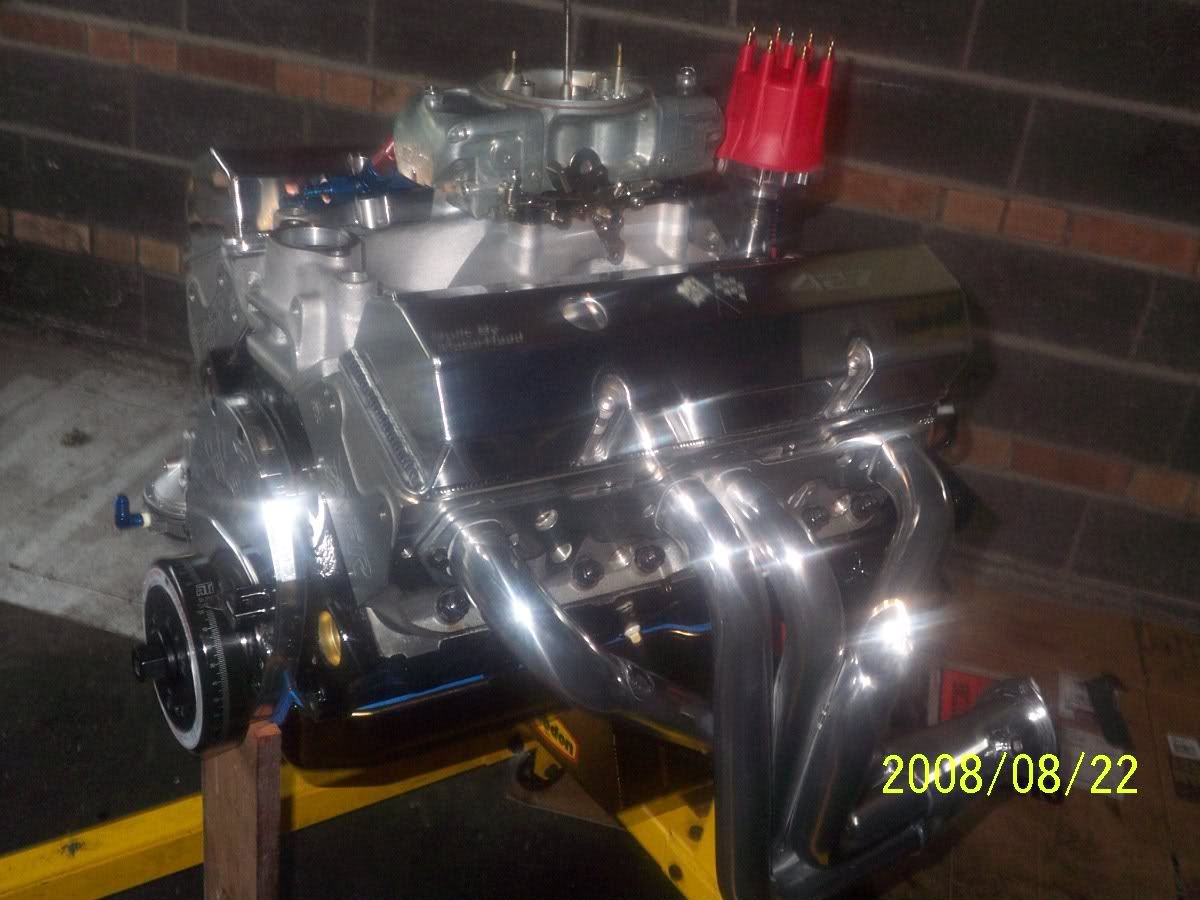
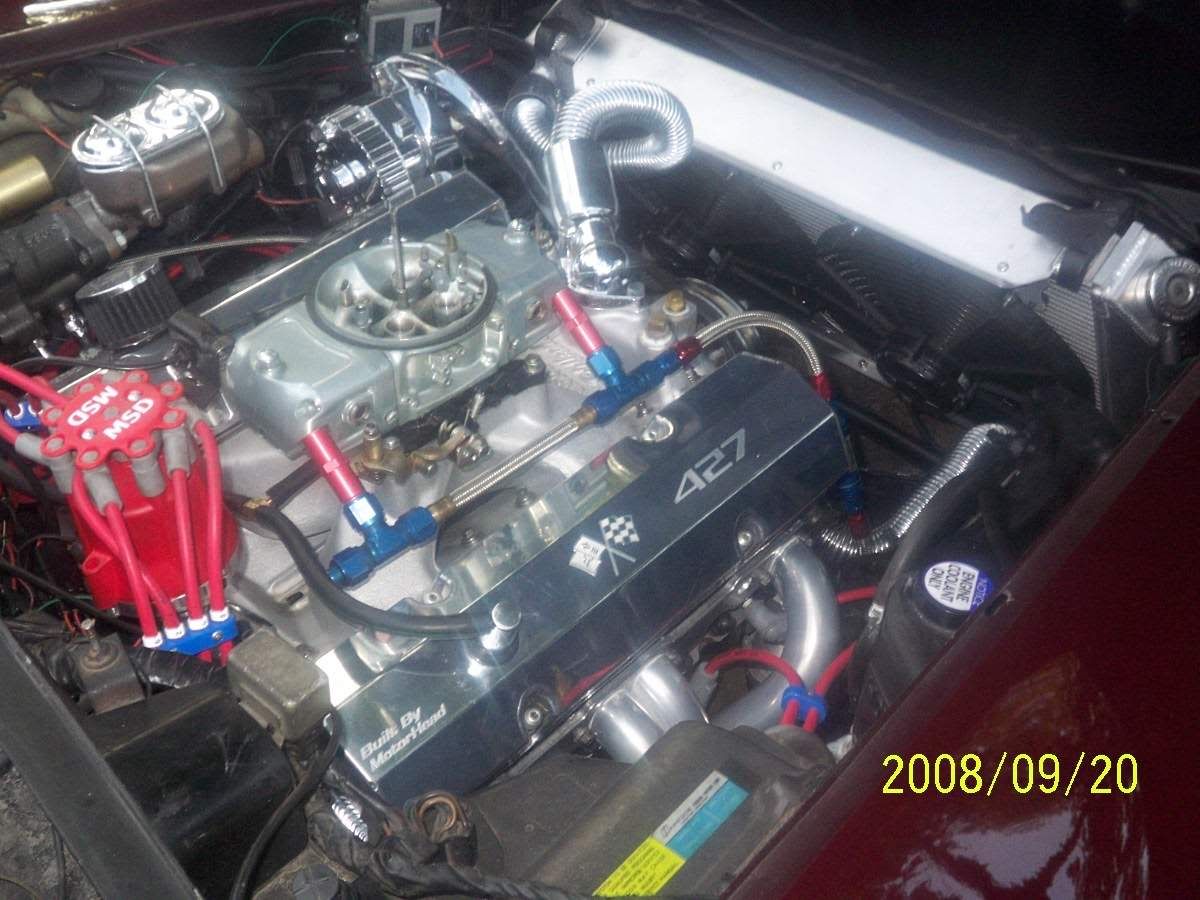
..and after you spend about 15++ grand ( if you build it yourself ) you get this, 650HP of tire shredding fun
( Yes I know all about the raised cam blocks, the Motown uses all conventional parts )
I would also recommend the billet steel splayed main caps
..and after you spend about 15++ grand ( if you build it yourself ) you get this, 650HP of tire shredding fun
a 472 of scott shafiroff with tour 650 hp its a good deal o a great choice if you prefer... thanks for answer... lovely engine i`m sure that this engine run like the devil.....
Thread Starter
Safety Car
Joined: Nov 2007
Posts: 3,570
Likes: 0
From: bottom of the sea
Everyone will have a differering opinion of the "best of everything".
Seems the more of them you put together that list gets a little more pricy each time and standards change. My version of "best" I couldnt afford to even think about yet 10 yrs ago it was almost attainable..
Even the best of them can snap, there are no guarantees.
Seems the more of them you put together that list gets a little more pricy each time and standards change. My version of "best" I couldnt afford to even think about yet 10 yrs ago it was almost attainable..
Even the best of them can snap, there are no guarantees.
i wasnt coming back here but you got me. there are no garantees. ive seen stock stuff turn 7000 rpm + all day long and ive seen 20,000$ race engines go up at the starting line. buying high dollar pieces doesnt garantee anything! but i agree it is a good feeling to know youve got em'. 
Thread Starter
Safety Car
Joined: Nov 2007
Posts: 3,570
Likes: 0
From: bottom of the sea
great engine..... and for all the people who doesnt have the cappacity to built a great engine as yours...????
a 472 of scott shafiroff with tour 650 hp its a good deal o a great choice if you prefer... thanks for answer... lovely engine i`m sure that this engine run like the devil.....
a 472 of scott shafiroff with tour 650 hp its a good deal o a great choice if you prefer... thanks for answer... lovely engine i`m sure that this engine run like the devil.....
15 + g's for a SB 427. no thanks
Race Director
Joined: Apr 2000
Posts: 17,676
Likes: 201
From: Who says "Nothing is impossible" ? I've been doing nothing for years.
i wasnt coming back here but you got me. there are no garantees. ive seen stock stuff turn 7000 rpm + all day long and ive seen 20,000$ race engines go up at the starting line. buying high dollar pieces doesnt garantee anything! but i agree it is a good feeling to know youve got em'. But what you stated above is right on the money, especially the last line

Pro
Joined: Jul 2005
Posts: 517
Likes: 7
From: Peoria IL
I think he's dead on. Those of us without a lot of experience generally fall into two categories- those that can afford to "build it stout" and those that are just piecing a car together as best they can afford, and good parts get mixed in with bad choices.
I am able to afford the good parts (usually by saving up for each big purchase a few months) but am probably misguided in many of the purchases. We get flamed when we ask questions by guys like you, Motorhead, so we ask only when we realize that we could be making a mistake- and lots of times we never even realize it or we fall into the misguided logic that "you get what you pay for". We should know better- just because you pay for it doesn't mean you get more/better, nor does it mean you're not falling prey to excellent marketing.
Team Owner
Joined: Apr 1999
Posts: 21,953
Likes: 1,445
From: Reno Nevada
2024 C3 of the Year Finalist- Modified
I think that life is about learning. There is no better way to learn than hands on. Every motor I built I learned something. Each and every one I was plotting and planning what I would do better on the next one.