






BBC solid roller lifter failures - a root cause analysis

Team Owner


Joined: Apr 1999
Posts: 21,953
Likes: 1,445
From: Reno Nevada
2024 C3 of the Year Finalist- Modified

Only one out of 16 wheels failed. Might have been defective out of the box and it just took that long. I would have never known that it had a problem unless I took the manifold off and inspected them when I was doing a rebiuld
Team Owner
Joined: Apr 1999
Posts: 21,953
Likes: 1,445
From: Reno Nevada
2024 C3 of the Year Finalist- Modified
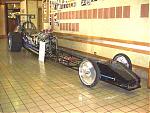
Thoughs are bad for sure, but I think the real quistion is why are they like that. I'm not sure I have heard any real reason here yet. I run these crane Horizontal lifters in my race engine that turns 9600rpm and with 240# on the seat and 700# open with .775 lift and I have used these lifters for well over 375 runs.
I really think time is a big factor. In a 1/4 mile and a 3 speed tranny you probably only exceed 8000 rpm for a couple of seconds per run. I bet your motor would not turn 9600 rpm for 40 seconds with your foot on the floor in top gear. I had been to The Salt Flats. Lots of blown motors trying running wide open for for miles on end
Burning Brakes

Joined: Jan 2007
Posts: 1,057
Likes: 4
From: Concord Calif
I really think time is a big factor. In a 1/4 mile and a 3 speed tranny you probably only exceed 8000 rpm for a couple of seconds per run. I bet your motor would not turn 9600 rpm for 40 seconds with your foot on the floor in top gear. I had been to The Salt Flats. Lots of blown motors trying running wide open for for miles on end
For the hell of it I run a two speed and the engine is at 7800rpm at launch and gets to 8500rpm in 1.2 seconds (shift point) and does not drop back and runs up to the 9600 at the 1/4. And it would not be to smart to gear most any engine to turn that number on the flats also!! For what ever your point is about this part having anything to do with the problem talked about here!
Instructor

Joined: May 2008
Posts: 154
Likes: 3
From: Indiana
Before this thread (excelent by the way) goes quiet I have a question that was not yet answerwed. 540RAT's research was done on BB engines. GKULL indicated he had no problem with his 383.
Is this roller lifter problem primarily in BB engines?
I am considering building a 383 or 409 with HP in the upper 400 range. Roller lifters are are a component I ame looking into. If the failure rate is higher than flat lifters I will modify my plans.
Is this roller lifter problem primarily in BB engines?
I am considering building a 383 or 409 with HP in the upper 400 range. Roller lifters are are a component I ame looking into. If the failure rate is higher than flat lifters I will modify my plans.
Team Owner
Joined: Apr 1999
Posts: 21,953
Likes: 1,445
From: Reno Nevada
2024 C3 of the Year Finalist- Modified
 He has KB blocks and tilton oil pump that must completely fill the valve covers because the 60 weight oil can't drain back fast enough. It has filled the breather overflows after a run. It has great big openings in the heads to the lifter valley for return and the lifter bores have the oil hole.
The idea is less broken springs because the oil doesn't allow them to glow red hot from going through the lights at 9200 rpm and data logged 56 psi of boost.
It is all that oil keep your lifters alive. Where a street motor does idle at very low oil pressure at every stop light.
Last edited by gkull; Oct 3, 2008 at 07:40 PM.

Thread Starter
Pro


Joined: Apr 2006
Posts: 625
Likes: 49
From: Southern California
Something else that is probably worth adding to the discussion is that, I reviewed a study on diesel lifter failures, which found that their roller lifter failures happen earlier or are much more frequent when the oil is too slick, which they called "low traction oil", which you can find with some of the premium synthetics or low friction racing oil. And their data showed that the lifter failures were due to the roller skidding, sliding, or skipping on the lobe. Also thicker oil contributes to skidding as well. This skidding significantly reduces the fatique life of the metal the lifter is made of. And they found that "high traction oil" as they called it, reduced the failures significantly. An oil I found that fits this "high traction" definition nicely, is Valvoline 4-Stroke Motorcycle Oil (dino type), which is available in 10W40 and 20W50 at Autozone and some other Auto Parts Stores. It is optimized to not be too slick for the wet clutches that motorcycles typically run. A buddy of mine runs it in his 9 second Japanese motorcycle Sport Bike, and likes it just fine. Of course most bikes make more hp per cube than our stuff ever will, and they turn more rpm than our stuff ever will (his stock redline is 14,000 rpm and that is not a typo), so using it in our stuff should be a walk in the park. Since many of us use slick synthetic or racing 20W50 oil, this is something else we can consider.
Last edited by 540 RAT; Oct 3, 2008 at 02:58 PM.
Burning Brakes
Joined: Jan 2007
Posts: 1,057
Likes: 4
From: Concord Calif
Something else that is probably worth adding to the discussion is that, I reviewed a study on diesel lifter failures, which found that their roller lifter failures happen earlier or are much more frequent when the oil is too slick, which they called "low traction oil", which you can find with some of the premium synthetics or low friction racing oil. And their data showed that the lifter failures were due to the roller skidding, sliding, or skipping on the lobe. Also thicker oil contributes to skidding as well. This skidding significantly reduces the fatique life of the metal the lifter is made of. And they found that "high traction oil" as they called it, reduced the failures significantly. An oil I found that fits this "high traction" definition nicely, is Valvoline 4-Stroke Motorcycle Oil (dino type), which is available in 10W40 and 20W50 at Autozone and some other Auto Parts Stores. It is optimized to not be too slick for the wet clutches that motorcycles typically run. A buddy of mine runs it in his 9 second Japanese motorcycle Sport Bike, and likes it just fine. Of course most bikes make more hp per cube than our stuff ever will, and they turn more rpm than our stuff ever will (his stock redline is 14,000 rpm and that is not a typo), so using it in our stuff should be a walk in the park. Since many of us use slick synthetic or racing 20W50 oil, this is something else we can consider.
This item has been a big topic for Harley Davidson engines as they run roller lifters and roller rod and main bearings. It has been a big deal here at work also for the big trucks as you brought up also. I do know that in the trucks that the right oil makes these parts live for a very long time. and in the case of followers, good oil and proper spring presurers as well as limiting detonation has these parts lasting a very long time. I have seen some test truck engines with a million miles on them with almost no measureable wear! This not an opion it is documented truth on the wear as conducted here at work.
Corvette Stories
The Best of Corvette for Corvette Enthusiasts

150 hp to 1,250 hp: Every Corvette Generation Compared by the Specs That Matter
Joe Kucinski
8 Coolest Corvette Pace Cars (and Replicas) of All Time
Verdad Gallardo
Top 10 Corvette Engines RANKED by Peak Torque (70+ Years of Muscle!)
Joe Kucinski
Corvette ZR1X Will Be Pacing the Indy 500, And Could Probably Race, Too!
Verdad Gallardo
Top 10 Corvettes Coming to Mecum Indy 2026!
Brett Foote
Top 10 C9 Corvette MUST-HAVES to Fix These C8 Generation Flaws!
Michael S. Palmer
10 Revolutionary 'Corvette Firsts' Most People Don't Know
Joe Kucinski
5 Reasons to Upgrade to an LS6-Powered Corvette; 5 Reasons to Stay LT2
Michael S. Palmer
2027 Corvette vs The World: Every C8 vs Its Closest Competitor
Joe Kucinski
Le Mans Master

Joined: Apr 2006
Posts: 5,403
Likes: 95
This item has been a big topic for Harley Davidson engines as they run roller lifters and roller rod and main bearings. It has been a big deal here at work also for the big trucks as you brought up also. I do know that in the trucks that the right oil makes these parts live for a very long time. and in the case of followers, good oil and proper spring presurers as well as limiting detonation has these parts lasting a very long time. I have seen some test truck engines with a million miles on them with almost no measureable wear! This not an opion it is documented truth on the wear as conducted here at work.
KW been sitting around for yrs collecting dust has a 3406A cat in it, has at least one million five hundred thousand miles on it, block, crank, cam, roller lifters, mechanical fuel injection, none have had to be worked on or replaced. I did have to take the injection pump off it replace the o-rings between the pump and the block to stop oil leaking but the pump is like it came from the factory.
Last edited by Little Mouse; Oct 4, 2008 at 11:44 PM.
