




Winter here - Rear end out!

Thread Starter
Melting Slicks

Joined: Nov 2001
Posts: 2,214
Likes: 0
From: Casa Grande AZ
 Winter here - Rear end out!
Winter finally hit here this weekend. So it's time to tear apart the car again.
Figured I'd start going through the rear of the car. I read everything I could before we tore into it. The only fear I had was removing the trailing arms. I think some have had some real nightmares here. Fortunately mine came out very easily. Half hour per side beginning to end - no problems! The bolts just unbolted and then pushed through - the worst part was getting the cotter keys out!
Now comes the hard part - setting up the wheel bearings and emergency brakes. If anyone has any info on the exact process involved in setting up the wheel bearings and measureing the runout, I could really use it!
Some pics:


Figured I'd start going through the rear of the car. I read everything I could before we tore into it. The only fear I had was removing the trailing arms. I think some have had some real nightmares here. Fortunately mine came out very easily. Half hour per side beginning to end - no problems! The bolts just unbolted and then pushed through - the worst part was getting the cotter keys out!
Now comes the hard part - setting up the wheel bearings and emergency brakes. If anyone has any info on the exact process involved in setting up the wheel bearings and measureing the runout, I could really use it!
Some pics:

Team Owner


Joined: Feb 1999
Posts: 29,077
Likes: 0
From: Deep East Texas
Re: Winter here - Rear end out! (lbell101)
Aw... You missed all the fun... You're supposed to have to cut at least one part out to get everything apart. :D
All kidding aside, congrats on a quick job of getting it out. I can't help with the bearing set up 'cause I bought a rebuilt set of T/A's. You might consider that or maybe letting somebody like Bair's rebuild your set. I understand that they have a fairly quick turn-around.
Keep us posted on how it's going. The pics are good.
All kidding aside, congrats on a quick job of getting it out. I can't help with the bearing set up 'cause I bought a rebuilt set of T/A's. You might consider that or maybe letting somebody like Bair's rebuild your set. I understand that they have a fairly quick turn-around.
Keep us posted on how it's going. The pics are good.

Drifting

Joined: Feb 2001
Posts: 1,603
Likes: 0
From: San Francisco, CA
Re: Winter here - Rear end out! (lbell101)
I am in the same process. The T/A's seem like they might come out. At least the bolts are loos and the bolt can move in and out so I think I will be ok. The problem I had this weekend was with the shock mounts. (I notice yours are still in.) Pounded the heck out of one to finally get it out and hit the other so hard that the removal tool stripped but the shock mount remains unscathed and unmoved. Am going to ship the arms to Bairs. They said they would remove the shock mount. Had I known this, I would of avoided messing with the other one for a half a day. :crazy: Good luck with the rest of the job.
Thread Starter
Melting Slicks
Joined: Nov 2001
Posts: 2,214
Likes: 0
From: Casa Grande AZ
Re: Winter here - Rear end out! (gtr1999)
Hey Gary!
Well, I've got a few questions. I haven't pulled the old bearing off the spindle yet as my puller needs some adjusting. But where are the shims everybody is talking about? Are they under the bearing in the pic below?
I think I will get the setup tool that I've heard about. But what is the exact measurement that we are trying to keep with .003 inches? Is it basically the measurement of the in/out axial 'slop' in the spindle after it's been reinstalled?
I have the dial indicators and mag base but I need to know what I'm measuring!
Thanks!

Well, I've got a few questions. I haven't pulled the old bearing off the spindle yet as my puller needs some adjusting. But where are the shims everybody is talking about? Are they under the bearing in the pic below?
I think I will get the setup tool that I've heard about. But what is the exact measurement that we are trying to keep with .003 inches? Is it basically the measurement of the in/out axial 'slop' in the spindle after it's been reinstalled?
I have the dial indicators and mag base but I need to know what I'm measuring!
Thanks!
Thread Starter
Melting Slicks
Joined: Nov 2001
Posts: 2,214
Likes: 0
From: Casa Grande AZ
Re: Winter here - Rear end out! (R. Bruno)
Hi R. Bruno!
I really want to learn how to do it myself. If I was having problems getting it apart and was getting fustrated, I'd probably have a different attitude about though - LOL. I took out one shock mount with no problems. Maybe somebody has done all this on my car before. Certainly they have been in there since there are absolutely NO emergency brake parts in there.
Thanks!
I really want to learn how to do it myself. If I was having problems getting it apart and was getting fustrated, I'd probably have a different attitude about though - LOL. I took out one shock mount with no problems. Maybe somebody has done all this on my car before. Certainly they have been in there since there are absolutely NO emergency brake parts in there.
Thanks!
Corvette Stories
The Best of Corvette for Corvette Enthusiasts

Top 10 Most Expensive Corvettes Ever Sold on Bring A Trailer
Brett Foote
10 Things Every Corvette Owner Needs (2026 Edition)
Michael S. Palmer
8 Most "Only Corvette Owners Understand" Quirks and Problems
Pouria Savadkouei
10 Reasons the C6 Z06 is Still A Performance Benchmark After 20 Years
Joe Kucinski
How Much Horsepower Every Corvette Engine "LOST" in 1972
Joe Kucinski
Top 10 DOs and DON'Ts for Protecting Your Convertible Top!
Michael S. Palmer
Top 10 Most Explosive Corvettes Ever Made: Power-to-Weight Ratio Ranked!
Joe Kucinski
150 hp to 1,250 hp: Every Corvette Generation Compared by the Specs That Matter
Joe Kucinski
8 Coolest Corvette Pace Cars (and Replicas) of All Time
Verdad Gallardo
Le Mans Master


Joined: Feb 2000
Posts: 7,032
Likes: 2
From: Newburgh NY
Re: Winter here - Rear end out! (lbell101)
Man, that brings back memories (2 years ago). I also got the whole rear, including crossmember, out in a couple of hours with no more than a few good whacks with a 5lb hammer. I hate rusted/frozen parts. :smash:
I sent my wheel bearings out but I did do the SS brakes. I used the slotted screwdriver routine for the springs and clips (available from any supplier).
Good articles at: http://www.corvettefag.com/ http://rowleycorvette.com/corvette_repair.html
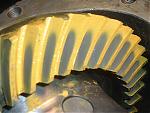
What comes out:

Must go in:

I sent my wheel bearings out but I did do the SS brakes. I used the slotted screwdriver routine for the springs and clips (available from any supplier).
Good articles at: http://www.corvettefag.com/ http://rowleycorvette.com/corvette_repair.html
What comes out:
Must go in:
Tech Contributor


Joined: Aug 1999
Posts: 15,175
Likes: 3,990
From: Connecticut, USA
Re: Winter here - Rear end out! (lbell101)
Hi Larry,
I'll help out as much as I can. First, the spacer or shim is in between the bearings on the spindle. There are 2 there- one looks like a small crush sleeve out of a rear differential, but it's NOT a cruash sleeve. It's actually a reducing spacer because the bearings have different size races. The shim that you change to set the end play is the smaller one that fits up against the smaller diameter bearing race. The part you're pointing to in your picture is the outer seal. There is also an inner seal.
I used a 20 ton press to remove everything first. I used the spindle knock off tool and brought the press up against it to protect the threads. These are not common threads you can get a tap or die for at Sears. They are 3/4-20, if I recall correctly, so be careful you don't bug them up or strip them. It took a good deal of force to pop them out.
It looks like you have the bearings loose-at least the inner bearing? To remove the outer bearing you'll need a slim bearing separator and a 20 ton press OR the correct bearing remover made for this job($100) That will enable you to use jack screws to pop the bearing off.
When you get it apart you should find the shim. The setup tool is good but costly($120) it's nothing more then a ground down spindle with a handle on it. If you know someone in a machine shop they can turn one for you, just have them make it about .001" undersize so the bearings slip on/off. With this tool practice setting up the old bearing so you don't wreck the new ones.
Clean the housing and leave the races in there. Clean the old bearings and oil them with a light spindle oil(5 to 10wt) assemble them on the setup tool and install the OLD nut. Torque the nut to 100 ft/lbs. Now is the trick of holding the housing secure so it doesn't move on you giving you a false reading on the indicator. Some people have hedl the housing in a vise and setup the end play others have made a fixture. I took the advice of Tom454 and made a fixture to hold the bearing housing and bearings vertical. I used a 5/8"aluminum plate to which I bolted on a piece of steel for the mag base. I still used a large C calmp to hold the mag base from moving. Using hand force I moved the spindle tool up and down and watched the indicator. I had about .002"-.003" which I believe was whatthe factory set THIS spindle at. I'm going to shoot for about .002" The book calls for .001 - .008" I believe a lot of guys set theirs to about .001-.0015".
I'm planning on using Mobil1 "red" grease on these. I believe Monty used this grease when he did his bearings.
I had these apart for the past year and I'm just getting back to working on them. I cleaned the housings and painted them with POR 15 top & coated with the POR 15 Metal mask. I tapped the spindle flanges 3/8-16 and used 3/8-16x5/8" socket flat head screws to bolt the rotors to the spindle in the same orientation as they came off. I then had a friend set them up in his 13" lathe and we ran and indicator on them to chekc the runout. They were within .004" , the book says within .005" is good but we trued them to .001" on each side and only removed .006" total from each rotor. again if you have a friend or know a good machine shop they can do this for you and it should't cost you a lot of money.
I can send you a picture of the bearing fixture if you want, just let me mhave your email address. I don't have or know how to use a digital camera but a guy at work took a few pictures for me to sent to a couple of forum friends.
Get the GM manual and go through it step by step and it should become clearer for you. Then decide if you want to do this and invest in the tools. SOme clubs buy the tools for members to use and I think Mid America had some kind of rental tool program last year?
Hope I didn't forget anything but ask some more if I did. I didn't assemble them yet but hope to within the next 2 weeks- I started pulling the rear differential apart too!!!
:smash: :D :smash: :cheers: :cheers: :cheers:
Gary
I'll help out as much as I can. First, the spacer or shim is in between the bearings on the spindle. There are 2 there- one looks like a small crush sleeve out of a rear differential, but it's NOT a cruash sleeve. It's actually a reducing spacer because the bearings have different size races. The shim that you change to set the end play is the smaller one that fits up against the smaller diameter bearing race. The part you're pointing to in your picture is the outer seal. There is also an inner seal.
I used a 20 ton press to remove everything first. I used the spindle knock off tool and brought the press up against it to protect the threads. These are not common threads you can get a tap or die for at Sears. They are 3/4-20, if I recall correctly, so be careful you don't bug them up or strip them. It took a good deal of force to pop them out.
It looks like you have the bearings loose-at least the inner bearing? To remove the outer bearing you'll need a slim bearing separator and a 20 ton press OR the correct bearing remover made for this job($100) That will enable you to use jack screws to pop the bearing off.
When you get it apart you should find the shim. The setup tool is good but costly($120) it's nothing more then a ground down spindle with a handle on it. If you know someone in a machine shop they can turn one for you, just have them make it about .001" undersize so the bearings slip on/off. With this tool practice setting up the old bearing so you don't wreck the new ones.
Clean the housing and leave the races in there. Clean the old bearings and oil them with a light spindle oil(5 to 10wt) assemble them on the setup tool and install the OLD nut. Torque the nut to 100 ft/lbs. Now is the trick of holding the housing secure so it doesn't move on you giving you a false reading on the indicator. Some people have hedl the housing in a vise and setup the end play others have made a fixture. I took the advice of Tom454 and made a fixture to hold the bearing housing and bearings vertical. I used a 5/8"aluminum plate to which I bolted on a piece of steel for the mag base. I still used a large C calmp to hold the mag base from moving. Using hand force I moved the spindle tool up and down and watched the indicator. I had about .002"-.003" which I believe was whatthe factory set THIS spindle at. I'm going to shoot for about .002" The book calls for .001 - .008" I believe a lot of guys set theirs to about .001-.0015".
I'm planning on using Mobil1 "red" grease on these. I believe Monty used this grease when he did his bearings.
I had these apart for the past year and I'm just getting back to working on them. I cleaned the housings and painted them with POR 15 top & coated with the POR 15 Metal mask. I tapped the spindle flanges 3/8-16 and used 3/8-16x5/8" socket flat head screws to bolt the rotors to the spindle in the same orientation as they came off. I then had a friend set them up in his 13" lathe and we ran and indicator on them to chekc the runout. They were within .004" , the book says within .005" is good but we trued them to .001" on each side and only removed .006" total from each rotor. again if you have a friend or know a good machine shop they can do this for you and it should't cost you a lot of money.
I can send you a picture of the bearing fixture if you want, just let me mhave your email address. I don't have or know how to use a digital camera but a guy at work took a few pictures for me to sent to a couple of forum friends.
Get the GM manual and go through it step by step and it should become clearer for you. Then decide if you want to do this and invest in the tools. SOme clubs buy the tools for members to use and I think Mid America had some kind of rental tool program last year?
Hope I didn't forget anything but ask some more if I did. I didn't assemble them yet but hope to within the next 2 weeks- I started pulling the rear differential apart too!!!
:smash: :D :smash: :cheers: :cheers: :cheers:
Gary

Melting Slicks

Joined: Oct 2001
Posts: 2,065
Likes: 1,395
From: Halifax, Nova Scotia, Canada
Re: Winter here - Rear end out! (lbell101)
But where are the shims everybody is talking about? Are they under the bearing in the pic below?
Gary has an excellent discription of the procedure.
I used a turned down spindle as the setup tool.
I also used the "red" synthetic grease.
Mine are set to .001 on the left and .002 on the right.
You will need a hand full of different shims to find the one with the correct thickness to give you the desired setting.
It's not a hard job, it just takes some time.
Barry

Drifting
Joined: Feb 2001
Posts: 1,603
Likes: 0
From: San Francisco, CA
Re: Winter here - Rear end out! (lbell101)
Larry- I wish someone had taken mine apart at some point before but apparently not. You would not believe the problems I had with the shock mounts. I mean I was not using a 2 pound hammer. I was using an 8 lb. sledge hammer with a long handle and getting full-on hits with it. Even after the mount moved a little, I had to keep at it until it was out. Unreal how tight. I am soaking the training arms with PB Blaster and think and hope they go easier.
Thread Starter
Melting Slicks
Joined: Nov 2001
Posts: 2,214
Likes: 0
From: Casa Grande AZ
Re: Winter here - Rear end out! (lbell101)
Wow! Thanks guys. Great info.
And it's slowly sinking in too!
OK - let me just verify a couple things in my mind - I know that's scary.
1. Basically, the only reason for the setup tool is so that you don't have to keep pressing the bearings on and off - right?
2. The runout is just the amount that the spindle will move back and forth in the bearings like in the pic below - correct?
3. All I really have to do is get that spindle movement down to around .001 inches - correct?
4. It sounds like it would be best to use the biggest shim first. Measure the runout and then replace the shim with the proper size one (to help avoid under-shimming too). Does that sound correct?
Gary , my email is lbell@chartermi.net. Do you mind if I email when I get in the middle of this and need some direction?
Thanks!!!

And it's slowly sinking in too!
OK - let me just verify a couple things in my mind - I know that's scary.
1. Basically, the only reason for the setup tool is so that you don't have to keep pressing the bearings on and off - right?
2. The runout is just the amount that the spindle will move back and forth in the bearings like in the pic below - correct?
3. All I really have to do is get that spindle movement down to around .001 inches - correct?
4. It sounds like it would be best to use the biggest shim first. Measure the runout and then replace the shim with the proper size one (to help avoid under-shimming too). Does that sound correct?
Gary , my email is lbell@chartermi.net. Do you mind if I email when I get in the middle of this and need some direction?
Thanks!!!
Tech Contributor
Joined: Aug 1999
Posts: 15,175
Likes: 3,990
From: Connecticut, USA
Re: Winter here - Rear end out! (lbell101)
Larry,
I'll send you the picture tomorrow and feel free to contact me there between 8:30- 5:00 EST.
The picture you show looks like one from Monty's site? which is ok but it's important to note there is a difference between runout of the rotor/spindle and end-play of the spindle bearings.
The rotor spindle runout is the amount of movement the rotor moves in/out through 360* rotation. More then .005" and you'll have problems pumping air into the calipers and braking system. The factory riveted the spindle & rotor together and turned them to have little if any runout. That why I hoped you marked the position of the rotor to spindle before removing the rotor the first time.
The spindle bearing end-play is the laterial movement in the bearings-in/out. the spacers reduce this endplay by tighening the gap between them. To get the end play down to .001" and have it be .001" requires absolutely no movement in the indicator base or the plateform where you mount the base. I first put my mag base on the back of the vise when I mounted the fixture in the vise. I had reading of .010" with very little force applied. It was from the inddicator pickng up movement in the vise and giving me a false reading- which could be a big problem if I set it up that way. I would be intersted in seeing how that indicator in the picture moved with the control arm when force was applied. This is the way the GM manual does say to check the beairng end play though :eek:
Like I first said, I would get or make a setup tool and use the old bearings to practice on. If you have a micrometer you can measure the thickness of the original bearing race vs the new race to see how different they are to give you an idea of a shim to start with. Yes you are correct that you don't want to press the bearings on & off changing shims, that's the purpose of the setup tool.
Does this help clear things up? :smash:
Gary
I'll send you the picture tomorrow and feel free to contact me there between 8:30- 5:00 EST.
The picture you show looks like one from Monty's site? which is ok but it's important to note there is a difference between runout of the rotor/spindle and end-play of the spindle bearings.
The rotor spindle runout is the amount of movement the rotor moves in/out through 360* rotation. More then .005" and you'll have problems pumping air into the calipers and braking system. The factory riveted the spindle & rotor together and turned them to have little if any runout. That why I hoped you marked the position of the rotor to spindle before removing the rotor the first time.
The spindle bearing end-play is the laterial movement in the bearings-in/out. the spacers reduce this endplay by tighening the gap between them. To get the end play down to .001" and have it be .001" requires absolutely no movement in the indicator base or the plateform where you mount the base. I first put my mag base on the back of the vise when I mounted the fixture in the vise. I had reading of .010" with very little force applied. It was from the inddicator pickng up movement in the vise and giving me a false reading- which could be a big problem if I set it up that way. I would be intersted in seeing how that indicator in the picture moved with the control arm when force was applied. This is the way the GM manual does say to check the beairng end play though :eek:
Like I first said, I would get or make a setup tool and use the old bearings to practice on. If you have a micrometer you can measure the thickness of the original bearing race vs the new race to see how different they are to give you an idea of a shim to start with. Yes you are correct that you don't want to press the bearings on & off changing shims, that's the purpose of the setup tool.
Does this help clear things up? :smash:
Gary
Thread Starter
Melting Slicks
Joined: Nov 2001
Posts: 2,214
Likes: 0
From: Casa Grande AZ
Re: Winter here - Rear end out! (gtr1999)
It sure does help clear things up. Thanks!
Doesn't sound like too bad of a job - other than just making sure I have the procedure correct. I'll make sure that I make a very good jig for measurement as that sounds very critical. Thanks very much!
Doesn't sound like too bad of a job - other than just making sure I have the procedure correct. I'll make sure that I make a very good jig for measurement as that sounds very critical. Thanks very much!
