







4-7 lobe swap

Le Mans Master


Joined: Apr 2006
Posts: 5,403
Likes: 95

Gkull isn't supposed to be easier on the crankshaft its main contributing factor. Besides rollers I noticed comp cams makes off the self solid flat tappit cams with 4/7 swap.
Last edited by Little Mouse; Apr 4, 2009 at 11:04 AM.

Racer

Joined: Feb 2009
Posts: 343
Likes: 0
From: San Diego CA
While it's an interesting application, and I laud those who ground the cams & tested this stuff out, on the SBC motors it's not a winner. Perhaps other motors but not ours.

Le Mans Master


Joined: Apr 2007
Posts: 7,353
Likes: 72
From: Graceland in a Not Correctly Restored Stingray
According to my understanding, here is the reasoning behind my choosing to go with a 4/7 swap in my new 427 BB build...
1) Better balance of peak loads on the crank journals; the 4th main having much higher loads than the 2nd in the 1-8-4-3-6-5-7-2 order, but the difference between the two is said to be significantly less with the swap. This supposedly also improves integrity of the oil films on the mains.
2) Improving A/F mix distribution to 7, which tends to be lean (especially with 180* manifolds), which should reduce the need for staggered jetting.
3) Having 4 & 2 exhaust events together apparently doesn't pose as large an issue as does having 5 & 7 together, as the former cylinders typically run cooler given they're closer to incoming coolant.
Given these and other lesser potential benefits, I really don't care if it makes any more torque or power. My $.02.

TSW
1) Better balance of peak loads on the crank journals; the 4th main having much higher loads than the 2nd in the 1-8-4-3-6-5-7-2 order, but the difference between the two is said to be significantly less with the swap. This supposedly also improves integrity of the oil films on the mains.
2) Improving A/F mix distribution to 7, which tends to be lean (especially with 180* manifolds), which should reduce the need for staggered jetting.
3) Having 4 & 2 exhaust events together apparently doesn't pose as large an issue as does having 5 & 7 together, as the former cylinders typically run cooler given they're closer to incoming coolant.
Given these and other lesser potential benefits, I really don't care if it makes any more torque or power. My $.02.
TSW

Thread Starter
Drifting

Joined: Nov 2003
Posts: 1,874
Likes: 7
From: l In
According to my understanding, here is the reasoning behind my choosing to go with a 4/7 swap in my new 427 BB build...
1) Better balance of peak loads on the crank journals; the 4th main having much higher loads than the 2nd in the 1-8-4-3-6-5-7-2 order, but the difference between the two is said to be significantly less with the swap. This supposedly also improves integrity of the oil films on the mains.
2) Improving A/F mix distribution to 7, which tends to be lean (especially with 180* manifolds), which should reduce the need for staggered jetting.
3) Having 4 & 2 exhaust events together apparently doesn't pose as large an issue as does having 5 & 7 together, as the former cylinders typically run cooler given they're closer to incoming coolant.
Given these and other lesser potential benefits, I really don't care if it makes any more torque or power. My $.02.
TSW
1) Better balance of peak loads on the crank journals; the 4th main having much higher loads than the 2nd in the 1-8-4-3-6-5-7-2 order, but the difference between the two is said to be significantly less with the swap. This supposedly also improves integrity of the oil films on the mains.
2) Improving A/F mix distribution to 7, which tends to be lean (especially with 180* manifolds), which should reduce the need for staggered jetting.
3) Having 4 & 2 exhaust events together apparently doesn't pose as large an issue as does having 5 & 7 together, as the former cylinders typically run cooler given they're closer to incoming coolant.
Given these and other lesser potential benefits, I really don't care if it makes any more torque or power. My $.02.
TSW
Will let you all know how I come out.
Thanks for the replies
Corvette Stories
The Best of Corvette for Corvette Enthusiasts

Top 10 Most Expensive Corvettes Ever Sold on Bring A Trailer
Brett Foote
10 Things Every Corvette Owner Needs (2026 Edition)
Michael S. Palmer
8 Most "Only Corvette Owners Understand" Quirks and Problems
Pouria Savadkouei
10 Reasons the C6 Z06 is Still A Performance Benchmark After 20 Years
Joe Kucinski
How Much Horsepower Every Corvette Engine "LOST" in 1972
Joe Kucinski
Top 10 DOs and DON'Ts for Protecting Your Convertible Top!
Michael S. Palmer
Top 10 Most Explosive Corvettes Ever Made: Power-to-Weight Ratio Ranked!
Joe Kucinski
150 hp to 1,250 hp: Every Corvette Generation Compared by the Specs That Matter
Joe Kucinski
8 Coolest Corvette Pace Cars (and Replicas) of All Time
Verdad Gallardo


Instructor
Joined: Mar 2007
Posts: 153
Likes: 0
From: London

Safety Car


Joined: Oct 2004
Posts: 3,926
Likes: 739
From: Youngstown Ohio
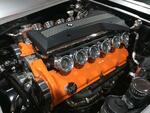
Personal observations show it be lopey at idle but smooth at the same time if you can understand what I mean....sort of wicked....gobs of torque from idle through 7000 rpm. Not radical duration, but lots of lift.
I don't know how much horsepower is added because of the swap, but I'm well satisfied with its behavior. See dyno sheet.....

Hear it run....

Le Mans Master


Joined: May 2003
Posts: 8,877
Likes: 3,556
From: Fernandina Beach FL
2023 Restomod of the Year finalist
2020 C3 of the Year Winner - Modified
According to my understanding, here is the reasoning behind my choosing to go with a 4/7 swap in my new 427 BB build...
1) Better balance of peak loads on the crank journals; the 4th main having much higher loads than the 2nd in the 1-8-4-3-6-5-7-2 order, but the difference between the two is said to be significantly less with the swap. This supposedly also improves integrity of the oil films on the mains.
2) Improving A/F mix distribution to 7, which tends to be lean (especially with 180* manifolds), which should reduce the need for staggered jetting.
3) Having 4 & 2 exhaust events together apparently doesn't pose as large an issue as does having 5 & 7 together, as the former cylinders typically run cooler given they're closer to incoming coolant.
Given these and other lesser potential benefits, I really don't care if it makes any more torque or power. My $.02.
TSW
1) Better balance of peak loads on the crank journals; the 4th main having much higher loads than the 2nd in the 1-8-4-3-6-5-7-2 order, but the difference between the two is said to be significantly less with the swap. This supposedly also improves integrity of the oil films on the mains.
2) Improving A/F mix distribution to 7, which tends to be lean (especially with 180* manifolds), which should reduce the need for staggered jetting.
3) Having 4 & 2 exhaust events together apparently doesn't pose as large an issue as does having 5 & 7 together, as the former cylinders typically run cooler given they're closer to incoming coolant.
Given these and other lesser potential benefits, I really don't care if it makes any more torque or power. My $.02.
TSW

The Chevy guys are doing it now (and have been for 12 years) w/ the LS motors.... And I don't think the cam pricing is anymore expensive.
