





Adjustable strut rods?
Thread Starter
Instructor

Joined: Apr 2008
Posts: 190
Likes: 0
From: Melbourne FL
 Adjustable strut rods?
I am rebuilding the rear suspension and came across these when I was getting ready to order my kit. Should I go with them? Thanks for any opinions. http://willcoxcorvette.com/product_i...ducts_id=24483
Pro

Joined: Jun 2005
Posts: 725
Likes: 1
From: FL.
Those are a good upgrade from the old original "camber" adjust struts. Most everyone uses adjustables (cant slip).
Theres a new Bracket also, it has a new geometry which gets the rods to be more parallel with the ground. Wilcox should have the bracket too. Changing both is a good idea, very easy to install, check the specs for your cars Camber..should be something like Neg. 1/8"
Theres a new Bracket also, it has a new geometry which gets the rods to be more parallel with the ground. Wilcox should have the bracket too. Changing both is a good idea, very easy to install, check the specs for your cars Camber..should be something like Neg. 1/8"

Le Mans Master


Joined: Apr 2007
Posts: 7,353
Likes: 72
From: Graceland in a Not Correctly Restored Stingray
Those are a good upgrade from the old original "camber" adjust struts. Most everyone uses adjustables (cant slip).
Theres a new Bracket also, it has a new geometry which gets the rods to be more parallel with the ground. Wilcox should have the bracket too. Changing both is a good idea, very easy to install, check the specs for your cars Camber..should be something like Neg. 1/8"
Theres a new Bracket also, it has a new geometry which gets the rods to be more parallel with the ground. Wilcox should have the bracket too. Changing both is a good idea, very easy to install, check the specs for your cars Camber..should be something like Neg. 1/8"

TSW
Last edited by TheSkunkWorks; Jul 12, 2009 at 04:14 PM.

Former Vendor
Joined: Apr 2009
Posts: 766
Likes: 3
From: Charlotte North Carolina 704-394-5150
Sorry, but IMHO eliminating those eccentrics in favor of a more sound adjustment solution IS an advantage in and of itself.
Note that care must be taken not to screw up your rear suspension's geometry by going too far with changing the location of the inner camber strut link, as eliminating negative camber gain in "bump" when the vehicle rolls will result in an adverse dynamic alignment which reduces the rear outer tire's contact patch when cornering. About 1/2" lower than OEM is the right setting for most anyone not drag racing or who doesn't go to the trouble to arrive at the best setting for their specific application/needs thru scientific testing.
TSW
Note that care must be taken not to screw up your rear suspension's geometry by going too far with changing the location of the inner camber strut link, as eliminating negative camber gain in "bump" when the vehicle rolls will result in an adverse dynamic alignment which reduces the rear outer tire's contact patch when cornering. About 1/2" lower than OEM is the right setting for most anyone not drag racing or who doesn't go to the trouble to arrive at the best setting for their specific application/needs thru scientific testing.
TSW

Replacing the strut rod mounting bracket to an aftermarket unit that allows different positions of the cam bolt is an option....but knowing WHERE to set the cam bolt is important because its position changes the way the suspension reacts. It's all in the angle(s).
"DUB"

Burning Brakes


Joined: Dec 2002
Posts: 1,179
Likes: 3
From: STANTON CA
Corvette Stories
The Best of Corvette for Corvette Enthusiasts

5 Best & 5 Worst Corvette Daily Drivers
Joe Kucinski
The Headlights of Every Corvette Generation Explained
Joe Kucinski
5 Best & 5 Most Overrated Corvette Track Packages of All Time!
Joe Kucinski
Every 2027 Corvette Engine Explained
Joe Kucinski
Designer Imagines A Corvette That Looks More Like a Corvette Than the Corvette
Verdad Gallardo
10 Ugly Corvettes That We Still Kinda Love
Joe Kucinski
Top 10 Most Expensive Corvettes Ever Sold on Bring A Trailer
Brett Foote
10 Things Every Corvette Owner Needs (2026 Edition)
Michael S. Palmer
8 Most "Only Corvette Owners Understand" Quirks and Problems
Pouria Savadkouei
Melting Slicks


Joined: Jul 2006
Posts: 2,293
Likes: 494
From: Salmon Arm, BC
The set from Willcox is what I just put on my car....Can't tell you how It works as I haven't driven it much with those on. What I can tell you is it came with grade 2 hardware (not good), so I replaced it with grade 8 stuff.
Make sure you put lots of antiseize on the threaded ends, so when you go to adjust it in 5 years it will move.
Make sure you put lots of antiseize on the threaded ends, so when you go to adjust it in 5 years it will move.

Melting Slicks
Joined: Jun 2009
Posts: 2,343
Likes: 4
From: Anderson SC
How about this.
http://www.ecklers.com/product.asp?p...8&dept_id=1843
http://www.ecklers.com/product.asp?p...8&dept_id=1843
I'm using the adjustable struts, on the stock brackets. If someone convinces me that dropping the mounts a 1/2 inch is wiser, I'll get an 1/2 aluminum shim plate made and longer bolts. Easy enough.
-W
Burning Brakes
Joined: Dec 2002
Posts: 1,179
Likes: 3
From: STANTON CA
According to an above poster - those "smart struts" aren't very smart - as they eliminate the negative camber gain in "bump" mode. They presume the camber change is a "bad thing" in order to sell them.
I'm using the adjustable struts, on the stock brackets. If someone convinces me that dropping the mounts a 1/2 inch is wiser, I'll get an 1/2 aluminum shim plate made and longer bolts. Easy enough.
-W
I'm using the adjustable struts, on the stock brackets. If someone convinces me that dropping the mounts a 1/2 inch is wiser, I'll get an 1/2 aluminum shim plate made and longer bolts. Easy enough.
-W



Race Director

Joined: Jul 2001
Posts: 15,892
Likes: 42
Your mileage may vary.
Pro
Joined: Jun 2005
Posts: 725
Likes: 1
From: FL.
I installed the Smart strut Kit 7-8yrs ago.
Truthfully I never questioned The Lowered Brackets "new & Better Geometry" As it was being advertised by VB&P at that time
That said, Im aware as anyone about Bogus "advertising Going on all over the aftermarket industry
Ive never heard anything more about that bracket angle till now, and Im not going to question the validity of Grand and skunkworks comments, Ive read their comments and info for many years,They are a couple of Very reputable Guys on the vette forums.
Although Ive put over a 100K miles with that Kit with the lowered bracket , And have had no need to adjust the camber to bring the rears back into spec. Im going to agree with Clams Viewpoint.
["I'm using the adjustable struts, on the stock brackets. If someone convinces me that dropping the mounts a 1/2 inch is wiser, I'll get an 1/2 aluminum shim plate made and longer bolts."]
These Kits are very popular and Money makers for the vendors, I'd really like to see someone come along with the Math and scientifics that shows benefeits with a 1/2" lowered Bracket, or shoot it down once and for all, so noone could waste Time and money on it.
PS I installed the Kit because the original eccentric wasnt reliable anymore. The adj. Struts are a good upgrade for the money. Mi 2 centavos
Truthfully I never questioned The Lowered Brackets "new & Better Geometry" As it was being advertised by VB&P at that time
That said, Im aware as anyone about Bogus "advertising Going on all over the aftermarket industry
Ive never heard anything more about that bracket angle till now, and Im not going to question the validity of Grand and skunkworks comments, Ive read their comments and info for many years,They are a couple of Very reputable Guys on the vette forums.
Although Ive put over a 100K miles with that Kit with the lowered bracket , And have had no need to adjust the camber to bring the rears back into spec. Im going to agree with Clams Viewpoint.
["I'm using the adjustable struts, on the stock brackets. If someone convinces me that dropping the mounts a 1/2 inch is wiser, I'll get an 1/2 aluminum shim plate made and longer bolts."]
These Kits are very popular and Money makers for the vendors, I'd really like to see someone come along with the Math and scientifics that shows benefeits with a 1/2" lowered Bracket, or shoot it down once and for all, so noone could waste Time and money on it.
PS I installed the Kit because the original eccentric wasnt reliable anymore. The adj. Struts are a good upgrade for the money. Mi 2 centavos
Last edited by 69vettester; Jul 13, 2009 at 12:28 PM.
Le Mans Master
Joined: Apr 2007
Posts: 7,353
Likes: 72
From: Graceland in a Not Correctly Restored Stingray
Mike, while you may find the eccentric adjusters to your liking, my experience has been that they just don't hold adjustment well over time, even when new. Yes, how and where I drive may be a factor in my observations, but fact remains that the heim-jointed struts I've long had have done a far better job at staying put...
Clams, in general, modern radials don't seem to require as much negative camber gain as did bias ply tires. The 1/2" lower setup to which I subscribe (by default) is according to John Greenwood's recommendations within his "VIP" (Vette Improvement Program) articles. IMCO, this is sound advice worth following, unless you're prepared to go to the trouble to prove a different geometry actually works better specifically for your car where you drive. You may or may not find a different setting to be optimal for you, but without testing (do you own a tire pyrometer?) you're guessing. Hope that explains my view more clearly...
DUB, sorry my box was full. I made some room, or you can email me.
TSW
Clams, in general, modern radials don't seem to require as much negative camber gain as did bias ply tires. The 1/2" lower setup to which I subscribe (by default) is according to John Greenwood's recommendations within his "VIP" (Vette Improvement Program) articles. IMCO, this is sound advice worth following, unless you're prepared to go to the trouble to prove a different geometry actually works better specifically for your car where you drive. You may or may not find a different setting to be optimal for you, but without testing (do you own a tire pyrometer?) you're guessing. Hope that explains my view more clearly...
DUB, sorry my box was full. I made some room, or you can email me.
TSW



Drifting


Joined: Jul 1999
Posts: 1,542
Likes: 43
From: Plano TX
My thoughts on strut rods.
The stock sturt rods will do the job but the rubber tends to wear out sooner that other bushing materials plus because they are pressed in inserts replacing them may no be a do it yourself fix. The cam adjusters do work but a pain to get right.
I went with adjustable strut rods to allow for ease of adjustment and the ability to measure the center to center length for repeatable results which the cam adjusters don't do very well.
I don't like using poly on both ends if the rods are adjustable as the up and down motion of the arm tries to twist the ends of the rod. Unless the adjustment nuts are very tight they can come undone. Having at least on rod end eliminates this.
I go with two rod ends on adjustable struts as my car is used for track days and street so I want to easily adjust and eliminate as much movement in the joints as possible.
I use the stock position on the diff as I want camber gain in the corners however my much stiffer springs reduce the amount of travel so cambe gain is about 2 degrees max.
If I were using the car on the street or using softer springs I would use the lower strut rod point available with the lowered bracket to reduce camber gain (softer spring equals longer travel so more gain in stock position). My strut rod bracket I made last year actually has two points so I can choose the camber gain I want.
The stock sturt rods will do the job but the rubber tends to wear out sooner that other bushing materials plus because they are pressed in inserts replacing them may no be a do it yourself fix. The cam adjusters do work but a pain to get right.
I went with adjustable strut rods to allow for ease of adjustment and the ability to measure the center to center length for repeatable results which the cam adjusters don't do very well.
I don't like using poly on both ends if the rods are adjustable as the up and down motion of the arm tries to twist the ends of the rod. Unless the adjustment nuts are very tight they can come undone. Having at least on rod end eliminates this.
I go with two rod ends on adjustable struts as my car is used for track days and street so I want to easily adjust and eliminate as much movement in the joints as possible.
I use the stock position on the diff as I want camber gain in the corners however my much stiffer springs reduce the amount of travel so cambe gain is about 2 degrees max.
If I were using the car on the street or using softer springs I would use the lower strut rod point available with the lowered bracket to reduce camber gain (softer spring equals longer travel so more gain in stock position). My strut rod bracket I made last year actually has two points so I can choose the camber gain I want.
Melting Slicks
Joined: Jun 2009
Posts: 2,343
Likes: 4
From: Anderson SC
LOTs of good info here thanks to all for super informative thread!!
I'm a street driver only and already got the ajustable strut rods and the poly bushings. If having them work loose is ever an issue, I will (after they are set up) fix the lower end of each so it can't turn, further tweaking if ever needed will require disconnecting the top - adding 3 minutes. So far, I'm convinced to drop the inside of the strut rods 1/4 to 1/2 inch for sure. I need to hear DUB weigh in on how far to drop them. How much (and where) are the adjustable hole brackets? That said, if I go with longer bolts and a plate.. is there a compelling reason not to use aluminum to save weight?
-W
I'm a street driver only and already got the ajustable strut rods and the poly bushings. If having them work loose is ever an issue, I will (after they are set up) fix the lower end of each so it can't turn, further tweaking if ever needed will require disconnecting the top - adding 3 minutes. So far, I'm convinced to drop the inside of the strut rods 1/4 to 1/2 inch for sure. I need to hear DUB weigh in on how far to drop them. How much (and where) are the adjustable hole brackets? That said, if I go with longer bolts and a plate.. is there a compelling reason not to use aluminum to save weight?
-W
Last edited by Clams Canino; Jul 13, 2009 at 02:39 PM.
Le Mans Master
Joined: Apr 2007
Posts: 7,353
Likes: 72
From: Graceland in a Not Correctly Restored Stingray
VB&P's smart strut bracket, with vertical rather than horizontal slots (pic 1), is available separately (#52000B, IIRC). You'll need to get or fab some lock plates (pic 2) to eliminate the eccentrics for use with heim-jointed ends, if you don't already have some. And, FYI, unless they've addressed the issue since my bringing it to their attention couple of years back (Pattie was still there), you'll need to bush down the bracket to diff mounting holes (pic 3).
1...VB&P bracket w/vertical slots for camber gain adjustment...
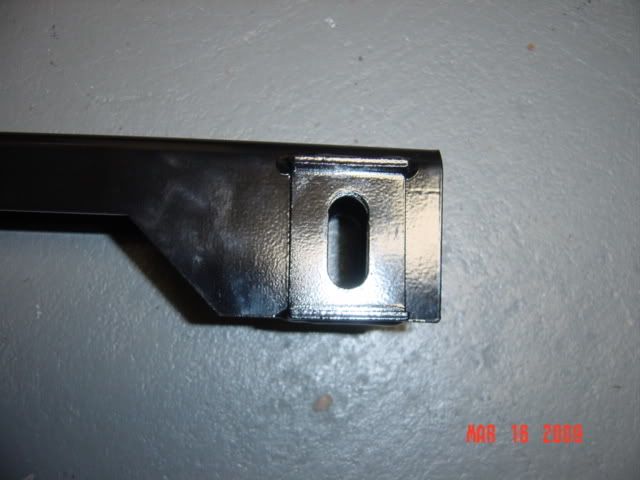
2...note the lock plates, which can be had or made with different positions for various camber gain settings...

3...significantly oversized bolt holes...
edit - I have heard of struts with poly bushings loosening, but haven't had this issue with heim's and lock plates. Still, I nut & bolt routinely, having learned the hard way that important things tend to break and/or fail at the most inconvenient of times.
1...VB&P bracket w/vertical slots for camber gain adjustment...
2...note the lock plates, which can be had or made with different positions for various camber gain settings...
3...significantly oversized bolt holes...
edit - I have heard of struts with poly bushings loosening, but haven't had this issue with heim's and lock plates. Still, I nut & bolt routinely, having learned the hard way that important things tend to break and/or fail at the most inconvenient of times.
Last edited by TheSkunkWorks; Jul 13, 2009 at 05:43 PM.

Melting Slicks
Joined: Mar 2008
Posts: 2,989
Likes: 198
From: Meriden CT
Nice buzz words, but not convincing- to me. If the stock hardware is in good condition it is easily and accurate adjustable to any position required to achieve the correct camber position- and will retain the slected setting. Many cars have rusty old bolts and nuts with rough threads that make adjustment ratchety and imprecise. Many of these same cars lose the setting shortly thereafter simply because the clamping action of the bolt and nut has been lost to overcoming the friction of tightening the nut.
Your mileage may vary.
Your mileage may vary.

