




More Aero Info

Thread Starter
Drifting


Joined: Apr 2002
Posts: 1,750
Likes: 37
From: Stockton Ca
 More Aero Info
Forum: I couldn't get anyone to respond to my last try. Perhaps we lack the scientific data? Lets face it the old LeMans racers were a brick.
I found this on the mileage weenie site.
Interview with BMW aerodynamicist Hans Kerschbaum
--------------------------------------------------------------------------------
In the September issue of Auto, Motor i Sport (Polish version of Auto, Motor und Sport) there is an interview BMW aerodynamicist Hans Kerschbaum. I've translated parts as it may be of interest to fellow Ecomodders:
The aerodynamics of cars is too complicated for pure theoretical reasoning, that's why the field is composed mostly of testing and research. Every detail has an effect on every other and there is no sense in changing something in the body, for example, without keeping an eye on its effect on the wheelwells, everything is interdependent. Let's say you start with cleaning up something in the wheels and wheelwells. This effects the airflow under the car, so you have to do some work there. This changes the distribution of pressure behind the car, so you have to do something on the body, which makes you return to the wheelwells. This is what happens every time.
Every car shape can be characterized by three parameters: coefficient of air drag and the lift force at the front and rear axle.
Getting the right lift is extremely hard and has a lot to do with suspension.
Today it is impossible to separate styling and aerodynamics. The interrelations between them are sometimes good, but often contradictory. For an engineer it is important to have good airflow on the corners and sides of the body, control the turbulence at the A-pillars and the mirrors (which are a small catastrophe from the aerodynamic point of view), and make sure that airflow detaches in the right places at the rear. At the same time you must minimalize the amount of dirt that sticks to the headlights and windshield and make sure that noise stays at an acceptable level. Of course, stylists want an nice body with a long front and short rear, because that shape is regarded as attractive and dynamic. On the other hand, it would be much more effective if the front was shorter and the rear longer.
The classic discrepancies between styling and aerodynamics show up in roadsters. The problem with a car such as the Z4 is the terribly short rear, but it's hard to imagine a BMW roadster of different proportions. This is regarded as beautiful, it's enough to see how people look at the car. But the aerodynamicists have a headache trying to raise the rear and shape it to reduce the lift there.
As much as 30% of drag comes from the wheels and wheelwells - this the critical area, still not understood well. One of the funny things is that the drag coefficient of a car is about 0.01 smaller when the wheels are spinning. The basic principle is to leave as little room as possible between the wheel and wheelwell. If you think that this shouldn't be a problem for stylists, then take a look at SUV's...
Another delicate problem is the wheel's rim. It would be best if it could be covered with something flat, but then the wheel wouldn't look so attractive and may have problems with brake heat, especially in the front. That's why we won't see flat, full hubcaps any time soon.
Airflow under the car is responsible for 1/5 of the drag. It should be smooth, so more and more often belly panels are used. Another problematic area is the engine bay. It can't be totally closed off, but there shouldn't be too much airflow either, so the grille holes can't be unnessesarily big. That's why stylist can change their shape, but their area gets determined in the wind tunnel. This illustrates why the same car with different engines may have different drag coefficients. For example, the Cx of the X6 xDrive30d is 0.33, while for the X6 xDrive50i it's 0.36, mostly because of a larger grille, but also because of wider tires. BMW uses venecian-blind style grilles that close when the engine doesn't need cooling. The wind tunnel also dictates where opennings should be placed. For example, in today's cars the air no longer exits around the transmission but through the wheelwells, where there is a lowpressure zone that sucks the air out.
So what does the future hold for aerodynamics? More research into wheelwells, which cause a lot of turbulence.
Air drag comes from:
40% shape and proportions of the body,
30% wheelwells,
20% under the car,
10% airflow through the engine bay.
Now: Back to my orignal Q:
If I was to double the size of the PC aero kit F & R, but half the angle of attack, what would be the result? Plus lower the F 2" for about a 2* rake, which is supposed to be a good thing w/ 17/18 wheels. comments?
This is part of my homework, I want to do this right.
R
I found this on the mileage weenie site.
Interview with BMW aerodynamicist Hans Kerschbaum
--------------------------------------------------------------------------------
In the September issue of Auto, Motor i Sport (Polish version of Auto, Motor und Sport) there is an interview BMW aerodynamicist Hans Kerschbaum. I've translated parts as it may be of interest to fellow Ecomodders:
The aerodynamics of cars is too complicated for pure theoretical reasoning, that's why the field is composed mostly of testing and research. Every detail has an effect on every other and there is no sense in changing something in the body, for example, without keeping an eye on its effect on the wheelwells, everything is interdependent. Let's say you start with cleaning up something in the wheels and wheelwells. This effects the airflow under the car, so you have to do some work there. This changes the distribution of pressure behind the car, so you have to do something on the body, which makes you return to the wheelwells. This is what happens every time.
Every car shape can be characterized by three parameters: coefficient of air drag and the lift force at the front and rear axle.
Getting the right lift is extremely hard and has a lot to do with suspension.
Today it is impossible to separate styling and aerodynamics. The interrelations between them are sometimes good, but often contradictory. For an engineer it is important to have good airflow on the corners and sides of the body, control the turbulence at the A-pillars and the mirrors (which are a small catastrophe from the aerodynamic point of view), and make sure that airflow detaches in the right places at the rear. At the same time you must minimalize the amount of dirt that sticks to the headlights and windshield and make sure that noise stays at an acceptable level. Of course, stylists want an nice body with a long front and short rear, because that shape is regarded as attractive and dynamic. On the other hand, it would be much more effective if the front was shorter and the rear longer.
The classic discrepancies between styling and aerodynamics show up in roadsters. The problem with a car such as the Z4 is the terribly short rear, but it's hard to imagine a BMW roadster of different proportions. This is regarded as beautiful, it's enough to see how people look at the car. But the aerodynamicists have a headache trying to raise the rear and shape it to reduce the lift there.
As much as 30% of drag comes from the wheels and wheelwells - this the critical area, still not understood well. One of the funny things is that the drag coefficient of a car is about 0.01 smaller when the wheels are spinning. The basic principle is to leave as little room as possible between the wheel and wheelwell. If you think that this shouldn't be a problem for stylists, then take a look at SUV's...
Another delicate problem is the wheel's rim. It would be best if it could be covered with something flat, but then the wheel wouldn't look so attractive and may have problems with brake heat, especially in the front. That's why we won't see flat, full hubcaps any time soon.
Airflow under the car is responsible for 1/5 of the drag. It should be smooth, so more and more often belly panels are used. Another problematic area is the engine bay. It can't be totally closed off, but there shouldn't be too much airflow either, so the grille holes can't be unnessesarily big. That's why stylist can change their shape, but their area gets determined in the wind tunnel. This illustrates why the same car with different engines may have different drag coefficients. For example, the Cx of the X6 xDrive30d is 0.33, while for the X6 xDrive50i it's 0.36, mostly because of a larger grille, but also because of wider tires. BMW uses venecian-blind style grilles that close when the engine doesn't need cooling. The wind tunnel also dictates where opennings should be placed. For example, in today's cars the air no longer exits around the transmission but through the wheelwells, where there is a lowpressure zone that sucks the air out.
So what does the future hold for aerodynamics? More research into wheelwells, which cause a lot of turbulence.
Air drag comes from:
40% shape and proportions of the body,
30% wheelwells,
20% under the car,
10% airflow through the engine bay.
Now: Back to my orignal Q:
If I was to double the size of the PC aero kit F & R, but half the angle of attack, what would be the result? Plus lower the F 2" for about a 2* rake, which is supposed to be a good thing w/ 17/18 wheels. comments?
This is part of my homework, I want to do this right.
R

Race Director


Joined: Apr 1999
Posts: 11,520
Likes: 14
From: CORVETTE 77 385 C.I. TEXAS
I saw your previous Aero topic & there is a lot of difference between hypermile economy cars & a high perf. sports car.
All GM cars were designed so snow chains could be added so no problem lowering the tires into fenderwells, though there were bumper height stds.
The original C3 design rear spoiler was cut way down to a lip for prod. because the front was lifting at high speed.
More data here. http://forums.corvetteforum.com/1571881818-post291.html
Probably you would not want to run a rear spoiler on 74-77.
The Indy ft. spoiler designed for our Vettes w/ wind tunnel scoops up air for cooling, cleans up airflow underneath & sweeps the airflow around the front tires.
Rec. for all performance 68-79 ! I put factory 3 piece on as soon as possible, so early that the paint matches & it appears original.
So I would not replace a wind tunnel designed ft. spoiler for a cow catcher.
It's possible that blocking the front grilles smoothly towards front would help.
Besides a wind tunnel, coast down times from high speed would help determine if changes were better or worse.
If I were going to change 68-77, then Indy ft. spoiler, cut front fenders a little more, ...
I could go on, but then...
All GM cars were designed so snow chains could be added so no problem lowering the tires into fenderwells, though there were bumper height stds.
The original C3 design rear spoiler was cut way down to a lip for prod. because the front was lifting at high speed.
More data here. http://forums.corvetteforum.com/1571881818-post291.html
Probably you would not want to run a rear spoiler on 74-77.
The Indy ft. spoiler designed for our Vettes w/ wind tunnel scoops up air for cooling, cleans up airflow underneath & sweeps the airflow around the front tires.
Rec. for all performance 68-79 ! I put factory 3 piece on as soon as possible, so early that the paint matches & it appears original.
So I would not replace a wind tunnel designed ft. spoiler for a cow catcher.
It's possible that blocking the front grilles smoothly towards front would help.
Besides a wind tunnel, coast down times from high speed would help determine if changes were better or worse.
If I were going to change 68-77, then Indy ft. spoiler, cut front fenders a little more, ...
I could go on, but then...
Thread Starter
Drifting
Joined: Apr 2002
Posts: 1,750
Likes: 37
From: Stockton Ca
Compromises?
Ganey: As usual I can't argue w/your comments. I had the Indy spoiler for awhile before it got tore up daily driving long ago.
I'm sure there were compromises made in the design of the PC aero kit.
I'm just wondering how much was changed for style over effectiveness?
Making the front a cow catcher was not my plan. lol I was hoping to see a point of no more improvement in larger aeros.
On the MPG site their rule of thumb is not to go lower on the air dam than the lowest hanging part of the car. That does make sense, but on the salt flats I see they go as low as possible?
Testing would give some data to see what works. I don't have the time or energy to try all my options. I'm sure someone somewhere has done some of this. In reality I was thinking about extending the spoilers about 2" at most.
If I recall correctly "at my age this is a crapshoot" that the LeMans bricks had the cowcatcher and a larger rear device. Of course they didn't have to work on public roads or survive parking lot damage.
If I am going to make any change, it has to work. After than let the cool factor rule. Small changes that look factory are what I like.
R
I'm sure there were compromises made in the design of the PC aero kit.
I'm just wondering how much was changed for style over effectiveness?
Making the front a cow catcher was not my plan. lol I was hoping to see a point of no more improvement in larger aeros.
On the MPG site their rule of thumb is not to go lower on the air dam than the lowest hanging part of the car. That does make sense, but on the salt flats I see they go as low as possible?
Testing would give some data to see what works. I don't have the time or energy to try all my options. I'm sure someone somewhere has done some of this. In reality I was thinking about extending the spoilers about 2" at most.
If I recall correctly "at my age this is a crapshoot" that the LeMans bricks had the cowcatcher and a larger rear device. Of course they didn't have to work on public roads or survive parking lot damage.
If I am going to make any change, it has to work. After than let the cool factor rule. Small changes that look factory are what I like.
R
Race Director
Joined: Apr 1999
Posts: 11,520
Likes: 14
From: CORVETTE 77 385 C.I. TEXAS
I haven't noticed any compromises on the PC front spoiler for looks, as you know they initially only used it on the PC.
Practical.
Another issue is just extending the spoiler lower increases frontal area.
Car & front spoiler as low as possible is best & raked. I have a leaf al. spring in the lower center of the PC front spoiler.
PS Another thing to look at is changing back glass angle.
If you have Rally wheels, as much as I hate wheel covers & trim rings, some Corvettes had wheel covers.
On the MPG site their rule of thumb is not to go lower on the air dam than the lowest hanging part of the car. That does make sense, but on the salt flats I see they go as low as possible?
Another issue is just extending the spoiler lower increases frontal area.
Car & front spoiler as low as possible is best & raked. I have a leaf al. spring in the lower center of the PC front spoiler.
PS Another thing to look at is changing back glass angle.
If you have Rally wheels, as much as I hate wheel covers & trim rings, some Corvettes had wheel covers.

Safety Car


Joined: Nov 2005
Posts: 3,961
Likes: 573
From: Lompoc, CA. Santa Barbara County
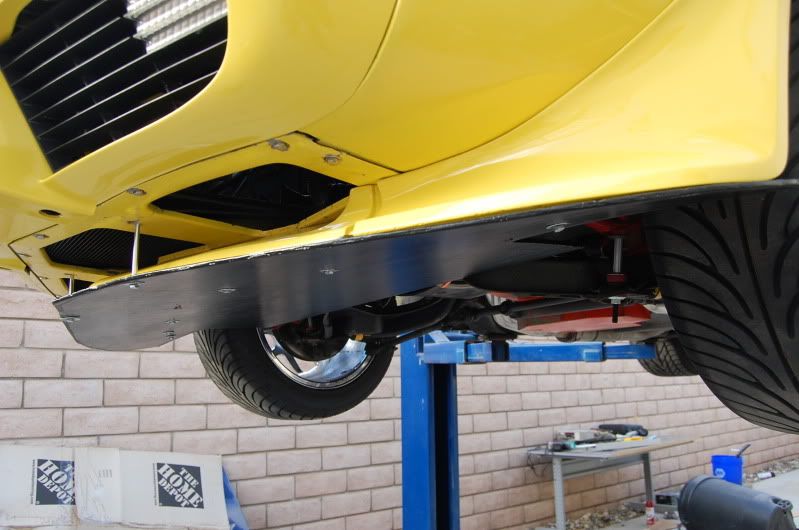
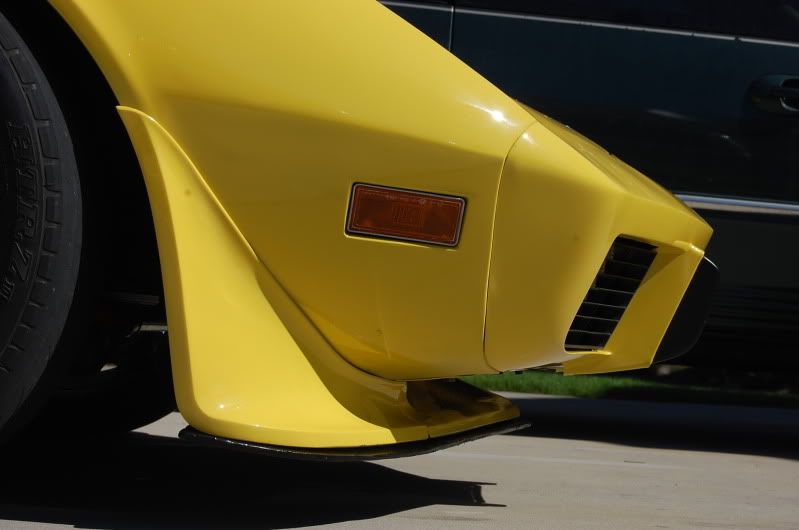
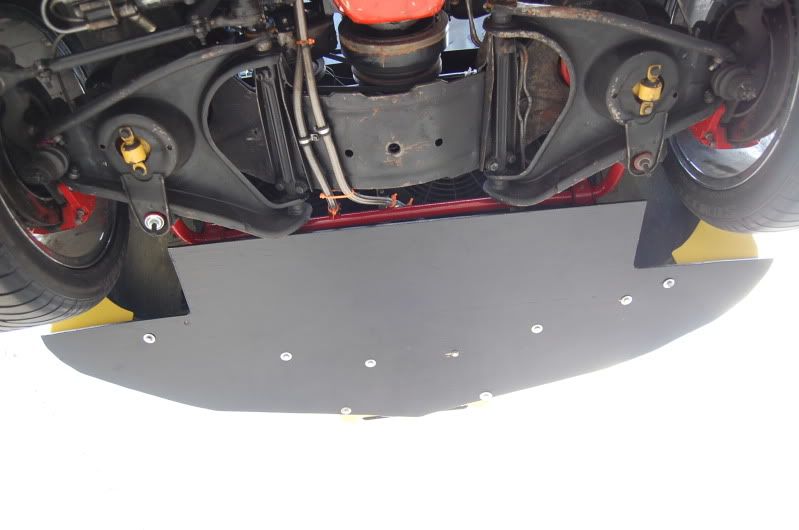
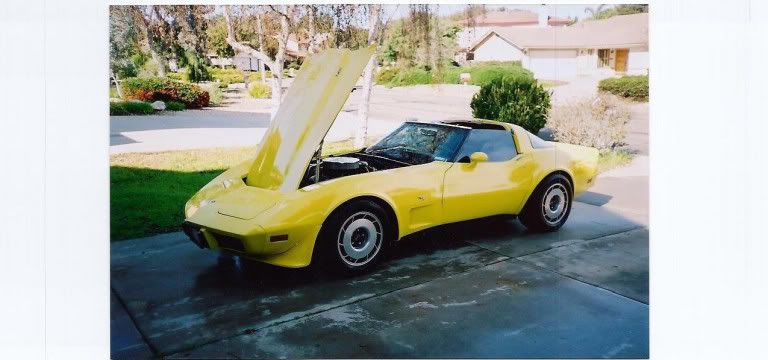
The Pace Car spoiler is both good looking and functional. The only problem is that originally it sat too high. Look at pictures of original 78s and 79s. But when you lower the front end a couple of inches to get the spoiler closer to the ground, the real world tears up your spoiler and paint job. I added a plywood splitter to protect my PC spoiler because I got tired of painting my spoiler annually. It works great, the plywood takes the driveway, speed bump, and curb abuse, and I think it helps aerodynamically. That's a Bee Jay theory. I plan to replace the plywood with some other exotic material in the future, but I want to get the design right. This is the second version. I'm also looking for rubber lip material to attach to the bottom of my splitter to limit even more undercar airflow, but it's not as readily avialable as it was back in the day. Anyone have suggestions? I also run the Pace Car rear spoiler. I also experimented with blocking the outside grills with aluminum sheeting, and the engine temp did not go up. I guess most of the engine cooling air is forced up thru the bottom holes by the PC spoiler. Removing the center license plate metal and installing a grill did significantly lower my engine temps however. Also for a few years, I ran the flat early C4 (84-86) wheels reversed. They were supposed to be more aerodynamic, and reversing them to factory was proved to help brake cooling at the Nelson Ledges 24 hour races.
Bee Jay

Bee Jay
Last edited by Bee Jay; Oct 25, 2009 at 11:35 AM.
Pro


Joined: Aug 2005
Posts: 704
Likes: 2
From: Cincinnati OH
Use the rubber seal they sell at HomeDepot or Lowes for the bottom of garage doors to seal out the weather. they are flexible and they look decent from a few feet away. You could use some small screws to hold it to your plywood splitter.
Thread Starter
Drifting
Joined: Apr 2002
Posts: 1,750
Likes: 37
From: Stockton Ca
Still a Brick
Bee Jay: I agree 100%. Looking at the PCs angle to the wind, any lowering of the front will "shroud" the spoiler and reduce the air it gets.
After Ganey's post I started thinking about a rubber skirt on the leading edge of the spoiler. Some members use rubber cut to width in a strip as an air dam. It would wear well and w/supports not deflect too much.
The problem is: After the front is lowered, how much clearance is there?
I'm thinking that the rear is where some gains could be made.
What is it called when the rear spoiler is "Boxed" on the sides to catch more air so it doesn't escape around the ends? That is something that has come along in the last 30 yrs. Also widening the spoiler would probably add downforce and cd. What it the rear was widened and laid down a few degrees, less cd same downforce perhaps?
The battle of cd vs downforce is never ending. Getting a proper wing would probably improve both cd and downforce. Getting it positioned correctly would be a whole new issue. It's all a compromise!
Good ideas all, I wish we had more data. How big were the aero aids on the LeMans racers. They look pretty big to me?
R
After Ganey's post I started thinking about a rubber skirt on the leading edge of the spoiler. Some members use rubber cut to width in a strip as an air dam. It would wear well and w/supports not deflect too much.
The problem is: After the front is lowered, how much clearance is there?
I'm thinking that the rear is where some gains could be made.
What is it called when the rear spoiler is "Boxed" on the sides to catch more air so it doesn't escape around the ends? That is something that has come along in the last 30 yrs. Also widening the spoiler would probably add downforce and cd. What it the rear was widened and laid down a few degrees, less cd same downforce perhaps?
The battle of cd vs downforce is never ending. Getting a proper wing would probably improve both cd and downforce. Getting it positioned correctly would be a whole new issue. It's all a compromise!
Good ideas all, I wish we had more data. How big were the aero aids on the LeMans racers. They look pretty big to me?
R
Thread Starter
Drifting
Joined: Apr 2002
Posts: 1,750
Likes: 37
From: Stockton Ca
Conveyor Belt Material.
I forgot that some are having problems finding the rubber for the leading edge. Here in the valley we have many Businesses that cater to farmers.
The rubber material used for wide conveyor bests works very well.
It comes thick so it won't deflect much, but you can't cut it w/home tools.
Check your area for a "Rubber Supply" and see what they can do for you.
Screwing it into the plywood leading edge would just split the wood.
Some brackets will have to be fabbed, but it will take the abuse of city driving. I hope this helps?
R
The rubber material used for wide conveyor bests works very well.
It comes thick so it won't deflect much, but you can't cut it w/home tools.
Check your area for a "Rubber Supply" and see what they can do for you.
Screwing it into the plywood leading edge would just split the wood.
Some brackets will have to be fabbed, but it will take the abuse of city driving. I hope this helps?
R
Corvette Stories
The Best of Corvette for Corvette Enthusiasts

Corvette & Porsche 911: How Two Icons Conquered the Last 25 Years
Joe Kucinski
2027 Chevrolet Silverado 1500 First Look: Everything You NEED to Know!
Michael S. Palmer
5 Best & 5 Worst Corvette Daily Drivers
Joe Kucinski
The Headlights of Every Corvette Generation Explained
Joe Kucinski
5 Best & 5 Most Overrated Corvette Track Packages of All Time!
Joe Kucinski
Every 2027 Corvette Engine Explained
Joe Kucinski
Designer Imagines A Corvette That Looks More Like a Corvette Than the Corvette
Verdad Gallardo
10 Ugly Corvettes That We Still Kinda Love
Joe Kucinski
Top 10 Most Expensive Corvettes Ever Sold on Bring A Trailer
Brett Foote
Race Director

Joined: Jan 2003
Posts: 15,177
Likes: 90
From: State of Confusion

Swamp Rat 30 above, with pulleys & belts for front-tires, and SR-31 below, with wheels & tires from a U.S. Navy fighter-plane

Garlits was famously quoted as saying his intent was to 'pierce a hole in the air, and drive-THROUGH that opening'
Thread Starter
Drifting
Joined: Apr 2002
Posts: 1,750
Likes: 37
From: Stockton Ca
I believe that the rear wing on a Fueler added several thousand pounds of downforce? Now that should keep 7,000 hp hooked up through the lights and add a few mph to the run?
Pics of old factory racers might have a few ideas we can use?
R
Pics of old factory racers might have a few ideas we can use?
R
Safety Car
Joined: Nov 2005
Posts: 3,961
Likes: 573
From: Lompoc, CA. Santa Barbara County
I think the problem at the rear end is the parachute type drag brake behind the rear end and in front of the bumper. I have some ideas and will be attempting something soon. Stay tuned. I also think the front end lift and underhood pressure can be relieved with hood vents. Working on that too.
Bee Jay

Bee Jay

Burning Brakes

Joined: Jun 2008
Posts: 1,086
Likes: 1
From: Michigan
I was looking into how much horsepower it takes to go 200+ mph a while back when the ZR1 came out. I was also interested in the flat back rear glass up to '77 and the bubble rear glass from 78-82 as it related to aero. Here is some interesting info I came across.
http://www.corvettefever.com/techart...ing/index.html
http://www.a2wt.com/APPENDIX.htm
http://www.bobnorwood.com/300%20mph%...nd%20Power.htm
http://www.corvettefever.com/techart...ing/index.html
http://www.a2wt.com/APPENDIX.htm
http://www.bobnorwood.com/300%20mph%...nd%20Power.htm


Thread Starter
Drifting
Joined: Apr 2002
Posts: 1,750
Likes: 37
From: Stockton Ca
Excellent!
08: That is the kind of data that is hard to argue with.
I thought that this was the most interesting part.
This was for the C3 w/flat r window. Quote.
The addition of the tiniest rear spoiler, however, did help produce 13.9 pounds of downforce in the rear (shown as negative lift on the chart). This is the only car that was able to produce negative lift numbers.
I agree w/Ganey the the PC kit is very good. I think it could be better.
Bee Jay. I agree that it looks like the tail section could catch/hold a lg vol of air. If the air doesn't get under the car in the first place, it can't get caught in the spare tire area. jmho
Maybe that is why many that take the cover out of that space, put it back?
If the spoiler/splitter was lowered a little, it wouldn't get shrouded by the "nose" of a downward tilted car. BJ, isn't your car running 17/18?
If that is the case, you are already there and it isn't too bad.
Who has a pic of a LeMans Brick? See if I can learn something?
R
I thought that this was the most interesting part.
This was for the C3 w/flat r window. Quote.
The addition of the tiniest rear spoiler, however, did help produce 13.9 pounds of downforce in the rear (shown as negative lift on the chart). This is the only car that was able to produce negative lift numbers.
I agree w/Ganey the the PC kit is very good. I think it could be better.
Bee Jay. I agree that it looks like the tail section could catch/hold a lg vol of air. If the air doesn't get under the car in the first place, it can't get caught in the spare tire area. jmho
Maybe that is why many that take the cover out of that space, put it back?
If the spoiler/splitter was lowered a little, it wouldn't get shrouded by the "nose" of a downward tilted car. BJ, isn't your car running 17/18?
If that is the case, you are already there and it isn't too bad.
Who has a pic of a LeMans Brick? See if I can learn something?
R
Race Director
Joined: Jan 2003
Posts: 15,177
Likes: 90
From: State of Confusion

even when the body is raised for final tuning after the burnout (below), these panels stay-closed and appear 'stock'

yet, once at-speed, the flip open, and allow trapped air under the rear-deck to escape

I'm not advocating butchering the backside of a C3 (unless the car is already in less-than-stellar condition), but would having some horizontal 'louvers' cut into the rear fascia, below the tail-lights, allow the trapped air out easily, as it seems this thread is aimed more at function than at form?

Thread Starter
Drifting
Joined: Apr 2002
Posts: 1,750
Likes: 37
From: Stockton Ca
Louvers!
I think you are on to something. FG won't allow punched in louvers.
I'm thinking of something "Marine" to vent the area. It wouldn't have to be very big, like hood vents.
PR: The C3 shown looks very clean w/low cd, but what about lift?
Did they style for aeros or downforce?
Very nice BTW, I like it. I think a little more azz would help.
More downforce = more traction in all conditions.
I'm thinking of something "Marine" to vent the area. It wouldn't have to be very big, like hood vents.
PR: The C3 shown looks very clean w/low cd, but what about lift?
Did they style for aeros or downforce?
Very nice BTW, I like it. I think a little more azz would help.
More downforce = more traction in all conditions.
Safety Car
Joined: Nov 2005
Posts: 3,961
Likes: 573
From: Lompoc, CA. Santa Barbara County
That a good idea Glennsgages. I had a '73 Type LT Camaro once. You gassed it up by flipping the license plate up or down (I don't remember). We could lightly spring load our rear plates and when enough pressure builds up, the plate will flip up and vent the air caught under the fuel tank.
Bee Jay
Bee Jay
Thread Starter
Drifting
Joined: Apr 2002
Posts: 1,750
Likes: 37
From: Stockton Ca
No!
How quick would you get pulled over w/plate not visible?
That is not a good idea.
I think I saw some C5 racers w/2 sm vents in back.
Even something as small as engine louvers would make a difference.
We need a C5 racer pic!
R
That is not a good idea.
I think I saw some C5 racers w/2 sm vents in back.
Even something as small as engine louvers would make a difference.
We need a C5 racer pic!
R
Safety Car
Joined: Nov 2005
Posts: 3,961
Likes: 573
From: Lompoc, CA. Santa Barbara County
 I wonder at what speed did the tailight flaps open on that funny car.
Bee Jay