




Carb Spacers Updated?

Thread Starter
Drifting


Joined: Apr 2002
Posts: 1,743
Likes: 37
From: Stockton Ca
 Carb Spacers Updated?
Forum: I've been reading up on this topic since many of the forum have tried a variety of spacers looking for that free power. Any new info?
Does anyone have some new results based on their testing?
I'm going to an L88 hood scoop for the cooler air and the room to run as much spacer as needed. It looks like the results from the cooler air cannot be seperated from the results from bigger plenum?
I think it is a little of both?
From what I have read, results are mixed and each engine combo has different requirements. Your thoughts please? TIA
R
Does anyone have some new results based on their testing?
I'm going to an L88 hood scoop for the cooler air and the room to run as much spacer as needed. It looks like the results from the cooler air cannot be seperated from the results from bigger plenum?
I think it is a little of both?
From what I have read, results are mixed and each engine combo has different requirements. Your thoughts please? TIA
R

Race Director


Joined: Oct 2000
Posts: 15,044
Likes: 79
From: central FL, near the beach.
i have the L88 hood- room? 
not all that much room.
the best spacer is no spacer at all. A spacer is just a patch, and a poor one at that, for a poorly designed intake tract.
Get the vortec set up- that has the needed space built into the intake tract, at least for cars with limited hood space, like the L88 hood. The path to the intake valve, being higher, flows more cfm easier. Of course AFR and others have done a fine job with the lower older height too.
not all that much room.
the best spacer is no spacer at all. A spacer is just a patch, and a poor one at that, for a poorly designed intake tract.
Get the vortec set up- that has the needed space built into the intake tract, at least for cars with limited hood space, like the L88 hood. The path to the intake valve, being higher, flows more cfm easier. Of course AFR and others have done a fine job with the lower older height too.

Team Owner


Joined: Apr 1999
Posts: 21,953
Likes: 1,445
From: Reno Nevada
2024 C3 of the Year Finalist- Modified
by Wayne Scraba
The art and science of tuning headers
Most people think of carburetor spacers as simple horsepower-increasing devices. But that might not be completely true. Certainly, in some cases they can be used to increase engine power levels, but, more important, they can be used as a sophisticated tuning aid. Spacers often provide an increase in top-end power, but at the same time, they can reduce bottom-end power as well as mid-range torque. Typically, power gain comes from increased plenum volume, but that's not the complete picture.
The manifold dilemma
Using a single-plane intake manifold as an example, you must first realize how a single-plane intake manifold functions. Generally, a single-plane intake includes a large, centrally located plenum that has reasonably straight runners leading from the plenum to the port entries in the cylinder head. In this configuration, a large common plenum is under the carburetor. According to the experts, this common plenum allows each runner and cylinder intake port combination to draw from all four carburetor venturii at wide-open throttle. As the partially vaporized air/fuel mixture leaves the base of the carburetor venturii, it forms as four individual mixture streams. When each of the cylinders places a demand on the plenum chamber, these mixture streams, or in some cases portions of the streams, physically bend in the direction of demanding runner/port entry. The mixture "streams" combine to form a single "mixture river," which flows into the runner, eventually feeding the cylinder that is making the demand.
Moroso Performance Products points out that the beauty of a single-plane manifold configuration is that it allows each runner to withdraw a larger volume of air/fuel mixture during the available induction time span. Unfortunately, life isn't always simple — and neither are intake manifolds. As each cylinder withdraws a charge from the plenum, the mixture streams are forced to change direction constantly. Creating more havoc inside the manifold are pressure pulses that travel backward from the cylinder into the manifold runner and eventually into the plenum. And some engine combinations have more of this reverse pressure pulsation than others. These constant directional changes in the plenum along with pressure pulses can create a healthy amount of turbulence inside the plenum.
The cure
Moroso notes that some single-plane intake manifolds are designed with a very short-turn radius coming out the bottom of the carb venturii into the respective entries of the intake-manifold runners. When the carburetor is moved up — most often with a spacer — the velocity of the intake charge is reduced, which in turn allows the previous mixture streams to make the bend around the corner, or short-side radius, easily. In certain applications, a short, 1/2-inch spacer will work, but in other cases, the manifold design dictates a larger spacer.
It doesn't take a rocket scientist to figure out that the addition of a spacer effectively increases the distance between the carburetor and the floor of the plenum. Because of this added distance, the carburetor signal is weakened. And when the signal is weakened, a larger jet or jets in the carburetor will be required. Carburetor spacers designed with four separate holes tend to recapture the velocity of the mixture stream that gets lost when an open carburetor spacer is installed. In simple terms, more exit velocity in the mixture stream creates a stronger carburetor signal than that found with an open spacer. Generally, the jet size will still have to be increased when a four-hole spacer is used, but not as much as with an open spacer.
How much spacer should you use? As a rule of thumb, single-plane intake manifolds seem to respond best with larger spacers — two inches in height and larger. On the other hand, most dual-plane intake manifolds work best with open spacers with a height of between 5/8-inch and 1 1/2 inches.
The market is filled with dozens of spacer styles and configurations. Some spacers are manufactured with insulating materials. These spacers decrease the amount of heat transferred from the intake manifold to the carburetor throttle plate and main body. This reduces the fuel temperature inside the carburetor. Naturally, the result is a denser fuel charge to the manifold, which in turn creates more horsepower.
Spacer materials
Believe it or not, plywood can be an ideal material for constructing carburetor spacers. The thin layers of laminated wood, bonded with resin, form a natural heat sink. For example, a wooden Moroso spacer features top-quality hardwood plywood with a sheet of phenolic resin-impregnated paper bonded to both sides. This creates a durable product that can be used in drag racing, circle track competition, or on the street.
Plywood spacers are easy to modify to suit a given manifold for optimum performance. On the other hand, phenolic spacers are constructed from an advanced material similar to plastic that can reduce heat conductivity 10 times greater than aluminum for a much denser air/fuel charge. Obviously, aluminum spacers are still widely available. The advantage in aluminum is that it can be easily modified for a given application. The disadvantage is that in some cases, an aluminum casting can be porous. Because of this, several manufacturers now offer billet-aluminum spacers CNC-machined from 6061-T6 material.
So how can spacers be used to improve performance? The folks from Moroso provide this theoretical example: You have a car that hooks. It works well, turning the tires slightly during the rollout. Everything is fine until you're up against a track that's greasy after the launch pad or provides conditions that resemble a mine shaft. Typically, the car still hooks reasonably well, but on the 1-2 gear change, it turns the tires heavily (in this case, assume that the engine rpm is brought down to the torque peak on the gear change). The e.t. goes away, and so does the consistency.
Now what? It's a tough situation to "tune" out. None of the normal tricks work because they kill the launch. That's where a spacer can be used. Add a spacer or increase the spacer height and increase the jet size by a couple of numbers. The launch will remain almost the same, but the increased plenum volume helps to shift the torque peak and peak horsepower upward. Because of this, the engine isn't dragged into the meat of its torque band during the gear change and it doesn't turn the tires. The result? A quicker e.t. and a bunch more consistency.
That's but one area where spacer tuning can work; however, there are dozens of other tuning applications, especially those where you have to tune to the engine, the car, the track, or the atmospheric conditions.
One final item to consider when buying or testing carburetor spacers is hood clearance. If the carburetor air horn is moved too close to the hood, then the airflow and fuel metering can become restricted. If the airflow is restricted, you simply won't be able to take advantage of the spacer.
Are spacers for you? That depends on your application, but if you don't tune with them, you could be missing out on some easy e.t.
The art and science of tuning headers
Most people think of carburetor spacers as simple horsepower-increasing devices. But that might not be completely true. Certainly, in some cases they can be used to increase engine power levels, but, more important, they can be used as a sophisticated tuning aid. Spacers often provide an increase in top-end power, but at the same time, they can reduce bottom-end power as well as mid-range torque. Typically, power gain comes from increased plenum volume, but that's not the complete picture.
The manifold dilemma
Using a single-plane intake manifold as an example, you must first realize how a single-plane intake manifold functions. Generally, a single-plane intake includes a large, centrally located plenum that has reasonably straight runners leading from the plenum to the port entries in the cylinder head. In this configuration, a large common plenum is under the carburetor. According to the experts, this common plenum allows each runner and cylinder intake port combination to draw from all four carburetor venturii at wide-open throttle. As the partially vaporized air/fuel mixture leaves the base of the carburetor venturii, it forms as four individual mixture streams. When each of the cylinders places a demand on the plenum chamber, these mixture streams, or in some cases portions of the streams, physically bend in the direction of demanding runner/port entry. The mixture "streams" combine to form a single "mixture river," which flows into the runner, eventually feeding the cylinder that is making the demand.
Moroso Performance Products points out that the beauty of a single-plane manifold configuration is that it allows each runner to withdraw a larger volume of air/fuel mixture during the available induction time span. Unfortunately, life isn't always simple — and neither are intake manifolds. As each cylinder withdraws a charge from the plenum, the mixture streams are forced to change direction constantly. Creating more havoc inside the manifold are pressure pulses that travel backward from the cylinder into the manifold runner and eventually into the plenum. And some engine combinations have more of this reverse pressure pulsation than others. These constant directional changes in the plenum along with pressure pulses can create a healthy amount of turbulence inside the plenum.
The cure
Moroso notes that some single-plane intake manifolds are designed with a very short-turn radius coming out the bottom of the carb venturii into the respective entries of the intake-manifold runners. When the carburetor is moved up — most often with a spacer — the velocity of the intake charge is reduced, which in turn allows the previous mixture streams to make the bend around the corner, or short-side radius, easily. In certain applications, a short, 1/2-inch spacer will work, but in other cases, the manifold design dictates a larger spacer.
It doesn't take a rocket scientist to figure out that the addition of a spacer effectively increases the distance between the carburetor and the floor of the plenum. Because of this added distance, the carburetor signal is weakened. And when the signal is weakened, a larger jet or jets in the carburetor will be required. Carburetor spacers designed with four separate holes tend to recapture the velocity of the mixture stream that gets lost when an open carburetor spacer is installed. In simple terms, more exit velocity in the mixture stream creates a stronger carburetor signal than that found with an open spacer. Generally, the jet size will still have to be increased when a four-hole spacer is used, but not as much as with an open spacer.
How much spacer should you use? As a rule of thumb, single-plane intake manifolds seem to respond best with larger spacers — two inches in height and larger. On the other hand, most dual-plane intake manifolds work best with open spacers with a height of between 5/8-inch and 1 1/2 inches.
The market is filled with dozens of spacer styles and configurations. Some spacers are manufactured with insulating materials. These spacers decrease the amount of heat transferred from the intake manifold to the carburetor throttle plate and main body. This reduces the fuel temperature inside the carburetor. Naturally, the result is a denser fuel charge to the manifold, which in turn creates more horsepower.
Spacer materials
Believe it or not, plywood can be an ideal material for constructing carburetor spacers. The thin layers of laminated wood, bonded with resin, form a natural heat sink. For example, a wooden Moroso spacer features top-quality hardwood plywood with a sheet of phenolic resin-impregnated paper bonded to both sides. This creates a durable product that can be used in drag racing, circle track competition, or on the street.
Plywood spacers are easy to modify to suit a given manifold for optimum performance. On the other hand, phenolic spacers are constructed from an advanced material similar to plastic that can reduce heat conductivity 10 times greater than aluminum for a much denser air/fuel charge. Obviously, aluminum spacers are still widely available. The advantage in aluminum is that it can be easily modified for a given application. The disadvantage is that in some cases, an aluminum casting can be porous. Because of this, several manufacturers now offer billet-aluminum spacers CNC-machined from 6061-T6 material.
So how can spacers be used to improve performance? The folks from Moroso provide this theoretical example: You have a car that hooks. It works well, turning the tires slightly during the rollout. Everything is fine until you're up against a track that's greasy after the launch pad or provides conditions that resemble a mine shaft. Typically, the car still hooks reasonably well, but on the 1-2 gear change, it turns the tires heavily (in this case, assume that the engine rpm is brought down to the torque peak on the gear change). The e.t. goes away, and so does the consistency.
Now what? It's a tough situation to "tune" out. None of the normal tricks work because they kill the launch. That's where a spacer can be used. Add a spacer or increase the spacer height and increase the jet size by a couple of numbers. The launch will remain almost the same, but the increased plenum volume helps to shift the torque peak and peak horsepower upward. Because of this, the engine isn't dragged into the meat of its torque band during the gear change and it doesn't turn the tires. The result? A quicker e.t. and a bunch more consistency.
That's but one area where spacer tuning can work; however, there are dozens of other tuning applications, especially those where you have to tune to the engine, the car, the track, or the atmospheric conditions.
One final item to consider when buying or testing carburetor spacers is hood clearance. If the carburetor air horn is moved too close to the hood, then the airflow and fuel metering can become restricted. If the airflow is restricted, you simply won't be able to take advantage of the spacer.
Are spacers for you? That depends on your application, but if you don't tune with them, you could be missing out on some easy e.t.
Team Owner
Joined: Apr 1999
Posts: 21,953
Likes: 1,445
From: Reno Nevada
2024 C3 of the Year Finalist- Modified
I've been using 1/2 open wood spacers as a thermal insulator for the last 14 years. It's height or additional plenum volume is minimal compared to my single plane intakes.
I have since switched to a 1 inch four hole to help out my Motown massive plenum volume single plane on the advice of a shop that specializes in dyno run carbs and intakes..
I have since switched to a 1 inch four hole to help out my Motown massive plenum volume single plane on the advice of a shop that specializes in dyno run carbs and intakes..
Race Director
Joined: Oct 2000
Posts: 15,044
Likes: 79
From: central FL, near the beach.
thermal insulation is a great idea. i use wood gaskets, 4 hole, 0.2" thick.
But they are gaskets, not spacers.(a spacer is defined as 1/2" or more, and need gaskets)
I don't think thicker, makes any significant difference, when it comes to thermal insulation.
George, is there a dual plane that is big enough to handle the airflow on your 427? U'd see a big difference at low to mid rpms.
But they are gaskets, not spacers.(a spacer is defined as 1/2" or more, and need gaskets)
I don't think thicker, makes any significant difference, when it comes to thermal insulation.
George, is there a dual plane that is big enough to handle the airflow on your 427? U'd see a big difference at low to mid rpms.

Safety Car


Joined: Oct 2007
Posts: 3,729
Likes: 267
From: Austin Texas
Corvette of the Year Winner 2017
2016 C3 of Year Finalist
you don't have much room to play with a spacer on a Vette,
I would suggest a carb Isolation plate for the best bang for the buck,
my carb went from; too hot to leave your hand on it, ...
to Ice cold with just an Isolation plate,
and we all know cool fuel is way better than perculating Hot fuel, for many reasons.
I did not measure that difference, but I would bet nearly a 100 degree drop in tempature.
69VETT
I would suggest a carb Isolation plate for the best bang for the buck,
my carb went from; too hot to leave your hand on it, ...
to Ice cold with just an Isolation plate,
and we all know cool fuel is way better than perculating Hot fuel, for many reasons.
I did not measure that difference, but I would bet nearly a 100 degree drop in tempature.
69VETT
Team Owner
Joined: Apr 1999
Posts: 21,953
Likes: 1,445
From: Reno Nevada
2024 C3 of the Year Finalist- Modified
Corvette Stories
The Best of Corvette for Corvette Enthusiasts

Top 10 Most Expensive Corvettes Ever Sold on Bring A Trailer
Brett Foote
10 Things Every Corvette Owner Needs (2026 Edition)
Michael S. Palmer
8 Most "Only Corvette Owners Understand" Quirks and Problems
Pouria Savadkouei
10 Reasons the C6 Z06 is Still A Performance Benchmark After 20 Years
Joe Kucinski
How Much Horsepower Every Corvette Engine "LOST" in 1972
Joe Kucinski
Top 10 DOs and DON'Ts for Protecting Your Convertible Top!
Michael S. Palmer
Top 10 Most Explosive Corvettes Ever Made: Power-to-Weight Ratio Ranked!
Joe Kucinski
150 hp to 1,250 hp: Every Corvette Generation Compared by the Specs That Matter
Joe Kucinski
8 Coolest Corvette Pace Cars (and Replicas) of All Time
Verdad Gallardo
Safety Car
Joined: Oct 2007
Posts: 3,729
Likes: 267
From: Austin Texas
Corvette of the Year Winner 2017
2016 C3 of Year Finalist
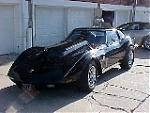
correction on a BB, you have min. space for additional spacer.
you got all kinds of room with the little motors !
just kidding nice looking 427 !
69VETT
you got all kinds of room with the little motors !
just kidding nice looking 427 !
69VETT


Thread Starter
Drifting
Joined: Apr 2002
Posts: 1,743
Likes: 37
From: Stockton Ca
Looking for Free Lunch?
My 74 has an Air Gap w/drop base that is up against my flattened hood.
There is no room for the heat shield from Lars or the Holly insulator, let alone a 1" spacer!
My body guy says he can put the curve back in my hood and get me a little space. I want a functional cold air induction and the L88 hood kit looks like a good way to go. I like the look and it works.
Not having a personal dyno, drag strip or other tuning aids, I have to go w/what works when I dyno test. Once I find my optimum set up, I have to pretty much stay w/that.
I did a google on carb spacers and spent some time reading the posts from other forums. The majority of users got more hp, and or more mpg. Some people just got a shift in their power curve, a few got nothing, and 1 lost power? Just having a cooler carb and or air temps alone should increase hp/mpg to some degree.
To be honest the gains were only 5-10 hp for the majority. There were a few that claimed more?
If I could get 5-10 hp and a little better mpg, that alone would be worth the cost of the spacer.
I plan on testing headers first, then the spacers. I will keep the forum posted. There were some old posts where forum members claimed gaining .10 sec and a few mph w/spacer. I am hoping those members will chime in and post their updated results? I'm still hoping for hard testing info.
R
There is no room for the heat shield from Lars or the Holly insulator, let alone a 1" spacer!
My body guy says he can put the curve back in my hood and get me a little space. I want a functional cold air induction and the L88 hood kit looks like a good way to go. I like the look and it works.
Not having a personal dyno, drag strip or other tuning aids, I have to go w/what works when I dyno test. Once I find my optimum set up, I have to pretty much stay w/that.
I did a google on carb spacers and spent some time reading the posts from other forums. The majority of users got more hp, and or more mpg. Some people just got a shift in their power curve, a few got nothing, and 1 lost power? Just having a cooler carb and or air temps alone should increase hp/mpg to some degree.
To be honest the gains were only 5-10 hp for the majority. There were a few that claimed more?
If I could get 5-10 hp and a little better mpg, that alone would be worth the cost of the spacer.
I plan on testing headers first, then the spacers. I will keep the forum posted. There were some old posts where forum members claimed gaining .10 sec and a few mph w/spacer. I am hoping those members will chime in and post their updated results? I'm still hoping for hard testing info.
R
Thread Starter
Drifting
Joined: Apr 2002
Posts: 1,743
Likes: 37
From: Stockton Ca
Dragstrip & Track Testing?
I know we have some forum members that live at the track. You guys know what works and what doesn't. Could you please share some of your hard earned knowlege w/us?
I'm still looking for the FP insulator kit that is supposed to lower temps
40*. Combine that w/CAI and I should be getting somewhere, hopefully?
I wonder how much of the power found on the dyno is lost once the hood closes?
R
I'm still looking for the FP insulator kit that is supposed to lower temps
40*. Combine that w/CAI and I should be getting somewhere, hopefully?
I wonder how much of the power found on the dyno is lost once the hood closes?
R
Racer

Joined: Dec 2008
Posts: 300
Likes: 0
From: Toms River NJ
I have an RPM Airgap intake also. I wanted some more RPM out of it, so I called Edelbrock and the tech guy said a 1" spacer and a gasket match to the heads should get me 500 prm more. He stressed to ONLY, ONLY use a split spacer. not open. not 4 hole. split. just like the manifold. So then I started thinking about that little notch that is cut into the plenum divider on the RPM Airgap manifold. Should I fill it, and then notch the spacer? Tech guy cut me off there too. he said to just leave it, it'll be fine. I also got a split thermal insulating gasket. I matched the spacer to the manifold, and the gasket to the spacer. No results yet. motor is awaiting a rebuild.

Le Mans Master


Joined: Oct 2000
Posts: 8,897
Likes: 1,357
From: Santa Ana CA
I have an RPM Airgap intake also. I wanted some more RPM out of it, so I called Edelbrock and the tech guy said a 1" spacer and a gasket match to the heads should get me 500 prm more. He stressed to ONLY, ONLY use a split spacer. not open. not 4 hole. split. just like the manifold. So then I started thinking about that little notch that is cut into the plenum divider on the RPM Airgap manifold. Should I fill it, and then notch the spacer? Tech guy cut me off there too. he said to just leave it, it'll be fine. I also got a split thermal insulating gasket. I matched the spacer to the manifold, and the gasket to the spacer. No results yet. motor is awaiting a rebuild.
It seems counter intuitive to use a divided spacer when the manifold is not divided just below that, but every car will react to these changes a little differently and the only real way to tell is on the dyno with back-to-back runs.
BTW, the Chevy Power Manual does recommend cutting out that center divider, but not to a depth greater than 1" on the '67-'71 Z28 manifold (simlar to the Corvette LT-1 manifold).
Last edited by toddalin; Nov 24, 2009 at 09:19 PM.
Race Director
Joined: Oct 2000
Posts: 15,044
Likes: 79
From: central FL, near the beach.
I'm glad to see you guys discussing the center divider 
It really is very important. A guy set on winning a race is going to do whatever it takes to get that trophy. One foot ahead at the finish line is a win, and the Power Manual is correctly named; it is not the Street Manners Manual or the MPG Manual Often times a track mod is not sensible for docile street use; the kind where u get to keep your license.
.
And the Edelbrock guy is right on A 4 hole gasket should be followed by 2 hole spacer, if that is your game, to increase plenum volume, but still maintain the advantage of a fully separated 2 plane manifold. We can't expect the guy to tell us to fill in the dip! I would on my car if the spacer was to be permanent, but Edelbrock is not going to recommend we modify their product 
It really is very important. A guy set on winning a race is going to do whatever it takes to get that trophy. One foot ahead at the finish line is a win, and the Power Manual is correctly named; it is not the Street Manners Manual or the MPG Manual
Often times a track mod is not sensible for docile street use; the kind where u get to keep your license. .
And the Edelbrock guy is right on
A 4 hole gasket should be followed by 2 hole spacer, if that is your game, to increase plenum volume, but still maintain the advantage of a fully separated 2 plane manifold. We can't expect the guy to tell us to fill in the dip! I would on my car if the spacer was to be permanent, but Edelbrock is not going to recommend we modify their product
Last edited by Matt Gruber; Nov 25, 2009 at 07:44 AM.

Race Director

Joined: Apr 1999
Posts: 11,520
Likes: 13
From: CORVETTE 77 385 C.I. TEXAS
Spacers are tuning devices. In order to even guesstimate which spacer might help, your setup would need to be stated.
In general it's not going to make much difference unless something else is wrong like carb size or intake.
Norval put it bluntly.
In general it's not going to make much difference unless something else is wrong like carb size or intake.
Norval put it bluntly.
Originally Posted by norvalwilhelm
... When guys tune with spacers they are actually tuning the intake height to compensate for a mismatched carb.
...
...

Burning Brakes

Joined: Aug 2005
Posts: 1,164
Likes: 1
From: Europe, France

But it can sometimes cure a fuel percolation issue, too.

So the owner thinks his engine works much better because of the spacer...


Burning Brakes
Joined: Aug 2006
Posts: 1,058
Likes: 27
From: Eastern North Carolina
Wow, there is a lot of infomation here, I have a question that will show my lack of knowledge on this subject. I have a stock L-81, is the stock manifold a single or dual plane manifold. I was thinking of adding a 4-hole spacer to increase MPG if possible. Sorry, I hope I didn't steal this thread.
Thanks Tim
Thanks Tim
Race Director
Joined: Oct 2000
Posts: 15,044
Likes: 79
From: central FL, near the beach.
Wow, there is a lot of infomation here, I have a question that will show my lack of knowledge on this subject. I have a stock L-81, is the stock manifold a single or dual plane manifold. I was thinking of adding a 4-hole spacer to increase MPG if possible. Sorry, I hope I didn't steal this thread.
Thanks Tim
Thanks Tim
If u lift the carb up u should see a 4 hole stock intake.
IMO, a 4 hole spacer would NOT increase mpg in this case. However, if the manifold has a passage that connects the high + low plane, and IF it has a lumpy cam with more overlap than stock, reducing or eliminating that passage could help mpg.
On an old version of my article I made the mistake of mentioning that spacers have been marketed as a mpg improver. Clever marketing i thought was obvious, but nobody caught on! It was the sealing off of each plane that heped mpg, not the space. But, how could the seller get rich selling a gasket? No way! But, a spacer weighs more, is harder to install, looks impressive, THAT could make the seller rich!