






removing rotor rivets
Thread Starter
Racer


Joined: Mar 2006
Posts: 493
Likes: 2
From: Dunellen New Jersey
 removing rotor rivets
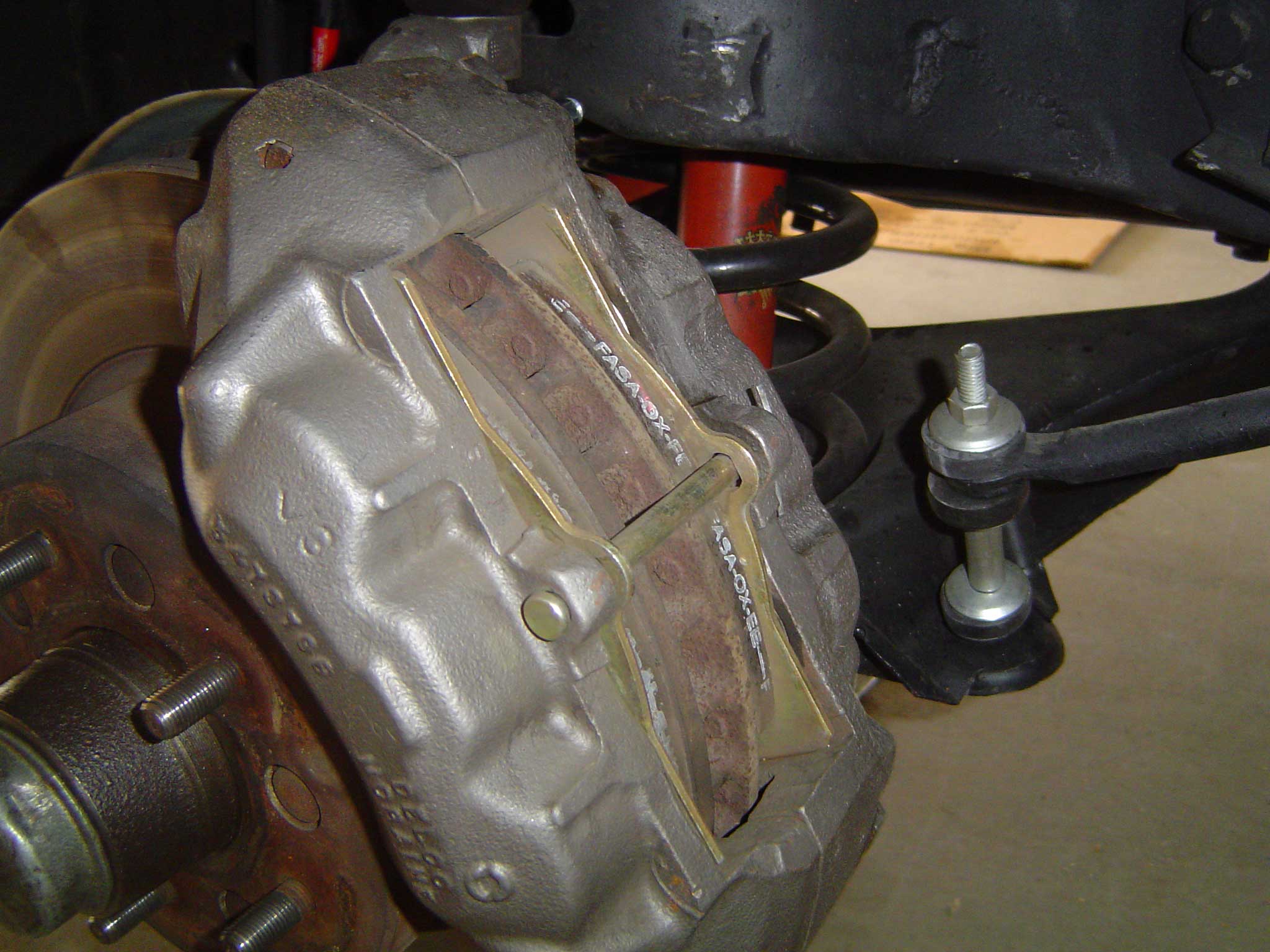
my old front rotors didn't have the rivets in them.I got another set of front hubs and want to romove the rotors.they are riveted on.How do you cut off the rivets?
Drifting


Joined: Apr 2007
Posts: 1,970
Likes: 45
From: Cameron Park CA
Burning Brakes


Joined: Mar 2006
Posts: 915
Likes: 2
From: Lima, OH -- 69 L71 427/435hp

Racer

Joined: Nov 2005
Posts: 409
Likes: 5
From: Orange County CA
I drilled mine out starting with a smaller bit and them moving to a 1/2 inch bit.. I used cobalt bits and they cut the rivets like butter.
After the heads were drilled out I used an air chisel with a pointed bit to push them out.
Took about 10 - 15 minutes per rotor tops..
The rivet heads were recessed in the rotor on mine, so I dont see how a hammer and chisel would work.
After the heads were drilled out I used an air chisel with a pointed bit to push them out.
Took about 10 - 15 minutes per rotor tops..
The rivet heads were recessed in the rotor on mine, so I dont see how a hammer and chisel would work.
Corvette Stories
The Best of Corvette for Corvette Enthusiasts

How Much Horsepower Every Corvette Engine "LOST" in 1972
Joe Kucinski
Top 10 DOs and DON'Ts for Protecting Your Convertible Top!
Michael S. Palmer
Top 10 Most Explosive Corvettes Ever Made: Power-to-Weight Ratio Ranked!
Joe Kucinski
150 hp to 1,250 hp: Every Corvette Generation Compared by the Specs That Matter
Joe Kucinski
8 Coolest Corvette Pace Cars (and Replicas) of All Time
Verdad Gallardo
Top 10 Corvette Engines RANKED by Peak Torque (70+ Years of Muscle!)
Joe Kucinski
Corvette ZR1X Will Be Pacing the Indy 500, And Could Probably Race, Too!
Verdad Gallardo
Top 10 Corvettes Coming to Mecum Indy 2026!
Brett Foote
Top 10 C9 Corvette MUST-HAVES to Fix These C8 Generation Flaws!
Michael S. Palmer
Instructor

Joined: Feb 2006
Posts: 185
Likes: 2
From: Long Valley NJ
I drilled mine out starting with a smaller bit and them moving to a 1/2 inch bit.. I used cobalt bits and they cut the rivets like butter.
After the heads were drilled out I used an air chisel with a pointed bit to push them out.
Took about 10 - 15 minutes per rotor tops..
The rivet heads were recessed in the rotor on mine, so I dont see how a hammer and chisel would work.
After the heads were drilled out I used an air chisel with a pointed bit to push them out.
Took about 10 - 15 minutes per rotor tops..
The rivet heads were recessed in the rotor on mine, so I dont see how a hammer and chisel would work.


Terrorizing Orange Cones

Joined: Oct 2007
Posts: 2,572
Likes: 17
From: Northern CO
I'd never removed Corvette rotors from their hubs before doing mine. Before starting disassembly, I measured the existing runout. Drivers was .003 and pass was .002. Removed from the spindles, removed and cataloged bearings, and cleaned hubs of excess grease.
I used the drill bits I had on hand (not cobalt) and after center-punching each head, I did a so-so job of keeping the bit centered on the first rivet head. The bit was slightly used and was subjectively, sharp.
This resulted in two things: being slightly off-center caused extra hub material to be taken and also went as much as 1/8" to 1/4" inch too deep into the hub flange (I know: shoulda used a stop to avoid that part). That was on the first 2 of 5 rivet heads of first assembly.
I was not pleased with my effort so took another tack. With the heads sitting in countersunk holes, the ole chisel and hammer method didn't appear so easy. Not intending to replace a ruined hub, I chose instead to grab my trusty Dremel with a carbide cutting disc.
Flipping the hub rotor face down, I carefully cut off the peened-over (rear) part of the rivet flush with the back of the flange. Used caution not to get too close to the hub center to avoid knocking the hub balancing out of whack by grinding away material.
Grabbed the BFH and center punched the rivet out; that ended up working for me and stopped buggering up the hub's flange..
Upon reassembly, I couldn't get the drivers side any closer than .005 out-of-alignment with the new rotor but the pass side came in at .003. I believe either measurement is within spec.
Just sayin' there's always options to some of the problems we encounter and mine turned out fine.
Good Luck.
I used the drill bits I had on hand (not cobalt) and after center-punching each head, I did a so-so job of keeping the bit centered on the first rivet head. The bit was slightly used and was subjectively, sharp.
This resulted in two things: being slightly off-center caused extra hub material to be taken and also went as much as 1/8" to 1/4" inch too deep into the hub flange (I know: shoulda used a stop to avoid that part). That was on the first 2 of 5 rivet heads of first assembly.
I was not pleased with my effort so took another tack. With the heads sitting in countersunk holes, the ole chisel and hammer method didn't appear so easy. Not intending to replace a ruined hub, I chose instead to grab my trusty Dremel with a carbide cutting disc.
Flipping the hub rotor face down, I carefully cut off the peened-over (rear) part of the rivet flush with the back of the flange. Used caution not to get too close to the hub center to avoid knocking the hub balancing out of whack by grinding away material.
Grabbed the BFH and center punched the rivet out; that ended up working for me and stopped buggering up the hub's flange..
Upon reassembly, I couldn't get the drivers side any closer than .005 out-of-alignment with the new rotor but the pass side came in at .003. I believe either measurement is within spec.
Just sayin' there's always options to some of the problems we encounter and mine turned out fine.
Good Luck.
