






Anyone Not Recommend Using Engine Block Drain Plugs to Flush Coolant?

Thread Starter
Burning Brakes


Joined: Oct 2009
Posts: 1,070
Likes: 57
 Anyone Not Recommend Using Engine Block Drain Plugs to Flush Coolant?
'71 350/270.
I would like to flush all my coolant using the two drain plugs on either side of the engine block.
Has anyone ever had a bad experience doing this (broken plug, stripped block, etc.)?
Any reason why I should not use the drain plugs, and simply do a drain & fill?
Thanks
I would like to flush all my coolant using the two drain plugs on either side of the engine block.
Has anyone ever had a bad experience doing this (broken plug, stripped block, etc.)?
Any reason why I should not use the drain plugs, and simply do a drain & fill?
Thanks

Team Owner


Joined: Jul 1999
Posts: 26,545
Likes: 46
From: Huntersville NC
I thought you were supposed to use the drain plugs. I couldn't get mine to budge... was that the problem or is one of them blocked by the starter? Can't remember, but my attempts to remove drain plugs were thwarted and I have just used the backflow flush kit to run water through the block until it ran clear. Its been a few years....
Thread Starter
Burning Brakes
Joined: Oct 2009
Posts: 1,070
Likes: 57
I thought you were supposed to use the drain plugs. I couldn't get mine to budge... was that the problem or is one of them blocked by the starter? Can't remember, but my attempts to remove drain plugs were thwarted and I have just used the backflow flush kit to run water through the block until it ran clear. Its been a few years....
It's my understanding that when you don't use the engine block drain plugs, then back flush with water, you will be left with ~1 gallon of water in still the block.
My two drain plugs look accessible, I'm just worried that I'll open up a can of worms trying to get them out (or back in, for that matter).

Melting Slicks


Joined: Mar 2009
Posts: 3,126
Likes: 15
If you want to try, use a six point socket on a 3/8 ratchet. If they are giong to budge they should with that set up. Plug should round off before breaking but no guarantee. If you get it out it the hole may well be caked over with crud. Use Awl or similar sharp tool to break crud out of way. I do not think the small amount of water left in block is worth the risk. IMHO, mds...

Melting Slicks
Joined: Apr 1999
Posts: 2,010
Likes: 3
From: Moon Twp. PA USA
It's my understanding that when you don't use the engine block drain plugs, then back flush with water, you will be left with ~1 gallon of water in still the block.
My two drain plugs look accessible, I'm just worried that I'll open up a can of worms trying to get them out (or back in, for that matter).
My two drain plugs look accessible, I'm just worried that I'll open up a can of worms trying to get them out (or back in, for that matter).
Please correct me if I am wrong.
Thread Starter
Burning Brakes
Joined: Oct 2009
Posts: 1,070
Likes: 57

Drifting

Joined: Apr 2006
Posts: 1,911
Likes: 2
From: gold coast queensland
you should have a go at removing them- make sure you use a nice tight socket and if you get them out now you wont regret as its going to be much easier to try it now then another 5 years of corroding down the track.also you will be happy when you see how many small particles come out if the maintenance history wasnt so good previously on the cooling system.if they havent been removed in a long time then sometimes they wont budge. i remove mine every few years when i do a collant change and put them back in with thread tape rather than loc-tite so they can be removed easily next time..
Last edited by gingerbreadman1977; May 1, 2010 at 02:01 AM.
Corvette Stories
The Best of Corvette for Corvette Enthusiasts

Corvette & Porsche 911: How Two Icons Conquered the Last 25 Years
Joe Kucinski
2027 Chevrolet Silverado 1500 First Look: Everything You NEED to Know!
Michael S. Palmer
5 Best & 5 Worst Corvette Daily Drivers
Joe Kucinski
The Headlights of Every Corvette Generation Explained
Joe Kucinski
5 Best & 5 Most Overrated Corvette Track Packages of All Time!
Joe Kucinski
Every 2027 Corvette Engine Explained
Joe Kucinski
Designer Imagines A Corvette That Looks More Like a Corvette Than the Corvette
Verdad Gallardo
10 Ugly Corvettes That We Still Kinda Love
Joe Kucinski
Top 10 Most Expensive Corvettes Ever Sold on Bring A Trailer
Brett Foote
Melting Slicks
Joined: Apr 1999
Posts: 2,010
Likes: 3
From: Moon Twp. PA USA
Water cools better than anti-freeze.
I use about 1 gal. of anti-freeze in my 21? qt. system along with a bottle of water pump lube/corrosion additive.
Car never sees freezing temperatures.
Drifting
Joined: Apr 2006
Posts: 1,911
Likes: 2
From: gold coast queensland

Race Director


Joined: Dec 1999
Posts: 19,610
Likes: 778
From: Forked River NJ
Definitly use a 6 point socker and go slowly to remove them. There is quite a bit of coolant that is still in the block. Do both sides not just one side. You will pull about a gallon out of the block total.

Race Director
Joined: Mar 2006
Posts: 14,112
Likes: 28
From: Florida
'71 350/270.
I would like to flush all my coolant using the two drain plugs on either side of the engine block.
Has anyone ever had a bad experience doing this (broken plug, stripped block, etc.)?
Any reason why I should not use the drain plugs, and simply do a drain & fill?
Thanks
I would like to flush all my coolant using the two drain plugs on either side of the engine block.
Has anyone ever had a bad experience doing this (broken plug, stripped block, etc.)?
Any reason why I should not use the drain plugs, and simply do a drain & fill?
Thanks
You have to get all the crud that settles in the lower cavities and if it has never been cleaned properly before, there will be a lot.
Each heating and cooling cycle of the engine loosens and puts a certain amount in suspension and disperses it throughout the whole system. Big enough pieces will plug the radiator tubes. Problem is even worse with alum rads since the inside of the tubes are smaller than the brass radiators.
Try some penetrant and with a long flat punch, hit the top of the plug hard a few times. Repeat the process several times and then use the suggested 6 point socket. If all else fails, you can drill out the plug, chase the thread and always install hex head brass pipe plugs.
You can always just knock out an easy to reach freeze plug too.
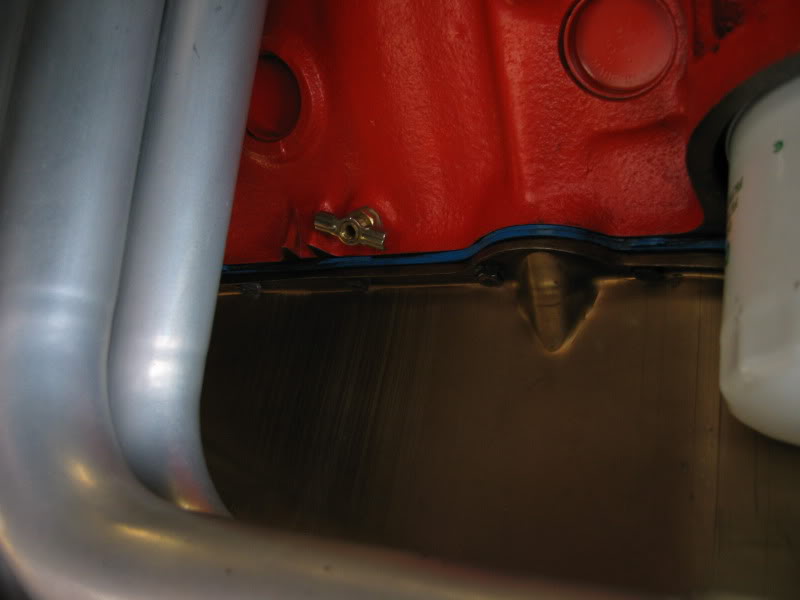
A good coolant flush is almost the first thing I always do with an engine and these pics, although a worse case, shows why. The residue is still coming out after hours of flushing thru the block plugs.


BTW, when done this engine ran at a steady tstat temp, in S Florida, with no radiator foam pieces, oem brass radiator a stock fan, even idling in traffic when 95 outside.





Drifting
Joined: Aug 2004
Posts: 1,883
Likes: 124
From: Lubbock TX
I've never messed with 'em. Too much chance of stripping something, ending up with a leak that wasn't there to start with, etc. When I flush the system, I open the bottom radiator plug with the engine up to operating temp and fill the radiator as it drains out. This takes some time since the t-stat closes when cooler water hits it, but 3 or 4 cycles generally does the trick. As long as it's circulating thru the block, you'll get all the old crap out. After everything runs clear at operating temp, stop filling and leave the drain open until nothing comes out.
Where I live, we don't have to worry about ever getting below a few degrees below zero and that's actually very extreme. I run mine full of straight A/F. My blocks are always clean and rust-free when I tear 'em down. Straight A/F freezes at a higher temp than the mix, but I'm not in an area that it would make any difference.
Where I live, we don't have to worry about ever getting below a few degrees below zero and that's actually very extreme. I run mine full of straight A/F. My blocks are always clean and rust-free when I tear 'em down. Straight A/F freezes at a higher temp than the mix, but I'm not in an area that it would make any difference.

Race Director


Joined: Feb 1999
Posts: 19,659
Likes: 34
From: Lenoir City Tennessee
Ci 6, 8 & 10 Veteran
St. Jude Donor '05-'06-'07-'08-'09-'10-'11-'12-'13-'14-'15
I like 7T2Vettes idea. That makes draining the block easier for sure. But if you look at the pics posted above, you can see there are sometimes some pretty big pieces that come out of these blocks sometimes. I would suggest when you get the plugs out, run water straight out of the hose through the block till it comes out clean and clear there too.
Pro


Joined: Jun 2009
Posts: 613
Likes: 3
From: Fleetwood PA
Agreed!!!!!....brass petcocks are the way to go! Those plugs can be a bear, but do the above mentioned steps and they should come out. Get a nice long helper bar over the handle of the ratchet and pull with a steady force.
Thread Starter
Burning Brakes
Joined: Oct 2009
Posts: 1,070
Likes: 57
"Getting the old coolant out is only part of the battle.
You have to get all the crud that settles in the lower cavities and if it has never been cleaned properly before, there will be a lot."
Once the plugs are out, how to you recommend flushing & getting all the crud out?
Thanks
You have to get all the crud that settles in the lower cavities and if it has never been cleaned properly before, there will be a lot."
Once the plugs are out, how to you recommend flushing & getting all the crud out?
Thanks
Drifting
Joined: Apr 2006
Posts: 1,911
Likes: 2
From: gold coast queensland
"Getting the old coolant out is only part of the battle.
You have to get all the crud that settles in the lower cavities and if it has never been cleaned properly before, there will be a lot."
Once the plugs are out, how to you recommend flushing & getting all the crud out?
Thanks
You have to get all the crud that settles in the lower cavities and if it has never been cleaned properly before, there will be a lot."
Once the plugs are out, how to you recommend flushing & getting all the crud out?
Thanks
Race Director
Joined: Mar 2006
Posts: 14,112
Likes: 28
From: Florida
"Getting the old coolant out is only part of the battle.
You have to get all the crud that settles in the lower cavities and if it has never been cleaned properly before, there will be a lot."
Once the plugs are out, how to you recommend flushing & getting all the crud out?
Thanks
You have to get all the crud that settles in the lower cavities and if it has never been cleaned properly before, there will be a lot."
Once the plugs are out, how to you recommend flushing & getting all the crud out?
Thanks
Try using the flushes and procedures available as a first step.
For serious flushing I remove the heater hose adapter from the intake manifold, replace with a brass 1/2"npt x 1/2"npt male hex nipple (http://www.hydrasun.com/catalogue/page.aspx?i=164)
If you can't get it at a local hardware, plumbing supply, try a hydraulic supply. Hex makes it easy for a wrench.
Then a 1/2" female npt ball valve (so you don't run to the shutoff valve 100 times), then a 1/2"npt male x female garden hose adapter (http://cgi.ebay.com/ws/eBayISAPI.dll...<br /> Remove both radiator hoses from radiator.
Use the hose full blast until it comes out the top radiator hose, then let drain completely. The surging under pressure from empty with the block holes open will help moving the crud to the holes.
Keep doing this till no more comes out. On one engine it took almost all day.
NEVER run cold water into a hot engine.
I've never messed with 'em. Too much chance of stripping something, ending up with a leak that wasn't there to start with, etc. When I flush the system, I open the bottom radiator plug with the engine up to operating temp and fill the radiator as it drains out. This takes some time since the t-stat closes when cooler water hits it, but 3 or 4 cycles generally does the trick. As long as it's circulating thru the block, you'll get all the old crap out. After everything runs clear at operating temp, stop filling and leave the drain open until nothing comes out.
Where I live, we don't have to worry about ever getting below a few degrees below zero and that's actually very extreme. I run mine full of straight A/F. My blocks are always clean and rust-free when I tear 'em down. Straight A/F freezes at a higher temp than the mix, but I'm not in an area that it would make any difference.
Where I live, we don't have to worry about ever getting below a few degrees below zero and that's actually very extreme. I run mine full of straight A/F. My blocks are always clean and rust-free when I tear 'em down. Straight A/F freezes at a higher temp than the mix, but I'm not in an area that it would make any difference.