






10:1 compression ratio

Thread Starter
Racer

Joined: Jul 2010
Posts: 261
Likes: 0
From: Manahawkin NJ
 10:1 compression ratio
Anyone running 10:1 now? I went to order my my new heads and was told it would be better to run 9.5:1 cr rather then 10:1. The reasoning being that on pump gas I would have to pull out so much timing that it would negate any advantages from the higher C R.
I have a stock converter and 3.55 gears so I am using a cam with 212 duration @ .50. The short duration means more static compression.
Anyone have 10:1, what cam are you running and do you have any problems.
Thanks
Tom
I have a stock converter and 3.55 gears so I am using a cam with 212 duration @ .50. The short duration means more static compression.
Anyone have 10:1, what cam are you running and do you have any problems.
Thanks
Tom

Melting Slicks

Joined: Jul 2010
Posts: 2,503
Likes: 33
From: McGrady NC
St. Jude Donor '15-'16
In my '80, I'm running a .40 over 4 bolt 350 with '76 L-82 heads (big valves and large chambers), an Edelbrock Performer and the factory Rochester with modifications, a cam similar to yours (465 lift, 212/214 duration, I forget the overlap) and Hooker long tube headers. With the popup pistons I have 10.5 to 1 compression ratio. I run 12 degrees initial timing with 34 degrees total. It requires premium gas but it runs great. 800 RPM idle and stock torque converter with factory rear gearing. It pulls like a son of a gun and gets surprisingly good gas mileage.

Melting Slicks


Joined: Oct 2006
Posts: 2,417
Likes: 336
From: Texas
355 4 bolt main,9.8:1 CR here, .030 over KB flat tops 4vr, block decked .010", dart 180 iron eagles 64cc chambers.
cam 224/230 @ .050. hydraulic roller. msd hei, timing, intial 16, mech. total 36, vacuum adv. total 52. 92 octane only. no problems, had to install a mini gear reduction starter ( 98 chev. pickup starter ). due to compression when hot. 3:55 gears, bm 2000 stall converter.
jet perf. quadrajet stage2, idles at 900, runs excellent so far. tried to keep it looking as stock as possible. kinda.
http://www.summitracing.com/parts/HRS-110245-12/

cam 224/230 @ .050. hydraulic roller. msd hei, timing, intial 16, mech. total 36, vacuum adv. total 52. 92 octane only. no problems, had to install a mini gear reduction starter ( 98 chev. pickup starter ). due to compression when hot. 3:55 gears, bm 2000 stall converter.
jet perf. quadrajet stage2, idles at 900, runs excellent so far. tried to keep it looking as stock as possible. kinda.
http://www.summitracing.com/parts/HRS-110245-12/
Last edited by speedreed8; Dec 9, 2010 at 09:27 PM.

Pro


Joined: Nov 2010
Posts: 602
Likes: 32
From: Old Bridge, NJ
Tom, You'll be OK with 10:1 and I don't expect you'll have to retard that much if at all compared to 9.5:1). Just run 93 (available many places here in NJ). Also, if the heads are aluminum, you can get away with a slightly higher compression than over iron because the heat dissipates through aluminum faster than iron (not as much heat build up).

Race Director


Joined: May 2003
Posts: 10,956
Likes: 409
From: California
I'm running 10.5:1 on an Edelbrock sig series retro roller. with 1.52 mag RR
Duration at 0.006" Lift: Intake: 305° Exhaust: 314°
Duration at 0.050" Lift: Intake: 242° Exhaust: 240°
Lift at Cam: Intake: 0.396" Exhaust: 0.396"
Lift at Valve: Intake: 0..602" Exhaust: 0.602"
no ping unless its like 100+ outside and no CAI... with a CAI, seems to be about 105+ now before ping, and that would be under heavy load and slightly lugging her... iron heads....but do have to run 91
Duration at 0.006" Lift: Intake: 305° Exhaust: 314°
Duration at 0.050" Lift: Intake: 242° Exhaust: 240°
Lift at Cam: Intake: 0.396" Exhaust: 0.396"
Lift at Valve: Intake: 0..602" Exhaust: 0.602"
no ping unless its like 100+ outside and no CAI... with a CAI, seems to be about 105+ now before ping, and that would be under heavy load and slightly lugging her... iron heads....but do have to run 91
Corvette Stories
The Best of Corvette for Corvette Enthusiasts

Every 2027 Corvette Engine Explained
Joe Kucinski
Designer Imagines A Corvette That Looks More Like a Corvette Than the Corvette
Verdad Gallardo
10 Ugly Corvettes That We Still Kinda Love
Joe Kucinski
Top 10 Most Expensive Corvettes Ever Sold on Bring A Trailer
Brett Foote
10 Things Every Corvette Owner Needs (2026 Edition)
Michael S. Palmer
8 Most "Only Corvette Owners Understand" Quirks and Problems
Pouria Savadkouei
10 Reasons the C6 Z06 is Still A Performance Benchmark After 20 Years
Joe Kucinski
How Much Horsepower Every Corvette Engine "LOST" in 1972
Joe Kucinski
Top 10 DOs and DON'Ts for Protecting Your Convertible Top!
Michael S. Palmer
Melting Slicks
Joined: Mar 2008
Posts: 2,666
Likes: 289
From: Spring Park MN
In my 64 Impala SS I have a 355 with 10 to 1 and 462 double hump iron heads with 214 intake duration. It does not ping on premium unless it's over 90 degrees out. That's with an old style iron head chamber. As George said, newer efficient chambers will stand more compression, especially if you have the squish set tight and the heads are aluminum.
I run the engine in my signature on pump gas and it has less trouble (actually none) with detonation than my old 355 I just mentioned.
I run the engine in my signature on pump gas and it has less trouble (actually none) with detonation than my old 355 I just mentioned.
Thread Starter
Racer
Joined: Jul 2010
Posts: 261
Likes: 0
From: Manahawkin NJ
Thanks for all the input. The motor has flat top pistons now and I have a set of new/never fired, Pro Topline 64cc cast iron Vortec heads sitting on the shelf. The chambers and valves were coated with ceramic.
Would that be 10:1 or 9.8:1? Just a curiosity question, not that .2 would make a difference.
I think the shop just wanted to sell me new heads.
Tom
Would that be 10:1 or 9.8:1? Just a curiosity question, not that .2 would make a difference.
I think the shop just wanted to sell me new heads.
Tom

Race Director

Joined: Apr 2000
Posts: 17,676
Likes: 201
From: Who says "Nothing is impossible" ? I've been doing nothing for years.
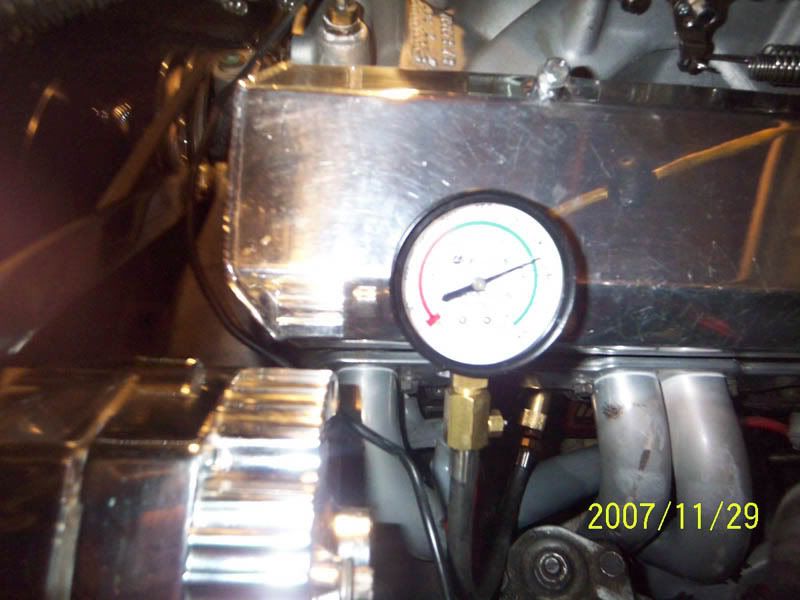
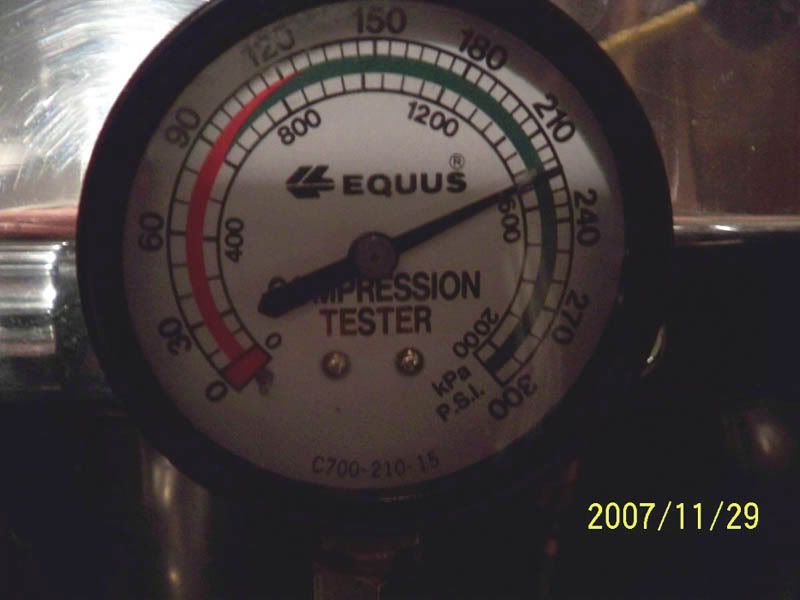
Mines 10.6:1 and it has 230psi cylinder pressure when I do a compression test and it runs fine on 91 octane gas. We do have 93 octane around here but I don't need it, unless I take it to the track to be safe. This is with 600+HP 427ci small block with aluminum AFR 227cc heads 

Race Director
Joined: Nov 2002
Posts: 12,142
Likes: 54
From: Taylor Michigan
427 1966 L72, and 350 1970 LT1.... 93 octane pump premium in any brand works just fine without any retuning or phony gas additives or boosters {snake oils} to accommodate 93.... 
I also have others that cannot use 93
I also have others that cannot use 93
Last edited by Ironcross; Dec 10, 2010 at 11:35 AM.
Pro
Joined: Nov 2010
Posts: 602
Likes: 32
From: Old Bridge, NJ
Thanks for all the input. The motor has flat top pistons now and I have a set of new/never fired, Pro Topline 64cc cast iron Vortec heads sitting on the shelf. The chambers and valves were coated with ceramic.
Would that be 10:1 or 9.8:1? Just a curiosity question, not that .2 would make a difference.
I think the shop just wanted to sell me new heads.
Tom
Would that be 10:1 or 9.8:1? Just a curiosity question, not that .2 would make a difference.
I think the shop just wanted to sell me new heads.
Tom
You can calculate the CR (static) by considering the stroke and volume of the chamber from one cylinder's point of view (VBDC - VTDC). Don't forget the conversion between cc and CI.
It's hard to tell what your final CR will be because it depends on the compressed gasket thickness. For example, for your setup, I calculate 9.5:1 using a 0.100" gasket and 10.6:1 using a 0.050" gasket.
Stick with the heads you have. They a lot of power due to improved flow over classic GM iron heads (under 5500rpm). I used those Vortec heads in a 383 that I built for my boat and it was about 10:1. Running a boat puts a harder load on a motor and will bring out the detonation a lot more than a car will.

Le Mans Master

Joined: Mar 2001
Posts: 6,240
Likes: 1,013
From: Watkinsville, GA and Glen Cove, NY
Tom, there is alot more to it but I think you should be OK. If it is a new build, set your quench as tight as possible as that helps. Keep you cooling system in nice shape. So many of the OEM were lower compression than stated simply because the piston was down .020 in the hole. Is your 10 to 1 measured or estimated? I built my 502 at 10 to 1 actual and it runs fine on 92/93. I haven't tried it on lower octane. My stock 62 340 horse car which is supposed to be 11 to 1 runs fine on 92/93 as well.
Burning Brakes

Joined: Oct 2008
Posts: 955
Likes: 50
From: Jersey Shore
Correct me if Im wrong here, but isnt cam choice a big factor in being able to determine a good pump gas compression ratio? More duration helps to bleed off some of the pressure when on the compression stroke. Dynamic compression ratio is what will help determine detonation.
For what its worth, the bottom end of my motor is an L46 (11.5:1 compression with 64cc heads). Now I run AFR 65cc heads, and the block is decked. I would have to assume I am still in the 11:1 compression ratio range, and I run on 93 pump gas with 35* total mechanical timing. No detonation here
For what its worth, the bottom end of my motor is an L46 (11.5:1 compression with 64cc heads). Now I run AFR 65cc heads, and the block is decked. I would have to assume I am still in the 11:1 compression ratio range, and I run on 93 pump gas with 35* total mechanical timing. No detonation here
Last edited by vette427-sbc; Dec 10, 2010 at 02:13 PM.
Race Director
Joined: Apr 2000
Posts: 17,676
Likes: 201
From: Who says "Nothing is impossible" ? I've been doing nothing for years.
The actual dynamic compression ratio is ultimately determines what gas you need to run, this takes into account the cam duration.
Generally with a street driven motor you can ballpark by using static compression ratio and whether or not you are getting any pinging using an particular grade of gas
Generally with a street driven motor you can ballpark by using static compression ratio and whether or not you are getting any pinging using an particular grade of gas
Race Director
Joined: May 2003
Posts: 10,956
Likes: 409
From: California
Race Director
Joined: Apr 2000
Posts: 17,676
Likes: 201
From: Who says "Nothing is impossible" ? I've been doing nothing for years.


Le Mans Master

Joined: Apr 2007
Posts: 7,353
Likes: 72
From: Graceland in a Not Correctly Restored Stingray
Since they've come up, to clarify dynamic compression ratios a bit, it's worth noting that "Actual DCR" = static CR x VE% (volumetric efficiency) at a given RPM, which isn't readily estimated without fairly elaborate software. DCR as is most commonly referred to here on the CF is calculated from the point in the stroke at which the intake valve closes, and is only a theoretical reference. That said, it's worth taking this theoretical DCR into account in the CR / cam selection (rule of thumb for performance pump gas builds seems to be from ~8:1 to no more than ~8.5:1), but IMCO with larger cams one ought to consider leaving some margin. Yes, alum heads typically afford a little more CR. With this in mind, here's a good primer on theoretical DCR, including a handy calculator which you can download...
http://www.empirenet.com/pkelley2/DynamicCR.html
Hope that helps.
TSW
http://www.empirenet.com/pkelley2/DynamicCR.html
Hope that helps.
TSW
Last edited by TheSkunkWorks; Dec 10, 2010 at 09:18 PM.