




Dumb autoX question
Thread Starter
Drifting


Joined: Jun 2008
Posts: 1,495
Likes: 134
From: Blanco County, TX

jbl,
I've got the Speeddirect spreader bar. Haven't autoXed on it yet. The added stiffness in front is noticeable on the street.
I've got poly bushings in the front end link. They are adjustable. They are pretty snug right now, but will take up anything left at the track. I've heard that the poly bushings are good but don't last that long. True or untrue?
Can I put 255's on an 8" rim? 4.5" backspace? Who makes ZR's? Sorry, I should know this.
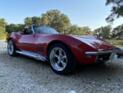
Here is a not-so good picture of my ride height.

I only have about 1 more inch of lowering before I won't be able to get over the hump in my driveway. I can probably gain 1/4" more on the rear sping bolts. They are threaded up tight right now.
Shark bar source? Will it work with a convertible. I definitely need some help holding me in the seat. My lap belts and stock seats aren't cutting it.
Birdman,
No worries on the threadjack. We're all hear to learn and help.
Kevin
I've got the Speeddirect spreader bar. Haven't autoXed on it yet. The added stiffness in front is noticeable on the street.
I've got poly bushings in the front end link. They are adjustable. They are pretty snug right now, but will take up anything left at the track. I've heard that the poly bushings are good but don't last that long. True or untrue?
Can I put 255's on an 8" rim? 4.5" backspace? Who makes ZR's? Sorry, I should know this.
Here is a not-so good picture of my ride height.
I only have about 1 more inch of lowering before I won't be able to get over the hump in my driveway. I can probably gain 1/4" more on the rear sping bolts. They are threaded up tight right now.
Shark bar source? Will it work with a convertible. I definitely need some help holding me in the seat. My lap belts and stock seats aren't cutting it.
Birdman,
No worries on the threadjack. We're all hear to learn and help.
Kevin
Last edited by Kevin68; May 1, 2011 at 10:48 AM.

Team Owner


Joined: Apr 1999
Posts: 21,953
Likes: 1,445
From: Reno Nevada
2024 C3 of the Year Finalist- Modified
Uh-oh more questions:
1. Can I use my infrared temp guage, or is there something better?
2. You seem to disagree with 69autoXr on the rear weight thing. I typically get 7 runs in a day, so it might take a couple of days to sort this out. I'll be out of gas by the end of the day with an 1/8 of a tank!
3. The alignment guy, experienced with C3's, said he maxed out the castor at +2.75. Can't remember what the reason why was, but I asked for +4 based on VBP's spec sheet, which I compromised between sport and AutoX.
4. I realize the limits of my tires. I'll address that later. I'm still inexperienced and not really looking to build a race car.
Thanks,
Kevin
1. Can I use my infrared temp guage, or is there something better?
2. You seem to disagree with 69autoXr on the rear weight thing. I typically get 7 runs in a day, so it might take a couple of days to sort this out. I'll be out of gas by the end of the day with an 1/8 of a tank!
3. The alignment guy, experienced with C3's, said he maxed out the castor at +2.75. Can't remember what the reason why was, but I asked for +4 based on VBP's spec sheet, which I compromised between sport and AutoX.
4. I realize the limits of my tires. I'll address that later. I'm still inexperienced and not really looking to build a race car.
Thanks,
Kevin
2. then use a 1/4 tank A-X tracks are under a mile around. If under the most extreme conditions you only get 3.5 mpg even with idling time before the rounds. 7 runs would only burn two gallons of gas. Weight is hard to start moving and to stop moving. If a car has so much power that it can spin the rear tires. additional weight is a poor option to fix the problem. weight x-fer during exceleration by using a lighter rear spring weight would be a better idea or less shock compression ratio and more rebound to hold the rear end down. Never at the shop or at the race tracks have I seen somebody ADD weight for traction.
3. The alingment guy is a moron that just wanted to do it the easiest quick way. I've had just under 4.0 castor for more than 20 years
4. The stickier the tire the more camber might be required because of bending forces. The tire choice is the biggest deciding item. It doesn't matter what settings or suspension you have if the tires have little traction.
As to poly my front poly sway bar bushings are about 20 years old. I replaced all my 20 year old poly a-arm bushings this last spring.

Le Mans Master


Joined: Apr 2007
Posts: 7,353
Likes: 72
From: Graceland in a Not Correctly Restored Stingray
 Guys, whether or not and if so how much a car (any car) needs rear bar isn't a simple matter of opinion, rather one of basic vehicle dynamics; too much anti-roll stiffness at one end in relation to the other is going to unbalance the car in question. Assuming one's F/R weight ratio and/or tires aren't or can't be readily and significantly changed, the prime suspect for oversteer (not talking power oversteer) will be too much rear anti-roll stiffness vs too little front. Anyway, there likely being as many opinions on this as there are driver preferences, IMCO it would be wise to avoid getting hung up on such while trying to sort out the chassis under one's own backside.
Last edited by TheSkunkWorks; May 1, 2011 at 07:15 PM.

Le Mans Master
Joined: Oct 2007
Posts: 7,445
Likes: 971
From: Tennessee/Rhode Island
Kevin,
Answering your questions above, poly bushings will last MUCH longer than rubber bushings on the sway bar-I have had mine for 28 years now!
The shark bar is great for convertibles and will keep you safer:
http://vetteworksonline.com/
My ZR tires are on SLP 17 inch rims that fit the C3 perfectly with no offsets, spacers etc.
I ran 255/60/15 BFG TA's on the OEM aluminum rims for years-Any 255/60/15 tires out there pretty much are terrible for anything but cruising!
Answering your questions above, poly bushings will last MUCH longer than rubber bushings on the sway bar-I have had mine for 28 years now!
The shark bar is great for convertibles and will keep you safer:
http://vetteworksonline.com/
My ZR tires are on SLP 17 inch rims that fit the C3 perfectly with no offsets, spacers etc.
I ran 255/60/15 BFG TA's on the OEM aluminum rims for years-Any 255/60/15 tires out there pretty much are terrible for anything but cruising!

Le Mans Master
Joined: Dec 2003
Posts: 5,727
Likes: 38
From: Fremont CA
1/8" of toe-in at the rear will make the car flighty and unpredictable, I would go with 3/16 to 1/4" of rear toe-in to help prevent toe-out on application of power out of corners. If you have turn entry oversteer, I would stiffen your front springs, a 360lb rear spring is pretty stiff, I would have run a lighter rear spring on a small block car. I haven't had a lot of good luck with fiberglass rear springs, I run a F-41 (7 leaf) with the Guldstrand main bottom leaf substituted for the OEM F-41. I stopped running rear roll bars on IRS Vettes a long time ago, they take away the "feel" of what the rear suspension is actually doing. On a street car a rear roll bar will work OK as you shouldn't ever be approaching the "envelope" of ultimate traction but on the Auto-X course you should be finding that edge and the more feedback you have the eassier it is to drive to the edge. Eaton Spring in Michigan could help you out with a new rear spring if you want to go to a steel one, there are many offered but quality is all over the place on the ones offered from most vendors. Do a search for autocross in this forum there should be plenty of set-up threads already.
Le Mans Master
Joined: Apr 2007
Posts: 7,353
Likes: 72
From: Graceland in a Not Correctly Restored Stingray
1/8" of toe-in at the rear will make the car flighty and unpredictable, I would go with 3/16 to 1/4" of rear toe-in to help prevent toe-out on application of power out of corners. If you have turn entry oversteer, I would stiffen your front springs, a 360lb rear spring is pretty stiff, I would have run a lighter rear spring on a small block car. I haven't had a lot of good luck with fiberglass rear springs, I run a F-41 (7 leaf) with the Guldstrand main bottom leaf substituted for the OEM F-41. I stopped running rear roll bars on IRS Vettes a long time ago, they take away the "feel" of what the rear suspension is actually doing. On a street car a rear roll bar will work OK as you shouldn't ever be approaching the "envelope" of ultimate traction but on the Auto-X course you should be finding that edge and the more feedback you have the eassier it is to drive to the edge...


Safety Car


Joined: Nov 2008
Posts: 3,717
Likes: 551
From: Seattle Washington
A lot of good Suspention info above but nobody has mentioned the Rear end Gears. With that much Gear Reduction I would exspect a lot of Oversteer excelerating out the Corner. Are You shifting from 2-3rd in between Corners? I have found that my 3.72with a TKO is a bit to low and I'm going to a 3.55 or 3.36 so that I can have less wheel spin, oversteer and no shifting from one corner to another. Oh, a lot of people think that a Rear Sway Bar ment it was a Big Block Car but thats been proven not to be. If the 1/2 shafts have Steel Caps holding the U-joints and not straps thats a good sign thow.

Melting Slicks


Joined: Jan 2004
Posts: 3,247
Likes: 210
From: Detroit MI
I don't think we're necessarily disagreeing, just trying to accomplish the same goal by different methods. He said "I've tried to get 60 rear and 40% front" weight distribution. In both cases he and I are trying to improve the front to rear weight distribution. In my case I'm limited by my class and my budget as far as how much weight I can remove from the front end; if you can't take weight off the front to get better rear weight %, how else can you do it? Gkull also has a big chunk of glass directly over the rear axle, and mufflers in back, and I have neither. I noticed a loss of power-on traction when I switched to side pipes from under car exhaust with mufflers in the back. Again, it's more about weight distribution than just pure weight.
Corvette Stories
The Best of Corvette for Corvette Enthusiasts

Top 10 Most Explosive Corvettes Ever Made: Power-to-Weight Ratio Ranked!
Joe Kucinski
150 hp to 1,250 hp: Every Corvette Generation Compared by the Specs That Matter
Joe Kucinski
8 Coolest Corvette Pace Cars (and Replicas) of All Time
Verdad Gallardo
Top 10 Corvette Engines RANKED by Peak Torque (70+ Years of Muscle!)
Joe Kucinski
Corvette ZR1X Will Be Pacing the Indy 500, And Could Probably Race, Too!
Verdad Gallardo
Top 10 Corvettes Coming to Mecum Indy 2026!
Brett Foote
Top 10 C9 Corvette MUST-HAVES to Fix These C8 Generation Flaws!
Michael S. Palmer
10 Revolutionary 'Corvette Firsts' Most People Don't Know
Joe Kucinski
5 Reasons to Upgrade to an LS6-Powered Corvette; 5 Reasons to Stay LT2
Michael S. Palmer
Thread Starter
Drifting
Joined: Jun 2008
Posts: 1,495
Likes: 134
From: Blanco County, TX
Guys,
I am very appreciative of all the tips. Keep in mind that I'm just learning autoX.
To the handling questions...I can induce oversteer into or out of a corner. To prevent OS into the corner, I am braking harder and straighter on my approach, and getting off the brake as I start the turn. I can easily oversteer out of the turn, but I can also control that with how hard I accelerate. I could drift if I wanted to (I have, but not on purpose), but I would think I want to keep from spinning the wheels out of a turn.
Gale,
I can run the whole course in 2nd. My club is dominated by Miatas, S2000s and Subarus, so there are lots of turns and very short straight aways, maybe 150'-200'. Redline in 2nd is about 55 mph. I don't think I'm quite getting there, but to be honest, I'm not really looking at the tach or speedo, I guess I do it by ear.
No straps on the u-joints, caps. I'm pretty certain it had a previous life as a big block. I'm over it now.
Solid LT1,
Not that I have a good comparison, but the car has very little nose dive on braking, and very little roll on cornering. It is much less than my wife's new BMW 3 series, though. Maybe this is limited by my lack of traction. I'm pretty light up front, Aluminum rad, heads, and intake, no AC or power brakes, and headers.
I believe what you are saying about the rear toe setting...I'm not sure I completely understand it, but I believe you. I need to stare at linkage some more to visualize that. I need to do more study so I can really understand all the geometry.
69autoXr,
Got it. I think I'll take it to a scale and figure out what I've got.
Thanks, Good points, all of them.
Kevin
I am very appreciative of all the tips. Keep in mind that I'm just learning autoX.
To the handling questions...I can induce oversteer into or out of a corner.
To prevent OS into the corner, I am braking harder and straighter on my approach, and getting off the brake as I start the turn. I can easily oversteer out of the turn, but I can also control that with how hard I accelerate. I could drift if I wanted to (I have, but not on purpose), but I would think I want to keep from spinning the wheels out of a turn.Gale,
I can run the whole course in 2nd. My club is dominated by Miatas, S2000s and Subarus, so there are lots of turns and very short straight aways, maybe 150'-200'. Redline in 2nd is about 55 mph. I don't think I'm quite getting there, but to be honest, I'm not really looking at the tach or speedo, I guess I do it by ear.
No straps on the u-joints, caps. I'm pretty certain it had a previous life as a big block. I'm over it now.
Solid LT1,
Not that I have a good comparison, but the car has very little nose dive on braking, and very little roll on cornering. It is much less than my wife's new BMW 3 series, though. Maybe this is limited by my lack of traction. I'm pretty light up front, Aluminum rad, heads, and intake, no AC or power brakes, and headers.
I believe what you are saying about the rear toe setting...I'm not sure I completely understand it, but I believe you. I need to stare at linkage some more to visualize that. I need to do more study so I can really understand all the geometry.
69autoXr,
Got it. I think I'll take it to a scale and figure out what I've got.
Thanks, Good points, all of them.
Kevin
Last edited by Kevin68; May 2, 2011 at 12:05 PM.

Burning Brakes


Joined: Oct 2003
Posts: 1,090
Likes: 74
From: New Carlisle IN
Here is my setup for my 73:
Front: 550lb springs
1-1/8" sway bar
Poly bushings
KYB gas adjust shocks
Rear:420+ lb VBP Fiberglass spring
9/16" (? not sure right now) sway bar
KYB gas adjust shocks
VBP adjustable strut rods
Stock 3.36 gears (I want to get a set of 3.55)
Wheels: 16" C4 style wheels using 3" VBP adapters.
Tires: Kumho V700 265/45/16.
My 76 is set up almost identical except a 360lb spring in rear, 3.08 gears, and heim joints on the ends of the strut rods.
The 73 is very neutral and seldomly oversteers. I get more understeer than I do overstear. The 76 is prone to oversteer. I tried disconnecting the rear bar at Putnam Park last year after I spun out twice, but it made no difference (may have even added to the problem).
I believe alot of your problem are related to tires and those rear gears. Even getting a better set of street tires will help out a lot. But, in order to do so, you will need to step up to 16 or 17" wheels. The rear gear is way to much. I would change to at least 3.73s if not even 3.55s.
The major thing you can do right now, is more practice. Use the car you have now and learn how to drive it fast. Learn to ease into the power to keep the tires from spinning out of a corner. Then as you get better make some changes and see how they work for you. It takes alot of seat time to get good at driving and learning how to set up a car.
Front: 550lb springs
1-1/8" sway bar
Poly bushings
KYB gas adjust shocks
Rear:420+ lb VBP Fiberglass spring
9/16" (? not sure right now) sway bar
KYB gas adjust shocks
VBP adjustable strut rods
Stock 3.36 gears (I want to get a set of 3.55)
Wheels: 16" C4 style wheels using 3" VBP adapters.
Tires: Kumho V700 265/45/16.
My 76 is set up almost identical except a 360lb spring in rear, 3.08 gears, and heim joints on the ends of the strut rods.
The 73 is very neutral and seldomly oversteers. I get more understeer than I do overstear. The 76 is prone to oversteer. I tried disconnecting the rear bar at Putnam Park last year after I spun out twice, but it made no difference (may have even added to the problem).
I believe alot of your problem are related to tires and those rear gears. Even getting a better set of street tires will help out a lot. But, in order to do so, you will need to step up to 16 or 17" wheels. The rear gear is way to much. I would change to at least 3.73s if not even 3.55s.
The major thing you can do right now, is more practice. Use the car you have now and learn how to drive it fast. Learn to ease into the power to keep the tires from spinning out of a corner. Then as you get better make some changes and see how they work for you. It takes alot of seat time to get good at driving and learning how to set up a car.
Le Mans Master
Joined: Apr 2007
Posts: 7,353
Likes: 72
From: Graceland in a Not Correctly Restored Stingray
On the rear toe issue, there are a couple of bug-a-boos at work. First, the C2/C3 rear suspension geometry has inherent toe steer during travel into bump and droop which is tied directly to where along each half-shaft's arc. Whenever bump (or squat) moves a half-shaft into a relationship with the chassis where the outer end is further up than the inner end, that arc moves the hub end of the TA inward while the bushing end is theoretically a fixed point; thus resulting in toe steer moving in the direction of toe-out, if not into toe-out should compensatory static toe-in be insufficient.
Thing is, the above geometry isn't the only problem. Judging from under-chassis closeup video I've seen of the C2/C3 rear suspension under high cornering and acceleration loads, compliant rubber-bushed TA's aren't held very well to their theoretical fixed points; thus complicating the above considerably. While it may not be the best of solutions, sometimes additional static rear toe-in can be a helpful crutch.
Thing is, the above geometry isn't the only problem. Judging from under-chassis closeup video I've seen of the C2/C3 rear suspension under high cornering and acceleration loads, compliant rubber-bushed TA's aren't held very well to their theoretical fixed points; thus complicating the above considerably. While it may not be the best of solutions, sometimes additional static rear toe-in can be a helpful crutch.
Thread Starter
Drifting
Joined: Jun 2008
Posts: 1,495
Likes: 134
From: Blanco County, TX
On the rear toe issue, there are a couple of bug-a-boos at work. First, the C2/C3 rear suspension geometry has inherent toe steer during travel into bump and droop which is tied directly to where along each half-shaft's arc. Whenever bump (or squat) moves a half-shaft into a relationship with the chassis where the outer end is further up than the inner end, that arc moves the hub end of the TA inward while the bushing end is theoretically a fixed point; thus resulting in toe steer moving in the direction of toe-out, if not into toe-out should compensatory static toe-in be insufficient.
With this in mind, adding more rear roll by disconnecting the rear sway bar with this rear toe alignment might make things worse given the exponential increase in toe steer for each increment of roll. If I don't disconnect I give up the camber advantages of IRS. Will adjustable strut rods allow me to adjust the toe? or are they just for camber adjustments. I'm thinking camber only. It would be good if there was an easy way to add more TA shims.
Team Owner
Joined: Apr 1999
Posts: 21,953
Likes: 1,445
From: Reno Nevada
2024 C3 of the Year Finalist- Modified
I have installed the adjustable TA on historic racing Vettes. The best option is a 6 link rear assembly.
Le Mans Master
Joined: Apr 2007
Posts: 7,353
Likes: 72
From: Graceland in a Not Correctly Restored Stingray
Yep, the struts are only for camber. VBP's Smart Strut bracket facilitates camber gain adjustment. (I always recommend lowering the inner strut links 1/2" below C3 OEM height as a baseline setting, which is about the top of the SS "inclination" slots.)
Pretty much everything about setup is a compromise, and the goal here is arriving at the best one attainable for a given car/driver/road combination. While finding the right amount of roll control at either particular end is an item worth sweating over, front/rear balance is very much dependant upon the relationship between the amount of anit-roll stiffness at each end. Increasing bar increases weight transfer, which reduces the total amount of available grip at the end of the car in question. So, the grip you give up to reduce roll in the name of limiting toe steer (and perhaps avoid a little extra static toe-in) might prove to outweigh the grip you gain from doing so. Don't loose sight of the big picture.
Pretty much everything about setup is a compromise, and the goal here is arriving at the best one attainable for a given car/driver/road combination. While finding the right amount of roll control at either particular end is an item worth sweating over, front/rear balance is very much dependant upon the relationship between the amount of anit-roll stiffness at each end. Increasing bar increases weight transfer, which reduces the total amount of available grip at the end of the car in question. So, the grip you give up to reduce roll in the name of limiting toe steer (and perhaps avoid a little extra static toe-in) might prove to outweigh the grip you gain from doing so. Don't loose sight of the big picture.
Thread Starter
Drifting
Joined: Jun 2008
Posts: 1,495
Likes: 134
From: Blanco County, TX
I'm not sure I understand this:
So... increasing front bar thickness reduces front end roll. I get that. But reducing front end roll increases weight transfer from the front to rear? Or do you mean that reducing front end roll limits the amount of rear to front weight transfer that naturally occurs when cornering. It seems like when cornering there would always be some weight transfer to the front, and the front bar is supposed to help keep the weight in the back by limiting front end roll.
The rear bar then keeps the back end from rolling and limits the car's ability to take advantage of the camber changes I want from the IRS? And for gaining some camber advantage, I lose some toe advantage...trade-offs...
Sorry to be a pest and for dragging this thread on, but I really enjoy trying to understand this. Thanks for entertaining these novice questions.
Any books that you would recommend that might apply to C3s?
Kevin
The rear bar then keeps the back end from rolling and limits the car's ability to take advantage of the camber changes I want from the IRS? And for gaining some camber advantage, I lose some toe advantage...trade-offs...
Sorry to be a pest and for dragging this thread on, but I really enjoy trying to understand this. Thanks for entertaining these novice questions.
Any books that you would recommend that might apply to C3s?
Kevin

Drifting
Joined: Oct 2008
Posts: 1,936
Likes: 92
From: Rochester Hills Michigan
While finding the right amount of roll control at either particular end is an item worth sweating over, front/rear balance is very much dependant upon the relationship between the amount of anit-roll stiffness at each end. Increasing bar increases weight transfer, which reduces the total amount of available grip at the end of the car in question.
I'm not sure I understand this:
So... increasing front bar thickness reduces front end roll. I get that. But reducing front end roll increases weight transfer from the front to rear? Or do you mean that reducing front end roll limits the amount of rear to front weight transfer that naturally occurs when cornering. It seems like when cornering there would always be some weight transfer to the front, and the front bar is supposed to help keep the weight in the back by limiting front end roll.
The rear bar then keeps the back end from rolling and limits the car's ability to take advantage of the camber changes I want from the IRS? And for gaining some camber advantage, I lose some toe advantage...trade-offs...
Sorry to be a pest and for dragging this thread on, but I really enjoy trying to understand this. Thanks for entertaining these novice questions.
Any books that you would recommend that might apply to C3s?
Kevin
So... increasing front bar thickness reduces front end roll. I get that. But reducing front end roll increases weight transfer from the front to rear? Or do you mean that reducing front end roll limits the amount of rear to front weight transfer that naturally occurs when cornering. It seems like when cornering there would always be some weight transfer to the front, and the front bar is supposed to help keep the weight in the back by limiting front end roll.
The rear bar then keeps the back end from rolling and limits the car's ability to take advantage of the camber changes I want from the IRS? And for gaining some camber advantage, I lose some toe advantage...trade-offs...
Sorry to be a pest and for dragging this thread on, but I really enjoy trying to understand this. Thanks for entertaining these novice questions.
Any books that you would recommend that might apply to C3s?
Kevin
Skunk means weight transfer from inside to outside, not front to back.
A bigger bar increases the weight transfer from inside tire to outside tire, reducing the cornering capacity of that axle. Bigger bar in front will get you more understeer. (For you, no rear bar will get you more understeer.)
The limit of this technique is when you pick up an inside tire. You may have seen a front-wheel-drive pick up an inside rear tire. A bigger rear bar won't help much when that happens...

Instructor

Joined: Apr 2007
Posts: 184
Likes: 1
From: Atlas is shrugging KC, MO area
FWIW in my younger auto X days, I ran poly bushings, 1.125" front factory bar, 7/16" factory rear bar, 255-60 Bridgestones w/ little tread, wide ratio 4-spd, 3.55 rear, L-82, and truck relief valve in the power steering pump.
Another way to check your tire pressures w/o a temp. readout is to chalk the edge of the tread over on to a portion of the sidewall about every 120*. After the run, if the chalk is rubbed off some of the sidewall, then you need to increase that tire's pressure. If it's not rubbed off the outer edge of the tread, then you need to decrease that tire's pressure. IOW you want to keep all of the tread on the ground (or asphalt) while maximizing the sidewall stiffness. Is it as good as a temp. readout? Probably not but it will get you close. Also if there is an appreciable amount of time between runs, recheck the pressures. If I remember correctly, I usually ran 40-42 psi.
Another way to check your tire pressures w/o a temp. readout is to chalk the edge of the tread over on to a portion of the sidewall about every 120*. After the run, if the chalk is rubbed off some of the sidewall, then you need to increase that tire's pressure. If it's not rubbed off the outer edge of the tread, then you need to decrease that tire's pressure. IOW you want to keep all of the tread on the ground (or asphalt) while maximizing the sidewall stiffness. Is it as good as a temp. readout? Probably not but it will get you close. Also if there is an appreciable amount of time between runs, recheck the pressures. If I remember correctly, I usually ran 40-42 psi.

Race Director


Joined: May 2003
Posts: 10,956
Likes: 409
From: California
Below is my set-up,,,,, I have almost a perfect feel... with a very neutral slide... I had to go down 1 size in rear sway bar to get it,,, but she is flatter around the corners than my C5....
here is what i have:
Front:
550# springs cut 1/2 coil
Bilsten Sport shocks.
Rack & Pinion Steering
18X8" rims and tires
1 1/4" front sway bar
Poly everything
Spreader bar
Rear:
Had 7/8" sway bar... got over steer... went to a 3/4"... now neutral
Bilstin Sports
18X10" rims and tires
360 composite rear spring
poly everything
Poly-adjustable smart struts
here is what i have:
Front:
550# springs cut 1/2 coil
Bilsten Sport shocks.
Rack & Pinion Steering
18X8" rims and tires
1 1/4" front sway bar
Poly everything
Spreader bar
Rear:
Had 7/8" sway bar... got over steer... went to a 3/4"... now neutral
Bilstin Sports
18X10" rims and tires
360 composite rear spring
poly everything
Poly-adjustable smart struts
Le Mans Master
Joined: Apr 2007
Posts: 7,353
Likes: 72
From: Graceland in a Not Correctly Restored Stingray
Yes, mashinter has it right, but I'll elaborate a little more in case it might help...
Any change in the relationship front to rear of anti-roll stiffnes alters what's called the roll couple percentage, tho you don't have to know what it's called or how to go about calculating it to get sorted. Basically, increasing front bar and/or spring, or decreasing rear bar and/or spring will shift balance towards understeer; less front bar and/or spring, or more rear bar and/or spring will shift balance towards oversteer.
Bars are more readily changed, but it's worth noting that higher spring rates don't increase weight transfer nearly as much as do bigger bars. In other words, doing more anti-roll control with springs and less with bars doesn't carry as much penalty against overall grip. I'm among those who prescribe to using fairly high spring rates (550# front coils aren't high ones BTW) to minimize bar requirements. Even tho it's a bit of a compromise, the BBSS (Big Bar / Soft Spring) school of thought is particularly popular among those who still consider ride comfort somewhat of a priority. I bring this up because IMCO deciding or identifying where along the scale between enthusiast and hardcore one falls will go a long way towards helping choose the right path for them.
As for suggested reading, the Vehicle Dynamics section of an old Chevy Power book is full of good nuts & bolts theory, tho thin at first glance on explaination. John Greenwood's VIP atricles are full of C3 improvement suggestions, tho many of us might argue his overall view on poly is outdated (see link below). How to Make Your Car Handle by Fred Puhn is dated, but does a good job of covering the basics. Chassis Engineering by Herb Adams gets into some finer details and includes light discussion of the C3 rear suspension; tho I don't necessarily agree 100% with everything put forward in that title. If you really want to dig in to the subject as a whole, Tune to Win by Carroll Smith is a must. There are others, but those ought to keep your gray matter busy for a while. Some of the deeper setup/engineering titles in my "library" are real hair-pullers.
http://www.corvettefaq.com/c3/vip.pdf
Any change in the relationship front to rear of anti-roll stiffnes alters what's called the roll couple percentage, tho you don't have to know what it's called or how to go about calculating it to get sorted. Basically, increasing front bar and/or spring, or decreasing rear bar and/or spring will shift balance towards understeer; less front bar and/or spring, or more rear bar and/or spring will shift balance towards oversteer.
Bars are more readily changed, but it's worth noting that higher spring rates don't increase weight transfer nearly as much as do bigger bars. In other words, doing more anti-roll control with springs and less with bars doesn't carry as much penalty against overall grip. I'm among those who prescribe to using fairly high spring rates (550# front coils aren't high ones BTW) to minimize bar requirements. Even tho it's a bit of a compromise, the BBSS (Big Bar / Soft Spring) school of thought is particularly popular among those who still consider ride comfort somewhat of a priority. I bring this up because IMCO deciding or identifying where along the scale between enthusiast and hardcore one falls will go a long way towards helping choose the right path for them.
As for suggested reading, the Vehicle Dynamics section of an old Chevy Power book is full of good nuts & bolts theory, tho thin at first glance on explaination. John Greenwood's VIP atricles are full of C3 improvement suggestions, tho many of us might argue his overall view on poly is outdated (see link below). How to Make Your Car Handle by Fred Puhn is dated, but does a good job of covering the basics. Chassis Engineering by Herb Adams gets into some finer details and includes light discussion of the C3 rear suspension; tho I don't necessarily agree 100% with everything put forward in that title. If you really want to dig in to the subject as a whole, Tune to Win by Carroll Smith is a must. There are others, but those ought to keep your gray matter busy for a while. Some of the deeper setup/engineering titles in my "library" are real hair-pullers.
http://www.corvettefaq.com/c3/vip.pdf
Last edited by TheSkunkWorks; May 4, 2011 at 04:39 PM.
Le Mans Master
Joined: Oct 2007
Posts: 7,445
Likes: 971
From: Tennessee/Rhode Island
Pauldana,
My setup is very similar to yours with the exception that I don't have rack and pinion but a custom blue printed oem steering box on front but everything is similar except the front bar is the oem 1 1/8 bar with poly endlink and mounting bushings. In the rear again very similar with competition adjustable struts with heim joint ends and a 3/4 oem type bar on place of the Oem 7/16 bar. My car is VERY neutral at the limit! The car
Would understeer badly with no rear bar! Just purchased the shark bar for added reinforcement behind the seats!
My setup is very similar to yours with the exception that I don't have rack and pinion but a custom blue printed oem steering box on front but everything is similar except the front bar is the oem 1 1/8 bar with poly endlink and mounting bushings. In the rear again very similar with competition adjustable struts with heim joint ends and a 3/4 oem type bar on place of the Oem 7/16 bar. My car is VERY neutral at the limit! The car
Would understeer badly with no rear bar! Just purchased the shark bar for added reinforcement behind the seats!