




heat in 1978 vette

Thread Starter
Instructor


Joined: Jul 2008
Posts: 167
Likes: 0
 heat in 1978 vette
Hi... wierd thing happening.
The temperature controls do not work on my vette... and after long travels the heat rises in the vette... is there a way to stop this? The passenger side where the feet go is really hot... not sure if heating core is there... but can I just shut this off somehow?? I dont think its a heat shield issue.. but wondering if anyone had this issue.
Thanks
The temperature controls do not work on my vette... and after long travels the heat rises in the vette... is there a way to stop this? The passenger side where the feet go is really hot... not sure if heating core is there... but can I just shut this off somehow?? I dont think its a heat shield issue.. but wondering if anyone had this issue.
Thanks

Melting Slicks

Joined: Feb 2006
Posts: 3,428
Likes: 5
From: Japan
Chances are the reasons your Vette is hot inside are many...I will try to address a few. (1) Any places where wiring, vacuum hoses, etc. can pass through the firewall and transmission tunnel are suspect, check for any holes that you can plug with RTV or some other such sealant to block incoming hot air. (2) Stuck heater valve- a car as old as yours will likely have this problem. You can remove it and apply vacuum to it to see if it works properly but chances are even if it does function properly it's still gonna leak internally and pass hot water into the heater core. (3) Cowl seal leaking hot air. On the underside of your hood there is a rubber seal running across the back of it that prevents hot air from going out of the engine compartment and down into the cowl plenum area- if this is old and dried out it won't do what it's supposed to and all that hot air will leak into the cabin through the cowl vents. (4) Console heater control not functioning/leaking. The heater control itself has a valve which either sends or cuts off vacuum to the heater valve; if this malfunctions through wear or whatever it will allow vacuum to get to the heater valve when you don't want it to. (5) THIS IS THE BIGGIE...worn out/ dried out heater/AC box plenum seals. There is a door inside the heater/AC plenum box that is supposed to block hot air from getting through the box and into the passenger compartment. When the seals around this door are worn and dried out, the door doesn't block the heat as it should and heat leaks into the passenger compartment when you don't want it.
THE SIMPLEST THING you can do to kill the heat problem in your old C3 Vette is put a shutoff valve on your heater inlet hose and close it during the summer, or just bypass the heater core completely by jumping the two heater fittings with one piece of hose. Obviously the more difficult (and expensive) alternative would be to go through items 1-5 above, troubleshooting and correcting as needed. I myself have successfully rectified 1 thru 4 and my car's still a cooker in the summer, but that !@&*!!?! heater box ain't comin' apart unless the motor comes out again. As far as the parts to repair all this stuff, it's all readily available from all the major Corvette suppliers and most of it's not even very expensive- just a ton of labor. There are also lots of threads here about Dynamat and/or Reflectix heat/sound barriers which help but if you want to get at the root of the problem you've got to fix the above mentioned five things. Best Wishes!
THE SIMPLEST THING you can do to kill the heat problem in your old C3 Vette is put a shutoff valve on your heater inlet hose and close it during the summer, or just bypass the heater core completely by jumping the two heater fittings with one piece of hose. Obviously the more difficult (and expensive) alternative would be to go through items 1-5 above, troubleshooting and correcting as needed. I myself have successfully rectified 1 thru 4 and my car's still a cooker in the summer, but that !@&*!!?! heater box ain't comin' apart unless the motor comes out again. As far as the parts to repair all this stuff, it's all readily available from all the major Corvette suppliers and most of it's not even very expensive- just a ton of labor. There are also lots of threads here about Dynamat and/or Reflectix heat/sound barriers which help but if you want to get at the root of the problem you've got to fix the above mentioned five things. Best Wishes!

Race Director

Joined: May 2006
Posts: 16,528
Likes: 53
From: Dayton, Ohio
Try pinching off one of the heater hoses and see if that helps.
http://www.harborfreight.com/3-piece...set-97578.html
http://www.harborfreight.com/3-piece...set-97578.html
Le Mans Master


Joined: Sep 2002
Posts: 5,236
Likes: 898
From: Myrtle Beach SC
Hi... wierd thing happening.
The temperature controls do not work on my vette... and after long travels the heat rises in the vette... is there a way to stop this? The passenger side where the feet go is really hot... not sure if heating core is there... but can I just shut this off somehow?? I dont think its a heat shield issue.. but wondering if anyone had this issue.
The temperature controls do not work on my vette... and after long travels the heat rises in the vette... is there a way to stop this? The passenger side where the feet go is really hot... not sure if heating core is there... but can I just shut this off somehow?? I dont think its a heat shield issue.. but wondering if anyone had this issue.
Plenum doors are operated by small plastic vacuum lines so they are all interconnected. If they have leaks than it renders the entire system dysfunctional. That's why its a good idea to check everything once you get up under there to look at the heater box from the passenger side. Get a vacuum pump to help check vacuum operations...like your controls.
Also, a very good book on the topic of "cabin heat" in a C3 is a book by Michael Davis called "Air Conditioning Strategies for the 63-82 Corvette." Gets into why these years are so poor at keeping passengers comfortable with excessive heat from engine and poor A/C systems. Big window in 78 did not help.
I pretty much went thru all the strategies to ensure all the systems were working as intended on my 78 and than just added some insulation batting. Your problem sounds, though like you have heat escaping from the system into the cabin.
Race Director
Joined: May 2006
Posts: 16,528
Likes: 53
From: Dayton, Ohio
Since you said your controls don't work its very possible your heater has reverted to default ,which will send all hot air through the floor heater duct.
First thing I would check with this condition is the vacuum feed to the interior controls. The tiny T and tiny hose in this pic is what feeds vacuum to the controls. Its common for the T to break or the hose to fall apart.
This pic is from a 78.

First thing I would check with this condition is the vacuum feed to the interior controls. The tiny T and tiny hose in this pic is what feeds vacuum to the controls. Its common for the T to break or the hose to fall apart.
This pic is from a 78.

Racer
Joined: May 2011
Posts: 373
Likes: 6
From: Dover Delaware
All of the suggestions are worth a try with the exception of tearing into the dash etc. I've read other posts and myself have used coolant shutoff valves on both hoses going into the heater box and they seem to work very well. NAPA has them both and can be found online at their site and giving the part#'s to the counter folks.
mk's78 aka mike
mk's78 aka mike
Thread Starter
Instructor
Joined: Jul 2008
Posts: 167
Likes: 0
Thanks guys! Been reading the posts on similair threads... the shut off valve sounds like the trick. Would any do though... I believe I have the 3/4" hose... all I would need to do is cut it and slip the shut off valve in between the engine and heater core.
Racer
Joined: Feb 2007
Posts: 271
Likes: 25
From: Buena Vista Colorado
All of the suggestions are worth a try with the exception of tearing into the dash etc. I've read other posts and myself have used coolant shutoff valves on both hoses going into the heater box and they seem to work very well.
Turned out I had 2 problems with my stock system: (1) A badly miss-adjusted temperature control cable, and (2) a broken vacuum hose.
The temp control cable not only controls an air mixing flapper, it also actuates a "bypass valve vacuum switch" that cuts off or supplies vacuum to the "heater hose bypass valve" installed in the coolant supply line between the intake manifold and the heater core. The miss-adjusted temperature control cable was not depressing the plunger of the bypass valve vacuum switch; thus the heater hose bypass valve was always OPEN (the fail-safe position) and hot coolant was ALWAYS flowing through my heater core. So I had HOT footwells regardless of where my temperature control lever was set.
Also, the small white or yellowish vacuum hose from the bypass valve vacuum switch to the heater hose bypass valve was completely severed INSIDE the firewall grommet. That hose had turned very brittle over 30 years.
The temperature control cable moves a lever that depresses a plunger on the bypass valve vacuum switch. The position of that lever is adjusted through a turnbuckle in the cable. Remove your passenger seat and the center console side cover, and you'll see the turnbuckle (white plastic, about 1-1/2" or 2" long) in the temperature control cable. (The turnbuckle looks a lot like an in-line fuse holder.) You'll have to remove the glove box liner to see the bypass valve vacuum switch that is mounted on top of the heater box behind the glove box. The plunger on the bypass valve vacuum switch must be FULLY depressed (temp control lever fully COLD) in order to supply the vacuum to the heater hose bypass valve and thus stop the flow of coolant through the heater core.
Here's the best climate control vacuum system schematic I've found so far:

I hope all this helps.
Corvette Stories
The Best of Corvette for Corvette Enthusiasts

Top 10 Most Expensive Corvettes Ever Sold on Bring A Trailer
Brett Foote
10 Things Every Corvette Owner Needs (2026 Edition)
Michael S. Palmer
8 Most "Only Corvette Owners Understand" Quirks and Problems
Pouria Savadkouei
10 Reasons the C6 Z06 is Still A Performance Benchmark After 20 Years
Joe Kucinski
How Much Horsepower Every Corvette Engine "LOST" in 1972
Joe Kucinski
Top 10 DOs and DON'Ts for Protecting Your Convertible Top!
Michael S. Palmer
Top 10 Most Explosive Corvettes Ever Made: Power-to-Weight Ratio Ranked!
Joe Kucinski
150 hp to 1,250 hp: Every Corvette Generation Compared by the Specs That Matter
Joe Kucinski
8 Coolest Corvette Pace Cars (and Replicas) of All Time
Verdad Gallardo
Race Director

Joined: Sep 2002
Posts: 10,362
Likes: 5
From: San Diego - Deep Within The State of CONFUSION!
Inside heat is one of the most commonly visited subjects here in this form in warm months I think if you do a search you will find volumes of information
Thread Starter
Instructor
Joined: Jul 2008
Posts: 167
Likes: 0
Been looking on here.. found that NAPA may have the part... but the inlet valves the cashier is telling me will work is too small.
https://www.napaonline.com/Catalog/C...069219683&An=0
DOn't think this is right.
https://www.napaonline.com/Catalog/C...069219683&An=0
DOn't think this is right.
Thread Starter
Instructor
Joined: Jul 2008
Posts: 167
Likes: 0
Thanks been reading all of the MODs inspired by home depot runs. I am confused though... is it a 5/8", 1/2", or 3/4" ball valve I want? My hose looks to be something like 1/2" to 3/4"... I'd like to make the cut and put in the piece immediately to prevent coolant leaking out... but there are numerous accounts at what the nipples are on each side of the valve.
Thread Starter
Instructor
Joined: Jul 2008
Posts: 167
Likes: 0
Whats the benefit of putting in a manual shut off valve up on top from rather than fixing the heater control valve?


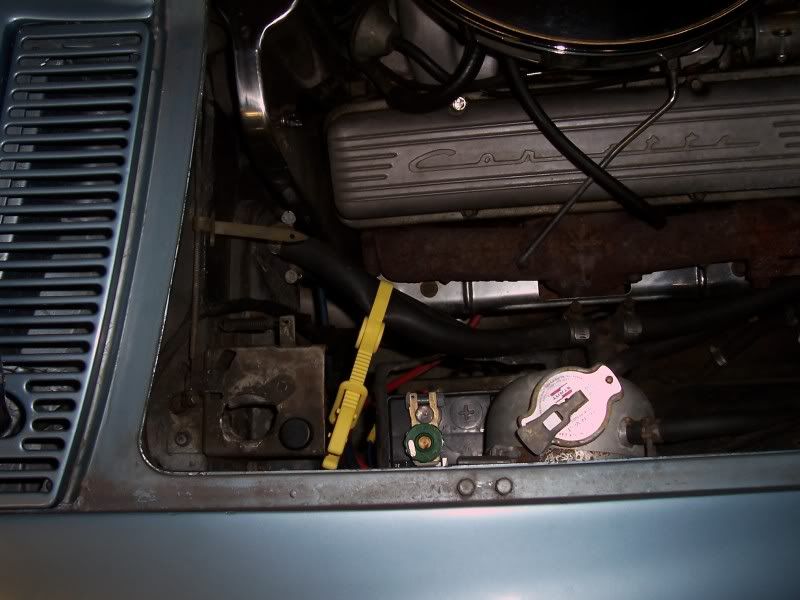
As you can see I think the hose is a 1/2"... I would need to get a fitting that fits this.
I get that the red circles is where I would cut the hose and put in a ball valve from home depot... something that could fit an 1/2" piece fitting, but what about the heater control valve that I assume is deeper in the vette... whats the purpose of that?
The heater control valve for a 1978 vette is hard to get to right? I mean its right up on the passenger side near the firewall.
As you can see I think the hose is a 1/2"... I would need to get a fitting that fits this.
I get that the red circles is where I would cut the hose and put in a ball valve from home depot... something that could fit an 1/2" piece fitting, but what about the heater control valve that I assume is deeper in the vette... whats the purpose of that?
The heater control valve for a 1978 vette is hard to get to right? I mean its right up on the passenger side near the firewall.
Thread Starter
Instructor
Joined: Jul 2008
Posts: 167
Likes: 0
smaller hose???
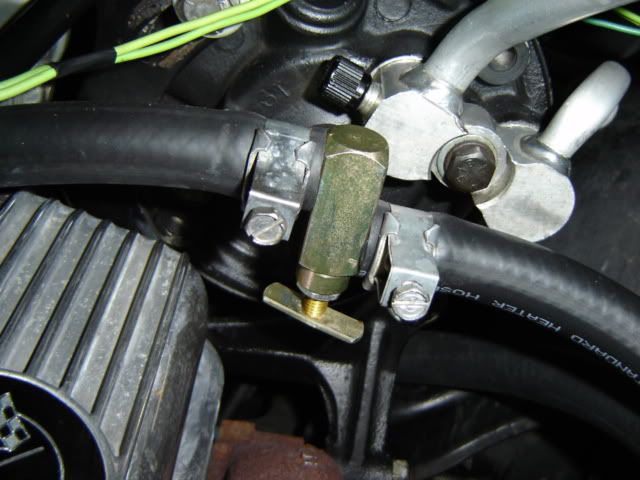
Agree with this except that only one shutoff valve is needed to stop coolant flow through the heater core. If you go this route, install the manual valve in the smaller hose. It is the heater core supply line, and coolant flows through it from the intake manifold to the heater core. That's what I did on my '78 with the exact same "heat in the footwells" problem described by the OP.



Race Director
Joined: May 2006
Posts: 16,528
Likes: 53
From: Dayton, Ohio
Race Director
Joined: May 2006
Posts: 16,528
Likes: 53
From: Dayton, Ohio
