



 Baby steps, slow and easy, it will come.
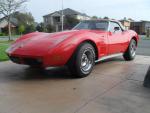


Installing nose on 1974 Stingray...

Thread Starter
Instructor

Joined: May 2011
Posts: 159
Likes: 0
From: Charleston South Carolina
 Installing nose on 1974 Stingray...
Hello all,
I am new to the forum but have been here a few times and taken advantage of all the knowledgeable posts and would like to thank everyone in advance for any responses.
I am trying to install a new truflex nose on my 1974 Stingray and was wondering if anyone had any pointers to make my life a little easier... the hardware seems to be really difficult to get in place. I did the rear bumper cover yesterday with relative ease...
Again, thanks for any help!
I am new to the forum but have been here a few times and taken advantage of all the knowledgeable posts and would like to thank everyone in advance for any responses.
I am trying to install a new truflex nose on my 1974 Stingray and was wondering if anyone had any pointers to make my life a little easier... the hardware seems to be really difficult to get in place. I did the rear bumper cover yesterday with relative ease...
Again, thanks for any help!
Safety Car


Joined: Aug 2001
Posts: 3,685
Likes: 202
From: Waterford Mi

Race Director


Joined: Aug 2007
Posts: 10,977
Likes: 19
From: Canboro Ontario

Navigator
Joined: Jun 2011
Posts: 9
Likes: 0
From: Cheshire Massachusetts
How did you make out on the front nose? I just got in both the front and rear covers yesterday. Did the rear end up being easier to install than the front? Did you install and fit and then remove and paint and then re-install?
Thread Starter
Instructor
Joined: May 2011
Posts: 159
Likes: 0
From: Charleston South Carolina
Hey there Mbadorini -
From the research I did I found that the majority of people who install the bumper covers have them painted after install while attached to the vette. Some of the shops I called also informed me that it's best to have them on the car.
The hardest part about installing these is getting them to line up. I ordered the stud posts with the flat backs - I'd reccomend those - they make the install a little bit easier.
Initially, I just drilled holes just large enough to fit the studs, and then bolted it on. I found that in some areas the bumper didn't line up with the body, so I took it off and drilled slots according to which way the bumper cover needed to move (i.e. if it needed to move towards the floor, I drilled a slot on the bumper cover upwards so that I could drop it to the desired height).
As the people who commented on this post advised me; I will advise you - take your time. You will almost surely get frustrated - it will definitly take a few attempts to get it on the best it can.
Mine turned out pretty good - there are a few places I am going to have the shop sand down before paint just so the lines flow "perfectly".
As for which is easier, I found the rear to be. In my case, some of the bolts holding on the nose bracket and grilles were rusted out, resulting in me having to use a grinder and a drill multiple times. The nose was more difficult I felt also because it was hard to get it centered perfectly and not have it move once the bolts were tightend. I am rather stubborn and did the job solo, but if you have a few spare hands to help hold in place, it will most likely make your life a little bit easier.
Hope that helps - best of luck to you!
From the research I did I found that the majority of people who install the bumper covers have them painted after install while attached to the vette. Some of the shops I called also informed me that it's best to have them on the car.
The hardest part about installing these is getting them to line up. I ordered the stud posts with the flat backs - I'd reccomend those - they make the install a little bit easier.
Initially, I just drilled holes just large enough to fit the studs, and then bolted it on. I found that in some areas the bumper didn't line up with the body, so I took it off and drilled slots according to which way the bumper cover needed to move (i.e. if it needed to move towards the floor, I drilled a slot on the bumper cover upwards so that I could drop it to the desired height).
As the people who commented on this post advised me; I will advise you - take your time. You will almost surely get frustrated - it will definitly take a few attempts to get it on the best it can.
Mine turned out pretty good - there are a few places I am going to have the shop sand down before paint just so the lines flow "perfectly".
As for which is easier, I found the rear to be. In my case, some of the bolts holding on the nose bracket and grilles were rusted out, resulting in me having to use a grinder and a drill multiple times. The nose was more difficult I felt also because it was hard to get it centered perfectly and not have it move once the bolts were tightend. I am rather stubborn and did the job solo, but if you have a few spare hands to help hold in place, it will most likely make your life a little bit easier.
Hope that helps - best of luck to you!
Corvette Stories
The Best of Corvette for Corvette Enthusiasts

Top 10 Most Expensive Corvettes Ever Sold on Bring A Trailer
Brett Foote
10 Things Every Corvette Owner Needs (2026 Edition)
Michael S. Palmer
8 Most "Only Corvette Owners Understand" Quirks and Problems
Pouria Savadkouei
10 Reasons the C6 Z06 is Still A Performance Benchmark After 20 Years
Joe Kucinski
How Much Horsepower Every Corvette Engine "LOST" in 1972
Joe Kucinski
Top 10 DOs and DON'Ts for Protecting Your Convertible Top!
Michael S. Palmer
Top 10 Most Explosive Corvettes Ever Made: Power-to-Weight Ratio Ranked!
Joe Kucinski
150 hp to 1,250 hp: Every Corvette Generation Compared by the Specs That Matter
Joe Kucinski
8 Coolest Corvette Pace Cars (and Replicas) of All Time
Verdad Gallardo
Racer
Joined: Jan 2007
Posts: 427
Likes: 1
Great suggestions above. I noted the cover position prior to removal. I prepped the fiberglass nose and applied high build primer. I then sanded the front cover and prepped with flexable high build primer. I then fitted the cover and marked with a pencil the interface.
Once outlined, I sanded and matched the front cover to the fiberglass nose. It took five trial and error fittings to be satisfied. I have accepted the two differences of the substates of fiberglass and urethane.
As a side line, this is an arena were one can 'loose' their mind. I have accepted that a cover will be wavey. I have spent many hours of trying to perfect something that was not perfect in the beginning. It is like tying to duplicate a museum artifact that was pretty damn good in the first place.
In summary, "let it ride on those things we cant control' I was pleased with the 'bolt-up' and accepted a wavy bumper cover. I will be painting both items seperate and then reassemble once dry.
Once outlined, I sanded and matched the front cover to the fiberglass nose. It took five trial and error fittings to be satisfied. I have accepted the two differences of the substates of fiberglass and urethane.
As a side line, this is an arena were one can 'loose' their mind. I have accepted that a cover will be wavey. I have spent many hours of trying to perfect something that was not perfect in the beginning. It is like tying to duplicate a museum artifact that was pretty damn good in the first place.
In summary, "let it ride on those things we cant control' I was pleased with the 'bolt-up' and accepted a wavy bumper cover. I will be painting both items seperate and then reassemble once dry.
