

trackday report

Le Mans Master


Joined: Dec 2003
Posts: 5,727
Likes: 39
From: Fremont CA

Aldo looking at your tire temp charts here is what I see:
Left front too Much negative camber, and low tire inflation, you should optimally see 127 outer 129 middle and 132 inner temps for a proper tire inflation then back the negative camber off 0.25 to 0.50 degree.
Right front looks GOOD! can't do any better than that!
Left rear too much negative camber and low inflation, should want to see 127 outer, 129 middle, 132 inner then work on camber setting, or add 2PSI (sorry no metrics here) and back camber off to about 1.5 degrees negative.
Right rear, the most unhappy tire, too much negative camber, set to 1.5 degrees negative, cannot really tell inflation pressure because 2 readings are near one another while inner tire is way warmer than other parts.
For setting camber in the rear remember, when the Vette suspension compresses, you will gain a slight amount of negative camber, you don't want to go too much negative at the back or you will loose grip as the tire cambers, the rears are doing 2 jobs, steering the car and accelerating out of the corner, sometimes you cannot get temperatures optimal. One other factor that can effect temperature readings is if you have a high speed or high effort corner to travel before leaving the track, this can effect your readings, this best solution is a 200FT diameter skid pad for testing.
Your oil pressure could be being effected by high temperatures but, I think you should consider mounting an ACCUSUMP oil accumulator to help with oil pressure on fast courses.
Here is a link to Canton Racing they also make very good oil pans, you should be running a 8-10quart oil pan for high speed track events if your on the throttle for more than a 20 second duration.
Link: http://www.accusump.com/
Looking at Cantons oil pan division, even this pan would be a big improvement on what you are running but, if you call them they will build a custom road race wet sump pan for you.
Link to oil pan: https://www.cantonracingproducts.com...ion&key=15-320
Left front too Much negative camber, and low tire inflation, you should optimally see 127 outer 129 middle and 132 inner temps for a proper tire inflation then back the negative camber off 0.25 to 0.50 degree.
Right front looks GOOD! can't do any better than that!
Left rear too much negative camber and low inflation, should want to see 127 outer, 129 middle, 132 inner then work on camber setting, or add 2PSI (sorry no metrics here) and back camber off to about 1.5 degrees negative.
Right rear, the most unhappy tire, too much negative camber, set to 1.5 degrees negative, cannot really tell inflation pressure because 2 readings are near one another while inner tire is way warmer than other parts.
For setting camber in the rear remember, when the Vette suspension compresses, you will gain a slight amount of negative camber, you don't want to go too much negative at the back or you will loose grip as the tire cambers, the rears are doing 2 jobs, steering the car and accelerating out of the corner, sometimes you cannot get temperatures optimal. One other factor that can effect temperature readings is if you have a high speed or high effort corner to travel before leaving the track, this can effect your readings, this best solution is a 200FT diameter skid pad for testing.
Your oil pressure could be being effected by high temperatures but, I think you should consider mounting an ACCUSUMP oil accumulator to help with oil pressure on fast courses.
Here is a link to Canton Racing they also make very good oil pans, you should be running a 8-10quart oil pan for high speed track events if your on the throttle for more than a 20 second duration.
Link: http://www.accusump.com/
Looking at Cantons oil pan division, even this pan would be a big improvement on what you are running but, if you call them they will build a custom road race wet sump pan for you.
Link to oil pan: https://www.cantonracingproducts.com...ion&key=15-320
Last edited by Solid LT1; Apr 2, 2012 at 12:13 AM.
Thread Starter
Burning Brakes

Joined: Sep 2008
Posts: 753
Likes: 0
Thanks everybody
if i haven't had those issues ( above all that rear right tire bad setting-i beat myself to haven't checked it before the track day) i could have kept well with all the other cars at the racetrack ( except certain "monsters" driven by pros) not only in the straights but also in most of the turns . I've been surprised by the good turns behaviour : i wasnt slower than other cars in the turns and if you watch the video you'll see that i didn't made corrections at the steering wheel.
Instead I've been surprised how faster than me the other cars were in the straights between the turns : i have to learn to use all the power i have without fear. My fear has been possible engine damage, not just using the power. 20 min with the engine always between 4000 and 6000 rpm is serious work.
on the main straight i felt the engine go out of breathe at about 6300 rpm in 4th gear : the reason is mainly my 2,5" exhausts and Car Chemistry silencers ( plus probably the dual plane intake, but much less influence i think. could it be also my electric fuel pump rated just at 72gph ? i have a mech pump at 110gph but still in its box. time to use it ?)
Next track day is in July ( quite hot , not good), then october ( possible rain)
I don't know if i'll be there considering the oil issues and other personal things.
unfortunately i have troubles with my mechanic ( his availability to make work on my car is difficult ) so i see no chance to stuff an Accusump or Canton road racing oil pan ( but this solution doesn't convince me anyway...from reports i have read it doesn't work that good ) or/and an oil cooler
More feasible for me would be possibly to install a SWING PICKUP on my oil pump , but i don't know where to get one and possible issues . any info about?
so my plan is :
-readjust all the camber-pressure settings and be sure that nothing loose or moving at the rear right wheel ( because i was sure i put the correct camber on that wheel and finding it with that huge unwanted neg camber after the laps is strange at least )
-i'll go out for a ride and check the oil pressure . I hope no oil pressure loss in normal conditions
-if oil pressure is same as usual ( no damage ) i'll go for this oil for track days only ( unless it's good too for general use, i use the car just once per month)
http://www.amsoil.com/storefront/zrf.aspx
I think that a thicker oil would work or at least it worths a try . by checking the hi resolution video i have ( sorry can't put it in HD on youtube, too heavy) it's evident that the oil pressure drops more and more and more easily lap after lap. So excessive oil thinning seems to be a good part of the problem.
adding another 1/2 qt would be not bad i think...
the other thing i can do on next track day is to make just 4 laps instead of 6 .
1 warm up , 1 "so and so" , then 1-2 laps pushing as hard as i can , without fear : engine and oil should keep well for just 2 laps.
Let's see
Aldo
if i haven't had those issues ( above all that rear right tire bad setting-i beat myself to haven't checked it before the track day) i could have kept well with all the other cars at the racetrack ( except certain "monsters" driven by pros) not only in the straights but also in most of the turns . I've been surprised by the good turns behaviour : i wasnt slower than other cars in the turns and if you watch the video you'll see that i didn't made corrections at the steering wheel.
Instead I've been surprised how faster than me the other cars were in the straights between the turns : i have to learn to use all the power i have without fear. My fear has been possible engine damage, not just using the power. 20 min with the engine always between 4000 and 6000 rpm is serious work.
on the main straight i felt the engine go out of breathe at about 6300 rpm in 4th gear : the reason is mainly my 2,5" exhausts and Car Chemistry silencers ( plus probably the dual plane intake, but much less influence i think. could it be also my electric fuel pump rated just at 72gph ? i have a mech pump at 110gph but still in its box. time to use it ?)
Next track day is in July ( quite hot , not good), then october ( possible rain)
I don't know if i'll be there considering the oil issues and other personal things.
unfortunately i have troubles with my mechanic ( his availability to make work on my car is difficult ) so i see no chance to stuff an Accusump or Canton road racing oil pan ( but this solution doesn't convince me anyway...from reports i have read it doesn't work that good ) or/and an oil cooler
More feasible for me would be possibly to install a SWING PICKUP on my oil pump , but i don't know where to get one and possible issues . any info about?
so my plan is :
-readjust all the camber-pressure settings and be sure that nothing loose or moving at the rear right wheel ( because i was sure i put the correct camber on that wheel and finding it with that huge unwanted neg camber after the laps is strange at least )
-i'll go out for a ride and check the oil pressure . I hope no oil pressure loss in normal conditions
-if oil pressure is same as usual ( no damage ) i'll go for this oil for track days only ( unless it's good too for general use, i use the car just once per month)
http://www.amsoil.com/storefront/zrf.aspx
I think that a thicker oil would work or at least it worths a try . by checking the hi resolution video i have ( sorry can't put it in HD on youtube, too heavy) it's evident that the oil pressure drops more and more and more easily lap after lap. So excessive oil thinning seems to be a good part of the problem.
adding another 1/2 qt would be not bad i think...
the other thing i can do on next track day is to make just 4 laps instead of 6 .
1 warm up , 1 "so and so" , then 1-2 laps pushing as hard as i can , without fear : engine and oil should keep well for just 2 laps.
Let's see
Aldo
Last edited by elle88; Apr 2, 2012 at 04:35 AM.
Thread Starter
Burning Brakes
Joined: Sep 2008
Posts: 753
Likes: 0
63mako
next time that i go out for a ride i'll make a straight line video possibly pulling all the gears , with T-tops on and windows up , so no wind noise and vibrations
Redvetteracr
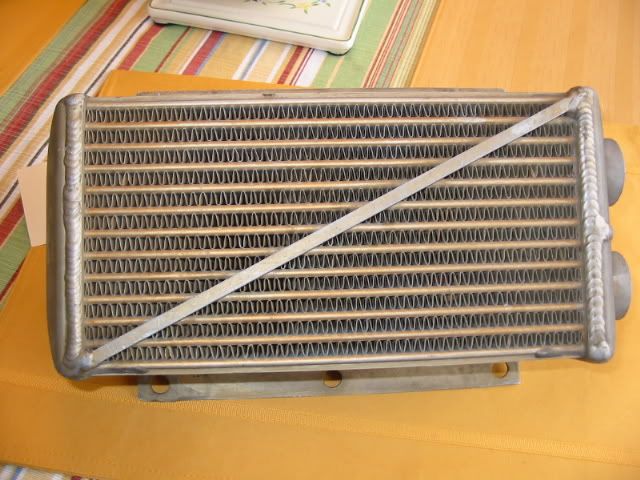
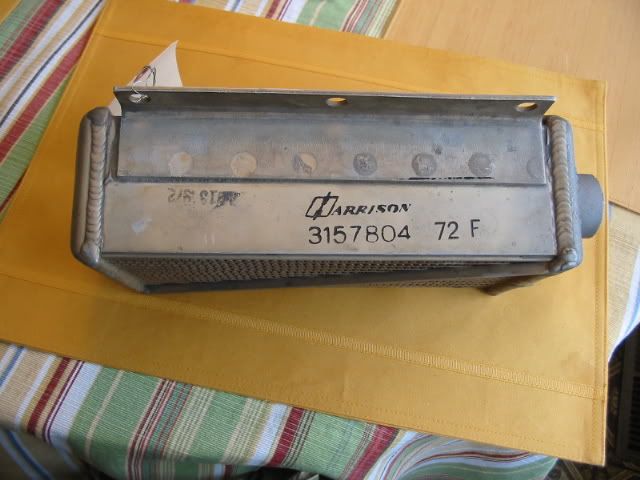
i'll keep in my mind that you have that Harrison oil cooler, if i'll decide for that route.
do you have or do you know where to get a swing pickup oil pump?
TSW
i agree with you that before going for more chassis tweaking ( spread bar for example) tires are the key. Those Avons are really good and when i did right turns (wheels settings OK ) i haven't been able to brake them loose. So once all tires will be properly setted i can do much better.
thinking also that would be good to go for wider Avons on the rear .
the other good thing to do would be to lower the car another inch or so , but not easy. So there's room to get much more on the racetrack from a 40years c3 kept substantially stock
Solid Lt1
i made the tires measures immediately after my stop. But the last left hand turn before the pits was quite hard , that's probably why the right front tire shows higher and different temperatures in respect to the left front
next time that i go out for a ride i'll make a straight line video possibly pulling all the gears , with T-tops on and windows up , so no wind noise and vibrations
Redvetteracr
i'll keep in my mind that you have that Harrison oil cooler, if i'll decide for that route.
do you have or do you know where to get a swing pickup oil pump?
TSW
i agree with you that before going for more chassis tweaking ( spread bar for example) tires are the key. Those Avons are really good and when i did right turns (wheels settings OK ) i haven't been able to brake them loose. So once all tires will be properly setted i can do much better.
thinking also that would be good to go for wider Avons on the rear .
the other good thing to do would be to lower the car another inch or so , but not easy. So there's room to get much more on the racetrack from a 40years c3 kept substantially stock
Solid Lt1
i made the tires measures immediately after my stop. But the last left hand turn before the pits was quite hard , that's probably why the right front tire shows higher and different temperatures in respect to the left front
Last edited by elle88; Apr 2, 2012 at 03:44 AM.

Race Director


Joined: Jan 2000
Posts: 13,024
Likes: 2,266
From: Corsicana, Tx
2020 C2 of the Year - Modified Winner
2020 Corvette of the Year (performance mods)
C2 of Year Winner (performance mods) 2019
2017 C2 of Year Finalist
Not sure what the latest tricks are in road race pans, but some of the drag pans are using a sump that actually steps *in* instead of having a kickout area in the bottom inch or two. That keeps whatever oil makes it back to the pan deeper over the pickup instead of spread out over a larger area and more room to slosh around.
This is the Milodon 31188 *stepped drag race pan* that is on my car.


I would think an accusump would help in your situtation to help with any momentary issues, but agreed...you need a good pan/oil/decent temps to keep it happy. Air is not a good thing in oil.
JIM
This is the Milodon 31188 *stepped drag race pan* that is on my car.
I would think an accusump would help in your situtation to help with any momentary issues, but agreed...you need a good pan/oil/decent temps to keep it happy. Air is not a good thing in oil.
JIM

Race Director


Joined: May 2005
Posts: 10,674
Likes: 122
From: Millington Illinois
St. Jude Donor '08-'09

Le Mans Master

Joined: Apr 2007
Posts: 7,353
Likes: 72
From: Graceland in a Not Correctly Restored Stingray
Based on my RR experiences, I respectfully disagree with Solid's read of temps relative to front camber. Higher outside temps (relative to inside) indicate insufficient rather than excessive negative camber, whether static or gained, and it is normal for inside temps to run a tad higher than the outside when camber is optimized for a given circuit.
Out back, with the power you have on tap, I agree you should try less static rear neg camber, but only after getting a baseline read on the -1.75.
Bottom line: Unlike on a skid pad or drag strip, the tire temps you're seeing in the pits are a combination of those generated under hard cornering and those from straightline braking and acceleration. So, how much to compromise settings for one vs the other depends on what makes the car (and the clock) happiest on a particular circuit, whatever might be our speculations.

Out back, with the power you have on tap, I agree you should try less static rear neg camber, but only after getting a baseline read on the -1.75.
Bottom line: Unlike on a skid pad or drag strip, the tire temps you're seeing in the pits are a combination of those generated under hard cornering and those from straightline braking and acceleration. So, how much to compromise settings for one vs the other depends on what makes the car (and the clock) happiest on a particular circuit, whatever might be our speculations.

Team Owner

Joined: Apr 1999
Posts: 21,953
Likes: 1,445
From: Reno Nevada
2024 C3 of the Year Finalist- Modified
First at the shop years ago and then on my Vette. As tire technology went up, so did G-forces. Historic racing requires period correct items like Avon treaded racing tires. So in the mid 2000's a company started treading road racing slicks to appear like the old counterpart.
Cars like this Bizzarini that was raced out of our shop lost oil pressure for and instant, spun a main bearing and popped a $25,000 USD motor. With the best Canton road racing pan available. Both mine and the Bizzarini have 8 quart pans. The problem was "G" forces over "1" in the turns.
thicker oil, extra oil will not cure anything. Accusump or dry sump is the only cure..
This is really kind of fun car to drive with the 4 Webber side draft cross ram manifold mechanical lifter 327 Chevy bored to a 337 ci

Cars like this Bizzarini that was raced out of our shop lost oil pressure for and instant, spun a main bearing and popped a $25,000 USD motor. With the best Canton road racing pan available. Both mine and the Bizzarini have 8 quart pans. The problem was "G" forces over "1" in the turns.
thicker oil, extra oil will not cure anything. Accusump or dry sump is the only cure..
This is really kind of fun car to drive with the 4 Webber side draft cross ram manifold mechanical lifter 327 Chevy bored to a 337 ci
Team Owner
Joined: Apr 1999
Posts: 21,953
Likes: 1,445
From: Reno Nevada
2024 C3 of the Year Finalist- Modified
Aldo, I didn't cover other issues. What does Avon tell you the optimum tire temp should be. I use hoosier R6 that require 180+ degrees. I know that we are not comparing the same class of tires.
Your idea of one warm up lap and then try for speed. In cooler track conditions I have found that you want to force as much heat into the tires the first lap. Accelerate hard and brake hard early. run the first turns at 75% and on turns with a safe run off see where the tires start to 4 wheel drift. It might take a more aggressive second lap to bring up the heat. your third lap on test the limits.
As to braking. Your tires and HP level will make stockish type brakes useless even with air cooling and 600 degree fluid. The stock brakes are dangerous. If you boil them into a turn laps into the event. They never recover. So the next turn you have complete brake failure.
Your idea of one warm up lap and then try for speed. In cooler track conditions I have found that you want to force as much heat into the tires the first lap. Accelerate hard and brake hard early. run the first turns at 75% and on turns with a safe run off see where the tires start to 4 wheel drift. It might take a more aggressive second lap to bring up the heat. your third lap on test the limits.
As to braking. Your tires and HP level will make stockish type brakes useless even with air cooling and 600 degree fluid. The stock brakes are dangerous. If you boil them into a turn laps into the event. They never recover. So the next turn you have complete brake failure.
Corvette Stories
The Best of Corvette for Corvette Enthusiasts

5 Best & 5 Worst Corvette Daily Drivers
Joe Kucinski
The Headlights of Every Corvette Generation Explained
Joe Kucinski
5 Best & 5 Most Overrated Corvette Track Packages of All Time!
Joe Kucinski
Every 2027 Corvette Engine Explained
Joe Kucinski
Designer Imagines A Corvette That Looks More Like a Corvette Than the Corvette
Verdad Gallardo
10 Ugly Corvettes That We Still Kinda Love
Joe Kucinski
Top 10 Most Expensive Corvettes Ever Sold on Bring A Trailer
Brett Foote
10 Things Every Corvette Owner Needs (2026 Edition)
Michael S. Palmer
8 Most "Only Corvette Owners Understand" Quirks and Problems
Pouria Savadkouei
Thread Starter
Burning Brakes
Joined: Sep 2008
Posts: 753
Likes: 0
Aldo, I didn't cover other issues. What does Avon tell you the optimum tire temp should be. I use hoosier R6 that require 180+ degrees. I know that we are not comparing the same class of tires.
Your idea of one warm up lap and then try for speed. In cooler track conditions I have found that you want to force as much heat into the tires the first lap. Accelerate hard and brake hard early. run the first turns at 75% and on turns with a safe run off see where the tires start to 4 wheel drift. It might take a more aggressive second lap to bring up the heat. your third lap on test the limits.
As to braking. Your tires and HP level will make stockish type brakes useless even with air cooling and 600 degree fluid. The stock brakes are dangerous. If you boil them into a turn laps into the event. They never recover. So the next turn you have complete brake failure.
Your idea of one warm up lap and then try for speed. In cooler track conditions I have found that you want to force as much heat into the tires the first lap. Accelerate hard and brake hard early. run the first turns at 75% and on turns with a safe run off see where the tires start to 4 wheel drift. It might take a more aggressive second lap to bring up the heat. your third lap on test the limits.
As to braking. Your tires and HP level will make stockish type brakes useless even with air cooling and 600 degree fluid. The stock brakes are dangerous. If you boil them into a turn laps into the event. They never recover. So the next turn you have complete brake failure.
actually i haven't been that fast on the straights as i should be and late on the brakes. But i think my brakes will keep for 1 or 2 10/10 laps. I had no issues with brakes till now ( but probably because i haven't been faster in the straights and so harder on the brakes. let's see...)
hey guys , look at this thing

i have watched my video of lap 5 . i reported how many rpm in various points then deduced the related speeds.
Surprise !
the speeds in kmh , sorry, between the ( ) are mine , the other without are of an Audi R8 in this video ( actually not sure it's an audi r8 , but for sure fast modern cars there in the video)
http://www.youtube.com/watch?v=M0ZN8...eature=related
i don't think i have made mistakes ...look at the drawing : my speed in most of the turns is the same or just slightly less than that R8.
I've been slower in the straights but as i already explained , it has been my fear of engine failure to keep me back.
the R8 in the video pulls more than 1G in the turns , so the same should apply to my car.
I would say : WOW!
Last edited by elle88; Apr 2, 2012 at 03:41 PM.
Premium Supporting Vendor


Joined: Aug 2001
Posts: 5,364
Likes: 38
From: King George VA
I skimmed all the above but didn't see what viscosity oil you were running. As an FYI, a typical 30 grade oil has a viscosity of about 10-11 cSt at 212F, but that drops significantly to about 3.1 cSt at 300F, a loss of about 70% of the viscosity you are used to at street temps. At least in the C5, it is very very easy to get oil temps that hot. Which would explain your oil pressure loss.
My personal thumb rule, and these are only thumb rules, is to use a 10w30 if oil temps can be kept below about 250-260F or so. 40 grade for 250-280F or so. 50 grade over that. Purposely over lapped my thumb rules to highlight there are no absolutes here.
And for the track, you'll want to use a high ZDDP oil as well - and while they aren't hard to find, you probably won't find one at Walmart either.
Many on the sticky.
__________________


C66 Racing #66 NASA ST2, SCCA T2
AMSOIL Dealer (Forum Vendor)
AMSOIL Preferred Customer Program (Members buy at Wholesale - a savings of about 25%)
C66 Racing #66 NASA ST2, SCCA T2
AMSOIL Dealer (Forum Vendor)
AMSOIL Preferred Customer Program (Members buy at Wholesale - a savings of about 25%)
Thread Starter
Burning Brakes
Joined: Sep 2008
Posts: 753
Likes: 0
Assume your oil temp was going up and up and up at the same time. You have an oil temp gauge? If so, I'd keep an eye on it next time out.
I skimmed all the above but didn't see what viscosity oil you were running. As an FYI, a typical 30 grade oil has a viscosity of about 10-11 cSt at 212F, but that drops significantly to about 3.1 cSt at 300F, a loss of about 70% of the viscosity you are used to at street temps. At least in the C5, it is very very easy to get oil temps that hot. Which would explain your oil pressure loss.
My personal thumb rule, and these are only thumb rules, is to use a 10w30 if oil temps can be kept below about 250-260F or so. 40 grade for 250-280F or so. 50 grade over that. Purposely over lapped my thumb rules to highlight there are no absolutes here.
And for the track, you'll want to use a high ZDDP oil as well - and while they aren't hard to find, you probably won't find one at Walmart either.
Many on the sticky.
I skimmed all the above but didn't see what viscosity oil you were running. As an FYI, a typical 30 grade oil has a viscosity of about 10-11 cSt at 212F, but that drops significantly to about 3.1 cSt at 300F, a loss of about 70% of the viscosity you are used to at street temps. At least in the C5, it is very very easy to get oil temps that hot. Which would explain your oil pressure loss.
My personal thumb rule, and these are only thumb rules, is to use a 10w30 if oil temps can be kept below about 250-260F or so. 40 grade for 250-280F or so. 50 grade over that. Purposely over lapped my thumb rules to highlight there are no absolutes here.
And for the track, you'll want to use a high ZDDP oil as well - and while they aren't hard to find, you probably won't find one at Walmart either.
Many on the sticky.
i have used this plus some GM Eos to increase ZDDP
http://www.amsoil.com/storefront/amo.aspx
but surely i'll go for this for track days
http://www.amsoil.com/storefront/zrf.aspx
Premium Supporting Vendor
Joined: Aug 2001
Posts: 5,364
Likes: 38
From: King George VA
I think the ZROD is a good choice for a dual track/street car. The Dominator Racing oil I use is very similar, but with lower detergent/dispersant levels than the ZROD has (which isn't much either).
Both the AMO and the ZROD are on AMSOIL's list for being suitable for flat tappet cam engines, and I even used the AMO in my LS6 for a few years before AMSOIL came out with the Dominator. Given how high these two oils are in ZDDP, I don't think you need to add more.
FYI, more than happy to help you get AMSOIL at dealer wholesale, about 25% below retail, via the AMSOIL Preferred Customer Program if you don't already have a source. Drop me a PM if interested.
Both the AMO and the ZROD are on AMSOIL's list for being suitable for flat tappet cam engines, and I even used the AMO in my LS6 for a few years before AMSOIL came out with the Dominator. Given how high these two oils are in ZDDP, I don't think you need to add more.
FYI, more than happy to help you get AMSOIL at dealer wholesale, about 25% below retail, via the AMSOIL Preferred Customer Program if you don't already have a source. Drop me a PM if interested.
Race Director
Joined: May 2005
Posts: 10,674
Likes: 122
From: Millington Illinois
St. Jude Donor '08-'09
Assume your oil temp was going up and up and up at the same time. You have an oil temp gauge? If so, I'd keep an eye on it next time out.
I skimmed all the above but didn't see what viscosity oil you were running. As an FYI, a typical 30 grade oil has a viscosity of about 10-11 cSt at 212F, but that drops significantly to about 3.1 cSt at 300F, a loss of about 70% of the viscosity you are used to at street temps. At least in the C5, it is very very easy to get oil temps that hot. Which would explain your oil pressure loss.
I skimmed all the above but didn't see what viscosity oil you were running. As an FYI, a typical 30 grade oil has a viscosity of about 10-11 cSt at 212F, but that drops significantly to about 3.1 cSt at 300F, a loss of about 70% of the viscosity you are used to at street temps. At least in the C5, it is very very easy to get oil temps that hot. Which would explain your oil pressure loss.
 Increasingly higher oil temperatures are thinning the oil as you lap repeatedly. An oil cooler would help. The road race L88 cars did use one. It gets you more volume and will keep temperatures down. The 20-50 amsoil is a good option for track days. If you pour it out of the bottle at ambient temperature it probably seems as thin as a conventional 10W-40.
Le Mans Master
Joined: Oct 2002
Posts: 7,098
Likes: 378
From: Las Vegas - Just stop perpetuating myths please.
Looks awsome too.
The car is looking great elle. I really like those wheels and I have the same mini lites with flat black spokes. But have u considered taller 18" wheels for lower sidewall profile? Get my drift?
cardo0
cardo0
Thread Starter
Burning Brakes
Joined: Sep 2008
Posts: 753
Likes: 0

Hey Kevin-63Mako : finally i made the incar video you asked ( windows up, no wind noise)
sorry i'm not drag strip oriented ... so i didn't made the start as it should be done. the clutch has seen better times and i didn't wanted to burn it . the road is very narrow (asphalt not perfect too . speed limit on that road 35mph !!!!!!) and it has been quite risky to make that run.
shift light at 6200 rpm .
got 6000 rpm in 4th = 115mph
----------------------------------------------
this is the first ride after my track day and took the chance to check -verify a couple of things
OIL : my concern was possible damage to engine's bearing because low oil pressure in turns at the racetrack.
today the oil pressure gage showed the same values as before the trackday. so it seems that the engine is fine
Rear camber : i have readjusted the rear right wheel at -1 1/4 negative camber ( it was 2 1/4). I have checked the value after the ride and still 1 1/4 . But i will keep an eye on it after next rides because i suspect some play at right 1/2 shaft. i hope not serious and camber value will hold
Last edited by elle88; Apr 25, 2012 at 11:44 AM.
Race Director
Joined: May 2005
Posts: 10,674
Likes: 122
From: Millington Illinois
St. Jude Donor '08-'09
6200 rpm shift points? Sounds strong and effortless like it wants more! Torque curve seems really flat, pulls uniformly through 3000 to 6000. Only looks like your dropping to 5000 on upshifts. Perfect for your road course use. That thing is begging for a T56 close ratio 6 speed and 150+ on the straights.
Edit: Bigger road race pan and oil cooler will help. I know your factory pan was expensive though. Glad no engine damage. High temperature and oil pressure drop in hard cornering like you had is a real good reason to stick with the synthetic. Your surpassing the g forces the stock pan was designed for.
Edit: Bigger road race pan and oil cooler will help. I know your factory pan was expensive though. Glad no engine damage. High temperature and oil pressure drop in hard cornering like you had is a real good reason to stick with the synthetic. Your surpassing the g forces the stock pan was designed for.
Last edited by 63mako; Apr 25, 2012 at 11:57 AM.
Le Mans Master
Joined: Apr 2007
Posts: 7,353
Likes: 72
From: Graceland in a Not Correctly Restored Stingray
Your mill sounds great!  Makes me think seriously about reconsidering a solid flat tappet for my 427 makeover rather than going to the expense and trouble of a solid roller.
I believe you probably know where I am by now on the oil temp/pressure issues, given I've struggled with them myself.
Makes me think seriously about reconsidering a solid flat tappet for my 427 makeover rather than going to the expense and trouble of a solid roller.I believe you probably know where I am by now on the oil temp/pressure issues, given I've struggled with them myself.
Thread Starter
Burning Brakes
Joined: Sep 2008
Posts: 753
Likes: 0
Your mill sounds great! Makes me think seriously about reconsidering a solid flat tappet for my 427 makeover rather than going to the expense and trouble of a solid roller.
I believe you probably know where I am by now on the oil temp/pressure issues, given I've struggled with them myself.
Makes me think seriously about reconsidering a solid flat tappet for my 427 makeover rather than going to the expense and trouble of a solid roller.I believe you probably know where I am by now on the oil temp/pressure issues, given I've struggled with them myself.
on the street my engine has more power than i can use
on the racetrack ...not enough probably. i can use more
unfortunately i have lost some HP to make the car streetable ( exhausts are quite restrictive because of noise reduction, intake is a dual plane). if i would remove these limitations , it would be surely better on the track but really a problem on the street
Race Director
Joined: May 2005
Posts: 10,674
Likes: 122
From: Millington Illinois
St. Jude Donor '08-'09
i think that for road racing a long duration cam ( roller or flat) is a good thing.
on the street my engine has more power than i can use
on the racetrack ...not enough probably. i can use more
unfortunately i have lost some HP to make the car streetable ( exhausts are quite restrictive because of noise reduction, intake is a dual plane). if i would remove these limitations , it would be surely better on the track but really a problem on the street
on the street my engine has more power than i can use
on the racetrack ...not enough probably. i can use more
unfortunately i have lost some HP to make the car streetable ( exhausts are quite restrictive because of noise reduction, intake is a dual plane). if i would remove these limitations , it would be surely better on the track but really a problem on the street