



454 falls on face
Melting Slicks


Joined: Mar 2006
Posts: 2,248
Likes: 67
From: Warrington PA
Finalist 2020 C4 of the Year - Unmodified
 they do fall flat @4500 r's
I am no way an authority on the issue, but would like to offer my opinion. When I bought my 74 454 over 3 years ago, and mentioned that I was pulling the engine to detail, there were some BB people who said, since you have it out why not upgrade? With only 10,000 miles on the vehicle, I thought it wouldn't be neccessary. But they also mentioned how the "smog" 454 motors ran out of power @ 4500 r's just like you have described. It seems like the biggest restrictions are the cam and heads, which have already been mentioned. Since you have upgraded the cam, seems like the heads would be the next step, as that has already been suggested also. I don't think you have a fuel problem.
There is a member in FL (Rob) who redid his 74 454 a few years ago with a cam and redone 781 heads (among everything else in the engine)which worked out really well for him.
My engine is torn down somewhat and I am probably keeing my stock pistons, but do have another cam (ISKY) good for 6000 r's or above, along with 68 427 "215" heads that are completely redone, bigger valves, etc., etc. With this combo and some other changes, I should be good to at least 6000 r's. My goal is not to run out of breath @ 4500 r's like the stock setups do, and I think I will accomplish that.
Your 73 should have 353049 stock heads, as the 74's have 336781, which I have been told are very similar, but they are still smog units. Now they also respond to head work and are very good flowing open chambered heads when worked.
Gives you something to think about.... Tom
Tom
There is a member in FL (Rob) who redid his 74 454 a few years ago with a cam and redone 781 heads (among everything else in the engine)which worked out really well for him.
My engine is torn down somewhat and I am probably keeing my stock pistons, but do have another cam (ISKY) good for 6000 r's or above, along with 68 427 "215" heads that are completely redone, bigger valves, etc., etc. With this combo and some other changes, I should be good to at least 6000 r's. My goal is not to run out of breath @ 4500 r's like the stock setups do, and I think I will accomplish that.
Your 73 should have 353049 stock heads, as the 74's have 336781, which I have been told are very similar, but they are still smog units. Now they also respond to head work and are very good flowing open chambered heads when worked.
Gives you something to think about....
Tom
Melting Slicks
Joined: Jul 2009
Posts: 2,091
Likes: 40
Should easily run past 5000, Magizine tests running to 5500 no problem. redline 5600 . Fresh heads no problem , the 74 heads flow great , better than many older ones , its just a low compression head. Sounds like a carb not rebuilt correct. You need to bite the bullet and have it restored , not rebuilt , send you Carb to Eric Jackson. It will work correct then.
Pro

Joined: Sep 2009
Posts: 629
Likes: 6
From: columbus ms
My tune port 327 camaro runs out of air around 5000 rpms. Just quits revvin and pullin. Runnin out of air with the tune port intake which I will take care of with a new mini ram later on. My money is on the heads. Makin over 100 extra hp over stock is a lot of extra air that those factory heads just won t flow. Like I said my brothers 72 454 did the samething with a rebuild with a performance cam. 4500 to 4800 was it.

Drifting

Joined: Mar 2011
Posts: 1,886
Likes: 9
First of all, those porous stone filters are junk. They won't supply a lawn mower engine very well, let alone a big block. At least use a paper one. With my 74 Quadrajet, I was able to use the longer fuel inlet fitting from a 77 and double the fuel filter size without too much trouble. The very early Qjets had a 7/8" inlet nut, at some time later changed to 1". So I don't know if that would exactly work for you. Sometimes trucks used larger filters.
If you made changes to the internals of the engine (compression, cam) that may have changed the fuel requirements of the engine. It may require recalibrating the carb to the new reality. On my '74, after a rebuild that included a cam change and compression increase, I had to richen up the part throttle mixture by a lot- something like 13%. I used an air/fuel meter by AEM (purchased through Jegs) to learn what the carb was doing and figure out in which direction I had to change things. Now it runs like it's fuel injected.
If you made changes to the internals of the engine (compression, cam) that may have changed the fuel requirements of the engine. It may require recalibrating the carb to the new reality. On my '74, after a rebuild that included a cam change and compression increase, I had to richen up the part throttle mixture by a lot- something like 13%. I used an air/fuel meter by AEM (purchased through Jegs) to learn what the carb was doing and figure out in which direction I had to change things. Now it runs like it's fuel injected.

Thread Starter
Intermediate

Joined: Dec 2009
Posts: 49
Likes: 0
sorry about not answering the question about removing the fuel filter. i did and it did help so thats why i went with a edelbrock pump and a inline fuel filter without the one in the carb. but now it seems i have a dead edelbrock fuel pump. it allows fuel to gravety feed through it but its does not pump. i triple checked the pump rod to make sure it was behind the lever. it seems i will have to send this one back and get a new one.

Race Director


Joined: May 2003
Posts: 10,956
Likes: 409
From: California
My guess is also valve train...... Mine was supposed to go to 7k and pull all the way.... But it platoed at about 4500.... At that time on the dyno I was 440tq and 380hp atthe rear wheels...... New beehive springs, compcams 1.52 mag rr, lighter push rods keepers and everything,,,,,,, now pull all the way to7k..... 460hp...... Happy ....... The c3 will smoke my c5

Drifting

Joined: Apr 2008
Posts: 1,540
Likes: 51
From: Lexington Park Maryland
I read it somewhere in this thread already but you may want to beg, borrow or steal a good quality fuel pressure gauge. Hook it up (outside the car of course) and read it when the motor starts dropping off. That will let you know for sure if it's a fuel delivery (or lack thereof) issue.

Race Director
Joined: May 2005
Posts: 10,674
Likes: 122
From: Millington Illinois
St. Jude Donor '08-'09
My guess is also valve train...... Mine was supposed to go to 7k and pull all the way.... But it platoed at about 4500.... At that time on the dyno I was 440tq and 380hp atthe rear wheels...... New beehive springs, compcams 1.52 mag rr, lighter push rods keepers and everything,,,,,,, now pull all the way to7k..... 460hp...... Happy ....... The c3 will smoke my c5
http://forums.corvetteforum.com/c3-t...ld-thread.html
If you find the springs are the issue I would recommend Beehives. They resist harmonics and spring surge much better for a little more money.
Corvette Stories
The Best of Corvette for Corvette Enthusiasts

10 Reasons the C6 Z06 is Still A Performance Benchmark After 20 Years
Joe Kucinski
How Much Horsepower Every Corvette Engine "LOST" in 1972
Joe Kucinski
Top 10 DOs and DON'Ts for Protecting Your Convertible Top!
Michael S. Palmer
Top 10 Most Explosive Corvettes Ever Made: Power-to-Weight Ratio Ranked!
Joe Kucinski
150 hp to 1,250 hp: Every Corvette Generation Compared by the Specs That Matter
Joe Kucinski
8 Coolest Corvette Pace Cars (and Replicas) of All Time
Verdad Gallardo
Top 10 Corvette Engines RANKED by Peak Torque (70+ Years of Muscle!)
Joe Kucinski
Corvette ZR1X Will Be Pacing the Indy 500, And Could Probably Race, Too!
Verdad Gallardo
Top 10 Corvettes Coming to Mecum Indy 2026!
Brett Foote
Race Director
Joined: May 2003
Posts: 10,956
Likes: 409
From: California
Yes, I agree. Big blocks especially are very picky on spring selection due to the heavy valvetrain. Check out page 7-8 here:
http://forums.corvetteforum.com/c3-t...ld-thread.html
If you find the springs are the issue I would recommend Beehives. They resist harmonics and spring surge much better for a little more money.
http://forums.corvetteforum.com/c3-t...ld-thread.html
If you find the springs are the issue I would recommend Beehives. They resist harmonics and spring surge much better for a little more money.


Race Director
Joined: May 2005
Posts: 10,674
Likes: 122
From: Millington Illinois
St. Jude Donor '08-'09

Thread Starter
Intermediate
Joined: Dec 2009
Posts: 49
Likes: 0
ok, so its fixed....kinda. its fixed depending on what speed i floor it. from about 20-35 it will rev up to redline. from about 40+ if i floor it it pulls hard to 4500rpm and falls on its face. im thinking metering rods in the carb? its a quadrajet btw
Drifting
Joined: Mar 2011
Posts: 1,886
Likes: 9
There are some who are Holley fans, but remember something. GM used Holleys on a few of the muscle cars when everybody thought fuel consumption and emissions were unimportant. As soon as those things became significant, the Holleys disappeared rapidly. GM used Quadrajets in scores of different applications for over 20 years - from the mid 60's to late in the 80's. (My 87 Olds had one on top of a 307. It may have been the last one!)

Le Mans Master

Joined: Aug 2008
Posts: 5,578
Likes: 61
From: Austin TX
Have you ever had your gas tank inspected? There is a "sock" type filter inside the tank attached to the fuel pickup. Even new, those are a a major restriction.
If your float level is correct, then you might need larger fuel lines, and you should consider an electric fuel pump.
Thread Starter
Intermediate
Joined: Dec 2009
Posts: 49
Likes: 0
You still have a fuel delivery problem, only now it is showing when you have it under a heavy load and fuel requirements run higher.
Have you ever had your gas tank inspected? There is a "sock" type filter inside the tank attached to the fuel pickup. Even new, those are a a major restriction.
If your float level is correct, then you might need larger fuel lines, and you should consider an electric fuel pump.
Have you ever had your gas tank inspected? There is a "sock" type filter inside the tank attached to the fuel pickup. Even new, those are a a major restriction.
If your float level is correct, then you might need larger fuel lines, and you should consider an electric fuel pump.
Le Mans Master
Joined: Aug 2008
Posts: 5,578
Likes: 61
From: Austin TX
I assume when the tank was replace a new sock was installed. If it were me, I'd remove the sock. That would free up some extra flow.
I'd also check every square inch of the fuel line, making sure there are no kinks or collapsed sections.
Also, your fuel cap vent might be clogged if it's original. That would create a vacuum in the tank and cause fuel starvation.
Check the simple stuff first, then consider larger lines and an electric boost pump. Carter used to make a lower pressure electric pump that acted as a booster and when it was off, fuel could still move through it and let the mechanical pump feed the engine. Some guys would rig it to where low engine vacuum would turn the boost pump on (heavy throttle). Or you could put a switch on it. Or just remove the mechanical pump and run all electric. That big motor is a fuel hog and it doesn't take much to starve them.
Le Mans Master
Joined: May 2002
Posts: 5,086
Likes: 786
From: Lebanon Township New Jersey
I agree with checking all the simple stuff mentioned above, in addition to taking out the carb fuel filter which you said helped the situation. I don't agree with the suggestion of needing bigger fuel lines or an electric pump. L88 cars came from the factory with the same fuel lines and mech pump as your car has, assuming they're in good condition. The stock fuel system can easily support over 500hp.

Race Director

Joined: Dec 1999
Posts: 11,096
Likes: 990
From: Sierra Foothills CA
Pull the cap and check. The weights should move freely. Spray some lube on them while you have it apart.
I assume when the tank was replace a new sock was installed. If it were me, I'd remove the sock. That would free up some extra flow.
I'd also check every square inch of the fuel line, making sure there are no kinks or collapsed sections.
Also, your fuel cap vent might be clogged if it's original. That would create a vacuum in the tank and cause fuel starvation.
Check the simple stuff first, then consider larger lines and an electric boost pump. Carter used to make a lower pressure electric pump that acted as a booster and when it was off, fuel could still move through it and let the mechanical pump feed the engine. Some guys would rig it to where low engine vacuum would turn the boost pump on (heavy throttle). Or you could put a switch on it. Or just remove the mechanical pump and run all electric. That big motor is a fuel hog and it doesn't take much to starve them.
I assume when the tank was replace a new sock was installed. If it were me, I'd remove the sock. That would free up some extra flow.
I'd also check every square inch of the fuel line, making sure there are no kinks or collapsed sections.
Also, your fuel cap vent might be clogged if it's original. That would create a vacuum in the tank and cause fuel starvation.
Check the simple stuff first, then consider larger lines and an electric boost pump. Carter used to make a lower pressure electric pump that acted as a booster and when it was off, fuel could still move through it and let the mechanical pump feed the engine. Some guys would rig it to where low engine vacuum would turn the boost pump on (heavy throttle). Or you could put a switch on it. Or just remove the mechanical pump and run all electric. That big motor is a fuel hog and it doesn't take much to starve them.
 Also, I just copied and pasted this from my prior post on this topic because you never answered the two questions in bold. This could really help isolate your problem depending on the answers. You're definitely losing some power using stock exhaust manifolds vs. the dyno headers but it would only make a slight difference, if any, in the RPM at which you pull peak HP.
Here's my prior post-
Have you had a chance to see if it runs any better now? My first guess is fuel delivery too. If no improvement with this out, have you checked all the lines for crimps and kinks? I think somebody mentioned checking float level and that would be next on my list.
Also, a couple of quick questions-
At what RPM did the power peak on the engine dyno?
Was the dyno run done with your current carb and ignition combo?

Melting Slicks
Joined: Mar 2002
Posts: 2,164
Likes: 7
From: Beringen
it kept running but its llike it lost power. i got out of it as soon as i noticed it stopped pulling. I am using the Petronix Ignitor I. as far as i remember it just bolted in place and slid over the shaft. no adjustments other than distance of the unit to the magnet. The 454 was built with a slightly more aggressive cam than stock and 9.5:1 compression. made 400hp and 500tq on the dyno with headers. I have the stock exhaust manifolds on it now.
Le Mans Master
Joined: Aug 2008
Posts: 5,578
Likes: 61
From: Austin TX
I agree with checking all the simple stuff mentioned above, in addition to taking out the carb fuel filter which you said helped the situation. I don't agree with the suggestion of needing bigger fuel lines or an electric pump. L88 cars came from the factory with the same fuel lines and mech pump as your car has, assuming they're in good condition. The stock fuel system can easily support over 500hp.
Most of my experience with q-jet's and stock fuel systems were on 400-455ci pontiacs in 2nd gen T/A's, and it was pretty easy to out run the fuel system in those cars, even when stock. We usually just added the carter pump and that was enough to handle most mild to moderate builds.
Le Mans Master
Joined: May 2002
Posts: 5,086
Likes: 786
From: Lebanon Township New Jersey
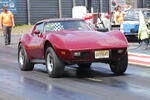
Nice looking (and fast) C3!
Most of my experience with q-jet's and stock fuel systems were on 400-455ci pontiacs in 2nd gen T/A's, and it was pretty easy to out run the fuel system in those cars, even when stock. We usually just added the carter pump and that was enough to handle most mild to moderate builds.
Most of my experience with q-jet's and stock fuel systems were on 400-455ci pontiacs in 2nd gen T/A's, and it was pretty easy to out run the fuel system in those cars, even when stock. We usually just added the carter pump and that was enough to handle most mild to moderate builds.
I understand what you're saying and I don't doubt your experiences. I had very similar problems with my car, at WOT, top of low gear, the engine would suddenly almost stop running. After letting off the gas, it would recover. The fixes were removing the filter in the carb (Qjet) and adjusting float level .