





Oil pressure sensor

Thread Starter
Pro


Joined: Jan 2005
Posts: 539
Likes: 3
From: Twin Cities Minnesota
 Oil pressure sensor
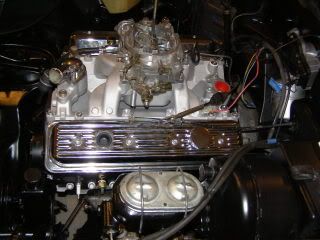
I just put in a new Year one crate engine and purchased a new Oil pressure sending unit (the holes were different size). Shortly after running my oil gauge which seemed to be working fine, pegged out all the way to the high side. Everything with the motor seems fine so i suspect it is either a gauge problem or sending unit problem.
Anyone have troubleshooting ideas?
Do new and older sending units operate on different voltage or resistance could i have gotten one that is not compatible?
Thanks
[IMG]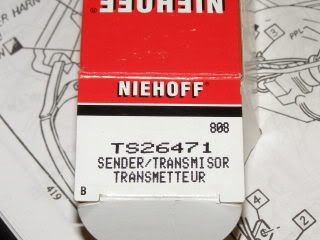 [/IMG]
Anyone have troubleshooting ideas?
Do new and older sending units operate on different voltage or resistance could i have gotten one that is not compatible?
Thanks
[IMG]
[/IMG]

Crackin' on...


Joined: Jun 2003
Posts: 9,455
Likes: 124
From: Somewhere in Tucson AZ
St. Jude Donor '09
Plumbing supply co may have an adapter you can use to put your old sender in the new hole.
Just bring both senders to them and ask for an adapter. Probably an NPT standard to metric.
hth
Just bring both senders to them and ask for an adapter. Probably an NPT standard to metric.
hth

Drifting

Joined: Mar 2011
Posts: 1,886
Likes: 9
I recall that the older cars (for example, my '74) had an oil pressure gauge that maxed out at 80 psi. It is 1/8" NPT. And at some point, Chevrolet changed over to a 100 psi gauge. So, yes, the sender has to match the gauge.
Last edited by gcusmano74; Mar 25, 2012 at 03:29 PM.

Instructor

Joined: Jan 2012
Posts: 156
Likes: 0
From: Mount Sinai New York
With the engine NOT running, switch the key to the "on" position. Pull the sending wire off the the oil press sender and ground it, either with a jumper lead or hold it to ground with someone watching the gauge. If the oil press gauge pegs out to max oil pressure, the gauge is good.
Corvette Stories
The Best of Corvette for Corvette Enthusiasts

5 Best & 5 Worst Corvette Daily Drivers
Joe Kucinski
The Headlights of Every Corvette Generation Explained
Joe Kucinski
5 Best & 5 Most Overrated Corvette Track Packages of All Time!
Joe Kucinski
Every 2027 Corvette Engine Explained
Joe Kucinski
Designer Imagines A Corvette That Looks More Like a Corvette Than the Corvette
Verdad Gallardo
10 Ugly Corvettes That We Still Kinda Love
Joe Kucinski
Top 10 Most Expensive Corvettes Ever Sold on Bring A Trailer
Brett Foote
10 Things Every Corvette Owner Needs (2026 Edition)
Michael S. Palmer
8 Most "Only Corvette Owners Understand" Quirks and Problems
Pouria Savadkouei
Instructor
Joined: Jul 2011
Posts: 142
Likes: 1
From: Fort White Florida
I have a similar problem. This just started happening, when I first start the engine the gauge is pegged out after it warmed up it started working normally. The other day it just stayed pegged out. When I turn the ignition off it slowly goes back to 80psi mark. Today I picked up a BWD Oil Pressure Switch Part # S769 from O'Reilly's. I installed it and it is still just staying pegged out. I had recently had the heads off for a valve job off and after putting it back together had a leak from the left side valve cover gasket and the wire got pretty oiled down. Could this be the problem? I read in another tread to not use teflon tape as the treads on the sensor are the ground, the new sensor had teflon tape on em and I installed it that way. Should I pull it back off and remove the teflon? I will give LI C3's suggestion a try in the morning
Last edited by Rick_V; Apr 6, 2012 at 06:37 PM.

Intermediate
Joined: Mar 2012
Posts: 31
Likes: 1
From: Grand Island Nebraska
I have a similar problem. This just started happening, when I first start the engine the gauge is pegged out after it warmed up it started working normally. The other day it just stayed pegged out. When I turn the ignition off it slowly goes back to 80psi mark. Today I picked up a BWD Oil Pressure Switch Part # S769 from O'Reilly's. I installed it and it is still just staying pegged out. I had recently had the heads off for a valve job off and after putting it back together had a leak from the left side valve cover gasket and the wire got pretty oiled down. Could this be the problem? I read in another tread to not use teflon tape as the treads on the sensor are the ground, the new sensor had teflon tape on em and I installed it that way. Should I pull it back off and remove the teflon? I will give LI C3's suggestion a try in the morning
Instructor
Joined: Jul 2011
Posts: 142
Likes: 1
From: Fort White Florida
I haven't had time to pull it yet. I don't think that is my problem though. I pulled the wire connector off and it stayed pegged out. I grounded that and it still was pegged out. It must be shorting out somewhere between the connector and the gauge or the gauge went bad.

Former Vendor
Joined: Aug 2006
Posts: 76,656
Likes: 1,853
From: Jeffersonville Indiana 812-288-7103
St. Jude Donor '08-'09-'10-'11-'12-'13-'14-'15
Here is the run down on the 1975-1982 Oil pressure gauges:
The oil pressure gauge works on the exact same principle as the fuel gauge.. 0 ohms is 0 pressure and 90 ohms is 80 lbs.... 40 lbs is 45 ohms input... The difference besides the face, is the dampening oil inside the gauge. The fuel gauge has a thicker oil and responds slower than the oil pressure gauge.....
The gauge requires power, ground and a input signal. When a oil pressure gauge pegs past 80 lbs it is missing ohms input... when grounded out it will go to zero and when the resistor is blown on the back of the gauge it will read, but the highest reading is about 1/3rd... or about 28 lbs on the face.
So.. go to the sending unit on the engine and ground out the wire to the block.. The gauge should go to zero... Then leave it unplugged and touching nothing and the gauge should peg.
This will eliminate, or point to the dash unit as the problem.
Now if the sending unit came with all kinds of Teflon on the threads this may be part of the problem. You may want to clean this off and put Teflon tape on the first three threads only... Then screw it back in and see what you get. Teflon is a lubricant used to make the NPT threads bite and not a sealant. Some factory senders are coated with a liquid form of this stuff and it can prevent the sending unit from grounding to the block..
You can test the sender and see if if it is working with an ohm meter in the 200 setting.
With the engine running see what the out put of the sender is.. If there is no out put then the sender is defective... (or not grounded properly).
Willcox
The oil pressure gauge works on the exact same principle as the fuel gauge.. 0 ohms is 0 pressure and 90 ohms is 80 lbs.... 40 lbs is 45 ohms input... The difference besides the face, is the dampening oil inside the gauge. The fuel gauge has a thicker oil and responds slower than the oil pressure gauge.....
The gauge requires power, ground and a input signal. When a oil pressure gauge pegs past 80 lbs it is missing ohms input... when grounded out it will go to zero and when the resistor is blown on the back of the gauge it will read, but the highest reading is about 1/3rd... or about 28 lbs on the face.
So.. go to the sending unit on the engine and ground out the wire to the block.. The gauge should go to zero... Then leave it unplugged and touching nothing and the gauge should peg.
This will eliminate, or point to the dash unit as the problem.
Now if the sending unit came with all kinds of Teflon on the threads this may be part of the problem. You may want to clean this off and put Teflon tape on the first three threads only... Then screw it back in and see what you get. Teflon is a lubricant used to make the NPT threads bite and not a sealant. Some factory senders are coated with a liquid form of this stuff and it can prevent the sending unit from grounding to the block..
You can test the sender and see if if it is working with an ohm meter in the 200 setting.
With the engine running see what the out put of the sender is.. If there is no out put then the sender is defective... (or not grounded properly).
Willcox
Last edited by Willcox Corvette; Apr 9, 2012 at 11:12 PM.
Instructor
Joined: Jul 2011
Posts: 142
Likes: 1
From: Fort White Florida
Here is the run down on the 1975-1982 Oil pressure gauges:
The oil pressure gauge works on the exact same principle as the fuel gauge.. 0 ohms is 0 pressure and 90 ohms is 80 lbs.... 40 lbs is 45 ohms input... The difference besides the face, is the dampening oil inside the gauge. The fuel gauge has a thicker oil and responds slower than the oil pressure gauge.....
The gauge requires power, ground and a input signal. When a oil pressure gauge pegs past 80 lbs it is missing ohms input... when grounded out it will go to zero and when the resistor is blown on the back of the gauge it will read, but the highest reading is about 1/3rd... or about 28 lbs on the face.
So.. go to the sending unit on the engine and ground out the wire to the block.. The gauge should go to zero... Then leave it unplugged and touching nothing and the gauge should peg.
This will eliminate, or point to the dash unit as the problem.
Now if the sending unit came with all kinds of Teflon on the threads this may be part of the problem. You may want to clean this off and put Teflon tape on the first three threads only... Then screw it back in and see what you get. Teflon is a lubricant used to make the NPT threads bite and not a sealant. Some factory senders are coated with a liquid form of this stuff and it can prevent the sending unit from grounding to the block..
You can test the sender and see if if it is working with an ohm meter in the 200 setting.
With the engine running see what the out put of the sender is.. If there is no out put then the sender is defective... (or not grounded properly).
Willcox
The oil pressure gauge works on the exact same principle as the fuel gauge.. 0 ohms is 0 pressure and 90 ohms is 80 lbs.... 40 lbs is 45 ohms input... The difference besides the face, is the dampening oil inside the gauge. The fuel gauge has a thicker oil and responds slower than the oil pressure gauge.....
The gauge requires power, ground and a input signal. When a oil pressure gauge pegs past 80 lbs it is missing ohms input... when grounded out it will go to zero and when the resistor is blown on the back of the gauge it will read, but the highest reading is about 1/3rd... or about 28 lbs on the face.
So.. go to the sending unit on the engine and ground out the wire to the block.. The gauge should go to zero... Then leave it unplugged and touching nothing and the gauge should peg.
This will eliminate, or point to the dash unit as the problem.
Now if the sending unit came with all kinds of Teflon on the threads this may be part of the problem. You may want to clean this off and put Teflon tape on the first three threads only... Then screw it back in and see what you get. Teflon is a lubricant used to make the NPT threads bite and not a sealant. Some factory senders are coated with a liquid form of this stuff and it can prevent the sending unit from grounding to the block..
You can test the sender and see if if it is working with an ohm meter in the 200 setting.
With the engine running see what the out put of the sender is.. If there is no out put then the sender is defective... (or not grounded properly).
Willcox
Instructor
Joined: Jul 2011
Posts: 142
Likes: 1
From: Fort White Florida
Not sure if this was directed to me or not but, if I ground the wire at the point it connects to the sending unit (but not attached to the sending unit) and see no change it has to be something with the wire? I am not very good with electrical stuff

Melting Slicks


Joined: Nov 2001
Posts: 2,668
Likes: 43
From: Eastern US XX
Correct - I should not answer so early in the AM!!
Intermediate
Joined: Mar 2012
Posts: 31
Likes: 1
From: Grand Island Nebraska
when grounded out it will go to zero and when the resistor is blown on the back of the gauge it will read, but the highest reading is about 1/3rd... or about 28 lbs on the face.
If the resistor is blown can it be replaced or does one just get a new gage>
If the resistor is blown can it be replaced or does one just get a new gage>
Instructor
Joined: Jul 2011
Posts: 142
Likes: 1
From: Fort White Florida
Found my problem. It was in the connector itself. I guess with all the jostling around with the headers taking the heads off and then back on I must have hit the connector and it pulled the wire loose from it or was not making contact. New connector and now reading 60psi

Former Vendor
Joined: Aug 2006
Posts: 76,656
Likes: 1,853
From: Jeffersonville Indiana 812-288-7103
St. Jude Donor '08-'09-'10-'11-'12-'13-'14-'15
I've used the ones from Radio shack in the past and I crimp a loop on the end wires that will pass over the stud.
Willcox