






lifter bore grooving-no engine disassembly--dumb idea?

Drifting


Joined: Dec 2004
Posts: 1,714
Likes: 42
From: Austin Texas

Scotty I was in this exact boat myself. I had bought a comp xe268h back in 98 or so. It was just after chevy high performance did their 400 hp vortec heads series and way before all the cam failing started.
The short story is I. Finally installed that cam 2 years ago and was very precautious. I still had the thick grey molly cam lube. I choose the crower cam saver lifters as well for my xe268h. Instead of grooving your block, they machine the lifter for the same effect.
I have no idea if it works or is just a gimmic but it was like insurance for me and my cam is fine.
The short story is I. Finally installed that cam 2 years ago and was very precautious. I still had the thick grey molly cam lube. I choose the crower cam saver lifters as well for my xe268h. Instead of grooving your block, they machine the lifter for the same effect.
I have no idea if it works or is just a gimmic but it was like insurance for me and my cam is fine.

Le Mans Master


Joined: Jun 2004
Posts: 6,231
Likes: 65
From: Seattle WA
St. Jude Donor '14
Originally Posted by Racer Brown
"Overfill the crankcase by at least 4 or 5 quarts of oil so that the oil level comes to within an inch of the top of the oil pan. Install a set of fairly hot spark plugs with a gap of 0.050" to 0.060" to prevent oil-fouling of the plugs, which is otherwise inevitable under no-load conditions with all the extra oil aboard. During this operation, we want near-maximum oil flow, together with a maximum of oil vapors and liquid oil thrashing about in the crankcase so that the cam lobe and lifter interface lubrication is considerably better than marginal.""

Filling the oil that high on a GEN I SBC just means the crank will be awash in oil and the counterweights will be hitting liquid oil...I can't think of a quicker way to potentially break a crank.
There isn't going to be any "near-maximum oil flow" of oil from that - flow is determined by pressure and bearing clearances, not the oil level in the pan (as long as the pickup is covered). We definitely don't want a ton of windage, either. And while there's a bit of blowby from the rings until they seat, modern rings seat in a heartbeat so it's really not an issue - so no hot plugs required.
All this stuff in my mind isn't about insurance - it's gimmicks and bad process that is more likely to cause other issues than do any good. Racing engine aren't street engines.
I follow the "old skool" break-in method and I have yet to lose a flat-tappet cam. Do the right break-in, run the right oil - that's it.

Last edited by billla; Jun 26, 2012 at 09:58 AM.

Melting Slicks


Joined: Oct 2010
Posts: 2,276
Likes: 337
From: "ɹǝpunuʍop", Adelaide, South Australia
just had a look at the instructions for the grooving tool
engine has to be apart, because the cutter is inserted from the bottom of the bore and pulled up thru the lifter bore
there's the simple answer
engine has to be apart, because the cutter is inserted from the bottom of the bore and pulled up thru the lifter bore
there's the simple answer

Melting Slicks
Joined: Aug 2008
Posts: 2,200
Likes: 3
From: Lehigh county Pennsylvania
On the other hand, I want the grooves. On the other hand, I don't want to remove the engine and disassemble it to cut the grooves. On the other hand, I don't want to smoke all the engine bearings during cam break-in because of the iron filings produced by the grooving tool. Anybody got any ideas so I can have it both ways?

Thread Starter
Le Mans Master
Joined: Mar 2008
Posts: 5,948
Likes: 72
From: Oxford MA-----You just lost the game!!!!

A thought comes to mind concerning the Racer Brown quote. It may be taken out of context. He may be talking about the cam break-in for a big block mopar. I remember my 440 had very deep skirts on the block, the oil pan was very shallow. Oil an inch from the pan rail would barely be hit by the crank, I think. It only had a 3.75" stroke, if I remember correctly. Even then, it still sounds kinda nutty, huh?
Keep the shiny side up!

Scott
Le Mans Master
Joined: Jun 2004
Posts: 6,231
Likes: 65
From: Seattle WA
St. Jude Donor '14
Have to say, I can't count the number of engine issues/failures I've seen based on that kinda thinking - especially with "gadget/thinking of the week" and more often racing approaches applied to street engines. High volume pumps, restricting oil flow up top, "leak down" lifters, crazy narrow valve seats, wide/narrow bearing specs way out of tolerance...the list goes on and on.
I would turn it around and ask if there's no concrete, proven benefit that can be articulated in engineering terms and with solid service history for the power levels and intended usage...then why do it?
If you can't talk directly to someone about a product with direct experience over the lifetime of a street engine - not a race engine that gets torn down every week - cough twice and pass.
Not beating you up at all...but in the spirit of sharing experience I felt I should throw that out there.
I would turn it around and ask if there's no concrete, proven benefit that can be articulated in engineering terms and with solid service history for the power levels and intended usage...then why do it?
If you can't talk directly to someone about a product with direct experience over the lifetime of a street engine - not a race engine that gets torn down every week - cough twice and pass.
Not beating you up at all...but in the spirit of sharing experience I felt I should throw that out there.

Race Director

Joined: May 2005
Posts: 10,674
Likes: 122
From: Millington Illinois
St. Jude Donor '08-'09
Have to say, I can't count the number of engine issues/failures I've seen based on that kinda thinking - especially with "gadget/thinking of the week" and more often racing approaches applied to street engines. High volume pumps, restricting oil flow up top, "leak down" lifters, crazy narrow valve seats, wide/narrow bearing specs way out of tolerance...the list goes on and on.
I would turn it around and ask if there's no concrete, proven benefit that can be articulated in engineering terms and with solid service history for the power levels and intended usage...then why do it?
If you can't talk directly to someone about a product with direct experience over the lifetime of a street engine - not a race engine that gets torn down every week - cough twice and pass.
Not beating you up at all...but in the spirit of sharing experience I felt I should throw that out there.
I would turn it around and ask if there's no concrete, proven benefit that can be articulated in engineering terms and with solid service history for the power levels and intended usage...then why do it?
If you can't talk directly to someone about a product with direct experience over the lifetime of a street engine - not a race engine that gets torn down every week - cough twice and pass.
Not beating you up at all...but in the spirit of sharing experience I felt I should throw that out there.
These have been manufactured for 25 years. Crower is a top shelf company that puts out quality products. These will drop oil pressure 1 to 2 Lbs but that is not an issue on any engine in good condition.
Hydraulic lifters are not racing parts and directing 20 -30% more oil to the lifter/ lobe interface is exactly what grooving the bores does. Vizard recommends grooving the lifter bores to extend flat tappet cam life. http://www.enginebuildermag.com/Arti...r_failure.aspx
My thought is it makes good engineering sense to increase lubrication at the lifter/lobe interface if your increasing the ramp rate and lift. The impact to the budget is nonexistant. These are about the same price as GM, comp or crane lifters.
Comparing using these to restricting oil to the top end, out of tolerance bearing clearances or other race only modifications is not quite the same. These lifters are not going to damage his engine and Crower is not a fly by night company. Just because you haven't used them does not mean they are a bad option for a fast ramp flat tappet cam.
Last edited by 63mako; Jun 26, 2012 at 02:03 PM.
Corvette Stories
The Best of Corvette for Corvette Enthusiasts

Every 2027 Corvette Engine Explained
Joe Kucinski
Designer Imagines A Corvette That Looks More Like a Corvette Than the Corvette
Verdad Gallardo
10 Ugly Corvettes That We Still Kinda Love
Joe Kucinski
Top 10 Most Expensive Corvettes Ever Sold on Bring A Trailer
Brett Foote
10 Things Every Corvette Owner Needs (2026 Edition)
Michael S. Palmer
8 Most "Only Corvette Owners Understand" Quirks and Problems
Pouria Savadkouei
10 Reasons the C6 Z06 is Still A Performance Benchmark After 20 Years
Joe Kucinski
How Much Horsepower Every Corvette Engine "LOST" in 1972
Joe Kucinski
Top 10 DOs and DON'Ts for Protecting Your Convertible Top!
Michael S. Palmer
Le Mans Master
Joined: Sep 2004
Posts: 5,116
Likes: 5
From: Livonia MI
Gotta agree with oil overfilling, as know a guy that had this happen. Seems the oil change place forgot to drain the old oil, and added even more. About a half hour of driving, the engine began banging and loosing power. The oil aerated so bad, took out the main bearings. The oil change place took care of everything, but not exactly the way I'm wanting my custom build to begin life.
Le Mans Master
Joined: Jun 2004
Posts: 6,231
Likes: 65
From: Seattle WA
St. Jude Donor '14
Again, I'm only sharing direct experience - 100's of engines built, 99.9% with flat-tappet cams, never grooved a lifter bore, never used "special" lifters...and never lost a flat-tappet cam. I just pulled down a 355 I built in '98 with an XE cam - 80K hard towing miles and it's still perfect. My perspective is no less - and no more - valid than yours; the OP ultimately decides based on what's posted.
Vizard's endorsement of both is interesting - but general articles need specific follow-up as what's needed in one build or for one engine family certainly isn't in another.

Le Mans Master
Joined: Apr 2006
Posts: 5,403
Likes: 95
Make no mistake if chevy could have used lazor technolgy way back to put a hole through a solid lifter put extra oil directly on the lobe face they would have done it. BBC were extra bad on cam failures. Much heavier valvetrain weight and more spring pressure. Do yourself a favor spend the few extra bucks for the crower hydraulic lifters. Make sure your lifters are all rotating.

Burning Brakes


Joined: Apr 2007
Posts: 1,039
Likes: 62
From: Kona Hawaii
Here's some feedback for you on the Crower cool face lifters.
[IMG]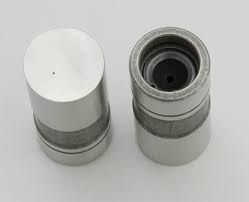 [/IMG]I'm using them in my motor,installed last August with a new Crower 00320 solid cam and full SS roller rockers.The lifters work great no lash change since installing them.I wanted extra lubrication to the cam lobes because I installed a new Richmond 6spd trans and knew I would be running the motor at lower rpm's when cruising on the Hwy.Figured I would have less splash lubrication to the cam at lower RPM's.Nothing wrong with a solid cam,you don't have to do lash adjustments every month and with the roller rockers you can hardly tell I'm running solids.Engine revs really quick with the solids and my low end is much stronger.I also advanced the cam 4 deg instead of straight up.As mentioned Crower also has the HYD Camsaver lifters which will spin in the bores allowing more oil to reach the cam lobes.Rhoads Lifters also have a superlube option on their lifters,including a retro style roller with link bar.Those retro style lifters are pricey though.Gimmick or not what's the harm in getting more oil to the cam lobes? Especially with the lower RPM's we run at with the installation of an OD trans.Factor in higher lift cams & stronger valve springs, extra lubrication would be a good thing......
[IMG]
[/IMG]I'm using them in my motor,installed last August with a new Crower 00320 solid cam and full SS roller rockers.The lifters work great no lash change since installing them.I wanted extra lubrication to the cam lobes because I installed a new Richmond 6spd trans and knew I would be running the motor at lower rpm's when cruising on the Hwy.Figured I would have less splash lubrication to the cam at lower RPM's.Nothing wrong with a solid cam,you don't have to do lash adjustments every month and with the roller rockers you can hardly tell I'm running solids.Engine revs really quick with the solids and my low end is much stronger.I also advanced the cam 4 deg instead of straight up.As mentioned Crower also has the HYD Camsaver lifters which will spin in the bores allowing more oil to reach the cam lobes.Rhoads Lifters also have a superlube option on their lifters,including a retro style roller with link bar.Those retro style lifters are pricey though.Gimmick or not what's the harm in getting more oil to the cam lobes? Especially with the lower RPM's we run at with the installation of an OD trans.Factor in higher lift cams & stronger valve springs, extra lubrication would be a good thing......
Race Director
Joined: May 2005
Posts: 10,674
Likes: 122
From: Millington Illinois
St. Jude Donor '08-'09
Conversely, just because you also haven't used them - or that a good shop uses them in 1,000 HP engines - also doesn't make them a good option for a street-driven fast ramp flat-tappet cam
Vizard's endorsement of both is interesting - but general articles need specific follow-up as what's needed in one build or for one engine family certainly isn't in another.
Vizard's endorsement of both is interesting - but general articles need specific follow-up as what's needed in one build or for one engine family certainly isn't in another.
 The op needs to make his own choices. I was just presenting a good alternative to grooving the lifter bores being he can't do that since he is installing the cam without removing the engine. I have built dozens of engines not hundreds so maybe your prospective is better than mine.
BTW Crower also was the inovator of the EDM hole in the solid lifters. Now other manufacturers are following suit.
Last edited by 63mako; Jun 26, 2012 at 06:54 PM.
Le Mans Master
Joined: Jun 2004
Posts: 6,231
Likes: 65
From: Seattle WA
St. Jude Donor '14
Nope - in no way better...just different. Different experience brings different perceptions.
The primary lesson I've learned from building a bunch of engines are simply KISS - the times I've ended up spending extra money or time has virtually always been on trying new stuff on the fringes. On the engines I do there's no room in the budget for experimentation or failure so I am EXTREMELY agnostic about anything even +/-.0001 out of the mainstream until I see it proven in practice...ideally by someone else with way deeper pockets...as they don't call it the "bleeding edge" of technology for nothing. I can predictably build a 383 in about 2 weekends...until the owner decides they want something wacko 
I am very big on the engineering concept of "fit for purpose" - i.e. designed for a specific application. If someone has the $$$ and time to experiment, great - and of course thats how hotrodding advances and we all benefit. If this lifter is at the tipping point, great - and I look forward to seeing more of them with documented long service history. I'm just saying I'm not convinced right now that's the case.
Probably way too much angst over a .003 hole
Different experience brings different perceptions. The primary lesson I've learned from building a bunch of engines are simply KISS - the times I've ended up spending extra money or time has virtually always been on trying new stuff on the fringes. On the engines I do there's no room in the budget for experimentation or failure so I am EXTREMELY agnostic about anything even +/-.0001 out of the mainstream until I see it proven in practice...ideally by someone else with way deeper pockets...as they don't call it the "bleeding edge" of technology for nothing.
I can predictably build a 383 in about 2 weekends...until the owner decides they want something wacko I am very big on the engineering concept of "fit for purpose" - i.e. designed for a specific application. If someone has the $$$ and time to experiment, great - and of course thats how hotrodding advances and we all benefit. If this lifter is at the tipping point, great - and I look forward to seeing more of them with documented long service history. I'm just saying I'm not convinced right now that's the case.
Probably way too much angst over a .003 hole