




Confused about Dyno's

Racer


Joined: Oct 2006
Posts: 435
Likes: 18
From: Florida

Where is your proof to prove me wrong, all I see is your opinion, picking on one word "calculates" is brilliant stuff, well how can you calculate anything with taking measurements in the first place. There's definitely a Joe Blow here but who is it ?
You picked on the wrong member in the first place mistakenly thinking I was posting about what you posted, now prove me wrong, I am not even going to ask for credentials, anyone can "Google" this stuff all I am asking is for you to prove me wrong and I will apologize, something civilized, intelligent people will do when proved wrong I have no problem with that, other than that you can do the same.
Wasaga can't be that far then you get show equations, diagrams and proof in person
You picked on the wrong member in the first place mistakenly thinking I was posting about what you posted, now prove me wrong, I am not even going to ask for credentials, anyone can "Google" this stuff all I am asking is for you to prove me wrong and I will apologize, something civilized, intelligent people will do when proved wrong I have no problem with that, other than that you can do the same.
Wasaga can't be that far then you get show equations, diagrams and proof in person
Racer
Joined: Oct 2006
Posts: 435
Likes: 18
From: Florida
I think that once you know exactly what hp is by definition, you can then understand you can not have it without torque. It is a unit of measure describing torque, over time and distance. Without torque, hp can not be calculated...
Racer
Joined: Oct 2006
Posts: 435
Likes: 18
From: Florida
You guys friends ? People with no info in sig coming out of the woodwork give me an f'ing break. The inertia dyno can measure HP even if there is no torque reading. Do you own a dyno or design them ? I understand what HP is and if you read the definition you would realize there is no torque involved.
Who died and gave you the authority to explain this to me ? The inertia dyno can measure HP without a Torque reading. Then calculates TQ. Most other dyno's are as you describe I am not disputing that. Prove me wrong opinions don't count
Who died and gave you the authority to explain this to me ? The inertia dyno can measure HP without a Torque reading. Then calculates TQ. Most other dyno's are as you describe I am not disputing that. Prove me wrong opinions don't count
Definition: A unit that is used to measure the power of engines and motors. One unit of horsepower is equal to the power needed to lift 550 pounds one foot in one second
How do you measure torque?
Racer
Joined: Oct 2006
Posts: 435
Likes: 18
From: Florida
I don't measure TQ nor do I calculate it I leave that up to mechanics, and nowadays the computer takes care of that. If you guys want to dismiss what some experts on dyno's have to say ( real experts not wanna bee's ) that's fine. I stand by what I have said there are 2 types of chassis dyno's inertia type and one that puts a load on the engine which covers most of the rest of chassis dyno's including engine dyno's.
Instead of telling me what you think can't you come up with some solid
engineering/physics fact.
I didn't Google this, like I said I don't want to hear your opinions, back up your posts with solid engineering/physics fact and I will be the first the apologize I don't expect the same from either of you for some instinctive reason. It should be fairly simple to come up with a credible third party response proving I am wrong, no ?
Let the Googling commence
Instead of telling me what you think can't you come up with some solid
engineering/physics fact.
I didn't Google this, like I said I don't want to hear your opinions, back up your posts with solid engineering/physics fact and I will be the first the apologize I don't expect the same from either of you for some instinctive reason. It should be fairly simple to come up with a credible third party response proving I am wrong, no ?
Let the Googling commence

Race Director

Joined: Apr 2007
Posts: 11,152
Likes: 890
From: South Western Ontario
Hmm, it seems you are arguing a technicality.
OK, there are inertia dynos which use an accelerometer and these are often claimed to calculate the power directly by using the changes in rotational energy. Well, the SI unit of energy is the Joule and one Joule is equal to the energy expended in applying a force of one newton through a distance of one meter. The last time I checked, Nm is the SI units for torque.
Don't believe me? Do you believe Wikipedia? Look here;
http://en.wikipedia.org/wiki/Rotational_energy
Read the paragraph after the equation. "The instantaneous power of an angularly accelerating body is the torque times the angular velocity." This says that when you are calculating changes in the power in the drum that you most certainly do use the torque.
You have to first understand this concept. The torque I'm talking about above is the torque in the drum system, not the torque as you see it plotted on a fancy curve curve with the rpm across the bottom. Everything rotating that is accelerating or decelerating has a torque involved. Further, the losses in a rotating system mean you even have to apply a torque just to keep it rotating at a steady speed.
Taking the torque and burying it inside a more involved formula doesn't mean it's no longer there. I now think the fact that the dyno doesn't expressedly calculate torque but rather uses it buried inside the equations as it calculates HP is the technicality you're trying to argue.
OK, there are inertia dynos which use an accelerometer and these are often claimed to calculate the power directly by using the changes in rotational energy. Well, the SI unit of energy is the Joule and one Joule is equal to the energy expended in applying a force of one newton through a distance of one meter. The last time I checked, Nm is the SI units for torque.
Don't believe me? Do you believe Wikipedia? Look here;
http://en.wikipedia.org/wiki/Rotational_energy
Read the paragraph after the equation. "The instantaneous power of an angularly accelerating body is the torque times the angular velocity." This says that when you are calculating changes in the power in the drum that you most certainly do use the torque.
You have to first understand this concept. The torque I'm talking about above is the torque in the drum system, not the torque as you see it plotted on a fancy curve curve with the rpm across the bottom. Everything rotating that is accelerating or decelerating has a torque involved. Further, the losses in a rotating system mean you even have to apply a torque just to keep it rotating at a steady speed.
Taking the torque and burying it inside a more involved formula doesn't mean it's no longer there. I now think the fact that the dyno doesn't expressedly calculate torque but rather uses it buried inside the equations as it calculates HP is the technicality you're trying to argue.
Last edited by vettebuyer6369; Aug 2, 2012 at 08:08 PM. Reason: cleaning it up
Race Director
Joined: Apr 2007
Posts: 11,152
Likes: 890
From: South Western Ontario
 Yes, I have read claims that an inertia dyno calculates the power directly. So what's your point about this exactly? Do you believe that me reading something that was written on the internet means I agree that it's true? The flip side of that kind of riduculous arguement is that you've read my statement that the dyno calculates torque and power which means you have agreed that it's true and that I am right.
I also find it very funny that you would read into my acknowlegement of reading certain claims as your proof even when you have no clue where I read it or who wrote it.
I'll give you one more simple example. You can google this formula very easily. The time for a frictionless rotating object to accelerate is given by the following formula;
time = inertia x dN/(308 x torque)
You re-arrange this to get his formula;
torque = inertia x dN / (308 x dt)
where
dN is the change is speed and dt is the change in time. You can also think of dN as the speed change and dt as the per unit of time each speed change is measured.
OK, using a precision clock and a measurment of the acceleration rate using an accelerometer to get the speed change the torque can be calculated.
However, instead of using the above formula on it's own, lets put the torque formula inside this formula;
hp = torque x rpm / 5250
and we get
hp = inertia x dN x rpm / (1617000 x dt)
Cool, now I have derived a formula that calculates HP directly from some other measurements. Does this mean torque wasn't used? No, it sure as hell does not. The torque calculation is now just part of this larger formula.
The dyno does more complex math than the above. However, the torque is still in the math.
Just FYI, I use the above formulas at work all the time. There is no need for me to even Google it.
Last edited by lionelhutz; Aug 1, 2012 at 09:47 PM.

Burning Brakes


Joined: Dec 2003
Posts: 1,004
Likes: 7
From: Adelaide South Australia
OK boys..... here is a website which posts all the info you could want in a comprehensive article on "How to build an Inertial Dyno"
http://www.dtec.net.au/Inertia%20Dyn...gn%20Guide.htm
It is a design for a motor cycle dyno, but all the design criteria and physics calcs supplied are applicable to car inertial dynos as well.
Interesting info which clearly states the physics behind the determination of power in an inertia dyno. Lots of pics too.
I'll let you boys digest the info.....
........................................ ........................................ .....
I'm sure both points of view will find argument to support their case, but in essence, an Inertia dyno does determine power without measuring torque as we understand it in foot lbs (Nm)
In fact, the only first principles measurement used is time for each rotation of the flywheel (roller) load.
All other units are calculated, including torque AND power.

http://www.dtec.net.au/Inertia%20Dyn...gn%20Guide.htm
It is a design for a motor cycle dyno, but all the design criteria and physics calcs supplied are applicable to car inertial dynos as well.
Interesting info which clearly states the physics behind the determination of power in an inertia dyno. Lots of pics too.
I'll let you boys digest the info.....
........................................ ........................................ .....
I'm sure both points of view will find argument to support their case, but in essence, an Inertia dyno does determine power without measuring torque as we understand it in foot lbs (Nm)
In fact, the only first principles measurement used is time for each rotation of the flywheel (roller) load.
All other units are calculated, including torque AND power.
Race Director
Joined: Apr 2007
Posts: 11,152
Likes: 890
From: South Western Ontario
I will once again repeat that I have always stated that power is calculated, not measured. I have also stated that the torque is also calculated and further that the torque needed to accelerate the drum is always used as part of the calculation for power.
Ok to start back in post #80, I came up with this formula;
Now, this website that is being accepted as "proof" that the dyno calculates hp without using torque has two formula for delta Erot and the Power. I'm going to combine these into a single formula.
P = (inertia x (second w² / 2)) – (inertia x (first w² / 2)) / dt
Now, the astute person would be able to look at the two above formula and see that they are the same. However, some people may not see this, so I will do some changes to my formula.
First, I'll convert to SI units and get rid of the numeric conversion factors the English units cause.
P = inertia x dN x rotating speed / dt
Next, I'll elaborate on the dN
P = inertia x (N2-N1) x N / dt
where
N2 = final rotating speed
N1 = initial rotating speed
N = rotating speed
Next, N is the rotating speed but the speed varied from N2 to N2 so I need to do something about this. I'm going to use the average rotating speed or (N2 + N1) / 2.
P = inertia x (N2 - N1) x (N2 + N1) / 2 /dt
Next, simplify a bit;
P = (inertia x N2^2/2 - inertia x N1^2/2) / dt
Odd, but it that looks very similar to the equation from the quoted website. In fact, it looks identical. I started with the equation for the torque required to cause the change in speed of a rotating inertia, plugged it into the standard formula to calculate power using the torque and rotating speed and ended with the formula used by an inertia dyno as described in the link posted by OzzyTom.
To conclude, I'm really not sure how anyone can say the torque calculation isn't involved or isn't embedded into the math that is used to calculate the power. The torque is most definately part of the calculation, you just have to look for it.
Ok to start back in post #80, I came up with this formula;
Now, this website that is being accepted as "proof" that the dyno calculates hp without using torque has two formula for delta Erot and the Power. I'm going to combine these into a single formula.
P = (inertia x (second w² / 2)) – (inertia x (first w² / 2)) / dt
Now, the astute person would be able to look at the two above formula and see that they are the same. However, some people may not see this, so I will do some changes to my formula.
First, I'll convert to SI units and get rid of the numeric conversion factors the English units cause.
P = inertia x dN x rotating speed / dt
Next, I'll elaborate on the dN
P = inertia x (N2-N1) x N / dt
where
N2 = final rotating speed
N1 = initial rotating speed
N = rotating speed
Next, N is the rotating speed but the speed varied from N2 to N2 so I need to do something about this. I'm going to use the average rotating speed or (N2 + N1) / 2.
P = inertia x (N2 - N1) x (N2 + N1) / 2 /dt
Next, simplify a bit;
P = (inertia x N2^2/2 - inertia x N1^2/2) / dt
Odd, but it that looks very similar to the equation from the quoted website. In fact, it looks identical. I started with the equation for the torque required to cause the change in speed of a rotating inertia, plugged it into the standard formula to calculate power using the torque and rotating speed and ended with the formula used by an inertia dyno as described in the link posted by OzzyTom.
To conclude, I'm really not sure how anyone can say the torque calculation isn't involved or isn't embedded into the math that is used to calculate the power. The torque is most definately part of the calculation, you just have to look for it.
Last edited by vettebuyer6369; Aug 2, 2012 at 08:18 PM.
Corvette Stories
The Best of Corvette for Corvette Enthusiasts

Top 10 Most Expensive Corvettes Ever Sold on Bring A Trailer
Brett Foote
10 Things Every Corvette Owner Needs (2026 Edition)
Michael S. Palmer
8 Most "Only Corvette Owners Understand" Quirks and Problems
Pouria Savadkouei
10 Reasons the C6 Z06 is Still A Performance Benchmark After 20 Years
Joe Kucinski
How Much Horsepower Every Corvette Engine "LOST" in 1972
Joe Kucinski
Top 10 DOs and DON'Ts for Protecting Your Convertible Top!
Michael S. Palmer
Top 10 Most Explosive Corvettes Ever Made: Power-to-Weight Ratio Ranked!
Joe Kucinski
150 hp to 1,250 hp: Every Corvette Generation Compared by the Specs That Matter
Joe Kucinski
8 Coolest Corvette Pace Cars (and Replicas) of All Time
Verdad Gallardo
Melting Slicks


Joined: Jul 2010
Posts: 2,762
Likes: 820
From: SUFFIELD CT USA 2023 C8 CORVETTE UN-MODIFIED FINALIST
2023 C8 of the Year Finalist - Unmodified
WOWW!!!!!!!! I think what the op needs to know is that there is no international calibration standard for dynos. The numbers coming off a dyno are for reference only and mean little, as the make, style, operator, settings, temperature, humidty and phase of the moon will change the readings, ok I made up the last one! AS has been stated it is a tuning tool only. The ops first pull identified a bad fuel pump, that was changed yielding better numbers. You get a baseline, that is only good for that exact dyno w/ that exact setup and operator and then you try to make improvements! I have had operators increase my numbers on my last ( third ) pull by 20% so I could "mess" w/ my car nut friends who think the numbers have huge importance and the operator new what I was requesting because he gets the same request all the time. Its just a tool, no magic, just reference!!!!

Administrator


Joined: Jul 2000
Posts: 53,982
Likes: 6,209
From: About 1100 miles from where I call home.
OK Guys...  ... I'm not sure what it is about "tech/performance" that makes these debates turn ugly, but I would prefer to keep threads like this one open, with some great exchanges of information, regardless of who thinks they are absolutely right.
I would imagine no one will be getting any "apologies" or admissions of giving up any time soon, either, so maybe we could not hold our breath on that.
I don't want to spend any more time cleaning up this thread. If I do, I'll just close it and proceed directly to the infractions for everyone involved.
Attack ideas, not people.
... I'm not sure what it is about "tech/performance" that makes these debates turn ugly, but I would prefer to keep threads like this one open, with some great exchanges of information, regardless of who thinks they are absolutely right.I would imagine no one will be getting any "apologies" or admissions of giving up any time soon, either, so maybe we could not hold our breath on that.
I don't want to spend any more time cleaning up this thread. If I do, I'll just close it and proceed directly to the infractions for everyone involved.
Attack ideas, not people.
Le Mans Master

Joined: May 2002
Posts: 5,086
Likes: 786
From: Lebanon Township New Jersey
Your arguments have been rational and intelligent without being belligerant. I can't say the same about those from a certain "forum expert".

Former Vendor
Joined: Oct 2011
Posts: 153
Likes: 0
From: Fairfield CA
I for some reason thought Dyno's were set for accurate readings, call me silly.
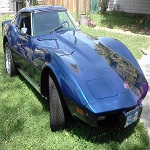
2 months ago I took my 75 in to see where I was at as far as power and torque.
I found out I had a bad fuel pump, a shakey 2 1/2 PSI and the engine had a miss at mid to high RPM.
The 75 still did 95mph in the 1/4 mile by the speedometer.
and showed 233.8Chp with 288.4 ft pounds.
I replaced the fuel pump, Now getting 5 1/2 psi and a speed of 110mph in the 1/4 mile.
I took it to another shop to have it retested and they come up with 202.5Chp and 263ft pounds.
A couple of the techs complemented me on how nice the engine ran.
So what's up with these numbers?
Isn't there a standard for Dynos?
The owner Ed said his $100,000 Dyno was stingy with HP.
Is that the same as saying it's not calibrated right?
Here is the results from the 1st Dyno.
I only got a printed paper with the 2nd Dyno
But the chart is smooth and unimpressive.
Ralph

Here is the latest Dyno results:

2 months ago I took my 75 in to see where I was at as far as power and torque.
I found out I had a bad fuel pump, a shakey 2 1/2 PSI and the engine had a miss at mid to high RPM.
The 75 still did 95mph in the 1/4 mile by the speedometer.
and showed 233.8Chp with 288.4 ft pounds.
I replaced the fuel pump, Now getting 5 1/2 psi and a speed of 110mph in the 1/4 mile.
I took it to another shop to have it retested and they come up with 202.5Chp and 263ft pounds.
A couple of the techs complemented me on how nice the engine ran.
So what's up with these numbers?
Isn't there a standard for Dynos?
The owner Ed said his $100,000 Dyno was stingy with HP.
Is that the same as saying it's not calibrated right?
Here is the results from the 1st Dyno.
I only got a printed paper with the 2nd Dyno
But the chart is smooth and unimpressive.
Ralph
Here is the latest Dyno results:
Ralph,
Your previous dyno has huge spikes in it... not sure if that's from the missfires or from your transmission shifting during the pull, but those spikes should not be read as peak hp. Any numbers from a dyno run that looks like that should basically be ignored.
As far as our dyno, it is calibrated to read just like a Mustang Chassis Dyno which is the most accurate IMO. My reasoning for this comes from my software engineering days. Back in college when I was just getting into tuning, I developed my own road dyno software. My software took a log file from an in-gear pull and looked at the change in RPM over time. Along with gearing and tire size, the software calculated the car's on-road acceleration. Then using weight, frontal area, drag coefficient, and air density, the software calculated the power and torque required to create the measured acceleration. While this sounds somewhat complicated, the whole thing is based on a few basic physics equations.
Since this software worked purely off real-world on-road acceleration and basic physics, the results are very accurate as long as the input parameters are accurate, the road is flat, and there is no significant wind. After doing a lot of testing with the software and getting very consistent results, I decided to test the results against several chassis dynos. To my surprise, I found that the power measurement from my software was always within 1-3whp as compared to most Mustang Chassis dynos. Dynojets usually came in at 10-15% higher and Dynapaks came in at 15-18% higher.
Considering these results, I concluded that the Mustang dyno measures power most "accurately" as it comes the closest to a real world power measurement. So when we acquired our Dynocom Chassis dyno, I calibrated it to read just like a Mustang dyno. This may hurt some people's ego's, but at the end of the day its the most accurate measurement I've seen.
All this being said, the most important part about a dyno is consistency, not the absolute numbers. If a dyno can reproduce the same measured results consistently, then its a good tool for tuning no matter what the actual numbers are. So if a dyno reads high, it doesn't mean its better or worse than a lower reading dyno when you're using it as a tuning tool.
Thanks
-- Ed
Former Vendor
Joined: Oct 2011
Posts: 153
Likes: 0
From: Fairfield CA
I also tried to read through most of this thread and there is a lot of good info as well as some confusion here on how dynos work.
Most dynos do in fact measure power and in the absence of RPM data they can display a power curve over time or over wheel speed. Power is basically work. The dyno software knows the inertia and diameter of the roller and measures the speed of the roller over time (acceleration). It then calculates how much power it takes to achieve the measured acceleration of the roller at the given speeds. Using this data along with measured RPM, it can then calculate wheel torque. This is the basis of just about any dyno measurement out there.
The big misconception that dynos measure torque directly comes from load bearing dynos. This type of dyno uses a load cell and when people see the load cell, they assume the dyno is using it to directly measure wheel torque. In fact, the load cell is only there to measure the amount of additional load being applied by the eddy brakes to slow down the roller. This load is then added back into the traditional inertial type power calculation to get the final power number. So even in this case, the dyno software is first measuring the acceleration of the drum, calculating the power it takes to achieve this acceleration, and then adding in the additional load that was applied by the eddy brake.
Just about every dyno works this way. The only possible exception is a hub type dyno that has nearly zero inertia and primarily uses the eddy brakes to create load.
Thanks
-- Ed
Most dynos do in fact measure power and in the absence of RPM data they can display a power curve over time or over wheel speed. Power is basically work. The dyno software knows the inertia and diameter of the roller and measures the speed of the roller over time (acceleration). It then calculates how much power it takes to achieve the measured acceleration of the roller at the given speeds. Using this data along with measured RPM, it can then calculate wheel torque. This is the basis of just about any dyno measurement out there.
The big misconception that dynos measure torque directly comes from load bearing dynos. This type of dyno uses a load cell and when people see the load cell, they assume the dyno is using it to directly measure wheel torque. In fact, the load cell is only there to measure the amount of additional load being applied by the eddy brakes to slow down the roller. This load is then added back into the traditional inertial type power calculation to get the final power number. So even in this case, the dyno software is first measuring the acceleration of the drum, calculating the power it takes to achieve this acceleration, and then adding in the additional load that was applied by the eddy brake.
Just about every dyno works this way. The only possible exception is a hub type dyno that has nearly zero inertia and primarily uses the eddy brakes to create load.
Thanks
-- Ed
Last edited by Equilibrium Tuning; Aug 17, 2012 at 06:39 PM.

Former Vendor
Joined: Oct 2011
Posts: 153
Likes: 0
From: Fairfield CA
BTW, I'll add to this that the whole concept of wheel torque is kind of a misnomer. Technically the torque applied at the wheels has a great deal to do with the gearing advantage and will vary greatly between different gears. What you see on a dyno chart is actually engine torque minus parasitic losses. And its only there as a calculation based off measured power.
To test this out, next time you're on a dyno, have the operator do pulls in a couple different gears. The resulting hp and torque will be nearly identical in each gear, but as we all know, you're actually applying a lot more torque at the wheel in a lower gear.
-- Ed
To test this out, next time you're on a dyno, have the operator do pulls in a couple different gears. The resulting hp and torque will be nearly identical in each gear, but as we all know, you're actually applying a lot more torque at the wheel in a lower gear.
-- Ed
Thread Starter
Burning Brakes
Joined: Feb 2011
Posts: 849
Likes: 0
From: Woodland California
Ralph,
Your previous dyno has huge spikes in it... not sure if that's from the missfires or from your transmission shifting during the pull, but those spikes should not be read as peak hp. Any numbers from a dyno run that looks like that should basically be ignored.
As far as our dyno, it is calibrated to read just like a Mustang Chassis Dyno which is the most accurate IMO. My reasoning for this comes from my software engineering days. Back in college when I was just getting into tuning, I developed my own road dyno software. My software took a log file from an in-gear pull and looked at the change in RPM over time. Along with gearing and tire size, the software calculated the car's on-road acceleration. Then using weight, frontal area, drag coefficient, and air density, the software calculated the power and torque required to create the measured acceleration. While this sounds somewhat complicated, the whole thing is based on a few basic physics equations.
Since this software worked purely off real-world on-road acceleration and basic physics, the results are very accurate as long as the input parameters are accurate, the road is flat, and there is no significant wind. After doing a lot of testing with the software and getting very consistent results, I decided to test the results against several chassis dynos. To my surprise, I found that the power measurement from my software was always within 1-3whp as compared to most Mustang Chassis dynos. Dynojets usually came in at 10-15% higher and Dynapaks came in at 15-18% higher.
Considering these results, I concluded that the Mustang dyno measures power most "accurately" as it comes the closest to a real world power measurement. So when we acquired our Dynocom Chassis dyno, I calibrated it to read just like a Mustang dyno. This may hurt some people's ego's, but at the end of the day its the most accurate measurement I've seen.
All this being said, the most important part about a dyno is consistency, not the absolute numbers. If a dyno can reproduce the same measured results consistently, then its a good tool for tuning no matter what the actual numbers are. So if a dyno reads high, it doesn't mean its better or worse than a lower reading dyno when you're using it as a tuning tool.
Thanks
-- Ed
Your previous dyno has huge spikes in it... not sure if that's from the missfires or from your transmission shifting during the pull, but those spikes should not be read as peak hp. Any numbers from a dyno run that looks like that should basically be ignored.
As far as our dyno, it is calibrated to read just like a Mustang Chassis Dyno which is the most accurate IMO. My reasoning for this comes from my software engineering days. Back in college when I was just getting into tuning, I developed my own road dyno software. My software took a log file from an in-gear pull and looked at the change in RPM over time. Along with gearing and tire size, the software calculated the car's on-road acceleration. Then using weight, frontal area, drag coefficient, and air density, the software calculated the power and torque required to create the measured acceleration. While this sounds somewhat complicated, the whole thing is based on a few basic physics equations.
Since this software worked purely off real-world on-road acceleration and basic physics, the results are very accurate as long as the input parameters are accurate, the road is flat, and there is no significant wind. After doing a lot of testing with the software and getting very consistent results, I decided to test the results against several chassis dynos. To my surprise, I found that the power measurement from my software was always within 1-3whp as compared to most Mustang Chassis dynos. Dynojets usually came in at 10-15% higher and Dynapaks came in at 15-18% higher.
Considering these results, I concluded that the Mustang dyno measures power most "accurately" as it comes the closest to a real world power measurement. So when we acquired our Dynocom Chassis dyno, I calibrated it to read just like a Mustang dyno. This may hurt some people's ego's, but at the end of the day its the most accurate measurement I've seen.
All this being said, the most important part about a dyno is consistency, not the absolute numbers. If a dyno can reproduce the same measured results consistently, then its a good tool for tuning no matter what the actual numbers are. So if a dyno reads high, it doesn't mean its better or worse than a lower reading dyno when you're using it as a tuning tool.
Thanks
-- Ed
How does the fact that you started measuring torque after it had already peaked figure in.
And why does my torque fall off so fast.
Thanks again Ed
Former Vendor
Joined: Oct 2011
Posts: 153
Likes: 0
From: Fairfield CA
In general doing dyno pulls with an automatic transmission is a bit more difficult unless you can manually lock the torque converter and lock the transmission in a particular gear (neither of which was possible on your car).
Hope that helps.
Thanks
-- Ed