





Coolant temp sensor with vortec heads
Le Mans Master


Joined: Mar 2008
Posts: 5,948
Likes: 72
From: Oxford MA-----You just lost the game!!!!

Yep, there's more than one way to skin a cat! I'm thinking about moving my sensor up to the intake just because I don't like that wire so close to the header. Good luck with however you decide to go.
Keep the shiny side up!
Scott
Keep the shiny side up!
Scott

Thread Starter
Racer

Joined: Apr 2012
Posts: 464
Likes: 1
From: Austell Georgia
The engine is assembled and already in the car so enlarging the hole at this time is not an option. The simple solutions are sometimes right in front of you.
BK- Everything good with your relocation? That would put the sensor above the top of the radiator. Just askin.....
BK- Everything good with your relocation? That would put the sensor above the top of the radiator. Just askin.....
Le Mans Master
Joined: Mar 2008
Posts: 5,948
Likes: 72
From: Oxford MA-----You just lost the game!!!!
Keep the shiny side up!
Scott

Racer
Joined: Nov 2006
Posts: 435
Likes: 7
From: Wake Forest NC
Corvette Stories
The Best of Corvette for Corvette Enthusiasts

10 Reasons the C6 Z06 is Still A Performance Benchmark After 20 Years
Joe Kucinski
How Much Horsepower Every Corvette Engine "LOST" in 1972
Joe Kucinski
Top 10 DOs and DON'Ts for Protecting Your Convertible Top!
Michael S. Palmer
Top 10 Most Explosive Corvettes Ever Made: Power-to-Weight Ratio Ranked!
Joe Kucinski
150 hp to 1,250 hp: Every Corvette Generation Compared by the Specs That Matter
Joe Kucinski
8 Coolest Corvette Pace Cars (and Replicas) of All Time
Verdad Gallardo
Top 10 Corvette Engines RANKED by Peak Torque (70+ Years of Muscle!)
Joe Kucinski
Corvette ZR1X Will Be Pacing the Indy 500, And Could Probably Race, Too!
Verdad Gallardo
Top 10 Corvettes Coming to Mecum Indy 2026!
Brett Foote
Drifting


Joined: Apr 2007
Posts: 1,970
Likes: 45
From: Cameron Park CA

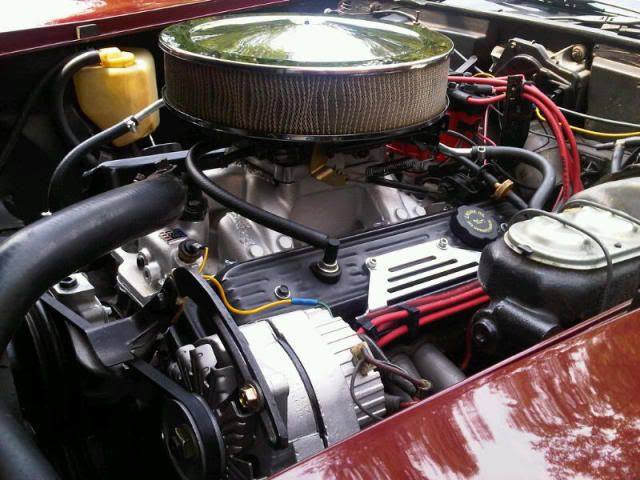
You can see the sender sort of hidden under the fuel line.

Pete

Drifting

Joined: Jul 2011
Posts: 1,697
Likes: 139
From: Syracuse NY
Use a brass NPT pipe adapter to fit. DO NOT put that sensor anywhere other than on the intake. I tried to clean up my engine bay and ran the sensor to a plug on one of the heads. HOLY SHI+ the head temp is WAY higher than the coolant temp at the thermostat housing, and it varies wildly with engine operating.


Thread Starter
Racer
Joined: Apr 2012
Posts: 464
Likes: 1
From: Austell Georgia
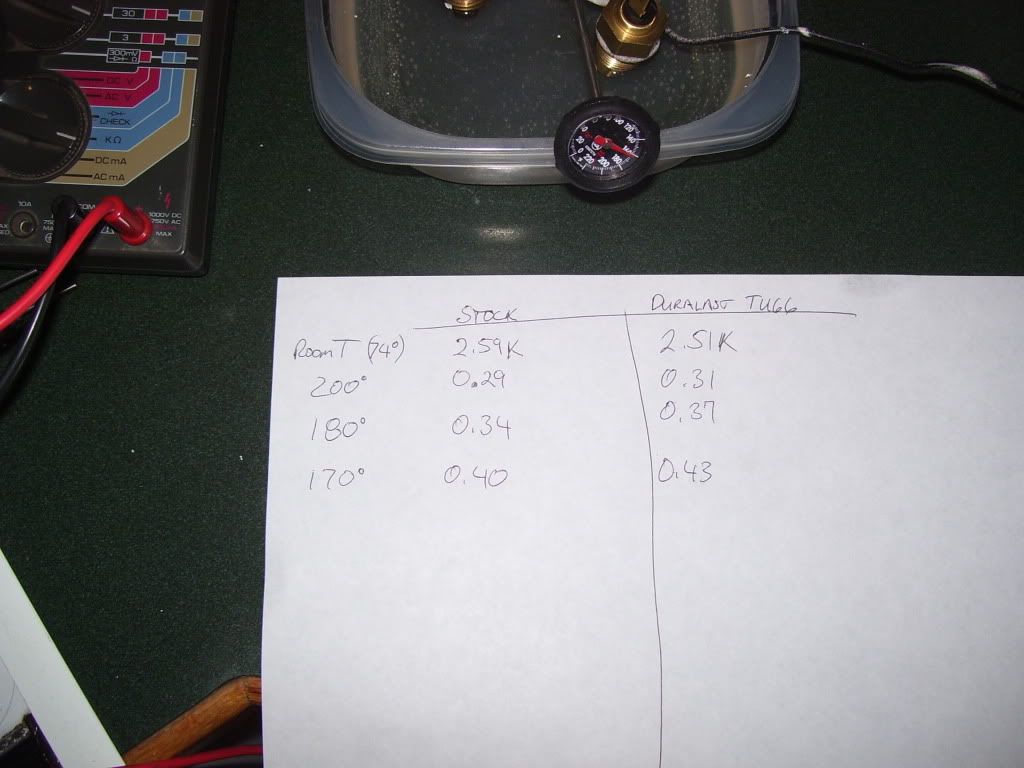
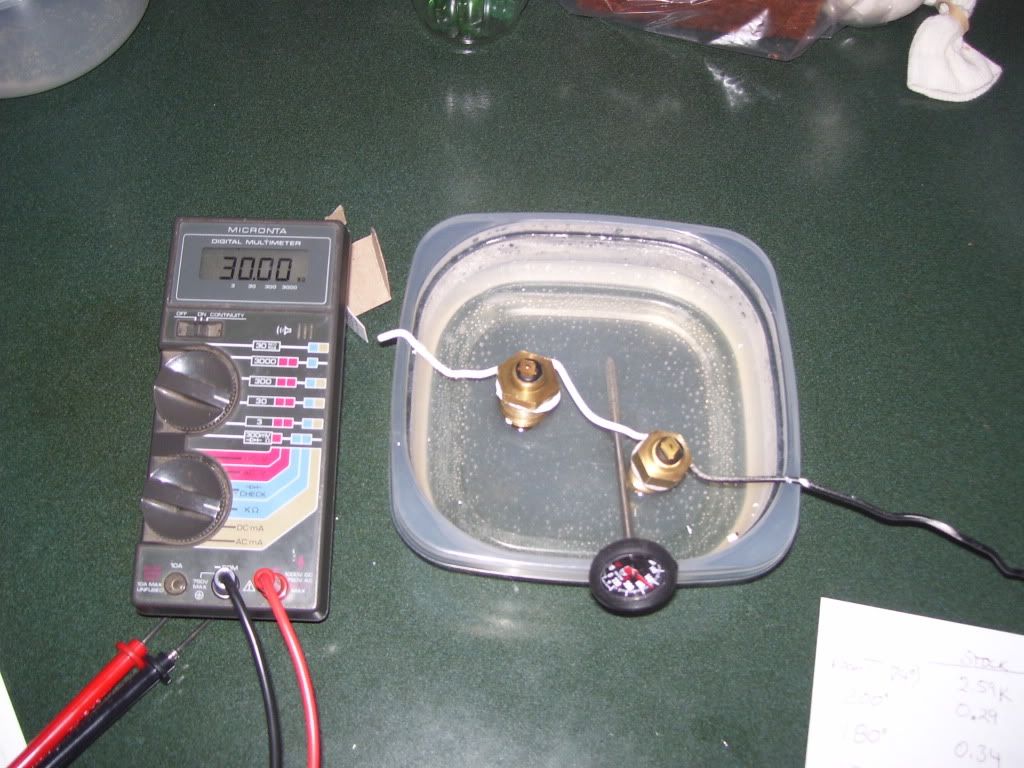
gkz You don't happen to have the ohm readings at various temps for this sender do you? If the readings at 200 deg are close it will work fine
peteZ06 your sender is where my heater line nipple goes. I have two ports by 7 or 8 cylinder I can use. I like taking the temp in the head ports because it does give the highest reading. Did you paint your valve covers or did they come that way?
Thanks
peteZ06 your sender is where my heater line nipple goes. I have two ports by 7 or 8 cylinder I can use. I like taking the temp in the head ports because it does give the highest reading. Did you paint your valve covers or did they come that way?
Thanks
Racer
Joined: Nov 2006
Posts: 435
Likes: 7
From: Wake Forest NC
Drifting
Joined: Apr 2007
Posts: 1,970
Likes: 45
From: Cameron Park CA
gkz You don't happen to have the ohm readings at various temps for this sender do you? If the readings at 200 deg are close it will work fine
peteZ06 your sender is where my heater line nipple goes. I have two ports by 7 or 8 cylinder I can use. I like taking the temp in the head ports because it does give the highest reading. Did you paint your valve covers or did they come that way?
Thanks
peteZ06 your sender is where my heater line nipple goes. I have two ports by 7 or 8 cylinder I can use. I like taking the temp in the head ports because it does give the highest reading. Did you paint your valve covers or did they come that way?
Thanks
You say if readings are close, it will work fine, yet you say the head readings are higher than the intake readings. Not so. The coolant flies by the sender so fast it doesn't matter if it is in the head or intake. The correct sender for the gauge in the intake is more accurate than a "close at 200°" wrong sender in the head.
The valve covers are C4 magnesium and are painted, you cannot polish or plate magnesium.

Le Mans Master


Joined: May 2002
Posts: 5,086
Likes: 786
From: Lebanon Township New Jersey
Just getting back to the location issue. I've had the sensor in the intake for years. It seems accurate. I fill my system thru the tstat location so the area where the sensor is located is flooded.

Race Director


Joined: Apr 2000
Posts: 17,676
Likes: 201
From: Who says "Nothing is impossible" ? I've been doing nothing for years.


Melting Slicks

Joined: Jul 1999
Posts: 3,030
Likes: 17
From: White Pine / Dandridge TN
Installed Vortec heads back in 2000. Went to the local hardware store and basically searched through their brass fittings assortment until I found one that fit the vortec head (male end). I then combined several more brass fittings so that I ended up with adapters that allowed the engine temp gauge to mate with the vortec head. I have my electric fan temp gauge connected to the manifold. Never had an issue with either.

Le Mans Master
Joined: Jan 2001
Posts: 6,728
Likes: 1,379
heck...for 12 bucks I'll try it....
many thanks